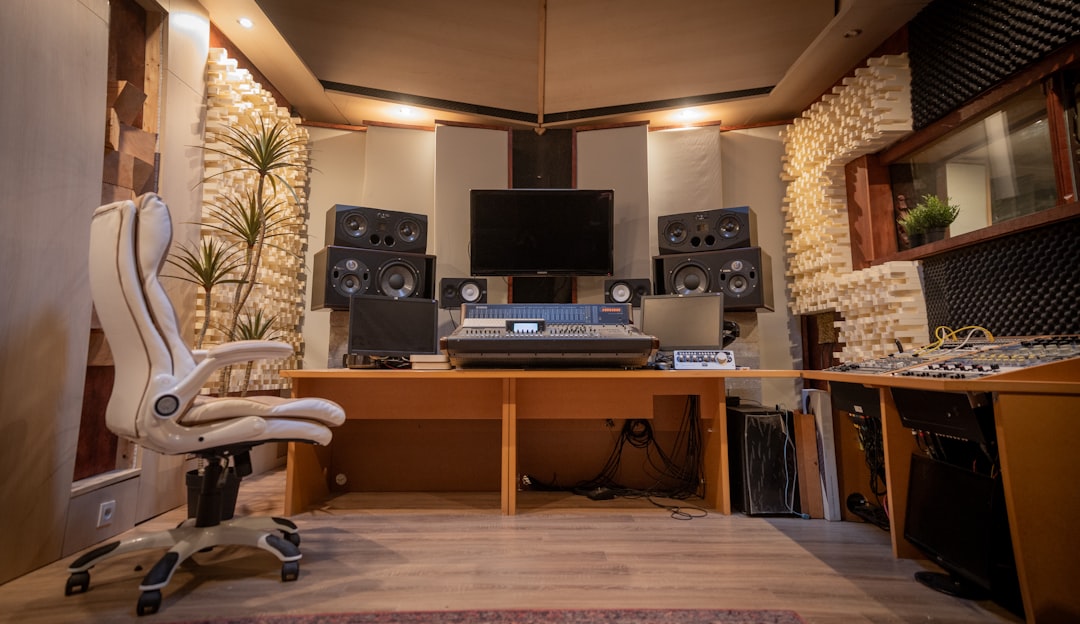
The pursuit of perfect sound often leads you to the realm of the audible spectrum, where high frequencies sparkle and mid-ranges reveal every nuance of a performance. Yet, lurking beneath the surface, an invisible yet powerful force shapes your listening experience: the sub-20Hz realm. This is the domain of the infrasound, the rumble of a distant train, the visceral thud of a kick drum, or the deep vibration of an explosion in a film. Neglecting this low-frequency territory is akin to building a magnificent house on an unstable foundation; the entire structure, no matter how beautifully appointed, will ultimately lack integrity and impact. Your understanding and implementation of sub-20Hz acoustic treatment are paramount to achieving truly immersive and accurate sound reproduction.
This article will guide you through the challenges and solutions associated with treating acoustic spaces for frequencies below 20Hz. You will learn why this often-overlooked region is critical, the unique physics involved, and the practical approaches to effectively tame these powerful sound waves.
You may wonder why you should concern yourself with frequencies you cannot consciously hear. The answer lies in their physical impact and their contribution to the overall perception of sound. While you may not “hear” a 15Hz tone in the way you hear a 1kHz tone, you will undoubtedly “feel” it. These very low frequencies possess immense wavelengths, stretching across your room and beyond. Their presence, or absence, can profoundly alter the perceived loudness, depth, and realism of audio content.
The Physiological Impact of Infrasound
Even below the threshold of conscious hearing, these low frequencies can interact with your body. They can induce subtle vibrations in the chest cavity and even influence your mood. A well-controlled infrasonic response can contribute to a sense of grandeur and gravitas, while an uncontrolled one can lead to a muddy, boomy, or even fatiguing listening experience. Think of it as the deep, resonant hum of a large engine; it’s not a melody, but it profoundly shapes your perception of the machine’s power.
The Psychoacoustic Connection
Your brain is a sophisticated interpreter of sound, and it doesn’t always process information linearly. The presence of controlled sub-20Hz energy can enhance the perceived impact of other frequencies, making a bassline feel more authoritative or an explosion more lifelike. Conversely, resonances and uncontrolled peaks in this region can bleed into audible frequencies, smearing transients and reducing clarity. This is like having a blurry photograph where the sharpest details are obscured by an overly dark background.
For those interested in enhancing their audio experience, particularly in the realm of low-frequency sound management, a related article on acoustic treatment for sub twenty hertz can be found at Freaky Science. This resource delves into the importance of proper acoustic treatment in achieving clear and balanced sound reproduction, especially for bass-heavy music genres and home theater setups. By understanding the principles outlined in this article, audio enthusiasts can better address the challenges posed by low-frequency sound waves and optimize their listening environments.
The Treacherous Terrain: Challenges of Sub-20Hz Treatment
Dealing with sub-20Hz frequencies presents a unique set of challenges that differ significantly from treating higher frequencies. Their sheer power and long wavelengths demand different strategies and much larger physical interventions. Attempting to use the same techniques that work for, say, 5kHz problem frequencies will be like trying to dam a river with a garden hose – utterly ineffective.
Wavelength vs. Room Size
The fundamental challenge stems from the relationship between wavelength and room dimensions. At 20Hz, the wavelength of sound is approximately 56 feet (17 meters). In most domestic listening environments, this wavelength is significantly larger than any room dimension. This means that standard acoustic treatments, typically designed to absorb or diffuse wavelengths comparable to or smaller than room features, will have minimal effect on these lowest frequencies. You are essentially trying to catch a giant whale with a fishing net designed for minnows.
Resonance and Modes
Every room, when excited by sound, will resonate at specific frequencies determined by its dimensions. These are known as room modes. For sub-20Hz frequencies, these modes can become particularly pronounced, leading to significant peaks and nulls in the frequency response. At the peak of a mode, the bass will be overwhelmingly loud and boomy; in a null, it will be virtually nonexistent. These modes are not subtle dips and bumps; they are seismic shifts in the low-frequency landscape of your room.
The Physics of Absorption: Surface Area and Density
Effective absorption of low frequencies requires a substantial amount of material that is dense and thick. This is why bass traps, the primary tool for low-frequency absorption, are often large, bulky, and strategically placed in corners where bass energy tends to accumulate. Attempting to achieve significant broadband low-frequency absorption with thin, lightweight materials on your walls is akin to expecting to stop a charging bull with a feather.
The Arsenal of Low Frequency Control: Absorption Strategies
When you decide to tackle the sub-20Hz beast, absorption becomes your primary weapon. The goal is to absorb as much of this low-frequency energy as possible before it can build up and cause problematic resonances. This is achieved through specialized devices known as bass traps.
Porous Absorbers (Broadband at Higher Frequencies)
While not your primary tool for sub-20Hz, it’s worth noting that thick, dense porous absorbers can offer some control at the upper end of the sub-20Hz range (e.g., 15-20Hz) if they are sufficiently thick. Think of panels made of dense fiberglass or mineral wool, at least 4 inches thick, and ideally thicker. However, their effectiveness diminishes rapidly as you go lower in frequency. They are more like a wide net that catches a lot of the smaller fish but lets the biggest ones slip through.
Resonant Absorbers (Tuned for Specific Frequencies)
This is where you’ll find your most potent tools for the sub-20Hz region. Resonant absorbers are designed to target specific frequencies or narrow bands of frequencies and convert their acoustic energy into heat. They are not passively absorbing; they are actively reacting to the sound waves.
Membrane Absorbers (Panel Absorbers)
Membrane absorbers, or panel absorbers, consist of a rigid panel (like plywood or MDF) mounted a certain distance in front of a sealed air cavity. The panel’s mass, stiffness, and the depth of the cavity are all tuned to resonate at a specific low frequency. When sound waves at that frequency hit the panel, it vibrates, and this vibration is damped by friction within the air cavity and the material itself. Imagine a drumhead; when you strike it, it vibrates. Now imagine that vibration is dampened. Effectively, the panel acts like a spring-mass-damper system, and you are tuning that system to absorb energy at specific sub-20Hz frequencies. The larger the panel, the better its ability to interact with longer wavelengths.
Tuning and Placement
The critical aspect of membrane absorbers is their tuning. Their effectiveness is directly tied to how accurately they are designed for the problematic frequencies in your room. This requires measurement and calculation. Placement is also crucial; they are often most effective when placed against a reflective surface, such as a wall or ceiling, where low-frequency pressure is maximal.
Helmholtz Resonators
A Helmholtz resonator is essentially a cavity of air with a narrow neck or opening. Think of blowing across the top of a bottle, and you create a resonant tone. In acoustic treatment, Helmholtz resonators are carefully constructed enclosures with perforated panels or slots. The air inside the cavity acts as a mass, and the opening acts as a spring. By carefully designing the volume of the cavity, the size and shape of the opening, and the depth of the neck, you can create a resonator that is highly efficient at absorbing a specific frequency (or a narrow band of frequencies).
Slot vs. Perforated
There are two main types of Helmholtz resonators used in acoustic treatment: slot resonators and perforated panel resonators. Slot resonators utilize a linear slot opening, while perforated panels use a series of holes. Both have their advantages in terms of design flexibility and aesthetic integration. These are like tuning forks specifically designed to vibrate and dissipate the energy of a particular low frequency.
The Unseen Architect: Diffusion at Low Frequencies
While absorption is your primary tool for controlling unwanted low-frequency energy, diffusion also plays a role, albeit a more nuanced one, at the sub-20Hz level. However, achieving meaningful diffusion at these very low frequencies is significantly more challenging than with higher frequencies.
The Scale of the Problem
Effective diffusion relies on scattering sound waves in multiple directions. For sub-20Hz frequencies, with their immense wavelengths, this requires very large and complex diffusing structures. The typical quadratic residue diffusers or QRDs you find in studios, while effective for mid and high frequencies, are far too small to interact meaningfully with wavelengths of 50 feet or more. You would need diffusers the size of a small building to start to see significant effects at 20Hz.
Indirect Benefits of Diffusion
While direct sub-20Hz diffusion might be impractical, strategic placement of diffusers at higher frequencies can indirectly influence the perception of low frequencies. Well-diffused mid and high frequencies can create a more even sound field, which can mask or mitigate the perception of subtle low-frequency anomalies that might otherwise be perceived as problematic. This is like having a well-lit room; even if there are minor shadows, the overall clarity prevents them from being overly distracting.
Combining Absorption and Diffusion
In an ideal scenario, you will employ a combination of absorption and diffusion. Bass traps will manage the raw energy of the lowest frequencies, while diffusers will help to create a more uniform and natural-sounding reverberant field for the audible frequencies. This balanced approach ensures that both the visceral impact and the clarity of the sound are addressed.
Acoustic treatment for frequencies below twenty hertz can be quite challenging, yet it is essential for achieving optimal sound quality in various environments. For those interested in exploring this topic further, a related article provides valuable insights into effective methods and techniques. You can read more about it in this informative piece on acoustic treatment strategies by visiting this link. Understanding the nuances of low-frequency sound management can significantly enhance your audio experience, whether in a studio or a home theater setup.
The Strategic Placement: Optimizing Bass Trap Deployment
| Parameter | Typical Value / Range | Notes |
|---|---|---|
| Frequency Range | Below 20 Hz (Sub-bass) | Focus on infrasonic and very low bass frequencies |
| Wavelength | 17 m to 34 m (at 20 Hz to 10 Hz) | Long wavelengths require large treatment elements |
| Common Acoustic Treatment Types | Bass traps, Helmholtz resonators, Membrane absorbers | Designed to target low frequency energy |
| Bass Trap Thickness | 30 cm to 1 m or more | Thicker traps absorb lower frequencies more effectively |
| Room Modes Impact | Significant below 50 Hz | Sub 20 Hz modes are difficult to control due to room size |
| Absorption Coefficient at 20 Hz | 0.1 to 0.5 (varies by material and thickness) | Lower than mid/high frequencies, requires specialized materials |
| Typical Materials | Dense fiberglass, mineral wool, heavy membranes | Materials with high mass and thickness preferred |
| Effectiveness | Partial reduction of sub 20 Hz energy | Complete absorption is challenging; often combined with structural solutions |
| Alternative Solutions | Room size adjustment, electronic equalization, active noise control | Often necessary alongside passive treatment |
Simply acquiring bass traps is only half the battle; their effective deployment is crucial. Low-frequency energy behaves predictably in a room, and understanding these patterns will allow you to place your traps for maximum benefit.
Corners: The Bass Accumulation Zones
Corners are the primary locations for low-frequency energy to build up in a room. This is due to the constructive interference of sound waves in these three-dimensional junctions. Therefore, strategically placing your bass traps in all corners (including the ceiling-to-wall corners) is fundamental. Think of corners as the natural collecting points for this low-frequency tide.
Wall-Ceiling and Wall-Floor Junctures
Similar to room corners, the junctions between walls and the ceiling, and walls and the floor, also act as areas where low-frequency energy can accumulate. Treating these areas, often with specialized corner bass traps or by extending treatments along these junctures, can further enhance low-frequency control.
Mid-Wall Placement
While corners are paramount, mid-wall placement can also be beneficial, especially if you are dealing with specific modal issues that are more pronounced at these locations. Using measurement tools to identify these problem areas will guide your placement strategy.
Understanding Room Modes in Practice
When you measure your room, you will see peaks and nulls at specific frequencies. Bass traps are most effective when placed at locations that excite these modes (antinodes) and are designed to absorb at those frequencies. Conversely, you generally want to avoid placing absorbers directly in the center of a room or at locations where low-frequency pressure is minimal.
The Measurement Imperative: Data-Driven Acoustic Decisions
The temptation is to rely on intuition or aesthetically pleasing arrangements when addressing acoustic issues. However, when dealing with the subtle and powerful forces of sub-20Hz acoustics, measurement is not optional; it is imperative. Without accurate measurements, you are essentially flying blind.
The Tools of the Trade: Measurement Microphones and Software
To effectively measure your room’s low-frequency response, you will need a calibrated measurement microphone and specialized acoustic analysis software. Popular choices include Room EQ Wizard (REW), which is free and incredibly powerful, and professional audio measurement systems.
Understanding Frequency Response Curves
Your measurements will generate frequency response graphs that show the sound pressure level at different frequencies. You will be looking for significant peaks and dips in the sub-20Hz range. These deviations indicate problematic room modes or resonances.
The Importance of Impulse Response and Decay Times
Beyond the steady-state frequency response, analyzing the impulse response and decay times (reverberation times) of your room at low frequencies provides crucial insights. Long decay times at low frequencies indicate that bass energy is lingering in the room and contributing to a muddy sound.
Iterative Treatment: Measure, Treat, Measure Again
Acoustic treatment is an iterative process. After you implement a treatment strategy, you must re-measure to assess its effectiveness. This allows you to fine-tune your approach and ensure that you are achieving the desired results. It’s a continuous dialogue between you, your room, and the sound. This process is less about a single fix and more about ongoing refinement.
FAQs
What is acoustic treatment for sub twenty hertz frequencies?
Acoustic treatment for sub twenty hertz frequencies involves using specialized materials and design techniques to control and manage very low-frequency sound waves, typically below 20 Hz. These frequencies are challenging to treat because of their long wavelengths and high energy, requiring large and dense absorbers or bass traps.
Why is acoustic treatment important for sub twenty hertz frequencies?
Treating sub twenty hertz frequencies is important because these ultra-low frequencies can cause unwanted resonances, vibrations, and sound distortion in a room. Proper treatment helps improve sound clarity, reduce muddiness, and create a more accurate listening environment, especially in studios, home theaters, and specialized audio spaces.
What types of materials are effective for treating sub twenty hertz frequencies?
Materials effective for sub twenty hertz treatment typically include large, dense bass traps made from thick fiberglass, mineral wool, or specialized membrane absorbers. Helmholtz resonators and quarter-wave traps are also used to target specific low-frequency modes. The size and placement of these treatments are critical due to the long wavelengths involved.
Can standard acoustic panels treat sub twenty hertz frequencies?
Standard acoustic panels are generally ineffective for sub twenty hertz frequencies because they are designed to absorb mid and high frequencies. Low-frequency treatment requires much thicker and denser materials or specialized resonators to address the long wavelengths and high energy of sub twenty hertz sounds.
How does room size affect acoustic treatment for sub twenty hertz frequencies?
Room size significantly impacts the treatment of sub twenty hertz frequencies because larger rooms have longer wavelengths and different modal patterns. Larger rooms may require more extensive or differently placed bass traps and resonators to effectively control these frequencies, while smaller rooms might experience stronger resonances that need targeted treatment.