So, you’ve noticed that streetlights are starting to look a bit… different? That cool, almost violet-blue hue popping up in some neighborhoods isn’t just a trick of the light. It’s actually a sign of a pretty significant shift in how our cities are lit.
The Hue of the Future: What’s Behind That Violet-Blue Streetlight?
That distinctive violet-blue glow isn’t an accident, and it’s not just a stylistic choice. It’s primarily a byproduct of a specific type of LED technology that’s becoming increasingly common in street lighting. While many of us might associate streetlights with a warm, yellowish glow (often from older sodium vapor lamps), the move towards LEDs has opened up a whole new spectrum of possibilities. The violet-blue tint comes from the way certain phosphors, used to convert the blue light emitted by the LED chip into white light, interact with the light spectrum. Different phosphor mixes produce different color temperatures and spectral outputs. The specific formulation that results in that noticeable violet-blue cast is often related to achieving a particular balance of light quality, efficiency, and, importantly, cost-effectiveness for manufacturers and municipalities. It’s a subtle but important indicator that your city is adopting newer, more advanced lighting technology.
Why the Shift to LEDs in the First Place?
The push for LED streetlights isn’t just about aesthetics; it’s driven by a strong desire for efficiency and sustainability.
Energy Savings: A Big Win for the Grid
One of the most compelling reasons for cities to switch to LEDs is the dramatic reduction in energy consumption. Traditional streetlights, especially older incandescent or high-pressure sodium lamps, are notoriously inefficient, converting a lot of energy into heat rather than usable light. LEDs, on the other hand, are far more efficient. This means they use significantly less electricity to produce the same amount of light, or even more light, depending on the specific fixture. For a city that might have thousands of streetlights, this energy saving translates into substantial cost reductions on electricity bills. Think of it like upgrading from an old, gas-guzzling car to a hybrid – the fuel savings are immediate and ongoing. This reduced energy demand also lessens the strain on the power grid, which can be particularly important during peak usage times.
Longevity: Less Maintenance, More Light
Beyond just saving energy, LEDs boast an incredibly long lifespan compared to older lighting technologies. While an incandescent bulb might last a few thousand hours, an LED fixture can easily last 50,000 to 100,000 hours, or even more. This significantly reduces the frequency of bulb replacements and the associated labor costs. Fewer truck rolls for maintenance means less disruption for residents, safer working conditions for crews, and more predictable budgeting for municipal lighting departments. When you consider the ongoing cost of maintenance, the initial investment in LED technology becomes even more appealing.
Environmental Impact: A Greener Glow
The energy efficiency of LEDs directly contributes to a lower carbon footprint for cities. By consuming less electricity, they reduce the demand for power generation, much of which still relies on fossil fuels. This means fewer greenhouse gas emissions contributing to climate change. Furthermore, older lighting technologies often contained hazardous materials like mercury. LEDs are generally considered more environmentally friendly, with fewer toxic components, making disposal and recycling less of a concern. This aligns with broader urban sustainability goals and the growing public demand for greener infrastructure.
Recently, there has been a fascinating phenomenon where streetlights have been observed turning a violet blue hue, sparking curiosity and discussions among residents and scientists alike. This unusual color change has been linked to various factors, including the type of bulbs used and environmental influences. For more insights into this intriguing topic, you can read a related article that explores the science behind streetlight colors and their impact on urban landscapes at Freaky Science.
The Science Behind the Spectrum: Why Violet-Blue?

That specific violet-blue tint isn’t just a random color; it’s a result of how we’re aiming to create “white” light from LEDs and the trade-offs involved.
Understanding LED White Light Generation
LEDs themselves emit light in a very narrow band of wavelengths, typically in the blue or ultraviolet spectrum. To create the broad-spectrum white light we’re used to seeing, manufacturers add a coating of phosphors onto the LED chip. When the blue or UV light from the chip excites these phosphors, they re-emit light at different wavelengths, which, when mixed, appear as white light to the human eye. The precise blend of phosphors used determines the color temperature (how warm or cool the white light appears) and the spectral power distribution (the relative intensity of light at different wavelengths).
The Role of Phosphor Blends
Different phosphor blends are used to achieve different types of white light. For example, a “warm white” might use phosphors that produce more red and green light, while a “cool white” will have a stronger blue component. The violet-blue hue often seen in newer streetlights can be an indicator of a specific phosphor blend designed to achieve a particular balance. Sometimes, this blend might prioritize efficiency or cost over perfectly mimicking natural daylight. It can also be a side effect of trying to achieve a high Color Rendering Index (CRI), a measure of how accurately a light source reveals the colors of objects. Achieving a very high CRI often requires a more complex phosphor blend, which can sometimes lead to these more pronounced spectral characteristics.
The Trade-offs: Efficiency vs. Color Fidelity
There’s often a trade-off between maximizing energy efficiency and achieving a perfect, natural-looking white light. Some phosphor mixes that are highly efficient might produce a light with a more pronounced blue peak, leading to that violet-blue appearance. Conversely, to get a light that closely mimics sunlight, with a more balanced spectrum, might require a less efficient phosphor blend or a more complex and costly LED package. Municipalities and lighting designers have to weigh these factors: how much energy savings do they prioritize, what is their budget, and what are their aesthetic and functional requirements for public spaces?
Impact on Human Perception and the Environment
This shift in light spectrum isn’t just about how the lights look; it has potential impacts on how we perceive our surroundings and the environment around us.
Visual Acuity and Glare
The increased blue light content in some LEDs can affect visual acuity. While brighter light generally improves visibility, the specific wavelengths can influence how well we see detail. Some studies suggest that increased blue light can lead to better contrast, potentially improving night vision for some individuals. However, it can also contribute to glare, which can be uncomfortable and even disorienting, especially for drivers and pedestrians. The intensity and distribution of the light are crucial here, not just the color. Well-designed fixtures aim to direct light where it’s needed without causing excessive glare.
Potential Biological and Ecological Effects
The increased blue light component in urban lighting has also raised questions about its impact on human circadian rhythms and wildlife. Our bodies are naturally tuned to the sun’s cycle, and exposure to bright blue light at night can disrupt the production of melatonin, a hormone that regulates sleep. This can lead to sleep disturbances and other health issues. For nocturnal animals, artificial light at night can disrupt their navigation, foraging, and reproductive behaviors. The specific spectral output of LEDs, particularly those with a high blue content, is a subject of ongoing research in this area. Cities are increasingly looking at ways to mitigate these effects through smart lighting controls and warmer color temperatures where appropriate.
Beyond the Glow: Practical Innovations in Urban Lighting
The violet-blue hue is just one visible sign of broader advancements in how our cities are lit. Smart technology is revolutionizing urban lighting, making it more responsive, efficient, and integrated.
The Rise of Smart Streetlights
“Smart” streetlights are more than just illuminated poles; they’re connected devices that can be controlled and monitored remotely, offering a host of functionalities beyond simple illumination.
Networked Control and Dimming
One of the most significant aspects of smart lighting is its networked control. Instead of manually turning lights on and off or having them operate on fixed timers, smart streetlights can be managed centrally through a digital network. This allows for dynamic adjustments based on real-time conditions. For example, lights can be dimmed when there’s less traffic or pedestrian activity, saving energy without compromising safety. They can also be brightened instantly if sensors detect unusual activity or if emergency services require increased visibility. This granular control offers unprecedented flexibility and efficiency.
Data Collection and Analysis
These networked lights can also act as sensors, collecting valuable data about the urban environment. This can include traffic flow, pedestrian movement, air quality, noise levels, and even weather conditions. This data can be analyzed to inform urban planning, improve traffic management, enhance public safety, and optimize city services. Imagine a streetlight network that can detect a traffic accident and automatically adjust nearby signals or alert emergency responders, all based on sensor data.
Integration with Other Smart City Initiatives
Smart streetlights are often a foundational element of a broader smart city ecosystem. They can communicate with other connected devices and platforms, such as public transport systems, waste management sensors, and smart parking meters. This integration allows for a more coordinated and responsive urban environment. For instance, a smart streetlight could communicate with a smart parking system to indicate available spots to drivers, or provide real-time transit information to passengers waiting at a bus stop.
Adaptive Lighting for Safety and Efficiency
The ability of lights to adapt to changing conditions is a key innovation, directly impacting both public safety and resource management.
Responding to Real-Time Needs
Adaptive lighting systems use sensors to detect ambient light levels, motion, or other environmental factors. This allows them to automatically adjust their brightness. For example, a streetlight might dim slightly on a clear night when there’s no one around, then brighten significantly when a car or pedestrian approaches. This ensures that light is only used at the intensity needed, when it’s needed, optimizing energy use while maintaining safety.
Enhanced Safety in Specific Scenarios
Beyond general dimming, adaptive lighting can be programmed for specific safety scenarios. In areas prone to accidents, lights might be programmed to be brighter. In parks or recreational areas, lighting levels could be adjusted to create a more welcoming or a more secure atmosphere depending on the time of day or intended use. During public events, lighting can be increased to improve visibility and crowd management. The ability to remotely adjust lighting also proves invaluable during emergencies, allowing authorities to quickly increase illumination in affected areas.
The Future of Streetlights: More Than Just Light
Looking ahead, streetlights are poised to become even more versatile, evolving from simple illumination devices into integrated urban infrastructure hubs.
Powering and Connectivity Hubs
Imagine streetlights equipped with Wi-Fi hotspots, charging stations for electric vehicles, or even small cell antennas to boost cellular network coverage. This makes them multipurpose assets, providing essential services beyond lighting and contributing to a more connected city. The infrastructure for streetlights is already in place, making it an ideal location to integrate these additional functionalities without the need for extensive new construction.
Environmental Monitoring Stations
As mentioned, smart streetlights can be equipped with environmental sensors. This can lead to a distributed network of sensors collecting real-time data on air quality, temperature, humidity, and noise pollution across the city. This data is invaluable for researchers, urban planners, and public health officials to understand and address environmental challenges. The ability to collect this data at a granular level, street by street, provides a much richer picture than traditional, sparser monitoring stations.
Supporting Autonomous Systems
As autonomous vehicles and drones become more prevalent, streetlights could play a role in supporting their navigation and operation. They could provide precise location data, act as beacons for guidance, or even communicate operational information to these systems. For example, a streetlight could signal to an autonomous vehicle that a pedestrian is about to cross, or provide real-time updates on road conditions.
Challenges and Considerations in the Violet-Blue Era
While the shift to LED streetlights, including those with a violet-blue hue, offers many advantages, it’s not without its challenges and important considerations for cities and their residents.
Cost and Implementation Hurdles
Despite the long-term savings, the initial investment in upgrading an entire city’s streetlight infrastructure to LED technology can be substantial.
Upfront Capital Investment
Replacing thousands, or even tens of thousands, of traditional streetlights with new LED fixtures requires significant upfront capital. This can be a major hurdle for municipalities with limited budgets. Cities often need to secure financing, explore grant opportunities, or implement phased upgrade plans to manage the cost over time. The initial procurement process itself can also be complex, involving bids, contract negotiations, and vendor selection.
Retrofitting vs. Full Replacement
Decisions need to be made about whether to retrofit existing poles with new LED heads or to replace the entire fixture, including the pole. Retrofitting can sometimes be more cost-effective, but full replacement might be necessary to take advantage of the latest technologies and designs, particularly for smart lighting integration. The condition of existing infrastructure plays a big role in this decision.
The Pace of Technological Advancement
The LED technology landscape is constantly evolving. Cities need to consider how to future-proof their investments. Opting for the absolute latest technology might mean higher initial costs, while choosing older, less advanced models might mean missing out on key features or requiring premature upgrades down the line. Finding the right balance between current needs and future adaptability is crucial.
Addressing Public Concerns and Perceptions
The new color of streetlights can sometimes be a point of contention or confusion for residents, and understanding these concerns is vital.
Aesthetic Preferences and Community Feedback
The violet-blue hue, while a sign of progress, might not be universally loved. Some residents may prefer the warmer, more traditional look of older lights. Municipalities need to engage with their communities, explain the reasons behind the change, and be receptive to feedback. This can involve public consultations, surveys, and pilot projects to gauge community acceptance of different lighting options.
Light Pollution and Sky Glow
While LEDs are generally more efficient, poorly designed or excessively bright LED streetlights can contribute to light pollution and sky glow, obscuring the night sky. The specific spectral output, particularly the blue light component, can also scatter more readily in the atmosphere. Cities need to implement best practices for lighting design, including directing light downwards where it’s needed, using shields, and setting appropriate brightness levels, to minimize these negative impacts. The violet-blue glow itself can sometimes be perceived as more intrusive than a warmer light.
The “Blue Light” Debate and Health Concerns
As discussed earlier, concerns have been raised about the potential health impacts of increased blue light exposure, particularly on sleep patterns. While research is ongoing, cities need to be mindful of these concerns. This might involve selecting LED fixtures with warmer color temperatures (e.g., 3000K or lower) where appropriate, especially in residential areas, or implementing smart controls to dim lights during sleep hours. Transparency about the technology and its potential effects is important for public trust.
Recently, there has been a fascinating discussion surrounding the phenomenon of streetlights turning violet blue, which has sparked curiosity among many. This unusual color change has been attributed to various factors, including the type of bulbs used and environmental influences. For those interested in exploring this topic further, you can read an insightful article that delves into the science behind these color transformations and their implications. Check it out here for more information.
The Way Forward: Balancing Innovation and Urban Well-being
| Metric | Value | Unit | Notes |
|---|---|---|---|
| Wavelength | 450-495 | nm | Typical range for violet-blue light |
| Color Temperature | 10,000-15,000 | K | Approximate temperature for violet-blue LED streetlights |
| Luminous Intensity | 800-1200 | cd | Typical intensity for streetlight LEDs |
| Power Consumption | 30-50 | W | Average power usage for LED streetlights |
| Visibility Range | 150-300 | meters | Effective illumination distance |
| Impact on Human Circadian Rhythm | High | N/A | Blue light can disrupt sleep patterns |
| Environmental Impact | Moderate | N/A | Potential effects on nocturnal wildlife |
The evolution of street lighting, marked by the emergence of violet-blue LEDs, represents a significant step towards smarter, more sustainable urban environments. However, the path forward requires careful consideration and a balanced approach.
Strategic Planning and Technology Selection
Cities need a clear strategy when it comes to their lighting infrastructure. This involves more than just replacing old bulbs; it means thinking about the long-term vision for urban illumination.
Needs Assessment and Goal Setting
Before embarking on large-scale upgrades, cities should conduct thorough needs assessments. What are the primary goals? Is it energy reduction, improved safety, enhanced aesthetics, or a combination of these? Setting clear, measurable goals will guide technology selection and ensure that investments deliver the desired outcomes. For instance, if the primary goal is energy savings, then highly efficient LEDs, even with a slightly cooler tint, might be prioritized. If public perception and natural light mimicry are paramount, then warmer, higher-CRI options might be chosen, even if slightly less efficient.
Choosing the Right Color Temperature and Spectrum
The “violet-blue” hue is often a result of specific phosphor blends aiming for efficiency or high CRI. However, cities have a growing range of LED options available, including those with warmer color temperatures (e.g., 2700K, 3000K) that produce less blue light and are often preferred for residential areas or for minimizing ecological impact. Understanding the spectrum and its implications is key to making informed choices that balance technical requirements with human and environmental well-being. Cities are increasingly looking at “full-spectrum” LEDs that aim to mimic natural daylight more closely, but these can be more expensive.
Phased Implementation and Pilot Programs
Given the cost and complexity, a phased approach to LED upgrades is often the most practical. This allows cities to manage budgets, learn from initial implementations, and adapt their strategies as new technologies emerge. Pilot programs in specific neighborhoods can be invaluable for testing different types of fixtures, gathering community feedback, and demonstrating the benefits of the new technology before a city-wide rollout. This also helps to identify any unforeseen issues or challenges.
Engaging the Community and Ensuring Inclusivity
The impact of street lighting extends beyond technical specifications; it affects the daily lives and perceptions of urban dwellers.
Transparency and Public Education
Open communication with residents is crucial. Explaining why the city is adopting LED technology, what the benefits are (energy savings, reduced maintenance, environmental advantages), and addressing any concerns about the new color or potential health impacts can build trust and support. Educational campaigns can demystify the technology and highlight how it contributes to a better urban environment. Presenting data and research findings in an accessible way is important.
Incorporating Feedback into Decision-Making
Municipalities should actively solicit and incorporate community feedback into their lighting plans. This can be done through public meetings, online surveys, and neighborhood consultations. Understanding where residents prefer warmer or cooler lighting, or have specific concerns about glare or light trespass, can lead to more effective and accepted lighting solutions. This participatory approach ensures that the new lighting serves the needs of the people who live under it.
Equity in Lighting Upgrades
Ensuring that lighting upgrades are implemented equitably across all neighborhoods is also important. Disadvantaged communities may have older, less efficient, or even non-existent street lighting. Prioritizing upgrades in these areas can not only improve safety and quality of life but also ensure that the benefits of new technology are shared by all residents. This means considering not just the color of the light, but its presence and effectiveness where it is most needed.
Looking Ahead: The Evolving Role of Urban Illumination
The violet-blue streetlight is a marker of a significant technological transition, but it’s just one chapter in the ongoing story of urban lighting. As cities continue to evolve, so too will their approach to illumination, moving towards systems that are not only efficient and safe but also intelligent, responsive, and deeply integrated into the fabric of urban life. The future promises lighting that is more than just a utility; it will be an active contributor to the health, well-being, and vibrancy of our cities. The goal is to create environments where people feel safe, comfortable, and connected, and where the light itself enhances, rather than detracts from, the urban experience.
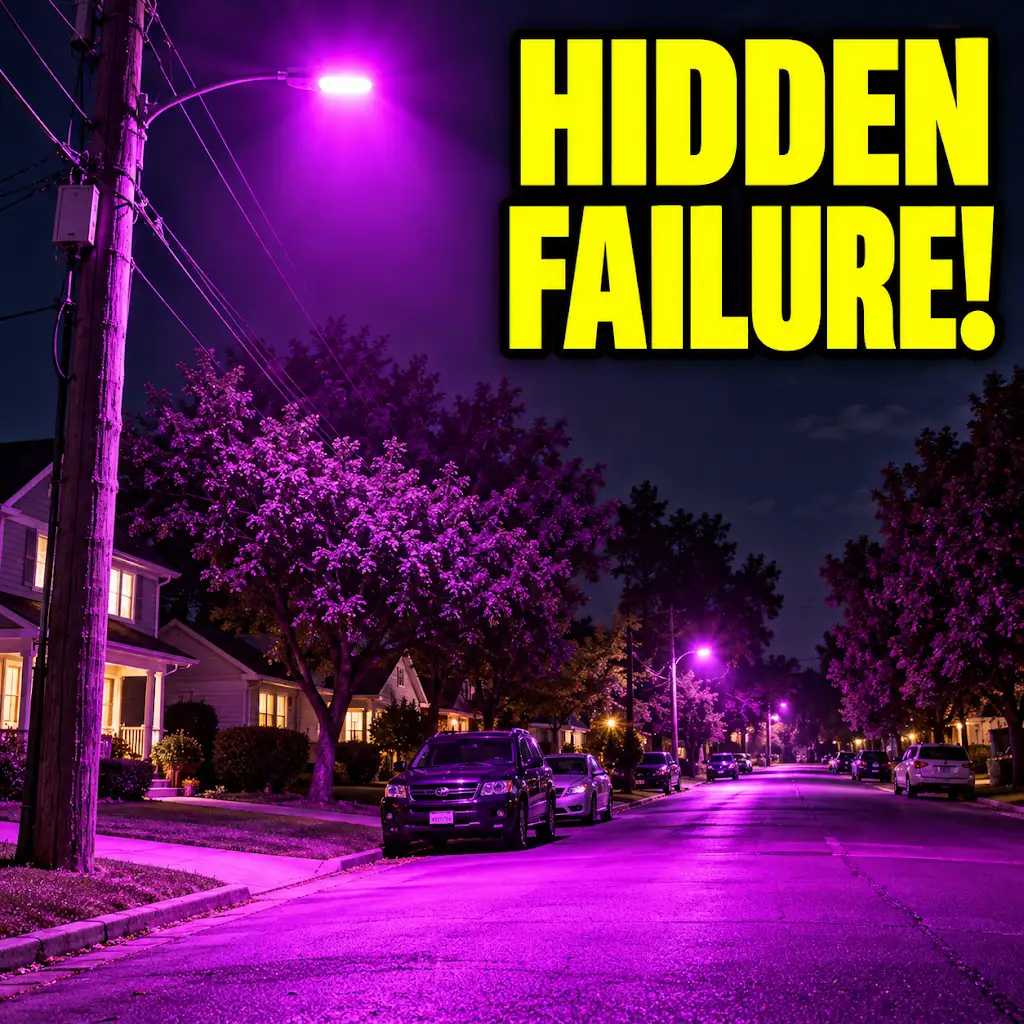
Why The Streetlights Are Turning Purple
FAQs
What caused the streetlight to turn violet blue?
The streetlight turned violet blue due to a combination of LED technology and a specific color filter that was installed.
Is the violet blue color of the streetlight permanent?
Yes, the violet blue color of the streetlight is permanent as it was intentionally designed to emit that specific hue.
Does the violet blue streetlight have any special significance?
While the violet blue color may not have a specific significance, it can create a unique ambiance and aesthetic in the area where it is installed.
Are there any benefits to using a violet blue streetlight?
One potential benefit of using a violet blue streetlight is that it may help improve visibility at night while also adding a touch of creativity to the urban environment.
Can other streetlights be changed to violet blue as well?
Yes, other streetlights can be changed to violet blue by using similar LED technology and color filters to achieve the desired color effect.