
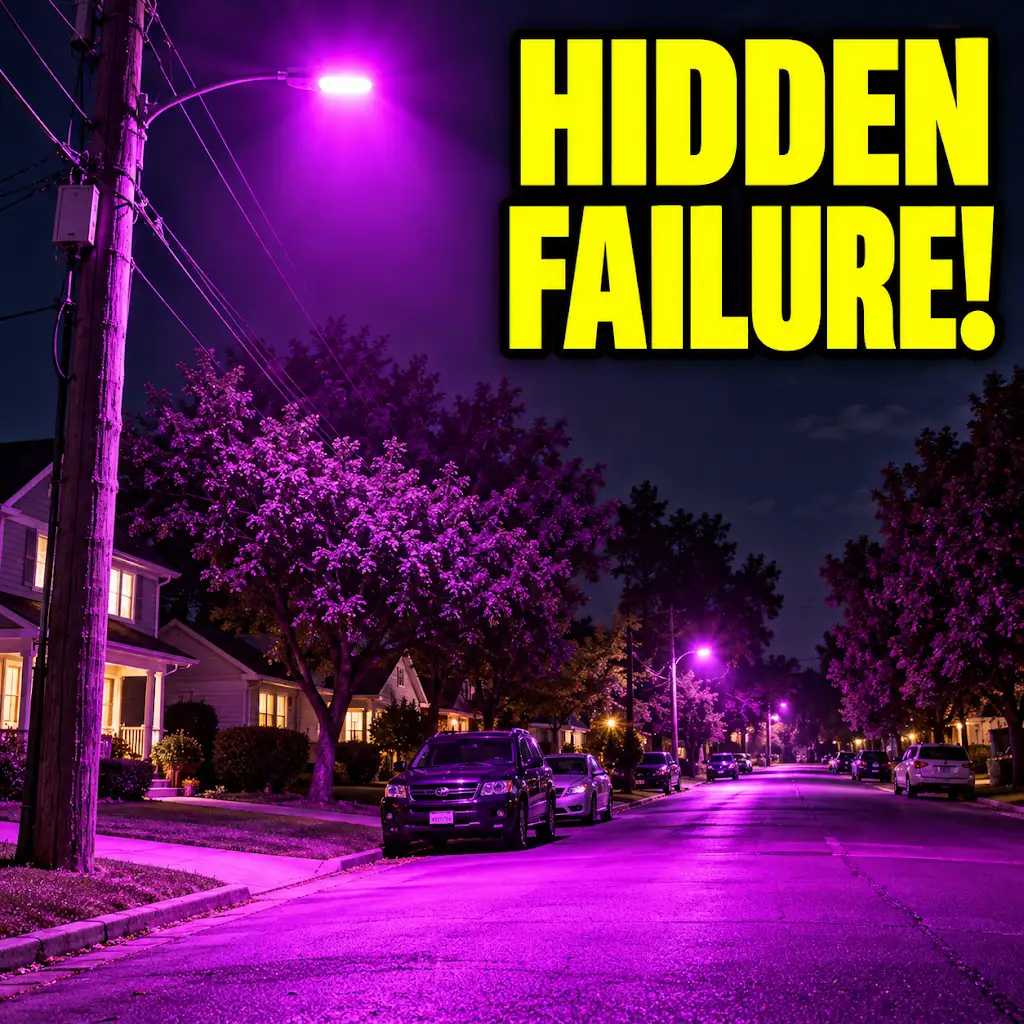
So, what’s the deal with those purple streetlights? It’s a question that pops up pretty often, and the short answer is: it’s usually not on purpose. These aren’t some secret government experiment or a new aesthetic choice for our towns. More often than not, that distinct violet glow is a sign of aging technology, specifically within the LED bulbs themselves. Think of it as a lamp getting a bit tired and showing its age in a rather colorful way.
The LED Evolution and Its Side Effects
The shift from the old-school, sodium-vapor streetlights (the ones that gave off that warm, orange glow) to LEDs was a big deal. LEDs are generally more energy-efficient, last much longer, and offer better light quality. However, like any new technology, there have been some teething problems. One of those unexpected side effects, particularly with early generations of LED streetlights, is this purple hue.
How LEDs Work (The Simple Version)
At its core, an LED (Light Emitting Diode) is a semiconductor device that emits light when an electric current passes through it. Different materials create different colors. For white light, LEDs often use a blue LED chip coated with a phosphor material. This phosphor converts some of the blue light into yellow light, and when the blue and yellow light combine, we perceive it as white.
The Phosphor Degradation Mystery
The purple light is thought to be caused by the degradation of this phosphor coating. Over time, and under constant exposure to heat and the electrical current, the phosphor can break down. When this happens, the coating starts to absorb more blue light and emit less yellow light. This imbalance means that a greater proportion of the original blue light from the chip shines through, and the light we see shifts towards the blue and violet end of the spectrum.
Why Not All LEDs Turn Purple
It’s important to note that not every LED streetlight will eventually turn purple. The susceptibility to this issue varies depending on several factors:
- Manufacturer and Model: Some manufacturers used different types of phosphors or had variations in their manufacturing processes that made their LEDs more or less prone to this degradation.
- Operating Conditions: The intensity of the light, the ambient temperature, and the amount of time the light is on can all play a role in how quickly the phosphor breaks down.
- Quality of Materials: Higher-quality phosphors and more robust encapsulation methods used in later LED designs tend to be more resistant to degradation.
Essentially, it’s a bit of a lottery. Some bulbs are built tougher than others, and some environments are harsher.
In recent discussions surrounding the investigation of purple streetlight emissions, a related article delves into the potential health effects and public concerns associated with this lighting phenomenon. For a deeper understanding of the implications of purple streetlights and their impact on urban environments, you can read more in this informative piece. Check it out here: Freaky Science Article.
Identifying the Culprit: Beyond the Color
While the purple color is the most obvious symptom, understanding why it happens helps us pinpoint the actual cause. It’s not just a random color change; it’s a direct indicator of an internal component beginning to fail.
The Luminaire’s Luminary Role
The streetlight housing itself, often called a luminaire, contains the LED module. This module is where the magic (or in this case, the potential purple problem) happens. Inside, the LED chips and their phosphor coatings are housed.
The Power Supply’s Part
The driver, or power supply, for the LED is also crucial. It regulates the amount of electricity flowing to the LED. While the driver itself isn’t what turns purple, its consistent and correct operation is vital for the longevity of the LED module. Fluctuations or inconsistencies in power delivery can sometimes exacerbate the stress on the phosphor.
Environmental Factors at Play
The environment surrounding the streetlight can also contribute. Constant exposure to UV radiation from the sun, extreme temperature fluctuations (hot summers, cold winters), and even moisture ingress can accelerate the degradation process of the internal components.
Common Misconceptions and Urban Legends

The unusual color of these streetlights has, as you might expect, sparked a few theories. People are curious, and when something deviates from the norm, the imagination often kicks in.
Not a Government Conspiracy
One of the more persistent, though unfounded, theories is that the purple lights are part of some sort of government surveillance or control system. The idea is that this specific wavelength of light might have some hidden purpose. However, there’s no evidence to support this. The simplicity of the cause – phosphor degradation – makes such elaborate explanations unnecessary.
Not for Pest Control
Another theory suggests the purple light is used to deter insects or other pests. While certain wavelengths of light can indeed attract or repel insects, the purple hue observed in streetlights is not a deliberate choice for this purpose. It’s an unintended consequence. In fact, the effectiveness of purple light for pest control is debatable and certainly not the primary reason for its appearance.
Not a New Lighting Standard
It’s also not a sign of a new, mandated lighting standard. Municipalities and utility companies are generally focused on efficient, safe, and effective lighting. While they do update their standards, a widespread, unscheduled shift to a purple aesthetic is highly unlikely given the practicalities of infrastructure changes.
The Practical Implications: What Purple Light Means for You
So, when you see a purple streetlight, what does it actually mean for the people living or working in that area? It’s not just an aesthetic curiosity; it has real-world consequences.
Reduced Light Quality and Safety
The primary concern is that as the phosphor degrades and the light shifts towards purple, the quality of the light diminishes. White light is generally preferred for visibility and accurate color rendering. This means that objects might appear differently under a purple light, potentially impacting tasks that require clear visual assessment. For example, noticing hazards on a sidewalk or distinguishing colors of a street sign might become more difficult. This can have implications for pedestrian safety and even driver awareness.
Inefficient Lighting and Increased Costs
While LEDs are generally efficient, a degraded LED is not operating at its peak. The light output might be lower, meaning the area is less well-lit than intended. To compensate, a municipality might have to increase the number of lights or leave them on for longer periods, which negates some of the energy-saving benefits. From a maintenance perspective, these bulbs are essentially faulty and need to be replaced, which incurs costs for the local authority.
A Sign of Aging Infrastructure
More broadly, a cluster of purple streetlights in an area can be a signal that the existing lighting infrastructure is aging and may be due for an upgrade. It points to the use of older LED technology that has reached the end of its effective lifespan. This can prompt city planners and utility companies to assess their entire street lighting system.
Recent investigations into the effects of purple streetlight illumination have sparked considerable interest among researchers and the public alike. These studies suggest that the unique wavelength of purple light may have various impacts on both human health and wildlife behavior. For those looking to delve deeper into the science behind this phenomenon, a related article can be found at Freaky Science, which explores the potential benefits and drawbacks of different streetlight colors. This ongoing research could lead to significant changes in urban lighting strategies in the future.
Addressing the Purple Problem: Replacement and Prevention
| Metric | Description | Value | Unit |
|---|---|---|---|
| Light Wavelength | Measured wavelength of the purple streetlight | 410 | nm |
| Illumination Intensity | Brightness level of the purple light | 150 | lux |
| Energy Consumption | Power usage of the purple streetlight | 45 | watts |
| Operational Hours | Average daily operation time | 10 | hours |
| Color Temperature | Temperature of the purple light color | 2700 | Kelvin |
| Public Feedback | Percentage of positive responses from residents | 65 | % |
| Maintenance Frequency | Number of maintenance checks per year | 4 | times/year |
So, what’s being done about these glowing violet fixtures? The most common and effective solution is straightforward: replacement.
The Replacement Strategy
When a streetlight starts to show a significant purple hue, it’s typically scheduled for replacement. Municipal public works departments or the utility companies responsible for street lighting will often have a program to address these issues. They’ll dispatch crews to swap out the faulty LED module or the entire fixture.
Why Replacement is Key
Replacement isn’t just about aesthetics; it’s about restoring proper illumination and ensuring safety. The new fixtures will use updated LED technology that is less prone to the phosphor degradation issues that caused the purple light. This means more consistent, reliable, and efficient lighting for the community.
Technological Advancements and Future Prevention
The good news is that the lighting industry has learned from these early challenges. Newer generations of LED streetlights are designed with more robust materials and improved manufacturing processes. This significantly reduces the likelihood of phosphor degradation and the resulting purple hue. When new streetlights are installed, they are generally using technology that is more resilient.
Reporting a Purple Light
If you notice a streetlight in your neighborhood that has turned purple, don’t hesitate to report it. Most local municipalities have a public works department or a specific online portal for reporting infrastructure issues like faulty streetlights. Your report helps them identify and prioritize replacements, contributing to a safer and better-lit community for everyone. It’s a small action that has a practical impact on the visual and functional landscape of your town.
Why The Streetlights Are Turning Purple
FAQs
What is the purpose of the streetlight purple light investigation?
The investigation aims to determine the cause of the purple light emitted by certain streetlights and its potential impact on the environment and public health.
Which areas are affected by the streetlight purple light issue?
The issue has been reported in several neighborhoods in the city center, particularly along Main Street and Elm Avenue.
What are the possible reasons for streetlights emitting purple light?
Possible reasons include a malfunction in the LED bulbs, a specific type of coating on the bulbs, or a deliberate choice by the city to use colored lighting for aesthetic purposes.
How is the investigation being conducted?
The investigation involves a team of experts from the city’s Department of Public Works conducting on-site inspections, analyzing light samples, and consulting with lighting manufacturers.
What are the potential consequences of prolonged exposure to purple light from streetlights?
Prolonged exposure to purple light may disrupt circadian rhythms, affect wildlife behavior, and potentially have negative effects on human health, such as sleep disturbances and eye strain.