The Mystery of the Violet Glow: Why City Lights Turn Purple
Ever looked up at the city sky at night and noticed a distinct purplish or violet hue to the streetlights? You’re not imagining it. This common phenomenon isn’t a glitch in your vision or a sign of impending doom; it’s a direct result of the technology used to light our streets and a fascinating interplay of physics and aging materials. The main culprit behind this violet tint is the degradation of the phosphors within the high-intensity discharge (HID) lamps, specifically metal halide and high-pressure sodium lamps, that have historically illuminated our urban landscapes.
The recent phenomenon of streetlights emitting a purple hue has sparked curiosity among urban residents and scientists alike. This unusual color change is often attributed to the use of LED technology, which can sometimes produce unexpected lighting effects. For a deeper understanding of this topic, you can explore the article on the science behind streetlight colors and their implications at Freaky Science.
The Science Behind the Purple Shift
The color of light we perceive from a lamp is determined by the gases inside it and the coatings applied to the bulb. Streetlights, especially older ones, often use specific types of bulbs designed for efficiency and longevity. When these bulbs are new, they produce a bright, often yellowish or white light. However, over time, the components within these lamps undergo changes that alter their light output.
How HID Lamps Work
High-intensity discharge lamps are a common type of street lighting. They produce light by passing an electric arc through a gas or vapor. There are a few main types used for street lighting:
- High-Pressure Sodium (HPS) Lamps: These are very common and known for their characteristic orangey-yellow light. They contain sodium vapor, mercury, and xenon. The arc excites the mercury, which then emits ultraviolet radiation that, in turn, excites the sodium, producing light.
- Metal Halide (MH) Lamps: These lamps produce a whiter, more natural-looking light. They contain metal halides (salts of metals like mercury, argon, and various metal iodides or bromides). The arc excites the mercury and the metal halides, producing a broad spectrum of light.
The Role of Phosphors
Many of these lamps, particularly MH lamps, use a phosphor coating on the inside of the outer bulb. Phosphors are materials that emit light when excited by ultraviolet radiation or other forms of energy. In MH lamps, the arc generates UV light, which strikes the phosphor coating, causing it to glow and emit visible light. The specific composition of the phosphor determines the color of the light produced.
The Slow Decay of Phosphors
Over thousands of hours of operation, the phosphor coating within these lamps begins to degrade. This degradation isn’t uniform across all colors of the light spectrum. Certain elements within the phosphor are more susceptible to breakdown than others. For the violet hue we see, the primary driver is the uneven decay of the phosphors that produce the warmer colors (reds and greens).
As the phosphors responsible for emitting red and green light start to fade or become less efficient, the remaining dominant wavelengths shift towards the bluer and violet end of the spectrum. It’s like a paint mixture where the red pigment is slowly dissolving, leaving the blue and violet colors more prominent. This gradual change in the light’s spectral composition is what ultimately leads to the noticeable purplish tint.
Metal Halide Lamps and Their Violet Tendencies
Metal halide lamps have been a popular choice for street lighting due to their good color rendering and efficiency. However, they are particularly prone to developing a violet hue over time.
The Chemistry of Metal Halides
The exact blend of metal halides in these lamps is carefully chosen to produce a specific light output. Common halide compounds include those of mercury, sodium, thallium, and indium. When the electric arc passes through the vaporized halides, they emit light across a spectrum.
Why Metal Halides Fade to Purple
The metals in the halide salts have different energy levels and react differently to the constant bombardment of electrons and radiation within the arc. Over extended use, the halogen atoms (like iodine or bromine) can react with the metal electrodes or the lamp’s interior surfaces. This reaction effectively depletes the halides that contribute to the red and green portions of the light spectrum. As these colors diminish, the blue and violet wavelengths, which are often produced by other metal elements or are inherently more stable, become more apparent, resulting in the characteristic purple glow.
High-Pressure Sodium Lamps: A Different Path to Color Change
While metal halide lamps are a primary source of the violet street light, high-pressure sodium lamps can also exhibit color shifts, though typically not to the same extent of a pure violet.
The Orangey-Yellow Standard
New HPS lamps produce a very distinct, warm orangey-yellow light. This is highly efficient for illuminating roads because the longer wavelengths of light are less scattered by fog and mist.
Color Shifts in HPS
Over their lifespan, HPS lamps can experience a slight shift in their color output. This is usually a move towards a more intense yellow or even a slightly greenish tint. The purple hue is less common in HPS lamps as their primary light-producing elements (sodium) are more robust in their spectral output. However, if there are issues with other components, or in very old lamps, subtle shifts can occur. The degradation mechanisms in HPS lamps are different, often involving changes in the arc tube’s material or vapor pressure, which can subtly alter the light spectrum.
The recent phenomenon of streetlights emitting a purple hue has sparked curiosity among many urban residents. This unusual color change can be attributed to the use of LED technology, which, while energy-efficient, can sometimes produce unexpected lighting effects. For those interested in exploring this topic further, a related article discusses the science behind these color variations and their implications for urban lighting. You can read more about it in this informative piece here.
The Age of LED and the Fading Purple
| Factor | Description | Impact on Purple Hue | Measurement/Metric |
|---|---|---|---|
| Light Source Type | Type of bulb used in streetlights (e.g., LED, sodium vapor, mercury vapor) | LEDs with specific phosphor coatings can emit purple hues | Wavelength range (nm): 380-450 (violet to blue spectrum) |
| Phosphor Coating | Material coating inside LED bulbs that converts blue light to other colors | Improper or degraded phosphor can cause purple tint | Phosphor degradation rate (% per year) |
| Voltage Fluctuations | Variations in electrical supply to streetlights | Can cause color shifts including purple hues | Voltage variance (Volts): ±10% |
| Temperature | Ambient temperature around the streetlight | Can affect LED color output and cause purple tint | Operating temperature range (°C): -20 to 40 |
| Lens or Cover Material | Material covering the light source | Discoloration or tinting can cause purple hue | Material UV degradation index |
| Age of Streetlight | Time since installation or last maintenance | Older lights may show color shifts including purple | Operational hours (thousands) |
The prevalence of the violet streetlight phenomenon is starting to diminish as cities transition to newer lighting technologies, primarily Light Emitting Diodes (LEDs).
Why LEDs Are Different
LEDs produce light through semiconductor technology, not by exciting gases or vapors in a bulb. White LEDs typically use a blue LED chip coated with phosphors. When the blue light from the chip strikes the phosphor, it’s converted into other colors, creating white light. The phosphor composition in LEDs can be precisely engineered for a specific color temperature and lifespan.
The Benefits of LED Transition
Modern LED streetlights offer several advantages, including much greater energy efficiency, longer lifespans, and improved controllability (dimming, color tuning). Crucially, the phosphor degradation mechanisms that lead to the violet tint in older HID lamps are different for LEDs. While LEDs do age and their light output can change over time (often becoming slightly bluer or less bright), they are far less prone to developing that distinct purple hue. As cities continue to upgrade their lighting infrastructure to LEDs, the iconic purple glow of older streetlights will become an increasingly rare sight.
The Enduring Legacy and Future of Urban Illumination
The purplish tint of old streetlights is more than just a visual quirk; it’s a tangible reminder of the evolution of lighting technology and the materials science that underpins it. For decades, metal halide and high-pressure sodium lamps were the workhorses of urban illumination, providing necessary light for safety and commerce. Their eventual degradation to a violet hue became an accepted part of the urban nightscape for many.
A Chapter Closing
As cities embrace the efficiency and technological advancements of LED lighting, this specific visual characteristic of older streetlights is gradually disappearing. It’s a subtle but significant change in the urban aesthetic, marking the end of an era in lighting. While the violet glow might become a nostalgic memory for some, the transition to LED offers a more sustainable and advanced future for how our cities are lit, promising better light quality and reduced energy consumption. The underlying science, however, remains a fascinating testament to how materials change and interact with energy over time.
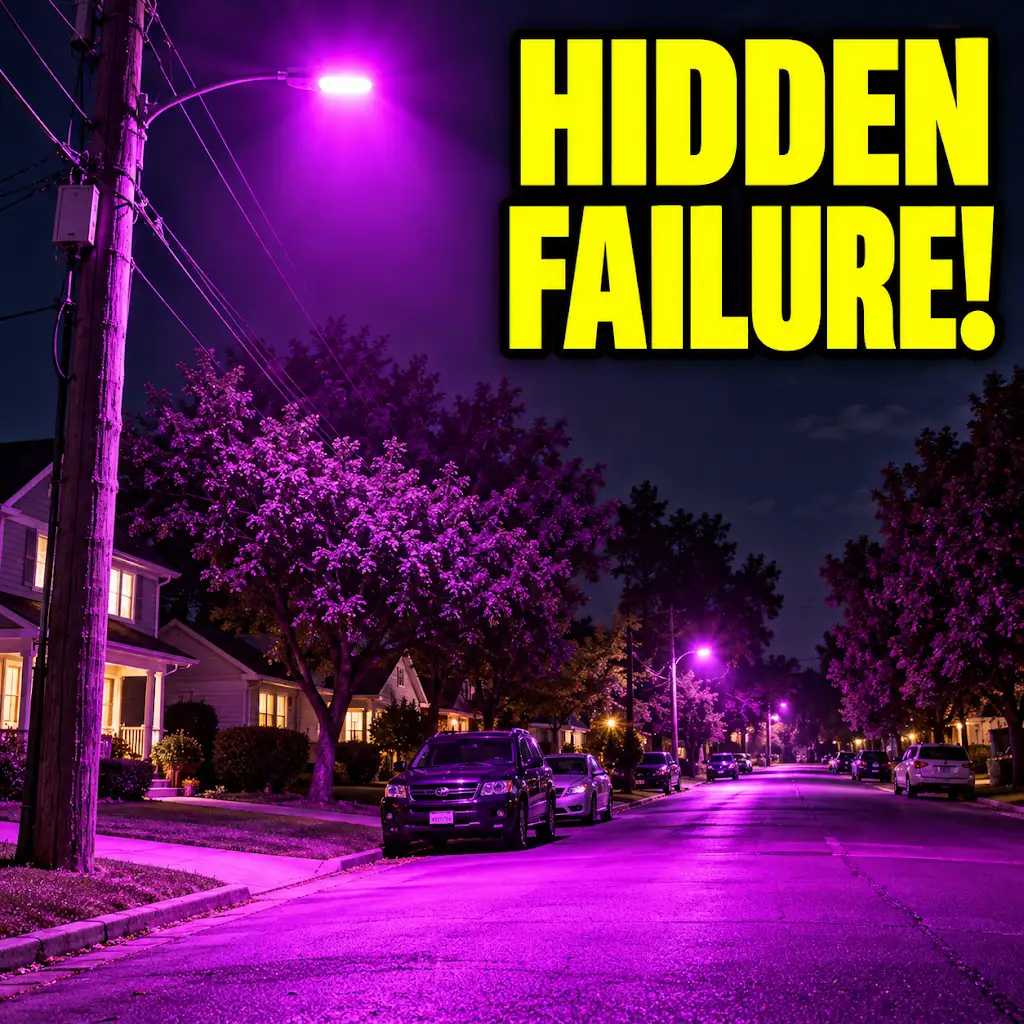
Why The Streetlights Are Turning Purple
FAQs
Why do some streetlights have a purple hue?
Some streetlights may appear to have a purple hue due to the type of LED bulbs used in their construction. These bulbs emit a bluish-white light that can sometimes appear purple, especially when viewed from a distance.
Is the purple hue of streetlights harmful to the environment?
The purple hue of streetlights is not inherently harmful to the environment. However, excessive artificial light at night can disrupt ecosystems and affect wildlife behavior, so it is important to consider the impact of street lighting on the environment.
Do purple streetlights affect human health?
There is no conclusive evidence to suggest that the purple hue of streetlights directly affects human health. However, exposure to artificial light at night can disrupt sleep patterns and potentially have negative effects on overall well-being.
Can the purple hue of streetlights be adjusted or changed?
Yes, the color temperature of LED streetlights can be adjusted to reduce or eliminate the purple hue. By selecting warmer color temperatures or using filters, municipalities can customize the lighting to better suit their needs and preferences.
Are there any benefits to using streetlights with a purple hue?
While the purple hue of streetlights may be a matter of personal preference, there are no specific benefits associated with this color. In fact, some argue that warmer color temperatures are more aesthetically pleasing and provide better visibility at night.