The cosmos, a tapestry woven with celestial bodies and vast, invisible forces, has long ignited humanity’s curiosity. Among the most profound and mind-bending aspects of this grand design are the interwoven concepts of spacetime and the travel of light. Albert Einstein’s theories of relativity revolutionized our understanding of these fundamental elements, revealing a universe far more dynamic and interconnected than previously imagined. Light, the messenger of the cosmos, not only illuminates distant galaxies but also carries within its very existence the secrets of the fabric of reality itself. Exploring spacetime and light travel is not merely an academic exercise; it is a journey into the heart of existence, a quest to comprehend the ultimate architecture of the universe and our place within it.
The Fabric of Reality: Spacetime’s Embrace
The very notion of spacetime challenged centuries of ingrained assumptions about space and time. Before Einstein, space was conceived as a static, three-dimensional arena, and time as a universal, unchanging river flowing independently. Newton’s laws, while incredibly successful in describing the motion of objects, operated within this framework of absolute space and absolute time. However, as observations and theoretical considerations pushed the boundaries of physics, cracks began to appear in this seemingly solid edifice. The constancy of the speed of light, a puzzling experimental result, served as a crucial hint that something fundamental was amiss with the classical view.
Unraveling the Intertwined Nature of Space and Time
Einstein’s special theory of relativity, published in 1905, was the first to formally propose the unification of space and time into a single, four-dimensional continuum: spacetime. This revolutionary idea posited that space and time are not independent entities but are intrinsically linked, much like the dimensions of length, width, and height. Events do not occur merely in space or at a particular time; they happen at a specific point in spacetime. This unification has profound implications. For instance, the perceived duration of an event and the spatial distance between two points can vary depending on the observer’s relative motion. This means that time can dilate (slow down) and lengths can contract (appear shorter) for objects moving at high speeds relative to a stationary observer. These effects, though counterintuitive to our everyday experience, are not mere theoretical curiosities. They have been experimentally verified, most notably through the behavior of subatomic particles in accelerators and the precise timing required for GPS systems to function accurately. The GPS satellites, moving at high velocities and experiencing weaker gravitational fields, must account for both special and general relativistic effects to maintain their synchronization with ground-based clocks. Without these relativistic corrections, GPS navigation would quickly become unusable, demonstrating the practical reality of spacetime’s dynamic nature.
Gravity as the Curvature of Spacetime
The next major leap came with Einstein’s general theory of relativity in 1915, which extended his ideas to include gravity. Instead of viewing gravity as a force acting across empty space, Einstein proposed that it is a manifestation of the curvature of spacetime itself. Massive objects, such as stars and planets, warp and distort the fabric of spacetime around them. This curvature dictates how other objects, including light, move through the universe. Imagine placing a heavy ball on a stretched rubber sheet. The ball creates a dip, and any smaller marbles rolled nearby will curve towards the ball, not because of a direct pull, but because they are following the contours of the warped sheet. Similarly, the Earth orbits the Sun not because of a mysterious gravitational force pulling it, but because it is following the curvature of spacetime created by the Sun’s immense mass. This elegant reinterpretation of gravity not only explained phenomena that Newtonian physics struggled with, such as the anomalous orbit of Mercury, but also predicted new ones, like the bending of starlight by massive objects.
Gravitational Waves: Ripples in the Cosmic Pond
A remarkable prediction of general relativity is the existence of gravitational waves – ripples in spacetime that propagate outward from cataclysmic cosmic events, such as the merger of black holes or neutron stars. These waves travel at the speed of light and carry information about their violent origins. For decades, gravitational waves remained purely theoretical, their detection a formidable technological challenge. However, in 2015, the LIGO (Laser Interferometer Gravitational-Wave Observatory) collaboration announced the first direct detection of gravitational waves, a monumental achievement that opened a new window onto the universe. This discovery confirmed a key prediction of general relativity and ushered in the era of gravitational-wave astronomy, allowing scientists to observe the universe in ways previously impossible, much like the invention of the telescope opened up the realm of visible light astronomy.
In exploring the fascinating concepts of spacetime and light travel, one can delve into the intricacies of how these elements interact within the framework of modern physics. A related article that provides valuable insights into these topics can be found at Freaky Science, where the implications of Einstein’s theories are discussed in detail, shedding light on the nature of our universe and the potential for faster-than-light travel.
The Speed of Light: A Universal Constant and Cosmic Speed Limit
The speed of light in a vacuum, denoted by the symbol ‘c’, is not just the velocity at which light travels; it is a fundamental constant of nature with profound implications for our understanding of the universe. Its constancy, regardless of the observer’s motion, was a cornerstone of special relativity and led to the reevaluation of space and time. This universal speed limit governs how quickly information can travel and sets the ultimate pace for any physical process.
Light’s Journey Through the Vacuum
In the vast emptiness of space, light, composed of massless photons, travels at approximately 299,792,458 meters per second. This seemingly abstract number has immense practical consequences. When we observe a star millions of light-years away, we are not seeing the star as it is now, but as it was millions of years ago, when the light that reaches our eyes began its journey. This “lookback time” is a direct consequence of the finite speed of light. It means that the light we detect from distant galaxies is essentially a historical record, offering us glimpses into the early universe. Studying the light from these ancient sources allows astronomers to piece together the evolutionary history of galaxies, stars, and the cosmos itself, from the Big Bang to the present day. The farther we look, the further back in time we see, making telescopes powerful tools for cosmic archaeology.
The Relativity of Simultaneity
The constancy of the speed of light leads to a peculiar consequence known as the relativity of simultaneity. Two events that appear to happen at the same time for one observer may not be simultaneous for another observer who is moving relative to the first. This is because the speed of light is the same for both observers, and their relative motion affects how they perceive the passage of time and the distances between events. Imagine two lightning strikes hitting the ends of a moving train. An observer standing on the ground might see the strikes as simultaneous. However, an observer on the train, moving towards one strike and away from the other, would perceive the strike they are moving towards as happening first. This demonstrates that there is no absolute, universal “now” that applies to all observers in all reference frames. Our perception of time is relative to our motion through spacetime.
The Cosmological Speed Limit and Information Transfer
The speed of light serves as the ultimate speed limit in the universe. According to special relativity, nothing with mass can travel at or exceed the speed of light. As an object approaches this speed, its relativistic mass increases, requiring an infinite amount of energy to reach ‘c’. This principle has profound implications for interstellar travel and communication. The vast distances between stars and galaxies, coupled with the speed limit of light, mean that journeys to other star systems, even with hypothetical advanced propulsion systems, would take years, decades, or even centuries. Similarly, communication across these vast distances is subject to the same delay, meaning that a message sent to a star 100 light-years away would take 100 years to arrive. This cosmic speed limit shapes our understanding of the feasibility of exploring and interacting with distant parts of the universe.
Light’s Interaction with Gravity: Bending the Cosmic Rays
One of the most stunning confirmations of Einstein’s general theory of relativity came with the observation that light, despite being massless, is affected by gravity. This phenomenon, known as gravitational lensing, reveals the universe in ways that are otherwise impossible. It demonstrates that gravity not only influences the motion of objects with mass but also warps the very fabric of spacetime through which light travels.
Gravitational Lensing: A Cosmic Magnifying Glass
Massive objects, such as galaxies and galaxy clusters, have enough gravitational influence to bend the path of light rays passing near them. This bending effect, predicted by general relativity, is called gravitational lensing. From our perspective on Earth, the light from a distant galaxy that passes by a massive foreground object will be deflected, much like light passing through a glass lens. This deflection can cause the distant galaxy to appear distorted, magnified, or even duplicated. In some cases, if the alignment is perfect, the light can encircle the foreground object, creating a ring of light known as an Einstein ring. Astronomers use gravitational lensing as a natural cosmic telescope, allowing them to study faint and distant objects that would otherwise be invisible. The magnification effect helps to reveal the detailed structures of early galaxies and provides a way to probe the distribution of dark matter, which exerts gravitational influence but does not emit light.
Studying the Unseen: Dark Matter Revealed by Light’s Deflection
Gravitational lensing provides a powerful tool for detecting and mapping dark matter, a mysterious substance that makes up a significant portion of the universe’s mass but does not interact with light. By observing how light from background galaxies is distorted as it passes through a galaxy cluster, astronomers can infer the distribution of mass within that cluster. The degree of bending is directly proportional to the total mass present, whether it be ordinary matter or dark matter. Studies of gravitational lensing have consistently shown that the amount of visible matter in galaxy clusters is far less than what is required to account for the observed lensing effects. This discrepancy is strong evidence for the existence of dark matter, which plays a crucial role in the formation and evolution of cosmic structures. Without the bending of light, much of the evidence for dark matter would be absent, leaving a significant gap in our cosmic inventory.
Black Holes: Where Light Itself Cannot Escape
Perhaps the most extreme consequence of gravity’s interaction with spacetime is the formation of black holes. These enigmatic objects are regions where gravity is so intense that nothing, not even light, can escape their pull once it crosses a boundary known as the event horizon. The event horizon is not a physical surface but a point of no return. According to general relativity, a black hole is formed when a massive star collapses under its own gravity at the end of its life. The immense density of the collapsed core warps spacetime to such an extreme degree that it creates a singularity, a point of infinite density and zero volume, surrounded by the event horizon. While we cannot directly “see” a black hole because it emits no light, its presence can be inferred from the behavior of matter around it. Gas and dust swirling around a black hole can form an accretion disk, which heats up to extremely high temperatures and emits X-rays and other forms of radiation, providing indirect evidence of the black hole’s existence. The study of black holes continues to push the boundaries of our understanding of gravity and the nature of spacetime itself.
Time Dilation and Length Contraction: The Relativity of Measurement
The interconnectedness of space and time, as described by special relativity, leads to fascinating consequences for how we measure these fundamental quantities. Time dilation and length contraction are not illusions; they are real physical effects that arise from an observer’s motion relative to another. These phenomena underscore the idea that there is no absolute framework for measuring space and time, but rather a relative one dictated by the laws of physics.
The Twin Paradox: A Thought Experiment on Time
The “twin paradox” is a classic thought experiment that illustrates the concept of time dilation. Imagine two identical twins. One twin remains on Earth, while the other embarks on a space journey at a significant fraction of the speed of light. Upon the traveling twin’s return, they will be younger than the twin who stayed on Earth. This is because time passes more slowly for the traveling twin due to their high velocity. The paradox arises because, from the traveling twin’s perspective, it is the Earth twin who is moving. However, the asymmetry of the situation – the traveling twin undergoes acceleration to turn around and return – resolves the paradox. The traveling twin experiences less proper time, the time measured by their own clock, than the Earth twin. This effect has been experimentally verified with atomic clocks flown on high-speed aircraft and satellites, confirming that moving clocks run slower.
Length Contraction: The Universe Shrinks at High Speeds
Complementary to time dilation, length contraction describes the phenomenon where the length of an object appears shorter in the direction of its motion when observed from a different reference frame. For an object moving at relativistic speeds, its length along its direction of travel will be contracted from the perspective of a stationary observer. If, for instance, a spacecraft were traveling at 99% the speed of light, its length would appear significantly shorter to someone observing it from Earth than it would to the astronauts on board. This contraction is not a deformation of the object itself but a consequence of how space is perceived in different inertial frames. It is another manifestation of the intertwined nature of space and time, where measurements of spatial extent are dependent on the observer’s motion.
The Role of the Lorentz Factor
The extent of time dilation and length contraction is governed by the Lorentz factor, denoted by the Greek letter gamma ($\gamma$). This factor is a function of the object’s velocity ($v$) relative to the speed of light ($c$). The formula for the Lorentz factor is $\gamma = 1 / \sqrt{1 – v^2/c^2}$. When the velocity is much smaller than the speed of light, the Lorentz factor is very close to 1, and relativistic effects are negligible, aligning with our everyday Newtonian physics. However, as the velocity approaches the speed of light, the Lorentz factor increases dramatically, leading to significant time dilation and length contraction. This mathematical relationship precisely quantifies how our measurements of space and time are relative and dependent on our motion through spacetime.
The fascinating relationship between spacetime and light travel has been a topic of extensive research and discussion in the scientific community. Understanding how light interacts with the fabric of spacetime can provide insights into the nature of the universe itself. For those interested in exploring this topic further, you can read a related article that delves into the intricacies of these concepts. This article offers a comprehensive overview of how light behaves in different gravitational fields and the implications for our understanding of the cosmos. To learn more, check out this informative piece.
The Cosmic Dance: Light’s Role in Cosmic Exploration and Understanding
| Metric | Value | Unit | Description |
|---|---|---|---|
| Speed of Light (c) | 299,792,458 | m/s | Speed at which light travels in vacuum |
| Light Year | 9.461 × 10¹⁵ | meters | Distance light travels in one year |
| Planck Time | 5.39 × 10-44 | seconds | Smallest meaningful unit of time in quantum gravity |
| Planck Length | 1.616 × 10⁻³⁵ | meters | Smallest meaningful unit of length in quantum gravity |
| Time Dilation Factor (γ) at 0.9c | 2.29 | dimensionless | Relativistic time dilation factor at 90% speed of light |
| Gravitational Time Dilation near Earth | ~1 × 10⁻⁹ | dimensionless | Fractional difference in time rate near Earth’s surface vs far away |
| Event Horizon Radius (Schwarzschild radius) of Sun | 2.95 | kilometers | Radius of black hole event horizon for Sun’s mass |
| Cosmic Microwave Background (CMB) Photon Travel Time | 13.8 × 10⁹ | years | Time since CMB photons started traveling through spacetime |
Light is more than just what allows us to see; it is the primary vehicle for information from the cosmos. The study of light, from its quantum properties to its journey across billions of light-years, is fundamental to our understanding of the universe, its origins, evolution, and ultimate fate. Telescopes, the instruments that gather and analyze this cosmic messenger, are our eyes into the grandest spectacle imaginable.
Electromagnetic Spectrum: A Multitude of Cosmic Signals
Light, in its broadest sense, encompasses the entire electromagnetic spectrum, including radio waves, microwaves, infrared radiation, visible light, ultraviolet radiation, X-rays, and gamma rays. Each part of this spectrum carries different information about the universe. Radio telescopes can detect the faint whispers of the early universe, while infrared telescopes can peer through dust clouds to reveal nascent stars and planets. X-rays and gamma rays, produced by extremely energetic events like supernovae and the accretion disks around black holes, provide insights into the most violent phenomena in the cosmos. By studying the light across this entire spectrum, astronomers gain a comprehensive picture of the diverse processes occurring throughout the universe. Each wavelength tells a different part of the cosmic story, from the subtle hum of cosmic background radiation to the fiery brilliance of exploding stars.
Redshift and Blueshift: Echoes of Cosmic Motion
The Doppler effect, familiar from sound waves (where a siren’s pitch changes as it passes), also applies to light. As a light source moves away from an observer, the wavelengths of its light are stretched, shifting towards the red end of the spectrum – this is known as redshift. Conversely, if a light source is moving towards an observer, its wavelengths are compressed, shifting towards the blue end – blueshift. The observation of redshift in the light from distant galaxies, most notably by Edwin Hubble, provided crucial evidence for the expansion of the universe. The farther away a galaxy is, the greater its redshift, indicating that it is receding from us at a higher speed. This cosmic redshift is a direct consequence of the expansion of spacetime itself, stretching the wavelengths of light as they travel through it. Blueshift is less common on cosmological scales but is observed for objects gravitationally bound to our own galaxy or local group.
The Cosmic Microwave Background: A Snapshot of the Early Universe
The Cosmic Microwave Background (CMB) radiation is a faint, uniform glow of microwave radiation that permeates the entire universe. It is considered the afterglow of the Big Bang, a relic from a time when the universe was about 380,000 years old and had cooled sufficiently for protons and electrons to combine and form neutral atoms. Before this epoch, the universe was an opaque plasma, and photons could not travel freely. The CMB represents the first light that was able to propagate through space, carrying with it crucial information about the conditions of the early universe. Tiny temperature fluctuations in the CMB, observed by missions like COBE, WMAP, and Planck, are the seeds from which all large-scale structures, such as galaxies and galaxy clusters, eventually grew. Analyzing these fluctuations allows cosmologists to precisely measure the age, composition, and geometry of the universe, providing strong support for the standard Big Bang model and offering profound insights into the universe’s origins and evolution.
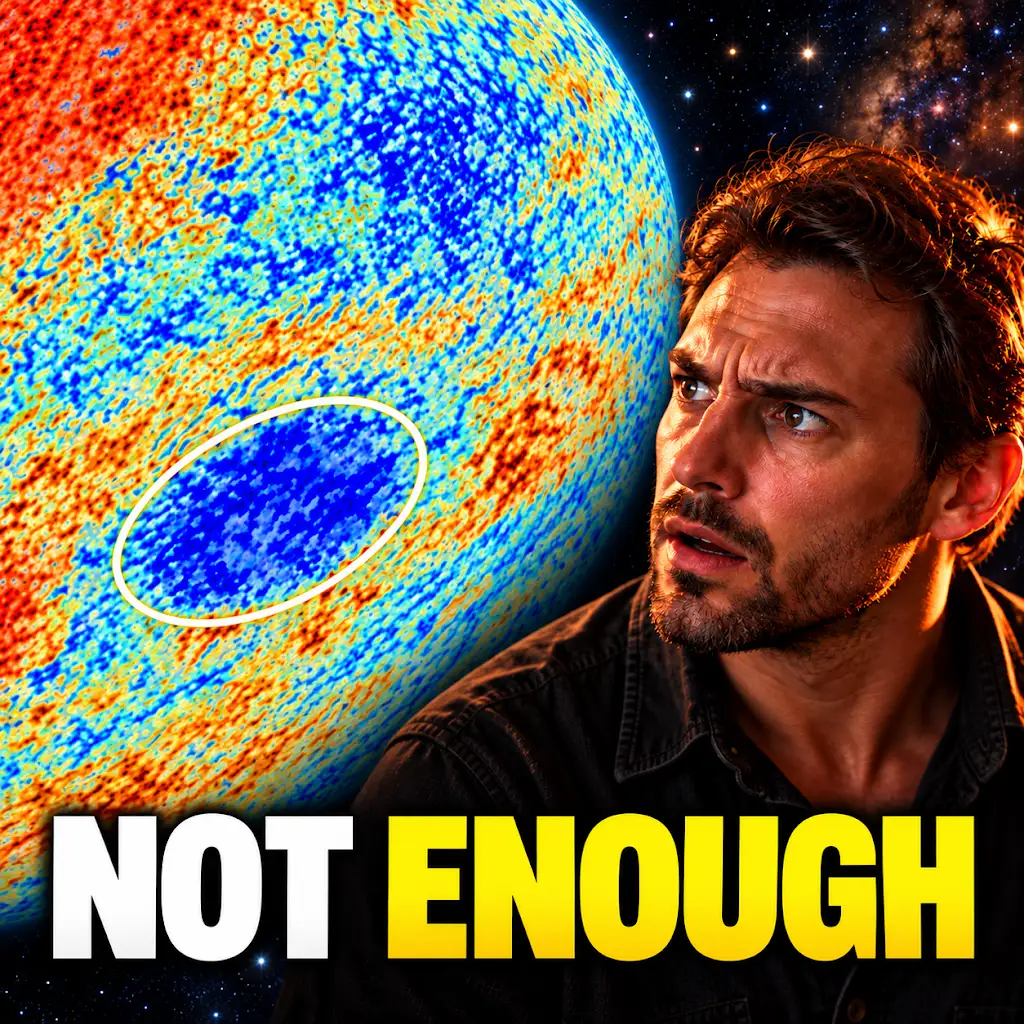
The Universe’s Cold Spot Has an Explanation. It’s Not Enough.
FAQs
What is spacetime?
Spacetime is a concept that combines the three dimensions of space with the fourth dimension of time into a single continuum. It is a fundamental framework in physics, particularly in the theory of relativity.
How does light travel through spacetime?
Light travels through spacetime at a constant speed of approximately 299,792 kilometers per second in a vacuum. According to the theory of relativity, light always travels at this speed regardless of the motion of the observer.
Can spacetime be warped or curved?
Yes, according to Einstein’s theory of general relativity, spacetime can be warped or curved by the presence of mass and energy. This curvature of spacetime is what we perceive as gravity.
How does the curvature of spacetime affect light travel?
The curvature of spacetime caused by massive objects like stars and black holes can bend the path of light rays. This effect, known as gravitational lensing, can cause light to follow curved trajectories around massive objects.
What are some implications of spacetime and light travel in astrophysics?
Understanding the relationship between spacetime and light travel is crucial in astrophysics for studying phenomena such as black holes, gravitational waves, and the expansion of the universe. It also helps scientists make predictions about the behavior of light in extreme gravitational environments.