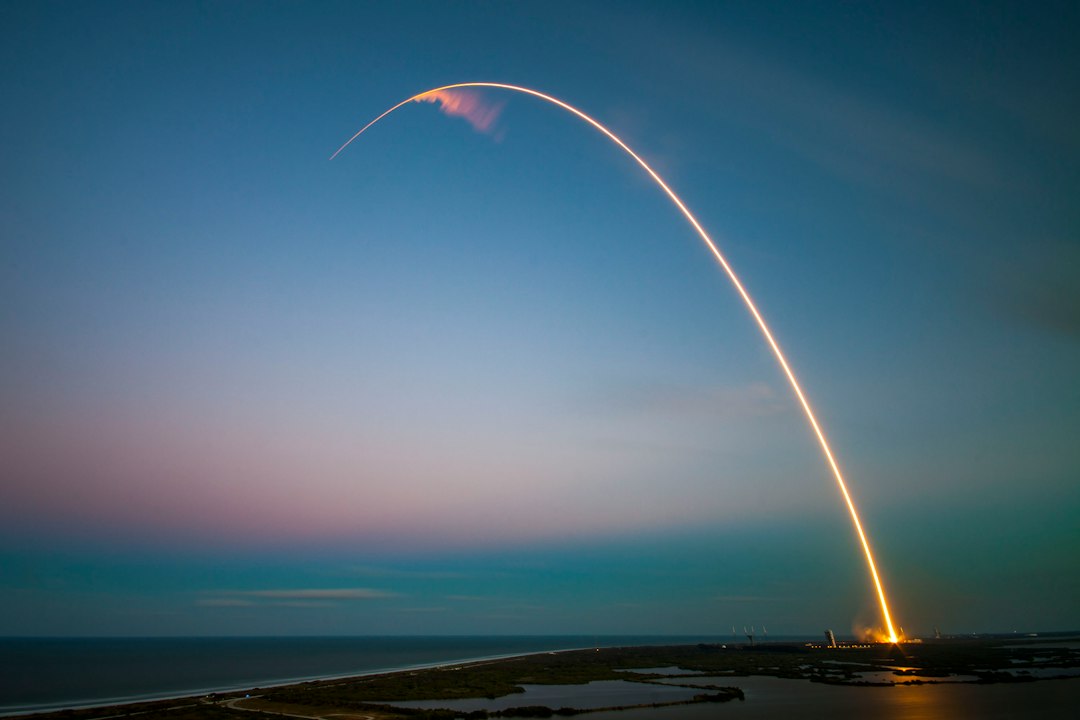
The inky blackness of space is a void of near-absolute vacuum, a realm where objects travel unimpeded by significant resistance. Yet, as a spacecraft transitions from the vast expanse of orbit to the denser layers of Earth’s atmosphere, a powerful and often overlooked force begins to assert itself: atmospheric drag. This phenomenon, a consequence of friction between the vehicle’s exterior and the countless gas molecules it encounters, plays a critical role in the design, operation, and ultimate fate of every object that dares to re-enter our planet’s embrace. From controlled descents that guide astronauts safely home to the silent, fiery demise of defunct satellites, spacecraft slowed by Earth’s atmosphere is a fundamental principle governing our interaction with the celestial frontier.
Understanding the Physics of Friction in Spacecraft Descent
Atmospheric drag, often referred to as air resistance, is the force that opposes the motion of an object through a fluid. In the context of spacecraft re-entry, this fluid is Earth’s atmosphere. As a spacecraft plunges into these increasingly dense layers, its high velocity causes it to collide with a multitude of atmospheric particles – atoms and molecules of nitrogen, oxygen, and other trace gases. Each collision transfers a small amount of momentum from the spacecraft to the atmospheric particles, effectively slowing the spacecraft down. This process is not unlike pushing your hand through water; the faster you move, the greater the resistance you feel.
The magnitude of this drag force is governed by several key factors. Foremost among these is the speed of the spacecraft. Drag increases dramatically with velocity, typically scaling with the square of the speed. This means that doubling a spacecraft’s speed quadruples the drag force it experiences. Secondly, the density of the atmosphere is crucial. As a spacecraft descends, it encounters progressively denser air, leading to a greater number of molecular collisions and thus a stronger drag force. The shape and surface area of the spacecraft also play a significant role. A larger, flatter surface area will experience more drag than a smaller, more streamlined one at the same speed and atmospheric density. This is why re-entry vehicles are often designed with specific aerodynamic profiles. Finally, the drag coefficient, a dimensionless number that depends on the shape of the object and the flow conditions, quantifies how aerodynamically “slippery” or “blunt” the object is.
The Re-entry Trajectory: A Delicate Dance with Drag
The journey back to Earth for a spacecraft is a meticulously planned and executed maneuver. The re-entry trajectory is not a straight dive; rather, it is a carefully controlled descent designed to manage the immense forces and heat generated by atmospheric drag. For crewed missions, such as those returning from the International Space Station, the spacecraft enters the atmosphere at a specific angle. Too shallow an angle, and the spacecraft might skip off the atmosphere like a stone on water, a scenario known as “skip re-entry,” potentially leading to excessive G-forces or an inability to descend. Too steep an angle, and the drag and heating rates would become so extreme that the spacecraft and its occupants could not survive.
This delicate balance is achieved through a combination of orbital mechanics and aerodynamic principles. Initially, the spacecraft sheds its orbital velocity by firing retro-rockets, slowing its tangential speed. This causes its orbit to decay, bringing it closer to Earth. As it enters the upper atmosphere, the drag force begins to increase, further reducing its speed. The spacecraft is often oriented in a particular way – typically blunt-end first for heat shield protection – to maximize drag and dissipate energy. The angle of attack, the angle between the spacecraft’s longitudinal axis and the direction of motion, is also crucial in controlling both drag and lift forces. By subtly adjusting this angle, mission control can fine-tune the descent rate and manage the heat load.
The atmosphere plays a crucial role in slowing down spacecraft as they re-enter from space, utilizing aerodynamic drag to reduce their speed significantly. This process is essential for ensuring a safe landing, as the intense heat generated during re-entry must be managed effectively. For a deeper understanding of the physics involved in this phenomenon, you can read a related article that explores the intricacies of atmospheric drag and its impact on spacecraft dynamics. For more information, visit this article.
The Consequences of Extreme Drag: Heat and Deceleration
The Intense Thermal Environment During Re-entry
The most dramatic consequence of spacecraft being slowed by Earth’s atmosphere is the immense heat generated. This heating is not primarily due to friction in the conventional sense, as one might experience rubbing their hands together. Instead, it is a result of adiabatic compression. As the spacecraft travels at hypersonic speeds (speeds greater than Mach 5), it compresses the air in front of it at an astonishing rate. This rapid compression causes the air molecules to gain kinetic energy, leading to a dramatic increase in temperature. The air in front of the spacecraft can reach temperatures of thousands of degrees Celsius, far hotter than the surface of the sun.
This superheated air then interacts with the spacecraft’s surface. Heat is transferred to the vehicle through convection and radiation. Convection occurs as the hot air flows over the spacecraft’s exterior, transferring its thermal energy. Radiation occurs as the intensely hot air plasma emits electromagnetic radiation, bathing the spacecraft in intense heat. The sheer magnitude of this thermal load is a primary engineering challenge in spacecraft design. Without robust thermal protection systems, even a brief exposure to these temperatures would vaporize any known material.
Designing for Survival: Heat Shields and Ablative Materials
To withstand the extreme temperatures of re-entry, spacecraft are equipped with specialized heat shields. These are typically made of ablative materials, substances designed to absorb thermal energy by undergoing a controlled process of burning away, or ablating. As the ablative material heats up, it chars, melts, and vaporizes. This process consumes a significant amount of thermal energy, carrying it away from the spacecraft’s structure. The gaseous byproducts of ablation also form a boundary layer of less hot gas between the spacecraft and the superheated atmospheric plasma, further insulating the vehicle.
Different missions employ different types of heat shield materials. For historical missions like Apollo, phenolic-impregnated carbon ablators (PICA) were used. Modern missions, such as those conducted by SpaceX, often utilize PICA-X, an advanced version of PICA. The thickness and composition of the heat shield are carefully calculated based on the expected heat load during re-entry, ensuring that enough material remains to protect the spacecraft throughout its descent. The design of the heat shield is not just about material science; it also involves intricate aerodynamic considerations to ensure that the heat is distributed as evenly as possible and that the ablative process proceeds in a predictable manner.
Managing Deceleration: G-Forces and Their Impact
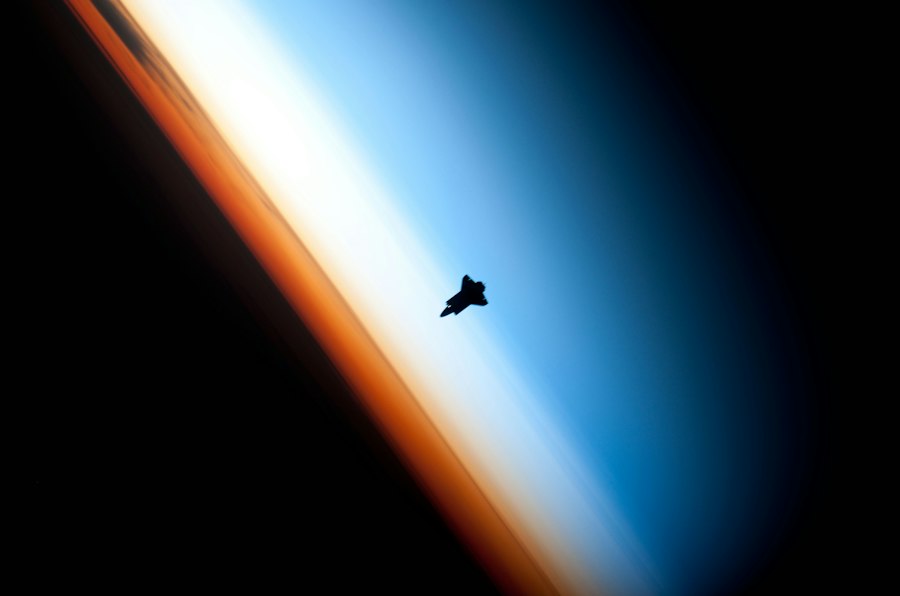
The Physiological Effects of High G-Forces on Astronauts
As the spacecraft decelerates due to atmospheric drag, its occupants experience G-forces, the perceived acceleration relative to Earth’s gravity. These forces can be significant, particularly during the initial stages of re-entry when the spacecraft is still moving at high speeds. G-forces are measured in “g’s,” where 1g is the standard force of gravity we experience every day. During re-entry, astronauts can experience sustained deceleration forces of several g’s.
These forces can have profound physiological effects. High positive G-forces (acting upwards from the feet to the head) can cause blood to drain from the brain, leading to tunnel vision, blackouts, and even loss of consciousness. Negative G-forces (acting downwards from the head to the feet) can cause blood to pool in the head, leading to “redout” and extreme discomfort. The human body is remarkably resilient, but there are limits to the G-forces it can withstand. Astronauts undergo rigorous training to prepare for these forces, including centrifuge training that simulates re-entry G-loads.
Utilizing Drag for Controlled Landings
While excessive G-forces are a concern, atmospheric drag is also a critical tool for achieving a controlled landing. Without it, spacecraft would continue their descent at dangerously high speeds, potentially impacting the Earth with catastrophic force. The drag experienced during re-entry allows for a gradual reduction in velocity, bringing the spacecraft to speeds manageable by parachutes or other landing systems.
For capsules like those used by NASA and Roscosmos, parachutes are the primary means of final deceleration after the most intense phase of re-entry. These massive parachutes deploy at specific altitudes and speeds, further slowing the capsule before it splashes down in the ocean or lands on solid ground. The timing and sequencing of these parachute deployments are crucial for a safe landing. The drag generated by the parachutes, combined with the residual drag from the capsule’s shape, ensures a smooth and controlled descent.
The Silent Demise: Deorbiting and Atmospheric Burn-up

The Fate of Inactive Satellites and Space Debris
Not all spacecraft return to Earth in a controlled manner. Many satellites, after completing their missions or failing in orbit, eventually succumb to the gradual tug of Earth’s atmosphere. Even in Low Earth Orbit (LEO), where the atmosphere is extremely thin, there is enough residual drag to cause a slow decay of an object’s orbit over time. This process can take months, years, or even decades, depending on the object’s altitude, shape, and surface properties.
As these objects descend, they eventually encounter denser atmospheric layers. The drag forces begin to increase, and the immense kinetic energy is converted into heat. For most smaller objects, this leads to complete disintegration and burn-up in the atmosphere. The intense heat vaporizes the material, leaving no trace on the ground. This phenomenon is often mistaken for shooting stars or meteors, which are actually natural celestial bodies burning up in our atmosphere.
Controlled Deorbiting: A Responsibility of Spacefaring Nations
The growing problem of space debris has made controlled deorbiting a critical aspect of responsible space exploration. Satellites are increasingly designed with deorbiting capabilities, allowing their operators to intentionally bring them down at the end of their operational life. This is typically achieved by firing thrusters to lower their orbit, accelerating their inevitable descent into the atmosphere.
The chosen deorbiting trajectory is carefully planned to ensure that any surviving debris falls into unpopulated areas, most commonly the “spacecraft cemetery” in the South Pacific Ocean, a vast area far from landmasses. This proactive approach to managing space debris is essential for maintaining the long-term sustainability of space activities and protecting operational satellites from potentially catastrophic collisions. The principle of spacecraft slowed by Earth’s atmosphere, in this context, becomes a tool for planetary protection, preventing the accumulation of orbital hazards.
When spacecraft re-enter the Earth’s atmosphere, they experience a significant deceleration due to atmospheric drag, which plays a crucial role in ensuring a safe landing. This process involves complex interactions between the spacecraft and air molecules, generating heat and slowing the vehicle down. For a deeper understanding of the science behind this phenomenon, you can explore a related article that discusses various aspects of atmospheric dynamics and their impact on spacecraft. Check it out here to learn more about how these principles are applied in aerospace engineering.
Advanced Concepts and Future Considerations
| Metric | Description | Typical Values | Effect on Spacecraft |
|---|---|---|---|
| Atmospheric Density | Mass of air per unit volume at various altitudes | 1.225 kg/m³ at sea level; decreases exponentially with altitude | Higher density increases drag force, slowing spacecraft more rapidly |
| Drag Force (Fd) | Force opposing spacecraft motion due to air resistance | Fd = 0.5 × ρ × v² × Cd × A | Reduces spacecraft velocity, dissipates kinetic energy as heat |
| Velocity (v) | Speed of spacecraft relative to atmosphere | Typically 7,800 m/s (orbital speed) to 0 m/s (landing) | Higher velocity increases drag force exponentially |
| Drag Coefficient (Cd) | Dimensionless number representing shape and flow characteristics | Ranges from 0.1 (streamlined) to 2.0+ (blunt bodies) | Higher Cd means more drag and faster deceleration |
| Cross-sectional Area (A) | Projected area of spacecraft facing airflow | Varies by spacecraft design, e.g., 10-100 m² | Larger area increases drag force |
| Heat Generation | Thermal energy produced by atmospheric friction | Up to several MW/m² during reentry | Requires heat shields to protect spacecraft |
| Deceleration Rate | Rate at which spacecraft slows down due to drag | Can exceed 5 g (49 m/s²) during peak reentry | Impacts structural integrity and crew safety |
Hypersonic Re-entry and Future Spacecraft Designs
As humanity ventures further into space and contemplates more ambitious missions, the challenges associated with re-entry are evolving. Future spacecraft, particularly those designed for hypersonic flight within the atmosphere or for returning from lunar or Martian missions, will encounter even more extreme conditions. The speeds and associated heating rates during these re-entries will push the boundaries of current thermal protection technologies.
Researchers are exploring new materials and designs to cope with these advanced re-entry scenarios. This includes the development of advanced ceramic composites, actively cooled structures, and innovative aerodynamic shapes that can generate lift to control the re-entry trajectory and reduce the peak heating loads. The understanding and manipulation of atmospheric drag remain central to these future endeavors.
The Role of Aerothermodynamics in Space Mission Planning
Aerothermodynamics, the study of the interaction between aerodynamic forces and thermodynamic processes, is a cornerstone of modern space mission planning. It encompasses the complex interplay of fluid dynamics, heat transfer, and chemical reactions that occur during atmospheric re-entry. Precise calculations of drag, lift, heat flux, and deceleration are essential for ensuring the safety and success of any mission involving atmospheric transit.
Sophisticated computational fluid dynamics (CFD) simulations and wind tunnel testing are used to model these phenomena with high fidelity. Engineers must account for the varying atmospheric density and composition along the re-entry path, as well as the complex shock waves and boundary layers that form around the spacecraft. The accuracy of these aerothermodynamic predictions directly impacts the design of the spacecraft’s structure, thermal protection system, and trajectory control. Ultimately, it is the precise understanding of how spacecraft are slowed by Earth’s atmosphere, and the subsequent management of the resulting forces and heat, that allows us to safely navigate the transition between the vacuum of space and the embrace of our planet.

There’s Only One Safe Way Back to Earth From the Moon
FAQs
What is the atmosphere made of?
The atmosphere is primarily composed of nitrogen (about 78%) and oxygen (about 21%), with trace amounts of other gases such as carbon dioxide, argon, and water vapor.
How does the atmosphere slow down spacecraft?
As a spacecraft enters the Earth’s atmosphere at high speeds, it experiences drag caused by air resistance. This drag slows down the spacecraft by converting its kinetic energy into heat and sound.
Why is it important for spacecraft to slow down upon reentry?
Slowing down upon reentry is crucial for spacecraft to avoid burning up due to the intense heat generated by friction with the atmosphere. It also allows for a controlled descent and landing.
How do spacecraft protect themselves from the heat generated during reentry?
Spacecraft are equipped with heat shields made of materials that can withstand high temperatures. These shields help dissipate and absorb the heat generated during reentry, protecting the spacecraft and its occupants.
What are some techniques used to further slow down spacecraft during reentry?
In addition to the natural drag experienced in the atmosphere, spacecraft can deploy parachutes or use thrusters to further slow down their descent and ensure a safe landing.