Sea turtles undertake some of the most impressive migrations in the animal kingdom, often traveling thousands of miles across vast ocean expanses to reach their feeding grounds and nesting beaches. The navigational mechanisms employed by these ancient mariners have long fascinated scientists. While many factors likely contribute to their incredible journeys, a growing body of research points to the Earth’s magnetic field as a primary navigational aid, a kind of invisible compass guiding them through the watery world. However, this intricate system is not without its challenges, as changes in the Earth’s magnetic field, known as magnetic field drift, may be impacting the turtles’ ability to navigate accurately.
Sea turtles, with their leathery shells and ancient lineage, are synonymous with oceanic exploration. They are a diverse group, encompassing seven extant species, each with its unique migratory patterns and behaviors. These journeys are not random wanderings; they are deeply ingrained life strategies, honed over millions of years of evolution.
The Rhythmic Pulse of Reproduction
The most well-documented and crucial aspect of sea turtle migration is tied to reproduction. Adult females, after spending years or even decades foraging in distant waters, will embark on epic voyages to return to the general vicinity of their natal beaches. This homing instinct is so powerful that it can lead them back to the very shores where they themselves hatched, a remarkable feat of biological memory and spatial awareness.
Natal Homing: A Biological GPS
The concept of natal homing is central to understanding sea turtle migration. It suggests that sea turtles imprint on specific locations during their early lives and use these imprints as navigational markers throughout their lives. This is akin to a person using a familiar landmark to orient themselves in a new city, but on an oceanic scale.
The Maternal Imperative: Ensuring the Next Generation
The return to nesting beaches is driven by the ultimate biological imperative: the continuation of the species. Female sea turtles excavate nests in the sandy shores, lay their clutch of eggs, and then return to the sea, leaving their offspring to hatch and immediately embark on their own perilous journey into the ocean. This cyclical return to land for reproduction is a defining characteristic of their life history.
Foraging Grounds: The Quest for Sustenance
Beyond reproduction, migrations are also critical for accessing abundant food sources. Different species of sea turtles have varying dietary preferences, from the gelatinous jellyfish favored by leatherbacks to the seagrass meadows that sustain green turtles. These diets are often found in specific geographical locations, necessitating long-distance movements to coincide with peak prey availability.
Dietary Specialists and Their Traveling Diets
The specialized diets of sea turtles dictate their migratory routes. For instance, green turtles often undertake seasonal migrations between their feeding grounds in seagrass beds and their nesting beaches, which may be hundreds or even thousands of miles apart. This ensures they are not depleting their food sources in one area and are adequately fueled for reproduction.
The Ecosystem’s Rhythm: Following the Tides of Nature
The migrations of sea turtles are intricately linked to the broader health and rhythms of marine ecosystems. Their movements can influence food webs, seed dispersal (in the case of species that consume fruits that fall into the sea), and even the structure of seafloor habitats through their grazing activities. Their journeys are not just personal quests but integral parts of the oceanic ballet.
Recent studies have shed light on the fascinating phenomenon of sea turtle migration and its connection to the Earth’s magnetic field. Researchers have discovered that these remarkable creatures possess an innate ability to navigate vast ocean distances, potentially using the Earth’s magnetic field as a guide. For more insights into this captivating topic, you can read a related article on the science behind animal navigation at Freaky Science.
Whispers of the Earth: The Magnetic Field Hypothesis
For centuries, the question of how sea turtles navigate such vast distances remained a mystery. Theories ranged from celestial navigation to olfactory cues and ocean currents. However, compelling evidence in recent decades has pointed towards the Earth’s magnetic field as a crucial component of their internal navigational system.
The Invisible Compass: Magnetoreception in Sea Turtles
Magnetoreception, the ability to sense magnetic fields, is a phenomenon observed in a variety of organisms, from birds to bacteria. In sea turtles, it is hypothesized that specialized sensory organs detect the Earth’s magnetic field, providing them with a sense of direction and location.
Sensory Receptors: A Biological Magnetometer
While the exact mechanisms of magnetoreception in sea turtles are still being investigated, research suggests the presence of specialized structures within their bodies that are sensitive to magnetic fields. These could include microscopic iron-rich particles, known as magnetosomes, or light-dependent chemical reactions occurring in the eye. Think of these as tiny, biological compass needles, constantly responding to the planet’s magnetic flux.
Latitude and Longitude: Mapping the Oceanic Highway
The Earth’s magnetic field is not uniform; it varies in both inclination (the angle at which magnetic field lines intersect the Earth’s surface) and intensity. Scientists hypothesize that sea turtles can detect these variations, using them to determine their latitude and longitude. This allows them to create an internal “magnetic map” of their environment, guiding them across the ocean.
Evidence from the Lab and the Field
Numerous studies have provided strong support for the magnetic navigation hypothesis. Laboratory experiments have shown that sea turtles can orient themselves in artificial magnetic fields, and field studies have tracked turtles deviating from their expected courses when exposed to altered magnetic conditions.
Controlled Experiments: Simulating the Magnetic World
In controlled laboratory settings, young sea turtles have been placed in tanks where the magnetic field can be manipulated. When the magnetic inclination is altered to mimic a different geographical location, the turtles often orient themselves in a way consistent with being at that simulated location, demonstrating a learned magnetic map.
Tracking Studies: Observing Nature’s Navigators
Satellite tracking of adult sea turtles has revealed remarkable fidelity in their migratory paths, often returning to the same foraging grounds or nesting beaches year after year. Disruptions to these paths, or unexpected detours, can sometimes be correlated with anomalous magnetic readings along their routes, further strengthening the magnetic compass theory.
The Shifting Sands of Magnetism: Understanding Geomagnetic Drift

The Earth’s magnetic field is not static. It is constantly changing, a dynamic phenomenon driven by the molten iron core of our planet. This continuous alteration is known as geomagnetic drift, and it presents a potential challenge to the navigational abilities of sea turtles.
The Earth’s Core: A Dynamic Dynamo
The Earth’s magnetic field is generated by the movement of liquid iron in the outer core. This metallic fluid is in constant motion, creating electrical currents that, in turn, produce the planet’s magnetic field. The complex and chaotic nature of these fluid dynamics leads to slow but significant changes in the magnetic field over time.
Magnetic Poles on the Move: A Wandering North
One of the most observable aspects of geomagnetic drift is the movement of the Earth’s magnetic poles. The magnetic north pole, in particular, has been observed to be drifting at an accelerating rate in recent decades, moving from its historical position over the Canadian Arctic towards Siberia. This migration of the poles can significantly alter the magnetic signatures of different regions.
Variations in Inclination and Intensity: A Changing Map
Beyond the movement of the poles, the inclination and intensity of the magnetic field also change across the globe and over time. These changes are not uniform; some regions experience more rapid shifts than others. For sea turtles, this means their internalized magnetic map is not a fixed representation of the Earth but a constantly evolving one.
The Implications of Drift for Navigation
As the Earth’s magnetic field shifts, so too does the magnetic “map” that sea turtles rely upon. If their navigational system is based on imprinted magnetic signatures from their natal regions, and those signatures change, they may find themselves disoriented.
Mismatched Magnetic Signatures: Lost in Translation
Imagine a traveler relying on an old, outdated map. As roads and landmarks change, the map becomes less reliable, and the traveler may get lost. Similarly, if a sea turtle’s imprinted magnetic signature no longer accurately reflects the current magnetic field at its destination, it could lead to navigational errors.
Potential for Increased Energy Expenditure and Reduced Survival
Navigational errors can have significant consequences for sea turtles. They may expend more energy searching for their destinations, leading to reduced body condition and lower reproductive success. In extreme cases, disorientation could lead to turtles becoming stranded or failing to reach critical feeding or nesting grounds, impacting their survival rates.
Navigational Challenges and Future Directions
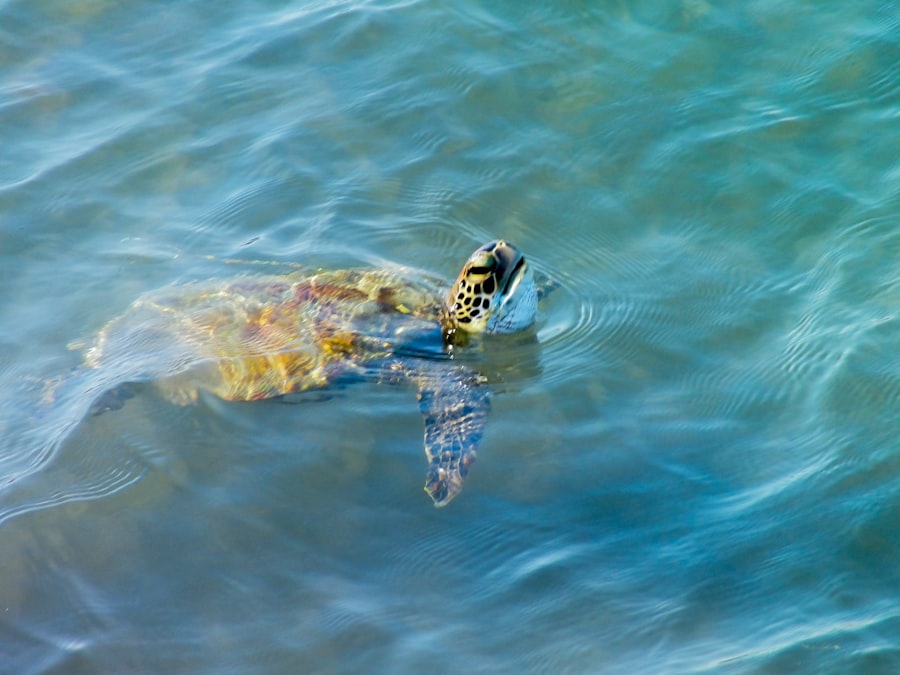
The interplay between sea turtle migration and geomagnetic drift presents a complex scientific puzzle with important conservation implications. Understanding these challenges is crucial for protecting these vulnerable species.
Research Efforts: Unraveling the Mystery
Scientists are employing a range of innovative techniques to study sea turtle navigation and the impact of geomagnetic drift. These efforts involve long-term tracking, sophisticated modeling, and advanced laboratory experiments.
Satellite Tagging and Acoustic Telemetry: Following the Trail
The deployment of satellite tags and acoustic telemetry devices allows researchers to track the movements of sea turtles with unprecedented precision. By analyzing these tracks, scientists can identify deviations from expected migratory paths and correlate them with known magnetic anomalies.
Geomagnetic Field Modeling: Predicting the Changes
Researchers are developing sophisticated models of the Earth’s magnetic field to predict future drifts and understand how these changes might impact sea turtle navigation. These models help to forecast potential navigational challenges in different regions and for different species.
Conservation Implications: Protecting the Navigators
The understanding of a relationship between sea turtle migration and geomagnetic drift has significant implications for conservation efforts. Conservation strategies may need to account for these natural changes to ensure the long-term survival of sea turtle populations.
Habitat Protection and Connectivity: Ensuring Safe Havens
Protecting critical nesting beaches and foraging grounds is paramount. Furthermore, ensuring the connectivity between these habitats, allowing for safe passage during migration, is essential, especially as potential navigational challenges increase due to geomagnetic drift.
Mitigating Anthropogenic Impacts: A Double Threat
Sea turtles already face numerous human-induced threats, including plastic pollution, entanglement in fishing gear, and habitat destruction. The added stress of potential navigational disorientation due to geomagnetic drift could exacerbate these existing challenges, creating a double threat to their survival.
Recent studies have shed light on the fascinating journey of sea turtle migration, particularly how these ancient mariners navigate using the Earth’s magnetic field. Researchers have discovered that magnetic field drift can significantly impact the migratory routes of these turtles, leading to changes in their traditional pathways. For a deeper understanding of this phenomenon, you can explore a related article that discusses the intricate relationship between sea turtles and their navigation methods. This insightful piece can be found here.
The Future of Oceanic Navigation
| Metric | Description | Value/Range | Unit | Notes |
|---|---|---|---|---|
| Average Migration Distance | Distance traveled by sea turtles during migration | 500 – 2,000 | km | Varies by species and population |
| Magnetic Field Intensity | Earth’s magnetic field strength at nesting sites | 25,000 – 65,000 | nT (nanotesla) | Varies geographically and over time |
| Magnetic Field Drift Rate | Annual change in magnetic field intensity | 5 – 60 | nT/year | Influences turtle navigation accuracy |
| Orientation Error Due to Drift | Deviation in turtle navigation caused by magnetic field changes | Up to 10 | degrees | Can affect migration routes |
| Migration Duration | Time taken to complete migration | 2 – 6 | months | Depends on species and environmental factors |
| Number of Nesting Sites Monitored | Sites studied for magnetic field and migration correlation | 15 | sites | Global distribution |
The journey of sea turtles across the oceans is a testament to the power of natural navigation. As we delve deeper into the complexities of their migratory behaviors and the dynamic nature of the Earth’s magnetic field, we gain a greater appreciation for the intricate web of life on our planet.
Adapting to a Changing World: Resilience in the Face of Flux
Sea turtles have demonstrated remarkable resilience throughout their evolutionary history, adapting to numerous environmental changes. It is plausible that they possess some inherent ability to adapt to gradual shifts in the magnetic field, perhaps through flexible learning or an ability to integrate multiple navigational cues.
The Role of Other Navigational Cues: A Multifaceted System
While the magnetic field appears to be a primary navigational tool, it is unlikely to be the sole one. Sea turtles likely utilize a combination of cues, including celestial navigation, olfactory signals from ocean currents, and even the memory of wave patterns, to orient themselves. This redundancy may provide a buffer against errors from any single system, including magnetic field drift.
A Call for Continued Research and Conservation Action
The ongoing research into sea turtle migration and the influence of geomagnetic drift highlights the need for continued scientific investigation and a robust commitment to conservation. Understanding these natural processes allows us to better protect these iconic creatures.
Bridging the Gap: Science and Conservation Working Together
Effective conservation requires a strong partnership between scientific research and on-the-ground conservation efforts. The insights gained from studying sea turtle navigation can inform policy decisions and guide the implementation of targeted conservation strategies.
Preserving a Natural Wonder: The Legacy of the Sea Turtle
The epic migrations of sea turtles are a wonder of the natural world, a living link to ancient oceans. By understanding and addressing the challenges they face, both natural and human-induced, we can help ensure that these magnificent navigators continue to grace our oceans for generations to come, completing their timeless journeys.
FAQs
What is sea turtle migration?
Sea turtle migration refers to the long-distance movement of sea turtles between their feeding grounds and nesting sites. This journey can span hundreds to thousands of kilometers and is essential for their reproduction and survival.
How do sea turtles navigate during migration?
Sea turtles use a combination of environmental cues to navigate, including the Earth’s magnetic field, water temperature, and chemical signals. The magnetic field provides a natural map that helps them determine their position and direction in the ocean.
What is magnetic field drift?
Magnetic field drift is the gradual change or shift in the Earth’s magnetic field over time. This drift can alter the magnetic cues that animals, like sea turtles, rely on for navigation.
How does magnetic field drift affect sea turtle migration?
Magnetic field drift can impact sea turtle migration by causing turtles to misinterpret their position or direction. This may lead to changes in their migratory routes or nesting locations, potentially affecting their reproductive success.
Are sea turtles able to adapt to changes in the Earth’s magnetic field?
Research suggests that sea turtles have some ability to adapt to changes in the Earth’s magnetic field by using additional environmental cues and learning from their experiences. However, rapid or significant shifts in the magnetic field could pose challenges to their navigation and survival.