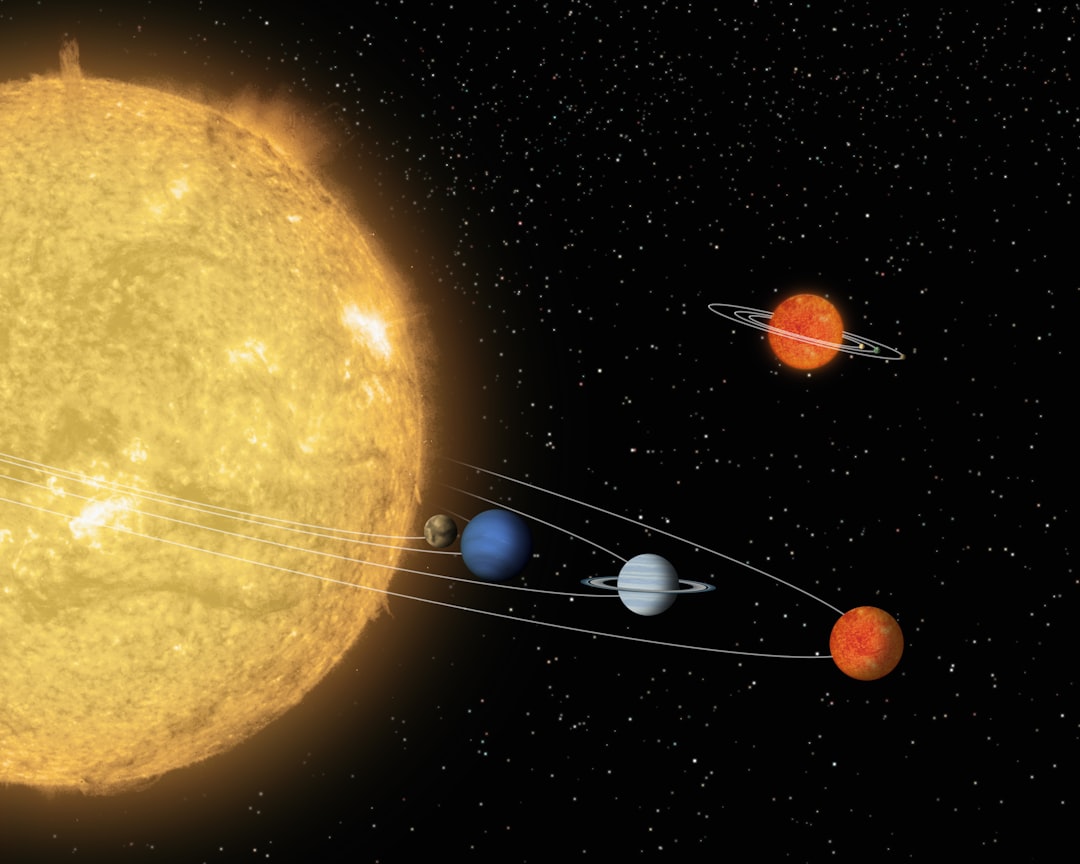
A phenomenon of solar activity, solar storms, sporadically impacts Earth’s technological infrastructure, including its extensive network of orbiting satellites. While the sun is the enduring source of light and life for our planet, it is also a dynamic entity capable of unleashing powerful bursts of energy and particles that can have tangible consequences for humanity’s space-based assets. This document explores the intricate relationship between solar storms and satellite operations, particularly focusing on the mechanisms leading to satellite orbital decay and re-entry.
Solar storms are not single, monolithic events but rather a spectrum of phenomena originating from the sun’s volatile atmosphere. These events involve significant releases of energy that travel through the vacuum of space, eventually interacting with Earth’s magnetosphere and upper atmosphere.
Coronal Mass Ejections (CMEs)
Coronal Mass Ejections (CMEs) are colossal expulsions of plasma and magnetic field from the sun’s corona. When these ejections are directed towards Earth, they can arrive within one to four days, carrying with them enormous amounts of energy.
- Mechanism of a CME: CMEs initiate from regions of intense magnetic activity on the sun’s surface, often near sunspots. As magnetic field lines become highly twisted and stressed, they can suddenly release, flinging billions of tons of superheated gas into space.
- Arrival at Earth: Upon reaching Earth, a CME’s magnetic field interacts with our planet’s magnetosphere, potentially inducing geomagnetic storms. This interaction can compress the magnetosphere on the sunward side and stretch it into a long ‘tail’ on the nightside, leading to significant disturbances.
Solar Flares
Solar flares are intense bursts of radiation (including X-rays and UV light) that erupt from the sun’s surface. Unlike CMEs, which are massive expulsions of material, flares are primarily energetic radiation events.
- Electromagnetic Pulse: The radiation from solar flares travels at the speed of light, reaching Earth within approximately eight minutes. This electromagnetic pulse can ionize portions of Earth’s upper atmosphere almost instantaneously.
- Impact on Radio Communications: The increased ionization in the ionosphere can cause severe disruptions to high-frequency (HF) radio communications, global positioning system (GPS) signals, and other radio-dependent technologies.
High-Speed Solar Wind Streams
Beyond the episodic events of CMEs and flares, the sun constantly emits a stream of charged particles known as the solar wind. Occasionally, regions on the sun, such as coronal holes, release faster and denser streams of this wind.
- Coronal Holes: These are areas on the sun with open magnetic field lines, allowing the solar wind to escape more freely and at higher speeds than usual.
- Geomagnetic Storms: When these high-speed streams buffet Earth’s magnetosphere, they can also induce geomagnetic storms, though typically less intense than those caused by CMEs.
Satellites can experience significant disruptions during solar storms due to the increased levels of charged particles in the Earth’s atmosphere, which can lead to drag and orbital decay. For a deeper understanding of this phenomenon, you can read the article that discusses the effects of solar activity on satellite operations and the measures taken to mitigate these risks. For more information, visit this article.
The Atmospheric Drifter: How Solar Storms Affect Satellite Orbits
The primary mechanism by which solar storms can lead to satellites falling involves changes in Earth’s upper atmosphere, specifically its density. Satellites in low Earth orbit (LEO), which is the region extending up to approximately 2,000 kilometers above the Earth’s surface, are particularly susceptible.
Atmospheric Drag: The Invisible Breaker
Even in the vacuum of space, LEO satellites are not entirely free from atmospheric interference. A thin layer of Earth’s atmosphere, primarily the thermosphere and exosphere, extends hundreds of kilometers above the surface.
- Gravitational Pull vs. Atmospheric Resistance: Satellites in LEO are constantly fighting a subtle battle. Earth’s gravity pulls them downwards, while their orbital velocity attempts to keep them in orbit. However, the sparse atmospheric particles, even at extreme altitudes, exert a tiny but continuous drag force.
- Gradual Orbital Decay: Over time, this atmospheric drag causes satellites to lose orbital energy, leading to a slow but steady decrease in their altitude, a process known as orbital decay. Imagine a car gradually losing speed on an incline – it eventually comes to a halt or rolls back down.
Solar Storms: Amplifying Atmospheric Drag
Solar storms act as powerful accelerators of this orbital decay process. When solar flares and CMEs interact with Earth’s magnetosphere, they inject significant amounts of energy into the upper atmosphere.
- Atmospheric Heating and Expansion: The energy deposited by solar storms, particularly X-rays and energetic particles, causes the thermosphere to heat up. As gases heat, they expand, much like air in a hot air balloon. This expansion pushes the upper atmospheric layers to higher altitudes.
- Increased Atmospheric Density: Crucially, this expansion leads to a temporary increase in the density of the atmosphere at common LEO altitudes. Even a modest increase in density can have a substantial effect on satellites, which are finely balanced in their orbits. If you are swimming in water and suddenly the water becomes thicker, you will feel more resistance.
- Enhanced Drag Force: With a denser atmosphere pushing against them, satellites experience a significantly amplified atmospheric drag force. This increased drag causes them to lose altitude at a much faster rate than under normal solar conditions.
The Feedback Loop of Decay
The process of satellite decay during solar storms is often a self-reinforcing cycle.
- Lower Altitude, More Drag: As a satellite loses altitude due to increased drag, it descends into even denser layers of the atmosphere. This further increases the drag force, accelerating its descent.
- Terminal Descent: Without active propulsion to boost their orbits, satellites caught in this enhanced drag environment can spiral downwards rapidly, eventually re-entering Earth’s atmosphere and burning up, or in rare cases, parts of them reaching the surface.
Catastrophic Cascade: Real-World Examples and Consequences
The theoretical understanding of solar storm impacts on satellites has been tragically validated by real-world events, demonstrating the tangible risks to space infrastructure.
The Starlink Incident of 2022
Perhaps the most prominent recent example of a large-scale satellite loss due to a solar storm occurred in February 2022, involving SpaceX’s Starlink constellation.
- Launch and Storm: SpaceX launched 49 Starlink satellites into a low-altitude “staging orbit” of approximately 210 kilometers. Shortly after deployment, a geomagnetic storm, triggered by a CME, hit Earth.
- Unexpected Drag: The geomagnetic storm caused the Earth’s atmosphere to heat and expand, increasing its density at the Starlink satellites’ altitude. Engineers estimated the atmospheric drag was up to 50% higher than during previous launches.
- Massive Loss: Despite attempts to maneuver the satellites, the increased drag overwhelmed their propulsion systems, preventing them from reaching their operational orbits. Consequently, approximately 40 of the 49 satellites re-entered Earth’s atmosphere and burned up, representing a significant financial loss and a setback for the constellation’s expansion.
Historical Satellite Losses
While the Starlink incident was notable for its scale and commercial impact, historical records reveal similar events.
- Skylab Re-entry (1979): While not solely due to a solar storm, the Skylab space station’s premature re-entry in 1979 was partly influenced by higher-than-predicted solar activity, which increased atmospheric drag and made precise control of its descent more challenging. Though active solar conditions were present, the station’s earlier-than-expected re-entry was more accurately attributed to delays in launching the Space Shuttle, which was intended to reboost and service it.
- Older Satellites: Numerous less prominent, older satellites with expired missions or limited fuel reserves have likely succumbed to similar atmospheric drag enhancements during periods of high solar activity, silently slipping back into the atmosphere without public notice.
Mitigating the Risk: Strategies for Satellite Resilience
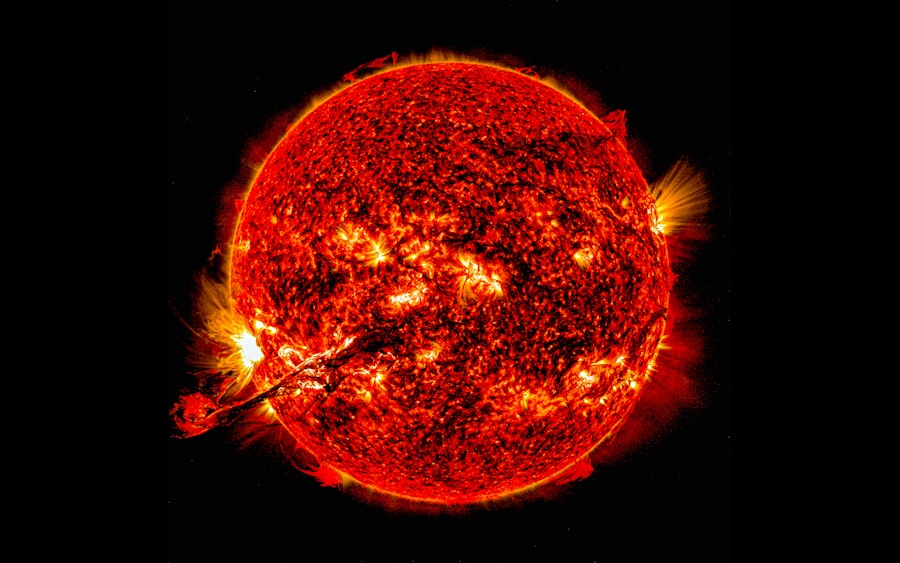
Given the increasing reliance on space-based technologies, mitigating the risks posed by solar storms is paramount. Satellite operators and developers are employing various strategies to build more resilient systems.
Enhancing Propulsion Systems
One of the most direct ways to combat increased atmospheric drag is to equip satellites with more capable propulsion systems.
- Larger Fuel Reserves: Satellites designed for LEO, especially those projected to operate during periods of high solar activity, can carry larger fuel tanks to provide more orbital correction “boosts.”
- Efficient Thrusters: Developing and integrating more efficient thruster technologies, such as ion propulsion, allows satellites to maintain orbit with less fuel consumption, extending their operational lifespan even under adverse conditions.
Strategic Launch Planning
Timing satellite launches can be a crucial factor in avoiding immediate solar storm impacts, though predicting solar activity with perfect accuracy remains a challenge.
- Solar Cycle Considerations: The sun follows an approximately 11-year solar cycle, with periods of high activity (solar maximum) and low activity (solar minimum). Launching satellites during periods of solar minimum can reduce the initial risk of encountering severe geomagnetic storms.
- Real-time Space Weather Monitoring: Advanced space weather forecasting centers continuously monitor the sun for CME and solar flare events. This allows satellite operators to receive early warnings, providing a window to implement mitigation strategies.
Robust Satellite Design
Beyond propulsion and launch timing, the fundamental design of satellites can contribute to their resilience.
- Aerodynamic Shapes: While many satellites are complex assemblages of instruments, designing their primary structures to be as aerodynamically efficient as possible can reduce drag.
- Altitude Selection: Choosing slightly higher orbital altitudes during deployment or for long-term operations provides a buffer against atmospheric expansion. A higher orbit means that even if the atmosphere expands, the satellite is less likely to encounter the significantly denser regions.
Adaptive Operations and Autonomous Systems
Modern satellite constellations are increasingly incorporating capabilities for adaptive and autonomous responses to space weather.
- Autonomous Drag Compensation: Some satellites are designed with autonomous systems that detect increased drag and automatically initiate thruster firings to maintain orbit, minimizing human intervention and reaction time.
- Constellation-Wide Maneuvers: For large constellations like Starlink, coordinated maneuvers or “drag-reduction modes” can be implemented across multiple satellites simultaneously to conserve fuel and minimize losses. This might involve reorienting the satellites to present a smaller surface area to the incoming atmosphere, like a swimmer turning on their side to cut through water more easily.
During solar storms, satellites can experience significant disruptions due to the increased levels of radiation and charged particles in the Earth’s atmosphere. This phenomenon can lead to a range of issues, including communication failures and even physical damage to the satellite’s components. For a deeper understanding of the effects of solar storms on satellites and the underlying science, you can read more in this informative article on Freaky Science. Understanding these interactions is crucial for improving satellite resilience and ensuring reliable space operations.
The Broader Implications: A Ripple Effect
| Metric | Description | Impact on Satellites |
|---|---|---|
| Solar Wind Speed | Velocity of charged particles emitted by the sun during solar storms (km/s) | High speeds increase atmospheric drag on satellites, causing orbital decay |
| Geomagnetic Storm Intensity (Kp Index) | Scale from 0 to 9 measuring geomagnetic activity | Higher Kp values correlate with stronger disturbances affecting satellite electronics and orbit |
| Atmospheric Density Increase | Percentage increase in Earth’s upper atmosphere density during solar storms | Increased density causes greater drag, leading to faster orbital decay |
| Satellite Altitude (km) | Orbital height of satellites above Earth | Lower altitude satellites experience more drag and are more prone to falling during storms |
| Radiation Levels | Intensity of solar radiation and energetic particles (measured in MeV/cm²/s) | High radiation can damage satellite electronics, causing malfunctions or loss of control |
| Satellite Mass | Mass of the satellite (kg) | Heavier satellites are less affected by drag but still vulnerable to radiation effects |
| Duration of Solar Storm | Length of time the solar storm affects Earth (hours to days) | Longer storms increase cumulative drag and radiation exposure, raising risk of satellite failure |
The loss of satellites due to solar storms has implications that extend beyond the immediate financial cost and mission failures. The increasing number of satellites in LEO, particularly mega-constellations, exacerbates some of these concerns.
Space Debris
While most re-entering satellites burn up harmlessly in the atmosphere, the growing number of objects increases the statistical probability of larger fragments reaching the ground. More importantly, the uncontrolled re-entry of multiple satellites simultaneously, as seen in the Starlink incident, adds to the already immense challenge of space traffic management and collision avoidance. Each re-entering satellite, even if it burns up, contributes to smaller fragments and dust in the very high atmosphere.
Economic and Strategic Vulnerabilities
Modern societies are deeply reliant on satellite services for everything from weather forecasting and navigation to global communications and national security. The disruption or loss of these assets due to solar storms represents a significant economic and strategic vulnerability. A large-scale loss during a severe solar event could temporarily cripple essential services, highlighting the need for robust ground-based backups and international cooperation in space weather mitigation.
Future Challenges and International Collaboration
As humanity ventures further into space and deploys even more complex and interconnected satellite systems, understanding and mitigating the effects of solar storms will become even more critical. International collaboration in space weather research, data sharing, and the development of standardized mitigation protocols will be essential to safeguard our orbital infrastructure and ensure the continued benefits of space exploration and utilization. The sun, a beacon of life, also serves as a constant reminder of the dynamic forces that shape our existence and challenge our technological frontier.
FAQs
Why do satellites fall or lose orbit during solar storms?
Solar storms increase the density of Earth’s upper atmosphere, causing greater drag on satellites. This drag slows them down, leading to a loss of altitude and sometimes causing them to fall from their intended orbits.
What causes solar storms that affect satellites?
Solar storms are caused by eruptions on the Sun, such as solar flares and coronal mass ejections (CMEs), which release large amounts of charged particles and electromagnetic radiation into space, impacting Earth’s magnetosphere and atmosphere.
How does increased atmospheric drag during solar storms impact satellites?
During solar storms, the atmosphere expands and becomes denser at higher altitudes. This increased atmospheric drag exerts additional force on satellites, reducing their speed and causing their orbits to decay more rapidly than usual.
Can satellites be protected from the effects of solar storms?
While satellites cannot be completely shielded from solar storm effects, operators can take precautions such as adjusting satellite orbits, powering down sensitive instruments, and using radiation-hardened components to minimize damage and operational disruptions.
How do scientists predict solar storms to protect satellites?
Scientists use solar observatories and space weather monitoring satellites to detect solar activity. By analyzing solar flares and CMEs, they can forecast solar storms hours to days in advance, allowing satellite operators to prepare and mitigate potential impacts.