The Earth’s crust, a seemingly immutable shell of rock and soil, is in a constant state of flux, a testament to the powerful forces that shape our planet. Among these forces, extreme temperatures, both frigid and scorching, play a profound role in the transformation of these seemingly inert materials. From the deep freeze of glacial ages to the infernal heat of volcanic eruptions, rocks undergo remarkable changes, influencing geological processes, shaping landscapes, and even impacting the very composition of the Earth. This article delves into the fascinating world of rock transformation under extreme temperature conditions, exploring the physical and chemical processes that govern these dramatic metamorphoses.
The impact of extreme cold on rocks is a pervasive force, particularly in polar regions, high altitudes, and during glacial periods. Freezing temperatures, seemingly simple, unleash a cascade of physical processes that can fracture, erode, and fundamentally alter the structure of rock formations.
Freeze-Thaw Cycles: The Pervasive Power of Ice
The most significant mechanism by which extreme cold transforms rock is the process of freeze-thaw weathering, also known as frost wedging or cryofracturing. This phenomenon hinges on a fundamental property of water: its expansion upon freezing.
Water’s Peculiar Expansion
When water infiltrates existing cracks, pores, or fissures within a rock, it occupies these spaces. As temperatures drop below the freezing point (0°C or 32°F), the water transforms into ice. Crucially, ice occupies approximately 9% more volume than liquid water. This expansion exerts immense pressure on the surrounding rock.
The Cracking of Strata
Repeated cycles of freezing and thawing amplify this pressure. Water seeps into microscopic cracks, freezes and expands, widening the fissures. As temperatures rise above freezing, the ice melts, and the now liquid water can penetrate deeper into the enlarged cracks. This cycle repeats, with each freeze-thaw event exerting incrementally greater stress. Eventually, this relentless pressure overcomes the tensile strength of the rock, leading to the formation of new cracks, the widening of existing ones, and the eventual fragmentation of the rock mass. The resulting debris, ranging from fine gravel to larger boulders, can then be transported by wind, water, or ice.
Glacial Abrasion and Plucking: The Sculpting Power of Ice Sheets
Beyond the molecular expansion of water, the sheer mass and movement of glaciers represent a powerful agent of rock transformation under extreme cold. Glaciers, vast rivers of ice, exert both erosional and deformational forces on the underlying bedrock.
Abrasion: The Sandpaper Effect of Ice
As glaciers flow downhill, they carry with them a load of sediment, including sand, gravel, and larger rocks. These embedded debris particles act like a colossal sandpaper, grinding and scouring the bedrock beneath. This process, known as glacial abrasion, polishes the rock surface, creating distinctive striations and grooves that are testament to the glacier’s passage. The finer the sediment load, the smoother the polished surface. In areas with larger, sharper debris, the abrasion can be more aggressive, creating deeper gouges.
Plucking: The Ice’s Grip
Glacial plucking, also known as quarrying, is another significant erosional process. Water seeps into cracks in the bedrock, and when it freezes, it expands, wedging the rock apart. As the glacier moves, it can then exert upward force, lifting and dislodging these fractured pieces of rock. These plucked blocks are then incorporated into the glacier’s base and carried along, contributing to its erosive power. The landscape features created by plucking are often jagged and irregular, with steep, cliff-like faces on the up-ice side of bedrock outcrops.
The Impact of Permafrost: Frozen Ground’s Subtle Influence
Permafrost, ground that remains frozen for two or more consecutive years, plays a significant role in shaping landscapes in cold regions. While not always a direct transformation of solid rock, it profoundly affects the weathering and erosion of surficial materials, including loosely consolidated rocks and soils.
Ground Ice and Thermal Erosion
The presence of ground ice within permafrost can lead to significant landscape changes. When permafrost thaws, the ice melts, causing the ground to subside. This process, known as thermokarst, can create irregular depressions, lakes, and slumping landforms. In some cases, flowing water in thawed areas can erode the unstable, ice-rich sediments, leading to rapid landscape degradation.
Frost Heave: Lifting and Fracturing
Frost heave is a phenomenon where water-rich soils expand as they freeze, pushing objects upwards. In areas with shallow bedrock or where rock fragments are present in the soil, frost heave can exert significant pressure, lifting and potentially fracturing these rocky materials. This process contributes to the breakdown of larger rock fragments into smaller pieces over time.
When rocks are subjected to extreme temperatures, they can undergo significant physical and chemical changes, leading to phenomena such as melting, metamorphism, or even fracturing. For a deeper understanding of these processes and their implications on geological formations, you can explore a related article that delves into the effects of temperature on rock properties and behavior. To read more about this fascinating topic, visit this article.
The Fiery Touch: How Heat Transforms the Earth’s Crust
Conversely, extreme heat, primarily associated with volcanic activity and geothermal processes, induces profound chemical and physical transformations in rocks. These high temperatures can melt, recrystallize, and alter the mineralogical composition of rocks, leading to the formation of new geological structures.
Igneous Rocks: Born of Fire
The most dramatic transformation of rock by heat occurs during the formation of igneous rocks. This process begins deep within the Earth’s mantle and crust where temperatures are high enough to melt existing rock into molten material called magma.
Magma Formation and Melting Points
The melting point of rocks is not a single fixed temperature but rather a range, dependent on the rock’s mineralogical composition, pressure, and the presence of volatiles like water. As temperatures rise significantly above these melting points, the solid rock begins to liquify. This can occur through:
- Decompression Melting: As hot mantle material rises towards the surface (e.g., at mid-ocean ridges), the surrounding pressure decreases, lowering the melting point and causing melting.
- Flux Melting: The introduction of water or other volatile substances into hot rock lowers its melting point, facilitating magma generation (e.g., at subduction zones).
- Heat Transfer Melting: When hot magma intrudes into cooler crustal rocks, it can transfer heat and melt the surrounding rock.
Crystallization and Rock Formation
As magma cools and solidifies, minerals begin to crystallize from the melt. The rate of cooling significantly influences the texture of the resulting igneous rock. Slow cooling, deep within the Earth, allows for the formation of large, well-developed crystals, resulting in coarse-grained rocks like granite. Rapid cooling at the surface, such as during volcanic eruptions, leads to the formation of fine-grained rocks like basalt, or even glassy textures like obsidian if cooling is extremely rapid. The specific minerals that form depend on the chemical composition of the magma and the temperature and pressure conditions during crystallization.
Metamorphic Rocks: Reshaped by Heat and Pressure
While melting leads to igneous rocks, rocks that are subjected to intense heat and pressure without melting undergo transformation into metamorphic rocks. This process, known as metamorphism, can significantly alter the rock’s texture, mineralogy, and chemical composition.
The Drivers of Metamorphism: Heat and Pressure
- Heat: Heat is a primary driver of metamorphism. It provides the energy required to break existing chemical bonds within minerals, allowing atoms to rearrange and form new mineral structures. Heat can be supplied by nearby magma intrusions (contact metamorphism) or by the deep burial of rocks within the Earth’s crust (regional metamorphism).
- Pressure: Pressure also plays a crucial role. Confining pressure, exerted equally from all directions, can compact rocks. Directed pressure, which acts more strongly in one direction than others, can cause minerals to align, creating a distinctive layered or foliated texture. This directed pressure is common in mountain-building processes.
Types of Metamorphism and Resulting Textures
- Contact Metamorphism: Occurs when rocks are heated by the intrusion of magma. The heat bakes the surrounding rock, causing mineral recrystallization. This typically results in non-foliated metamorphic rocks, such as hornfels.
- Regional Metamorphism: Occurs over large areas, usually associated with tectonic plate collisions. The combined forces of heat and directed pressure cause intense deformation and recrystallization, leading to the formation of foliated rocks like slate, schist, and gneiss. The degree of foliation often indicates the intensity of the metamorphic process. Gneiss, for instance, exhibits distinct banding of different minerals, signifying high-grade metamorphism.
- Hydrothermal Metamorphism: Involves the reaction of rocks with hot, chemically active fluids. These fluids can leach out certain elements and deposit others, altering the rock’s composition and mineralogy. This is often associated with volcanic regions.
Thermal Decomposition: Breaking Down Minerals
At very high temperatures, the chemical bonds within certain minerals can break down directly, leading to thermal decomposition. This process releases gases and forms new, more stable mineral assemblages.
Examples of Thermal Decomposition
- Carbonate Rocks: Minerals like calcite (in limestone) and dolomite (in dolostone) decompose at elevated temperatures. For example, calcite (CaCO3) breaks down into calcium oxide (CaO) and carbon dioxide (CO2) when heated. This reaction is significant in the production of cement.
- Hydrated Minerals: Minerals that contain water molecules within their crystal structure, such as gypsum, will dehydrate when heated, releasing their water and forming anhydrite.
This decomposition process is a fundamental chemical reaction driven solely by the input of thermal energy, altering the fundamental composition of the rock.
The Role of Extreme Temperatures in Landscapes
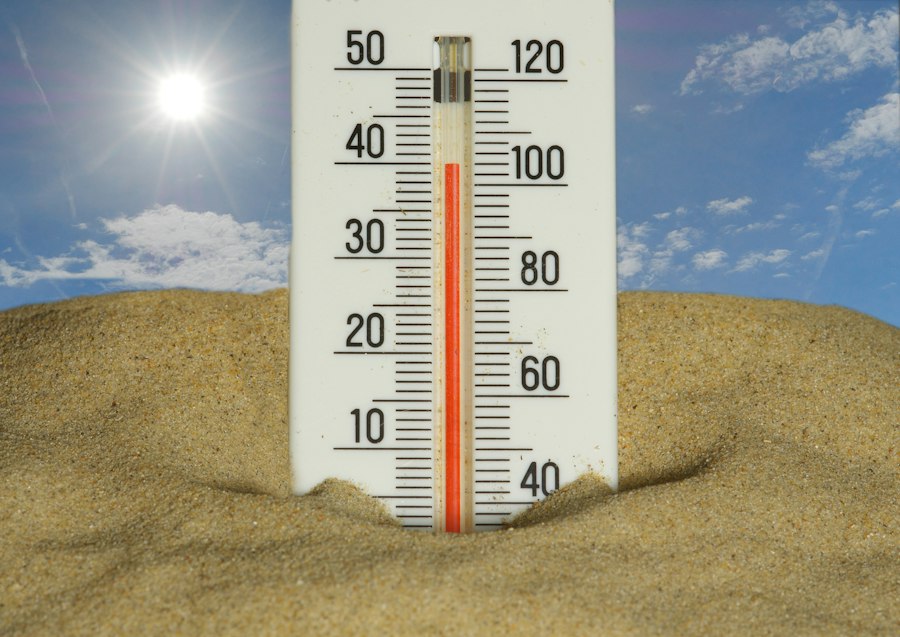
The transformative power of extreme temperatures is not confined to the molecular or mineral level; it profoundly shapes the macroscopic features of our planet’s surface.
Shaping Deserts: Heat and Arid Erosion
In hot, arid environments, extreme temperatures contribute to rock breakdown through various mechanisms, albeit often different from those in cold climates.
Thermal Expansion and Contraction
Daily and seasonal temperature fluctuations in deserts can cause rocks to expand and contract repeatedly. This thermal stress, while generally less forceful than freeze-thaw cycles, can weaken the rock over long periods, leading to exfoliation – the peeling off of rock layers – and the eventual fragmentation of rock formations. This is particularly noticeable in massive granite formations, where concentric shells of rock can spall off.
Chemical Weathering in Arid Climates
While liquid water is scarce, the presence of trace amounts of moisture, combined with high temperatures, can accelerate certain chemical weathering reactions in deserts. Salts, often present in desert soils, can crystallize within rock pores. As these salt crystals grow, they exert pressure that can contribute to the breakdown of rock. Additionally, high temperatures can enhance the rate of chemical reactions, although the availability of reactants remains a limiting factor.
Glacial Landforms: Echoes of Extreme Cold
The erosional and depositional power of glaciers, driven by extreme cold, has sculpted some of the most dramatic and recognizable landforms on Earth.
Fjords, U-Shaped Valleys, and Cirques
The grinding action of glaciers carves out distinctive U-shaped valleys, replacing the V-shaped valleys typically formed by rivers. At the heads of glaciers, ice plucking and frost wedging can excavate large, armchair-shaped depressions known as cirques. Where glaciers flow into the sea, they can create deep, drowned valleys called fjords.
Moraines and Till Plains
As glaciers retreat, they deposit the rock debris they have accumulated. These deposits form moraines, which can be found at the edges or the snout of a glacier. Extensive, relatively flat plains formed by the widespread deposition of glacial till are known as till plains. These landforms are direct evidence of the massive transport and deposition capabilities of ice under extreme cold.
Volcanic Landscapes: The Immediate Impact of Heat
The direct and immediate impact of extreme heat is most evident in volcanic landscapes. The molten rock, ash, and gases released during eruptions create entirely new geological formations.
Lava Flows and Plateaus
When magma erupts onto the surface as lava, it flows and cools, solidifying into various forms depending on its viscosity. Slow-moving, fluid lavas can spread out over vast areas, forming extensive lava flows and eventually creating lava plateaus. More viscous lavas can build up steep-sided volcanic cones.
Ash Deposits and Pyroclastic Flows
Volcanic eruptions can also eject enormous quantities of ash, volcanic bombs, and other fragments of rock and glass into the atmosphere. These materials can travel great distances, blanketing the landscape. Pyroclastic flows, fast-moving currents of hot gas and volcanic matter, can travel down the flanks of volcanoes at high speeds, incinerating everything in their path and leaving behind deposits of volcanic ash and pumice.
The Interplay of Temperature and Other Geological Factors
It is important to recognize that extreme temperatures rarely act in isolation. Their transformative power is often amplified or modified by the interplay of other geological factors.
Pressure’s Amplifying Role
As previously discussed, pressure is a critical companion to heat in the formation of metamorphic rocks. Similarly, in cold environments, the pressure exerted by the overlying ice in a glacier can enhance the grinding and plucking processes. In deep geological settings, the immense pressures associated with burial can significantly influence the melting point of rocks, even at relatively high temperatures.
Water’s Dual Nature: Facilitator and Inhibitor
Water plays a crucial, albeit complex, role in rock transformation under extreme temperatures. In cold environments, its expansion upon freezing is the direct agent of freeze-thaw weathering. However, the presence of liquid water is also necessary for many chemical weathering reactions that can occur at higher temperatures. In metamorphic processes, water acts as a solvent and a catalyst, facilitating the migration of ions and the recrystallization of minerals. Conversely, in very high-temperature environments, water can be driven out of minerals, which can then inhibit further chemical reactions.
Time: The Unseen Architect
The transformative processes driven by extreme temperatures are often slow, operating over geological timescales. The gradual accumulation of stress from freeze-thaw cycles, the slow creep of glaciers, or the gradual cooling of magma all require vast periods of time to produce significant changes. Therefore, time is an indispensable factor in the sculpting and reshaping of the Earth’s rocky facade by temperature extremes.
When rocks are subjected to extreme temperatures, they can undergo significant changes in their physical and chemical properties, leading to processes such as metamorphism or even melting. This fascinating transformation is explored in detail in a related article that delves into the effects of heat on various types of rocks and minerals. For those interested in understanding the science behind these geological phenomena, you can read more about it in this informative article.
Conclusion: A Continuously Evolving Planet
| Temperature Range (°C) | Effect on Rock | Physical Changes | Chemical Changes | Examples |
|---|---|---|---|---|
| 0 – 200 | Minor thermal expansion | Rock expands slightly | None | Surface heating during day |
| 200 – 600 | Dehydration and mineral alteration | Loss of water from minerals, slight cracking | Breakdown of clay minerals, oxidation | Shallow burial metamorphism |
| 600 – 900 | Metamorphism and recrystallization | Grain growth, foliation development | New mineral formation (e.g., garnet, kyanite) | Regional metamorphism |
| 900 – 1200 | Partial melting | Rock begins to soften and melt partially | Melting of some minerals, chemical differentiation | Formation of migmatites |
| 1200+ | Complete melting | Rock becomes magma | Full chemical rehomogenization | Igneous magma generation |
The transformation of rock at extreme temperatures is a testament to the dynamic nature of our planet. From the shattering power of frost wedging in glacial landscapes to the molten birth of igneous rocks in volcanic realms, temperature extremes are fundamental drivers of geological change. These processes not only shape the physical appearance of our world but also influence the Earth’s chemistry, its internal structure, and the very habitability of its surface. Understanding these transformations provides invaluable insights into the Earth’s history, its ongoing evolution, and the forces that continue to mold its future. The seemingly solid rocks beneath our feet are, in reality, participants in a grand, slow-motion dance choreographed by the relentless forces of heat and cold.

We Drilled 12 KM Into Earth—Then the Rock Started Bending
FAQs
What happens to rock at extreme temperatures?
At extreme temperatures, rocks can undergo physical and chemical changes.
How do rocks react to high temperatures?
When exposed to high temperatures, rocks can melt and turn into magma or lava.
What happens to rocks when they are subjected to extreme heat and pressure?
Under extreme heat and pressure, rocks can undergo metamorphism, changing their mineral composition and texture.
Can rocks withstand extreme temperatures?
Rocks have different melting points depending on their mineral composition, so some rocks can withstand higher temperatures than others.
What are some examples of rocks that can withstand extreme temperatures?
Igneous rocks like granite and basalt have higher melting points compared to sedimentary rocks like limestone and shale, making them more resistant to extreme temperatures.