You’re standing in your kitchen, the heart of your home, the place where nourishment and memories are created. For generations, cooking has relied on familiar flames and glowing coils. You’ve mastered the dance of the gas burner, learned the subtle art of temperature control on your electric stovetop. But what if there was a way to elevate that experience, to unlock a new level of precision, speed, and efficiency, all while embracing a cleaner, safer future? You’re on the cusp of such a revolution, and it’s powered by the invisible force of electromagnetic induction.
This isn’t some far-off futuristic fantasy; it’s a technology that’s rapidly transforming kitchens worldwide, offering you a cooking experience that’s more intuitive, responsive, and ultimately, more enjoyable. Get ready to discover how electromagnetic induction is not just changing how you cook, but fundamentally enhancing the entire culinary journey.
You might be picturing science experiments and laboratory beakers, but the principle behind electromagnetic induction is surprisingly elegant and directly applicable to your kitchen. At its core, it’s about harnessing the power of magnetism to generate heat.
The Magic of Magnetism and Electricity
You know that magnets attract or repel each other. Electricity, on the other hand, is the flow of charged particles. What you might not realize is that when an electric current flows through a wire, it creates a magnetic field around that wire. Conversely, when a magnetic field changes near a conductor, it can induce an electric current within that conductor. This reciprocal relationship is the bedrock of electromagnetic induction.
The Inductor Coil: Your Kitchen’s Secret Weapon
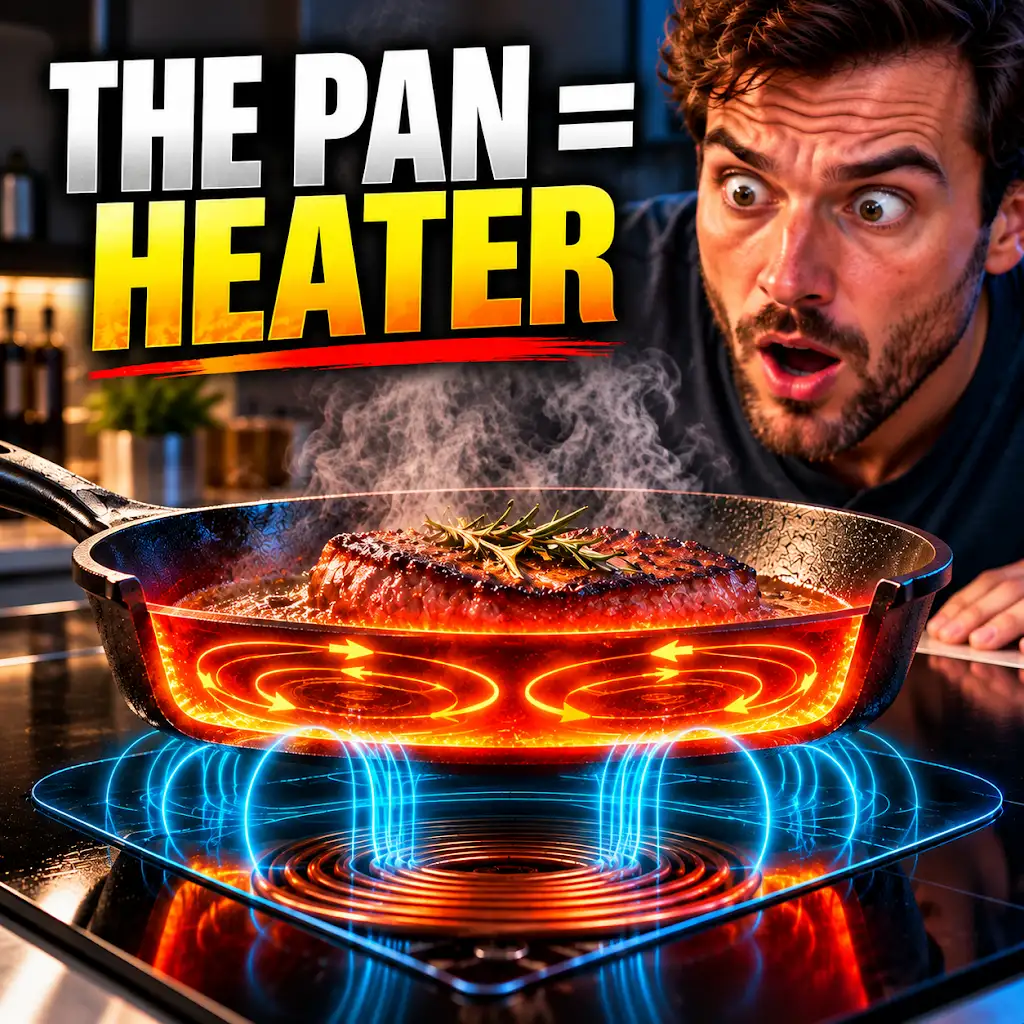
Your induction cooktop isn’t just a flat surface; it’s a sophisticated piece of engineering. Beneath that smooth ceramic glass lies a coiled copper wire, the inductor. When you turn on your induction burner, an alternating electric current is passed through this coil. This rapidly changing current generates a fluctuating magnetic field.
Ferrous Fury: The Role of Your Cookware
Here’s where your cookware becomes crucial. For induction to work, it needs to be made of a ferromagnetic material – essentially, materials that are attracted to magnets. This includes cast iron and most stainless steel. When you place a compatible pot or pan on the induction surface, the fluctuating magnetic field from the inductor coil penetrates the base of the cookware.
Creating Eddy Currents: The Engine of Heat
As the magnetic field oscillates, it induces small electrical currents within the metal of your cookware. These circulating currents are known as eddy currents. Now, the magic happens. The base of your cookware is a conductor, and as these eddy currents flow through it, they encounter resistance from the metal’s atoms. This resistance, much like friction, generates heat directly within the cookware itself. It’s a remarkably efficient process, as the heat is produced exactly where you need it – in your pot or pan.
Hysteresis Heating: A Supporting Role
In addition to eddy currents, ferromagnetic materials also experience hysteresis heating. This phenomenon occurs because the rapidly changing magnetic field causes the magnetic domains within the cookware’s metal to constantly realign. This internal friction also contributes to the generation of heat. While eddy current heating is the primary driver of heat generation in induction cooking, hysteresis heating plays a supporting role, particularly in certain types of cookware.
Direct Heat Generation: The Game Changer
Unlike traditional stovetops that heat a burner which then heats the cookware, induction heating bypasses the intermediate step. The heat is generated directly within the base of your pot or pan. This fundamental difference is what unlocks a host of advantages you’ll soon discover. You’re not just transferring heat; you’re creating it precisely where and when you need it.
Electromagnetic induction plays a crucial role in modern cooking, particularly in induction cooktops, which utilize this principle to heat pots and pans directly. For a deeper understanding of how electromagnetic induction is applied in culinary technology, you can explore the article on this topic at Freaky Science. This resource provides insights into the science behind induction cooking and its advantages over traditional cooking methods.
Unlocking a World of Benefits: Why Induction is the Future
The scientific principles are fascinating, but the real story of electromagnetic induction lies in the tangible benefits it brings to your kitchen and your life. You’re not just getting a new appliance; you’re investing in a smarter, safer, and more enjoyable way to cook.
Unmatched Speed and Responsiveness: A Culinary Leap Forward
You’ve experienced the lag of a traditional stovetop, waiting for the coils to glow red or the gas to ignite and heat the burner. Induction eliminates this waiting game.
Boiling Water in Seconds: A Test of Power
Imagine placing a pot of water on an induction burner and watching it come to a rolling boil in a fraction of the time it takes on your old stove. Many induction cooktops can boil water significantly faster than conventional methods, thanks to the direct and efficient heat transfer. This means less time waiting and more time for the actual cooking. You can move from prepping ingredients to cooking them almost instantaneously.
Precise Temperature Control: Like a Surgeon with a Spatula
Traditional stovetops often involve a degree of guesswork. You turn the knob, and the heat output changes, but there’s a delay in how that change affects your food. Induction offers unparalleled precision.
Instantaneous Adjustments: Reacting to Your Every Move
When you adjust the power setting on an induction cooktop, the magnetic field changes immediately, and so does the heat generated in your cookware. This means you can go from a gentle simmer to a vigorous boil, or vice versa, in an instant. This responsiveness is invaluable for delicate sauces, caramelization, and any dish that requires precise temperature management. You’re no longer fighting the stove; you’re in complete command.
Consistent Heat Distribution: No More Hot Spots
Because the heat is generated directly within the base of your cookware, induction offers remarkably even heat distribution. You’ll find fewer hot spots and cooler edges, leading to more consistent cooking results. This means your stir-fries will cook evenly, your pancakes will have a uniform golden-brown finish, and your risottos will achieve that perfect creamy texture without constant stirring to prevent scorching.
Enhanced Safety: Peace of Mind in Your Kitchen
You’ve probably had the scare of accidentally leaving a burner on or touching a still-hot coil. Induction addresses these safety concerns head-on, making your kitchen a safer environment for you and your family.
Cool-Touch Surfaces: No More Accidental Burns
The surface of an induction cooktop itself doesn’t get as hot as traditional stovetops. While the cookware transfers heat, the ceramic glass beneath it remains relatively cool. This significantly reduces the risk of accidental burns, especially important if you have children or pets in your home. You can confidently rest a utensil on the cooktop without fear of it melting or burning.
Automatic Shut-Off: A Built-in Guardian
Most induction cooktops are equipped with sensors that detect the presence of cookware. If you remove a pot or pan from the burner, or if the cookware is empty, the induction element will automatically shut off. This prevents unnecessary energy waste and further enhances safety by eliminating the risk of leaving a burner on accidentally with nothing on it.
No Open Flames: Eliminating a Fire Hazard
Unlike gas stoves, induction cooking utilizes electricity and magnetism, meaning there are no open flames. This eliminates a significant fire hazard in your kitchen, offering a greater sense of security. You don’t have to worry about gas leaks or flames igniting nearby materials.
Superior Energy Efficiency: Good for Your Wallet and the Planet
You’re increasingly conscious of your energy consumption, and induction technology aligns perfectly with those goals. Its efficiency translates into lower energy bills and a reduced environmental footprint.
Minimal Heat Loss: Direct to Your Food
As mentioned earlier, induction generates heat directly in the cookware. This means very little energy is wasted heating the air around the burner or the surface of the cooktop. Traditional stovetops, in contrast, lose a significant amount of heat to the surrounding environment. This direct transfer of energy to your food makes induction a remarkably efficient cooking method.
Faster Cooking Times = Less Energy Used
Because induction cooks food faster, you’re using less energy overall for each cooking task. Boiling water takes minutes, not what feels like an eternity. Searing a steak is quicker. These cumulative energy savings add up over time.
Smart Energy Management: Technology Working for You
Many modern induction cooktops feature advanced energy management systems, allowing you to monitor and control your energy usage more effectively. This empowers you to make informed decisions about your cooking habits and further optimize your energy consumption.
The Perfect Pairing: Understanding Induction-Ready Cookware
You might be wondering, “Can I use all my existing pots and pans on an induction cooktop?” The answer is a qualified yes, but it’s essential to understand the role of your cookware.
The Magnet Test: Your First Step
The simplest way to determine if your cookware is induction-ready is the magnet test. Take a common magnet and hold it to the base of your pot or pan.
The Attraction Test: Simple and Effective
If the magnet sticks firmly to the bottom of the cookware, it’s likely induction-compatible. This indicates that the base contains enough ferromagnetic material. If the magnet barely sticks or doesn’t stick at all, that piece of cookware will not work on an induction cooktop.
What Makes Cookware Induction-Ready?
The key lies in the material composition of the cookware’s base.
Ferromagnetic Core: The Heart of Compatibility
Cookware designed for induction typically features a base with a significant amount of iron or steel. This is what allows it to interact with the magnetic field generated by the cooktop.
Cast Iron: A Timeless Classic
Cast iron cookware is naturally ferromagnetic and works exceptionally well on induction cooktops. Its excellent heat retention properties are further enhanced by the direct heating of induction.
Stainless Steel: Versatile and Responsive
Many types of stainless steel are induction-compatible. Look for cookware that is specifically labeled as “induction-ready” or “for induction use.” Often, these will have a magnetic layer bonded to the bottom.
Multi-Ply Construction: The Best of Both Worlds
The most advanced induction-ready cookware often features a multi-ply construction. This usually involves layers of stainless steel sandwiching a core of aluminum or copper. This combination offers excellent heat conductivity and distribution (from the aluminum or copper) while ensuring magnetic compatibility (from the stainless steel).
Cookware to Avoid (or Adapt)
Not all cookware is created equal when it comes to induction.
Aluminum and Copper (Without a Magnetic Base): Beautiful but Incompatible
Pure aluminum and copper cookware, while excellent conductors of heat, are not magnetic. Therefore, they won’t directly heat on an induction cooktop.
Induction Adaptor Discs: A Workaround
If you have beloved aluminum or copper pots and pans that you’re reluctant to part with, you can purchase induction adaptor discs. These are flat, metallic discs that sit on the induction cooktop and are themselves heated. You then place your non-induction cookware on top of the disc. While this allows you to use your old cookware, it does reduce the efficiency of the induction system.
Glass and Ceramic Cookware: A Different Purpose
Glass and ceramic cookware are generally not magnetic and will not work on induction cooktops. These materials are typically designed for oven use or for stovetops that rely on direct radiant heat.
Investing in Your Culinary Experience: Choosing Wisely
When you’re ready to embrace induction cooking, investing in a good set of induction-ready cookware will significantly enhance your experience. Look for pieces that are well-constructed, offer even heat distribution, and are designed for durability. The right cookware will unlock the full potential of your induction cooktop.
Beyond the Basics: Advanced Features and Creative Applications
You’ve grasped the fundamental advantages of induction, but the technology continues to evolve, offering even more sophisticated features and opening up new possibilities in your kitchen.
Bridging the Gap: Flex Zones and Bridge Burners
One of the limitations of traditional stovetops is the fixed size of the heating elements. You might have a large griddle or a long roasting pan that struggles to fit evenly over a round burner. Induction technology offers solutions.
The Versatility of Flex Zones: Adaptable Cooking Surfaces
Many modern induction cooktops feature “flex zones” or “bridge burners.” These are areas on the cooktop that can be combined to create a larger, continuous cooking surface. This allows you to use larger pots, griddles, or even multiple smaller pans across a single, adaptable zone.
Accommodating Larger Cookware: Griddles and Roasting Pans
Imagine searing fish or cooking breakfast for a crowd on a large griddle. With flex zones, this becomes effortless. The entire bridged area heats evenly, ensuring consistent cooking across the entire surface.
Multi-Zone Cooking: Independent Control
In some flex zone configurations, you can still control each smaller zone independently, offering flexibility for different dishes or cooking techniques simultaneously.
Smart Connectivity and Intuitive Controls: The Kitchen of Tomorrow, Today
The integration of technology into our homes is rapidly expanding, and induction cooktops are no exception.
Wi-Fi Enabled Cooktops: Remote Control and Monitoring
You can now find induction cooktops that connect to your home Wi-Fi network. This allows for remote control and monitoring via a smartphone app.
Preheating and Adjusting Settings from Anywhere
Imagine preheating your cooktop before you even get home from work, or adjusting the simmer on your sauce from the living room. This connectivity adds a layer of convenience and control you never thought possible.
Receiving Notifications and Alerts
Your smart cooktop can send you notifications about cooking progress, potential issues, or even when your food is ready, keeping you informed and in control.
Intuitive Touch Controls and Digital Displays: A Sleek Interface
Induction cooktops often feature sleek, minimalist touch controls and clear digital displays. These interfaces are not only aesthetically pleasing but also incredibly intuitive to use, offering precise control over each cooking zone.
Creative Culinary Possibilities: Pushing the Boundaries
The precision and responsiveness of induction cooking open up a world of creative possibilities for home cooks.
Sous Vide Precision at Home: Replicating Restaurant-Quality Techniques
While not a direct replacement for a dedicated sous vide circulator, the precise temperature control of induction cooktops allows for excellent results when performing sous vide cooking directly in a pot. You can maintain incredibly stable temperatures for extended periods, achieving perfect doneness and tender textures.
Candy Making and Chocolate Tempering: Unrivaled Accuracy
Delicate tasks like candy making and chocolate tempering require absolute control over temperature. Induction’s ability to maintain precise, low temperatures makes these culinary feats far more achievable for the home cook. You can achieve that perfect snap in your brittle or that glossy sheen on your tempered chocolate with confidence.
Searing with Confidence: Achieving the Perfect Crust
The rapid and intense heat generated by induction is ideal for searing meats, achieving that beautiful, caramelized crust that locks in juices. You can go from a gentle simmer to high heat instantly, ensuring a perfect sear every time.
Electromagnetic induction plays a fascinating role in modern cooking techniques, particularly with the rise of induction cooktops that utilize this principle for efficient heat generation. For those interested in exploring the science behind this innovative cooking method, a related article can be found at Freaky Science, which delves into how electromagnetic fields create heat directly in the cookware, offering both energy efficiency and precise temperature control. This advancement not only enhances culinary experiences but also promotes safety and convenience in the kitchen.
Making the Switch: Considerations for Your Induction Upgrade
| Parameter | Value/Metric | Unit | Description |
|---|---|---|---|
| Frequency | 20-100 | kHz | Operating frequency range of induction cooktops |
| Power Output | 500-3500 | Watts | Typical power range for household induction cookers |
| Coil Diameter | 10-20 | cm | Diameter of the induction coil under the cooktop surface |
| Efficiency | 80-90 | % | Energy transfer efficiency from coil to cookware |
| Cookware Material | Ferromagnetic | – | Type of material required for induction heating (e.g., cast iron, stainless steel) |
| Heating Time | 2-5 | minutes | Time to bring 1 liter of water to boil on induction cooktop |
| Magnetic Field Strength | 1-10 | mT (millitesla) | Magnetic field strength near the cookware surface during operation |
You’re convinced that induction is the way forward, but you’re wondering about the practicalities of making the transition. Don’t worry; we’ve got you covered.
Installation and Electrical Requirements: Ensuring a Smooth Transition
Induction cooktops are typically electric appliances and will require a dedicated electrical circuit.
Professional Installation Recommended: For Safety and Performance
While some DIY enthusiasts might be comfortable, it’s generally recommended to have your induction cooktop installed by a qualified electrician or appliance installer. They can ensure the correct wiring, circuit breaker capacity, and proper ventilation, guaranteeing optimal performance and safety.
Understanding Wattage and Amperage: Matching Your Home’s Capacity
Induction cooktops draw a significant amount of power. Your electrician will assess your home’s existing electrical capacity and ensure that the new cooktop can be safely integrated into your electrical system. This might involve upgrading your home’s electrical panel or wiring if it’s older.
Budgeting for Your New Cooktop: An Investment in Your Kitchen
Induction cooktops can represent a higher upfront investment compared to some traditional stovetops. However, it’s important to consider the long-term benefits.
The Cost of the Appliance: A Range of Options
The price of induction cooktops varies widely depending on brand, features, and size. You can find a range of options to suit different budgets, from more basic models to high-end units with advanced smart technology.
The Cost of New Cookware: A Necessary Consideration
If you’re upgrading from a non-induction stove, you’ll likely need to invest in new, induction-ready cookware. Factor this into your overall budget. As mentioned, looking for sales and bundle deals can help mitigate this cost.
Long-Term Savings: Energy Efficiency and Durability
While the initial investment might seem higher, remember the long-term savings you’ll experience through increased energy efficiency and the durability of induction technology. You’re investing in an appliance that will serve you well for years to come, with lower running costs.
Maintenance and Cleaning: Keeping Your Induction Cooktop Pristine
One of the joys of induction cooking is how easy it is to keep your cooktop looking its best.
The Smooth Ceramic Surface: Effortless Cleaning
The smooth, flat ceramic glass surface of an induction cooktop is incredibly easy to clean. Spills and splatters can typically be wiped away with a damp cloth.
Avoiding Abrasive Cleaners: Protecting the Surface
It’s important to use non-abrasive cleaners and soft cloths to avoid scratching the ceramic surface. Specialized ceramic cooktop cleaners are available and can help maintain its shine.
Dealing with Stubborn Stains: Gentle Persuasion
For stubborn stains, a ceramic cooktop scraper can be used carefully to lift away burnt-on food. Always follow the manufacturer’s instructions to avoid damaging the surface.
The Learning Curve: Embracing the New
While induction is incredibly intuitive, there might be a slight learning curve as you adjust to its speed and responsiveness.
Experimentation and Familiarization: Getting to Know Your Cooktop
Take some time to experiment with your new cooktop. Try different power levels and cooking times for your favorite dishes. You’ll quickly develop a feel for how it responds and how to achieve your desired results.
Reading the Manual: Unlocking All the Features
Don’t underestimate the value of reading your cooktop’s user manual. It will often contain specific tips and tricks for maximizing its performance and understanding all its features.
Your Culinary Evolution: Embracing the Induction Revolution
You stand at the precipice of a culinary transformation. Electromagnetic induction is not just a technological advancement; it’s an invitation to a more efficient, safer, and enjoyable cooking experience. You’ve explored the science, unlocked the benefits, and understood the practicalities of making the switch.
The days of waiting for your stove to catch up are fading. You can now command your kitchen with an unprecedented level of control and precision. From boiling water in mere moments to achieving restaurant-quality searing, induction empowers you to cook with confidence and creativity. It’s about more than just preparing meals; it’s about enhancing the entire process, from the initial spark of inspiration to the final, delicious bite.
So, are you ready to revolutionize your cooking? Are you prepared to embrace the speed, the precision, the safety, and the sheer delight that electromagnetic induction brings? Your kitchen is waiting. The future of cooking is here, and it’s electrifying. Step into a new era of culinary exploration, where the invisible forces of magnetism become your greatest allies in the art of delicious creation. The induction revolution is not just happening; it’s happening for you.
The Pan Is the Heater: How Induction Cooking Really Works
FAQs
What is electromagnetic induction in cooking?
Electromagnetic induction in cooking is a technology that uses magnetic fields to generate heat directly in the cookware, rather than through a traditional heating element.
How does electromagnetic induction cooking work?
Electromagnetic induction cooking works by creating a magnetic field between the cooktop and the induction-compatible cookware. This magnetic field induces electrical currents in the cookware, which in turn generates heat for cooking.
What are the advantages of electromagnetic induction cooking?
Some advantages of electromagnetic induction cooking include faster heating times, precise temperature control, energy efficiency, and safety features such as automatic shut-off when cookware is removed.
What types of cookware can be used with electromagnetic induction cooking?
Cookware that is made of ferrous materials such as cast iron or magnetic stainless steel is compatible with electromagnetic induction cooking. Non-magnetic materials like aluminum or copper will not work on an induction cooktop unless they have a magnetic base.
Are there any limitations to electromagnetic induction cooking?
One limitation of electromagnetic induction cooking is that it requires the use of induction-compatible cookware, which may be more expensive than traditional cookware. Additionally, induction cooktops may produce a slight humming sound during operation.