
The vast, inky depths of our planet’s oceans hold secrets that have captivated human imagination for centuries. Tales of colossal creatures lurking beneath the waves, capable of capsizing ships and instilling primal fear, are woven into the fabric of seafaring folklore. While many of these stories are born of myth and exaggeration, the reality is far more extraordinary. The oceans are indeed home to a menagerie of astonishingly large and often bizarre organisms, some so elusive they remain largely shrouded in mystery. This article delves into the captivating world of real-life sea monsters, exploring creatures that rival the most fantastical of legends, from the elusive giant squid to the long-extinct, yet perpetually fascinating, megalodon.
Few creatures embody the mystique of the deep sea quite like the giant squid (Architeuthis dux). For generations, sailors’ accounts of immense, tentacled beasts rising from the abyss fueled nightmares and legends. It was a creature so rarely seen that its very existence was debated by scientists, relegated to the realm of folklore for much of history. The reality, however, is a testament to the ocean’s capacity for producing life on a truly grand scale.
Physical Marvels: Size, Strength, and Sensory Prowess
The sheer size of the giant squid is its most striking attribute. While precise measurements are difficult due to their elusive nature and the tendency for specimens to be found in pieces, estimates suggest they can reach lengths of up to 13 meters (43 feet) for males and an astonishing 18 meters (60 feet) for females, including their two longest feeding tentacles. Their mantle, the main body of the squid, can be as long as a bus, and their eyes are the largest in the animal kingdom, measuring up to 27 centimeters (11 inches) in diameter – roughly the size of a dinner plate. These enormous eyes are perfectly adapted for spotting prey and predators in the dim light of the mesopelagic zone, the twilight zone of the ocean.
Their muscular bodies are a testament to their predatory lifestyle. The eight arms and two longer feeding tentacles are equipped with powerful suckers, some lined with sharp chitinous rings, capable of ensnaring and crushing prey. The beak, located at the center of their arms, is made of hardened keratin and is strong enough to tear through the flesh of large fish and even other cephalopods. Their blood, a unique blue hue due to the presence of hemocyanin, a copper-based protein, allows them to survive in the oxygen-poor environments of the deep.
Elusive Encounters: From Rare Sightings to Scientific Breakthroughs
For centuries, evidence of giant squid was limited to beached carcasses or fragmented remains washed ashore. These infrequent discoveries fueled speculation and contributed to their mythical status. It wasn’t until the late 19th and early 20th centuries that more comprehensive studies began, but direct observations of live specimens in their natural habitat remained largely a dream.
The advent of advanced deep-sea exploration technology, including remotely operated vehicles (ROVs) and submersibles, finally brought humanity face-to-face with these magnificent creatures. In 2004, a Japanese research team achieved a groundbreaking feat: they filmed a live adult giant squid for the first time in its natural environment. This footage, captured at a depth of 900 meters (3,000 feet) off the coast of Ogasawara Island, provided invaluable insights into their behavior, swimming patterns, and hunting techniques. Subsequent expeditions have continued to document these elusive giants, slowly chipping away at the veil of mystery that once surrounded them.
Predators of the Deep: The Arms Race with the Sperm Whale
The primary predator of the giant squid is the sperm whale (Physeter macrocephalus). These colossal marine mammals are perfectly equipped for hunting in the deep, possessing powerful sonar capabilities to locate their prey and specialized diving adaptations. The most compelling evidence of the predator-prey relationship between sperm whales and giant squid comes from the scars found on sperm whale skin – telltale marks left by the suckers of giant squid tentacles. These scars are a testament to the fierce battles that take place in the dark depths.
Researchers believe that giant squid are a crucial part of the sperm whale’s diet, and the whales are the only known natural predators capable of tackling such large cephalopods. The encounters are undoubtedly brutal, and while many sperm whales likely succeed in their hunts, the scars suggest that the giant squid puts up a formidable fight, showcasing its immense strength and defensive capabilities. The struggle between these two titans of the deep is a primal drama played out in an environment hidden from human eyes.
In exploring the fascinating world of real-life sea monsters, one can delve into the intriguing article on Freaky Science that discusses various marine creatures that have sparked myths and legends throughout history. From the colossal squid to the elusive giant octopus, these creatures often blur the lines between reality and folklore. To learn more about these enigmatic beings and their impact on our understanding of the ocean, check out the article here: Freaky Science.
The Colossal Kraken: Mythical Behemoth or Misinterpreted Reality?
The legend of the Kraken is perhaps the most famous of all sea monster tales, originating from Norse mythology. Described as a monstrous, island-sized cephalopod capable of dragging entire ships to the ocean floor, the Kraken has become synonymous with the unfathomable terrors that lie beneath the waves. But where did this legend come from, and is there any basis in reality for such a creature?
Origins of the Legend: Norse Sagas and Sailor’s Tales
The earliest accounts of the Kraken appear in the sagas of medieval Iceland and Norway. These stories painted a vivid picture of a creature so immense that its body could be mistaken for an island, and its tentacles were said to be as thick as tree trunks. Sailors, understandably terrified by the vastness and unknown dangers of the sea, often attributed unexplained phenomena to monstrous entities. The sudden appearance and disappearance of whirlpools, the unsettling sounds emanating from the deep, and the sight of something enormous moving beneath the surface could easily have been interpreted as the work of a colossal beast.
Over time, these tales were embellished and spread, evolving into the terrifying image of the Kraken that we recognize today. The sheer scale of the descriptions suggests a creature far beyond anything scientifically documented, leading many to dismiss it as pure fantasy.
The Giant Squid Connection: A Possible Real-World Inspiration
While the Kraken’s true nature remains a matter of speculation, many cryptozoologists and marine biologists believe that the legend may have been inspired, at least in part, by encounters with the giant squid. The physical characteristics described in the sagas – the immense size, the numerous tentacles, and the predatory nature – bear a striking resemblance to Architeuthis dux.
It is plausible that early sailors, encountering a giant squid for the first time, especially in rough seas or under poor visibility, would have been overwhelmed by its size and appearance. A large specimen, perhaps agitated or defensive, could have created significant disturbances in the water, leading to the perception of an even larger, more terrifying entity. The legend of the Kraken may, therefore, be an exaggerated, albeit understandable, interpretation of real encounters with these real, albeit not quite island-sized, cephalopods. The mystery of the Kraken continues to fascinate, serving as a reminder of how our understanding of the natural world is constantly shaped by our encounters with the unknown.
The Shadow of Doubt: The Unseen and the Unexplained
Despite the compelling link to the giant squid, some argue that the Kraken legend might allude to something even more profound and yet undiscovered. The oceans are vast, and human exploration has only scratched the surface. There remains a significant possibility of encountering organisms that surpass our current understanding of marine biology, creatures that could indeed be of a size and power that would inspire awe and terror in equal measure. The enduring appeal of the Kraken lies in this lingering possibility, a testament to the boundless mysteries that the ocean continues to hold.
The Megalodon: The Apex Predator of Prehistory
While the giant squid and Kraken reside in the realm of the living and the legendary, the megalodon (Otodus megalodon) belongs to the ancient past. Yet, the sheer scale and ferocity of this extinct shark continue to capture the public imagination, making it one of the most captivating and terrifying “sea monsters” of all time. Its name, meaning “big tooth,” is a fitting testament to its colossal size and its fearsome reputation.
A Titan of the Seas: Size and Power Unmatched
The megalodon was an undisputed titan of the prehistoric oceans, dominating marine ecosystems for millions of years, from approximately 23 to 3.6 million years ago. While its exact size is debated due to the limited fossil evidence (primarily consisting of its massive teeth and vertebrae), scientific consensus suggests it was the largest shark and apex predator that ever lived. Estimates for its length vary, but most researchers believe it reached lengths of at least 15 to 18 meters (50 to 60 feet), with some reaching upwards of 20 meters (65 feet) or even more. To put this into perspective, this is roughly twice the size of the largest great white shark ever recorded.
Its jaw was proportionally enormous, capable of engulfing prey of substantial size. The teeth, the most common fossil remains, are themselves remarkable specimens, reaching up to 18 centimeters (7 inches) in length. These teeth were serrated and triangular, perfectly designed for slicing through the flesh and bone of its prey, which included large whales, seals, and other marine animals. The sheer power of its bite force is estimated to have been immense, capable of crushing bone and delivering devastating blows.
The Global Reign: Megalodon’s Ecological Dominance
The megalodon was not confined to a single geographic region; its fossils have been found in oceans around the world, indicating a global distribution. This widespread presence allowed it to exploit a diverse range of prey species, further solidifying its position as the apex predator of its era. Its existence profoundly shaped marine ecosystems, influencing the evolution and behavior of other species as they adapted to the constant threat of this formidable hunter.
The Mystery of Its Extinction: Climate Change and Competition
The demise of the megalodon remains a subject of scientific inquiry. While it dominated the oceans for millions of years, its extinction around 3.6 million years ago coincided with significant environmental shifts. Several factors are believed to have contributed to its decline:
The Cooling Climate
As the Earth’s climate began to cool, ocean temperatures dropped. Megalodon, being a large, presumably ectothermic animal, may have struggled to adapt to these colder waters, particularly in its nursery grounds.
Declining Prey Populations
Changes in ocean currents and sea levels, likely driven by global cooling and glaciation, led to shifts in the distribution and abundance of its primary prey, such as certain whale species. A decline in its food sources would have placed immense pressure on the megalodon population.
Increased Competition
The emergence and diversification of other large marine predators, such as early ancestors of the great white shark and orca, may have intensified competition for food resources. While megalodon was undoubtedly a formidable predator, it may have been outcompeted by more agile or specialized hunters in the changing marine landscape. The precise combination and impact of these factors are still being investigated by paleontologists.
Creatures of the Abyss: Beyond the Giants
While the giant squid and the specter of the megalodon dominate many discussions of sea monsters, the deep ocean harbors a multitude of other fascinating and often bizarre creatures that could easily inspire tales of the monstrous. These organisms, adapted to extreme pressure, eternal darkness, and scarce food, showcase the incredible diversity and resilience of life on Earth.
The Anglerfish: A Luminous Predator of the Dark
The anglerfish, particularly the deep-sea varieties, are prime examples of the strange beauty found in the abyss. These fish are characterized by their bioluminescent lures, fleshy appendages that dangle in front of their gaping mouths, attracting unsuspecting prey in the pitch-black depths. The lure emits a soft, enticing glow, acting as a deadly trap for smaller fish and invertebrates.
Adaptations for Survival
The adaptations of anglerfish are truly remarkable. Many species are sexually dimorphic, with the tiny males finding and fusing with the much larger females, essentially becoming a sperm-producing appendage. This ensures reproduction in the vast, sparsely populated deep sea. Their large mouths and expandable stomachs allow them to consume prey almost as large as themselves, a crucial adaptation in an environment where meals are infrequent.
The Vampire Squid: Not Quite a Vampire, but Still Terrifying
Despite its name, the vampire squid (Vampyroteuthis infernalis) is not a true squid and is not a blood-sucker. It is a unique cephalopod with characteristics of both squid and octopus. Its most striking feature is the cloak-like webbing between its arms, which it can invert to reveal rows of sharp spines, giving it a fearsome appearance.
A Unique Defense Mechanism
When threatened, the vampire squid can engulf itself in its webbed arms, creating a defensive posture that makes it appear larger and more threatening. It also possesses the ability to eject a cloud of bioluminescent mucus, disorienting predators and allowing for escape. These adaptations, coupled with its deep-sea habitat, contribute to its enigmatic and somewhat monstrous reputation.
The Blobfish: An Unlikely Candidate for Monstrosity
While not overtly fearsome in its appearance, the blobfish has gained notoriety for its rather gelatinous and somewhat forlorn appearance when brought to the surface. In its natural deep-sea habitat, where the pressure is immense, the blobfish’s gelatinous flesh is the perfect consistency to maintain buoyancy. However, when removed from this high-pressure environment and brought to the surface, its body loses its structural integrity, resulting in its now-famous “melted” look. This stark contrast between its natural and exposed states has earned it a place in the public’s perception of odd and slightly unsettling sea creatures.
Throughout history, tales of sea monsters have captivated the imagination of many, often blurring the lines between myth and reality. For those intrigued by these enigmatic creatures, a fascinating article can be found that explores the science behind legendary sea monsters and their possible real-life counterparts. You can read more about this intriguing topic in the article on Freaky Science, where the connection between folklore and marine biology is examined in detail.
The Human Fascination with Sea Monsters
| Sea Monster | Size | Location | Behavior |
|---|---|---|---|
| Kraken | Unknown | North Atlantic Ocean | Legendary giant squid-like creature |
| Megalodon | Up to 60 feet | Worldwide oceans | Extinct giant shark |
| Leviathan | Unknown | Various mythologies | Gigantic sea serpent |
The enduring appeal of sea monsters, from ancient myths to modern cinematic portrayals, speaks to a deep-seated human fascination with the unknown and the untamed. Our ancestors, facing the vast and often unpredictable ocean, naturally projected their fears and awe onto the creatures they could not comprehend.
The Psychology of Fear and Wonder
The ocean represents a frontier of the unknown, a realm that is alien to our terrestrial existence. Its immense depths, crushing pressures, and the sheer darkness of its lower reaches evoke a sense of vulnerability and primal fear. Sea monsters, with their exaggerated forms and terrifying capabilities, tap into this primal fear, representing the ultimate embodiment of the ocean’s power and its capacity for the monstrous.
Simultaneously, these creatures inspire wonder and awe. They represent the extraordinary adaptations of life to extreme environments, pushing the boundaries of what we consider possible. The discovery of real creatures like the giant squid, with their alien beauty and immense size, fuels our curiosity and our desire to explore the unexplored. The “monsters” of the deep, whether real or imagined, serve as a constant reminder of the vastness of our planet and the incredible diversity of life it harbors.
The Role of Media and Popular Culture
The evolution of sea monster narratives has been heavily influenced by media and popular culture. From early literature and folklore to Hollywood blockbusters, these stories have been retold and reinterpreted, shaping our collective understanding and perception of these creatures. Films like “Jaws,” while focusing on a known predator, amplified public fear of sharks. Documentaries about the giant squid and explorations of the deep sea have brought real-life wonders to a wider audience.
Even fictional creatures like Godzilla, while not strictly marine monsters, draw inspiration from the awe-inspiring and sometimes terrifying power of the ocean’s inhabitants. This ongoing engagement with sea monster imagery ensures that their allure remains potent, continuing to spark our imagination and our desire to unravel the secrets of the deep.
The Quest for Discovery: Continuing Exploration
The fascination with sea monsters is intrinsically linked to the ongoing quest for discovery. As technology advances, allowing us to penetrate deeper into the ocean’s mysteries, we continue to encounter new and astonishing species. The possibility of discovering an organism that rivals the mythical Kraken or surpasses our current understanding of marine life fuels the drive for exploration. Each new discovery, whether it’s a previously unknown species of deep-sea fish or a more detailed observation of a giant squid, adds another layer to the complex tapestry of life in our oceans, blurring the lines between myth and reality and continuing the timeless allure of the real-life sea monsters that inhabit our planet.
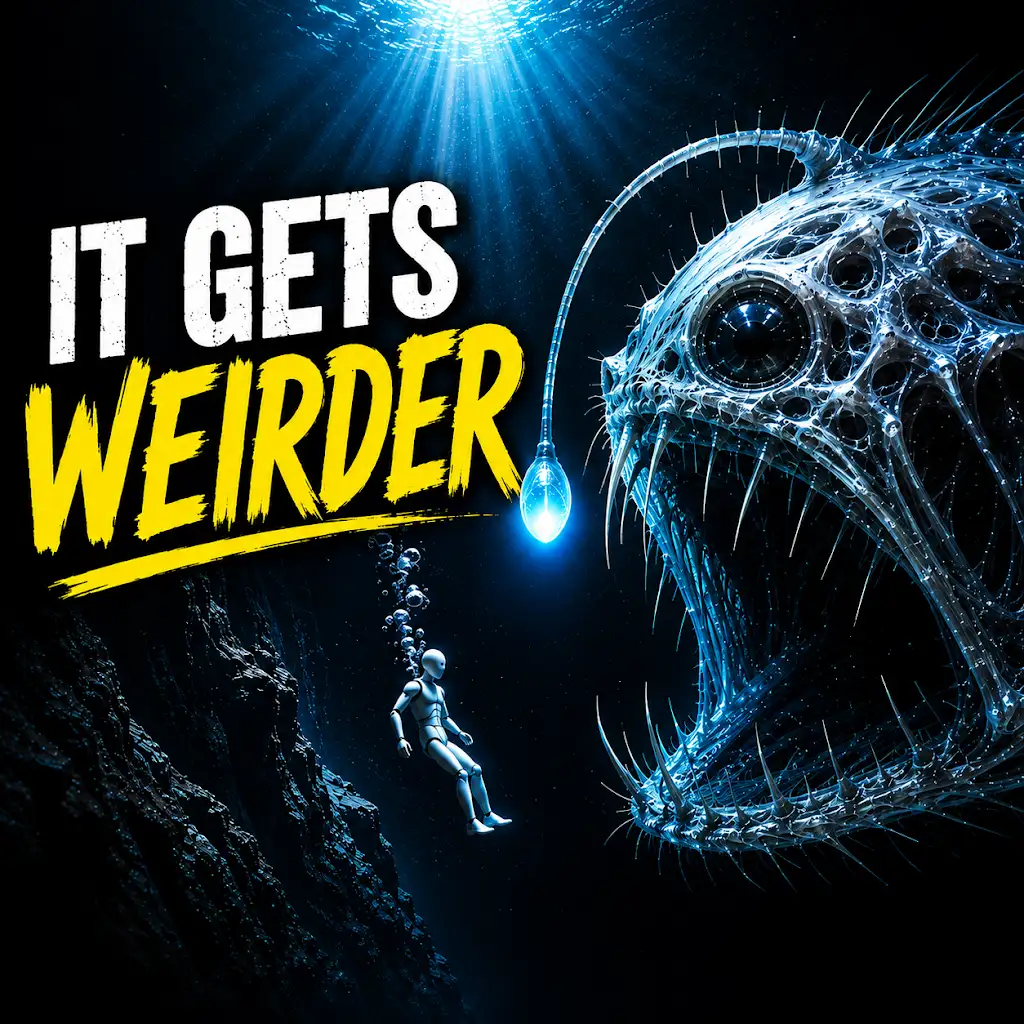
The Deeper You Go, the Less Life Looks Like Life
FAQs
What are some examples of real life sea monsters?
Some examples of real life sea monsters include the giant squid, the colossal squid, the oarfish, the goblin shark, and the frilled shark.
Are these sea monsters dangerous to humans?
While some of these sea monsters have the potential to cause harm to humans due to their size and predatory nature, they generally do not pose a significant threat. Most of these creatures live in deep ocean waters and rarely come into contact with humans.
How do scientists study real life sea monsters?
Scientists study real life sea monsters through various methods such as deep sea exploration using submersibles and remotely operated vehicles, as well as by analyzing specimens that are caught in fishing nets or washed ashore.
What is the largest real life sea monster ever discovered?
The largest real life sea monster ever discovered is the colossal squid, which can grow to be over 40 feet long and is known for its massive size and powerful tentacles.
Why are these creatures often referred to as “sea monsters”?
These creatures are often referred to as “sea monsters” due to their large size, unusual appearance, and the mystery that surrounds them. In the past, sightings of these creatures may have contributed to myths and legends about sea monsters.