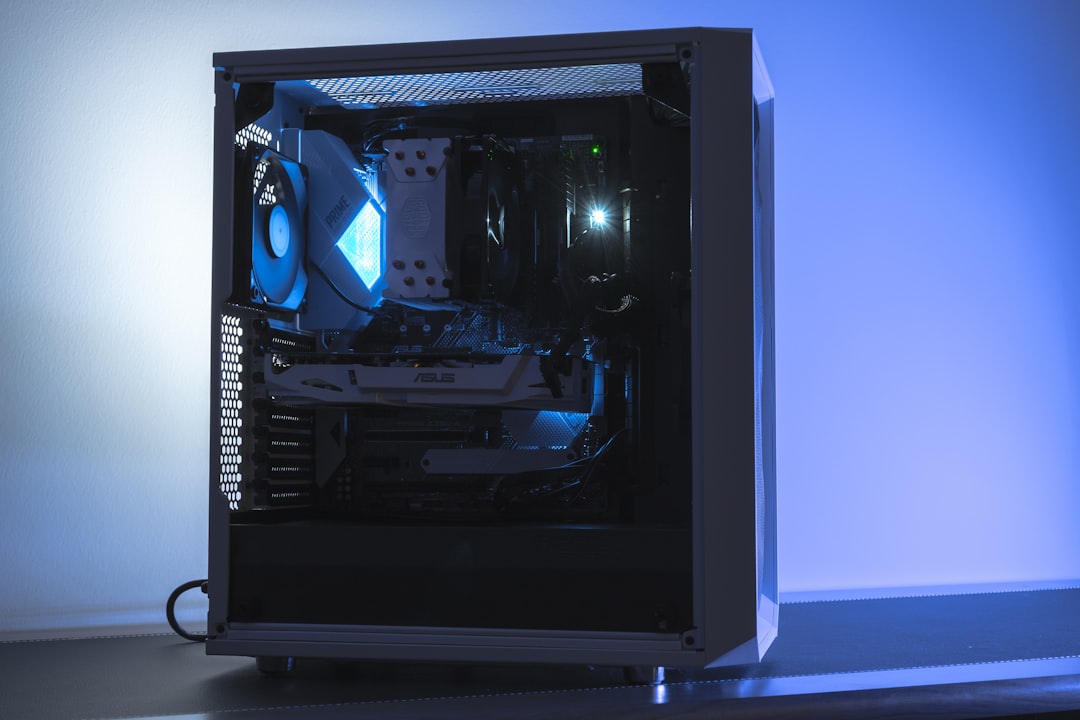
The relentless march of technological progress has long been characterized by a constant pursuit of greater speed and capability in our computing devices. From the colossal mainframes of yesteryear to the pocket-sized supercomputers we carry today, the trend has been clear: more power, faster processing. Yet, as we push the boundaries of silicon and explore novel computational paradigms, a fundamental physical constraint looms large, posing a significant challenge to this unbridled ambition. This is the battle between the practical realities of today’s computers and the theoretical ultimate efficiency dictated by the Landauer Limit.
The digital revolution has transformed nearly every facet of human existence. Computing power, once a luxury reserved for scientific institutions and large corporations, is now ubiquitous. The sheer volume of data generated and processed globally is staggering, fueled by everything from scientific research and financial markets to social media and the Internet of Things. This insatiable demand for computation has driven innovation at an astonishing pace.
The Evolution of Processors: From Transistors to Billions
The heart of modern computing lies in the processor, and its evolution is a testament to human ingenuity. The journey began with vacuum tubes, then transitioned to transistors, and eventually to integrated circuits, or chips, containing millions, and now billions, of transistors. Each transistor acts as a tiny switch, controlling the flow of electrical current and performing logical operations. The miniaturization of these transistors, a phenomenon famously described by Moore’s Law, has been a primary driver of increased processing power and reduced energy consumption per operation.
Moore’s Law: A Guiding Principle (and a Looming Wall)
Gordon Moore’s observation in 1965 that the number of transistors on a microchip doubles approximately every two years has been a remarkably accurate predictor of the semiconductor industry’s progress for decades. This relentless scaling has allowed for smaller, faster, and more energy-efficient processors. However, as transistors approach atomic scales, quantum mechanical effects become more pronounced, and the physical limits of lithographic techniques become increasingly challenging to overcome. The era of easy scaling is undoubtedly nearing its end.
The Growing Energy Footprint of Computing
While individual transistors and processors have become more efficient, the sheer scale of computation being performed globally has led to a significant increase in the overall energy consumption of the computing industry. Data centers, the backbone of the internet and cloud computing, are massive consumers of electricity, not only for powering the servers but also for cooling them to prevent overheating. This energy demand has significant economic and environmental implications, prompting a search for more sustainable computing solutions.
The Environmental Impact of Data Centers
The energy required to power data centers contributes to greenhouse gas emissions, especially if the electricity is generated from fossil fuels. The water used for cooling in some facilities also raises concerns about local water resources. As the digital world continues to expand, the environmental cost of computation becomes an increasingly critical consideration, pushing the industry to explore renewable energy sources and more efficient cooling technologies.
The Insatiable Demand for Data
The explosion of data, often referred to as “big data,” is another key driver of computational demand. From scientific simulations that require processing petabytes of information to the constant stream of data from sensors and personal devices, the need to store, process, and analyze this information is immense. This data-centric paradigm necessitates ever-increasing computational resources.
The Rise of Artificial Intelligence and Machine Learning
The recent surge in the capabilities of Artificial Intelligence (AI) and Machine Learning (ML) algorithms has been particularly impactful. These technologies, while offering transformative potential, are often computationally intensive, requiring vast datasets and extensive training cycles. The training of large language models, for instance, can consume energy equivalent to that of thousands of homes for an extended period, highlighting the computational cost of cutting-edge AI.
In exploring the fascinating world of computational limits, a related article that delves into the implications of the Landauer limit on real computers can be found at Freaky Science. This article discusses how the theoretical constraints of information processing, as defined by the Landauer limit, challenge the efficiency of modern computing systems and highlights the ongoing research aimed at overcoming these barriers.
Beyond Silicon: Exploring New Computational Frontiers
As the limitations of traditional silicon-based computing become more apparent, researchers are exploring a diverse range of alternative technologies and computational paradigms that promise greater efficiency and capability. These efforts aim to overcome the physical barriers encountered with conventional semiconductor scaling.
Quantum Computing: A Paradigm Shift
Quantum computing represents a fundamental departure from classical computing. Instead of relying on bits that can be either 0 or 1, quantum computers use qubits, which can exist in a superposition of both states simultaneously. This, along with the principle of entanglement, allows quantum computers to explore a vast number of possibilities concurrently, offering the potential for exponential speedups in solving certain types of problems that are intractable for even the most powerful classical supercomputers.
The Promise of Quantum Algorithms
Algorithms like Shor’s algorithm for factoring large numbers and Grover’s algorithm for searching unsorted databases demonstrate the theoretical power of quantum computation. These algorithms could revolutionize fields such as cryptography, drug discovery, materials science, and financial modeling. However, building and maintaining stable quantum computers is a significant engineering challenge, and error correction remains a crucial area of research.
Neuromorphic Computing: Mimicking the Brain
Neuromorphic computing aims to build hardware that mimics the structure and function of the human brain. Instead of the von Neumann architecture that separates processing and memory, neuromorphic systems often integrate these functions, similar to how neurons and synapses operate in biological brains. This approach can lead to highly energy-efficient and parallel processing capabilities, particularly for tasks that the brain excels at, such as pattern recognition and learning.
Spiking Neural Networks and Analog Computing
Many neuromorphic architectures utilize spiking neural networks, where information is encoded in the timing of “spikes” of electrical activity, much like biological neurons. This can lead to significantly lower power consumption compared to traditional digital systems. Analog computing, which uses physical phenomena like voltage and current to represent and manipulate data, is also being explored in the context of neuromorphic designs for its potential efficiency benefits.
Optical Computing: Harnessing Light
Optical computing uses photons, or light particles, instead of electrons to perform computations. Light travels faster than electricity and generates less heat, offering the potential for extremely high speeds and reduced energy consumption. While optical computing has been explored for decades, challenges remain in miniaturization, signal processing, and integrating optical components with electronic systems.
Photonic Integrated Circuits and Light-Based Logic Gates
Research in photonic integrated circuits (PICs) is advancing the development of optical chips that can perform complex operations. Engineers are working on creating light-based logic gates and memory elements that can manipulate and store optical signals efficiently, paving the way for a new generation of high-speed, low-power computing devices.
The Landauer Limit: The Fundamental Barrier to Efficiency
While technological advancements push the boundaries of what’s possible, there exists a fundamental physical limit that dictates the absolute minimum energy required for computation. This is known as the Landauer Limit, named after physicist Rolf Landauer. It is a cornerstone of thermodynamics and information theory, and it has profound implications for the future of computing efficiency.
Information Erasure and Energy Dissipation
The Landauer Limit states that the erasure of one bit of information in a system requires a minimum amount of energy dissipation. This energy is released as heat. This might seem counterintuitive at first glance, as we often think of information as abstract and devoid of physical cost. However, in the realm of physics, information is intrinsically linked to the physical state of a system.
The Thermodynamic Cost of Resetting a Bit
Consider a simple bit that can be in one of two states, 0 or 1. To perform a computation, we often need to reset this bit to a known state. If the bit is in an unknown state (e.g., a superposition of 0 and 1, or simply an undetermined state), and we deterministically set it to 0, we are essentially losing information about its previous state. This loss of information, according to Landauer, has a thermodynamic cost.
The Mathematical Formulation of the Limit
The Landauer Limit is quantified by the following formula:
$E \ge k_B T \ln 2$
Where:
- $E$ is the minimum energy required to erase one bit of information.
- $k_B$ is the Boltzmann constant, a fundamental constant in physics that relates temperature to energy.
- $T$ is the absolute temperature of the system in Kelvin.
- $\ln 2$ is the natural logarithm of 2, approximately 0.693.
At room temperature (around 300 Kelvin), the Landauer Limit is approximately $0.017$ electron volts (eV) or $2.8 \times 10^{-21}$ joules (J). While this value is incredibly small, it represents an absolute lower bound. Any computation that involves irreversible steps, such as erasing information, will inherently dissipate at least this much energy per bit erased.
Irreversible vs. Reversible Computing
The key concept here is reversibility. If a computational process is perfectly reversible, meaning that the original state can be perfectly reconstructed from the final state, then in theory, no energy needs to be dissipated. However, most computations performed by classical computers are irreversible. For example, if a computation results in a single output from multiple inputs, the original inputs cannot be uniquely determined from the output.
The Gap Between Theory and Practice
The current energy consumption of everyday computing devices is orders of magnitude higher than the Landauer Limit. A typical transistor in a modern processor might consume millions of times more energy per operation than the theoretical minimum. This significant gap highlights the immense potential for efficiency improvements in computing hardware and algorithms.
Current Energy Dissipation in Transistors
The energy dissipated by a transistor is due to various factors, including leakage currents, switching losses, and the energy required to charge and discharge capacitances. As transistors shrink, these effects become more complex, and quantum tunneling can lead to increased leakage. Overcoming these practical challenges is crucial for approaching the Landauer Limit.
The Ultimate Efficiency Battle: Real Computers vs. Landauer Limit
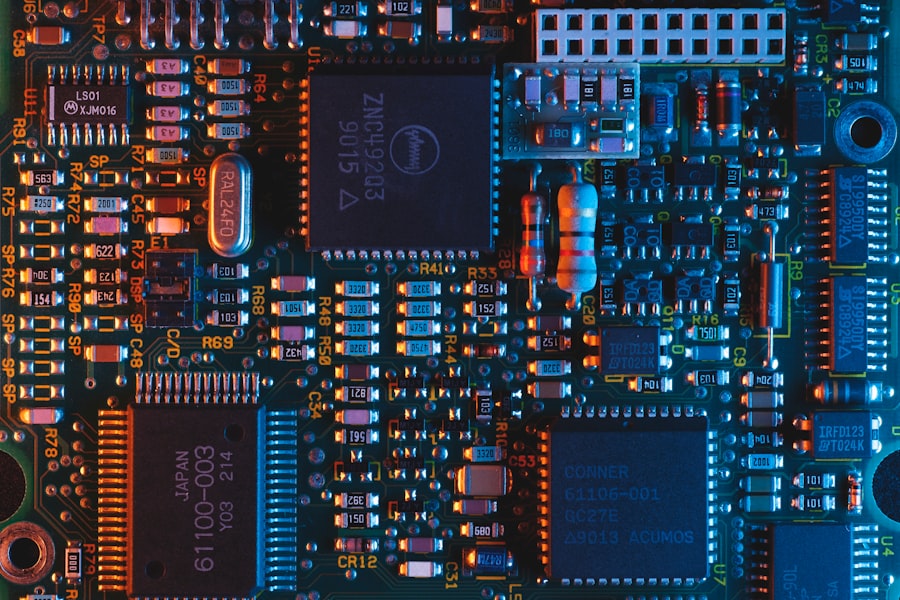
The Landauer Limit serves as a theoretical benchmark, a tantalizing glimpse into the absolute minimum energy required for computation. The “ultimate efficiency battle” is the ongoing struggle to bridge the vast gap between the energy our current computers consume and this fundamental physical limit.
The Imperfect World of Digital Circuits
Digital computers, by their very nature, operate on binary logic, where bits are deterministically set to 0 or 1. Many operations within these circuits involve irreversible transformations of information. For example, an AND gate takes two inputs and produces a single output. If the output is 0, we cannot definitively determine whether the inputs were (0, 0), (0, 1), or (1, 0). This inherent irreversibility contributes to energy dissipation.
The Energy Cost of Logic Gates
Each logic gate in a processor, no matter how small, has an associated energy cost for its operation. This cost is a combination of factors, including the power required to switch the transistors, the energy needed to drive the signals, and the energy lost due to resistance and other physical imperfections. While engineers constantly strive to reduce this cost, it remains significantly higher than the Landauer Limit.
The Role of Energy-Efficient Algorithms
Beyond hardware, the design of algorithms plays a critical role in computational efficiency. Algorithms that minimize the number of operations, reduce data movement, and avoid unnecessary computations can significantly lower the overall energy footprint of a task.
Algorithmic Optimization and Complexity Theory
Computer scientists continuously work on developing more efficient algorithms for various problems. This involves understanding the computational complexity of problems and devising strategies to solve them with fewer resources. For instance, a problem that can be solved in logarithmic time (O(log n)) is significantly more efficient than one that requires linear time (O(n)) or quadratic time (O(n^2)).
The Quest for Reversible Computing
The ultimate goal for achieving energy efficiency close to the Landauer Limit lies in the development of reversible computing. In a reversible computing model, every computational step can be undone, allowing for the recovery of the original information. While this sounds ideal, implementing truly reversible computing in practice presents significant challenges.
The Fredkin Gate and Beyond
Pioneering work in reversible computing, such as the development of the Fredkin gate (also known as a Toffoli gate), has demonstrated the theoretical possibility of building logic circuits that are entirely reversible. However, these circuits often require more complex hardware and can be slower than their irreversible counterparts in the short term. The practicality and scalability of reversible computing are ongoing areas of research.
The ongoing debate about the efficiency of real computers in relation to the Landauer limit has sparked interest in various scientific circles. A fascinating article that delves deeper into this topic can be found on Freaky Science, where the implications of thermodynamic principles on computing are explored. Understanding these concepts is crucial for advancing technology, and you can read more about it in the article linked here: Freaky Science. This exploration not only highlights the theoretical boundaries but also the practical challenges faced by modern computing systems.
Bridging the Gap: Strategies and Innovations
| Computing System | Energy Consumption | Landauer Limit |
|---|---|---|
| Traditional Computer | Several watts to hundreds of watts | 2.85 x 10^-21 joules per bit of information erased |
| Quantum Computer | Depends on the number of qubits and operations | Depends on the quantum operations and temperature |
The journey towards ultra-efficient computing is a multi-faceted endeavor, involving a combination of hardware innovation, algorithmic refinement, and the exploration of entirely new computational paradigms. The Landauer Limit serves as both a challenge and an inspiration for these efforts.
Designing for Lower Dissipation
Engineers are constantly seeking ways to minimize energy dissipation in computing hardware. This involves not only shrinking transistors but also exploring new materials, device architectures, and power management techniques.
Advanced Transistor Technologies
Beyond FinFETs (Fin Field-Effect Transistors), research is exploring technologies like Gate-All-Around (GAA) transistors and Negative Capacitance FETs (NC-FETs) to improve switching speed and reduce leakage currents. The exploration of novel materials like 2D materials (e.g., graphene, MoS2) also holds promise for creating transistors with superior electrical properties.
Power Gating and Dynamic Voltage and Frequency Scaling (DVFS)
Sophisticated power management techniques are employed in modern processors to reduce energy consumption. Power gating involves shutting off power to inactive parts of the chip, while DVFS dynamically adjusts the voltage and clock frequency of the processor based on the workload, slowing it down when high performance is not required.
The Importance of Data Locality and Minimizing Data Movement
A significant portion of the energy consumed by computers is spent moving data between memory and processing units. Optimizing data locality, where data is kept close to where it’s being processed, and minimizing unnecessary data transfers can lead to substantial energy savings.
In-Memory Computing Architectures
Emerging architectures like in-memory computing aim to perform computations directly within memory arrays, eliminating the need to shuttle data back and forth. This can drastically reduce latency and energy consumption, particularly for data-intensive applications.
Efficient Data Compression and Encoding
Employing effective data compression and encoding techniques can reduce the amount of data that needs to be stored and transmitted, thereby reducing the computational resources required. This is especially relevant in the era of big data.
The Future of Ultra-Efficient Computing
The battle between the practical limitations of current computers and the theoretical efficiency of the Landauer Limit is far from over. It is a dynamic and exciting field of research and development. As we continue to push the boundaries of technology, we can expect to see increasingly efficient computing systems.
The Role of Energy Harvesting and Low-Power Design
The development of energy-harvesting technologies, which can capture energy from ambient sources like light, heat, or vibrations, could further reduce the reliance on traditional power sources for certain devices. Additionally, a continued focus on low-power design principles across all levels of computing will be crucial.
The Synergy of Different Computational Paradigms
It is likely that the future of ultra-efficient computing will involve a synergistic combination of different computational paradigms. Classical computing, quantum computing, and neuromorphic computing may not be mutually exclusive but rather complementary, each excelling at different types of tasks. The ultimate goal is to leverage the strengths of each to achieve unprecedented levels of computational power and efficiency. The Landauer Limit, in this context, remains the ultimate arbiter of efficiency, driving innovation towards a future where computation is as energetically frugal as physically possible.

Why the Universe Makes You Pay to Forget
FAQs
What is the Landauer limit?
The Landauer limit is a theoretical minimum amount of energy required to perform a computation. It is based on the principle that erasing or resetting a bit of information in a computer requires a certain amount of energy.
What are real computers?
Real computers are physical devices that perform computations using electronic circuits and components. They include traditional desktop and laptop computers, as well as servers, supercomputers, and other types of computing devices.
How do real computers compare to the Landauer limit?
Real computers currently consume significantly more energy than the Landauer limit when performing computations. This is due to the inefficiencies of electronic circuits and the need for cooling systems to dissipate heat generated during computation.
What are the implications of the Landauer limit for computing technology?
The Landauer limit has implications for the future of computing technology, as it sets a fundamental lower bound on the energy consumption of computation. Researchers are exploring alternative computing technologies, such as quantum computing and reversible computing, that could potentially operate closer to the Landauer limit.
How might the Landauer limit impact the development of future computing devices?
The Landauer limit could influence the design and development of future computing devices by encouraging the use of more energy-efficient computing technologies. It may also drive research into new methods for minimizing energy consumption in computation, leading to more sustainable and efficient computing devices.