The Earth’s oceans, vast and enigmatic, play a crucial role in regulating global climate, sustaining ecosystems, and supporting human economies. However, these complex systems are under increasing pressure from anthropogenic factors, necessitating robust and timely monitoring. The Rapid Ocean Monitoring Array Data (ROMAD) initiative represents a significant advancement in this field, providing a continuous stream of oceanographic information critical for understanding, predicting, and responding to oceanic changes. This article delves into the architecture, capabilities, and impact of ROMAD, inviting the reader to explore the intricate mechanisms by which humanity is beginning to untangle the ocean’s silent narrative.
The ocean, often perceived as a static blue expanse, is in fact a dynamic fluid battlefield of currents, temperatures, and chemical reactions. Its scale and complexity have long presented a challenge to comprehensive observation. Traditional methods, such as research cruises and sporadic buoy deployments, offered snapshots rather than continuous narratives. However, the accelerating pace of climate change, manifest in rising sea levels, ocean warming, and acidification, demands a paradigm shift in data acquisition.
The Limitations of Traditional Oceanographic Surveys
Historically, oceanographic data collection relied heavily on ship-based expeditions. These voyages, while invaluable for in-depth regional studies, are inherently time-consuming, expensive, and limited in spatial and temporal coverage. Imagine attempting to understand the intricate workings of a vast city by taking a photograph from a single street corner once a month; this metaphor aptly describes the limitations of past oceanic observational efforts.
The Rise of Autonomous Systems and Sensor Networks
The advent of autonomous underwater vehicles (AUVs), gliders, and sophisticated sensor technologies has revolutionized ocean monitoring. These instruments can operate independently for extended periods, collecting data across vast stretches of ocean and at varying depths. This technological leap laid the groundwork for integrated monitoring systems like ROMAD, enabling a continuous gaze upon the ocean’s ever-changing face.
Recent advancements in oceanography have highlighted the importance of rapid ocean monitoring array data, which plays a crucial role in understanding marine ecosystems and climate change. For further insights into the latest developments in this field, you can explore a related article on ocean monitoring technologies at Freaky Science. This resource provides valuable information on how these technologies are being utilized to gather real-time data, enhancing our ability to respond to environmental changes effectively.
Architecture and Components of ROMAD
ROMAD is not a single instrument, but rather a distributed network of interconnected platforms and sensors, functioning as the central nervous system of a global oceanic observatory. Its architecture is carefully designed to maximize data acquisition, transmission, and processing, offering a multi-dimensional view of oceanographic parameters.
Distributed Sensor Platforms
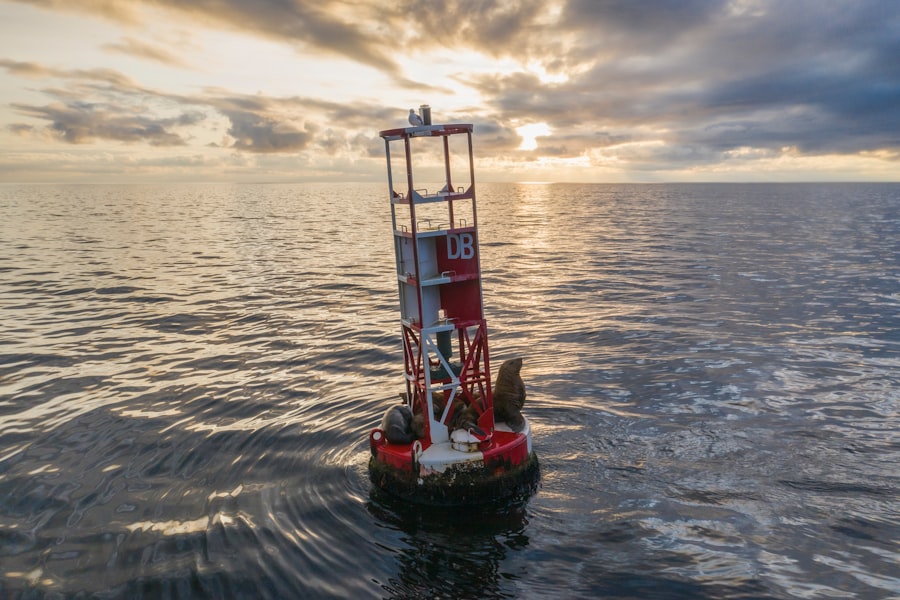
The backbone of ROMAD consists of an extensive array of diverse sensor platforms. It includes moored buoys, which serve as sentinel stations, collecting data at fixed locations over prolonged periods. These buoys often feature meteorological sensors above the surface and a suite of oceanographic instruments extending into the water column. Complementing these are profiling floats, such as those within the Argo program, which drift with ocean currents, periodically surfacing to transmit collected data. Gliders, autonomous winged vehicles, provide another layer of mobility, traversing predefined transects for weeks or months, collecting continuous profiles of temperature, salinity, and other variables. In deeper oceanic trenches and along active tectonic zones, cabled observatories offer unparalleled real-time data flow, essentially providing a dedicated fiber optic highway for oceanographic information.
Sensor Modalities and Data Types
Each platform within ROMAD is equipped with a specific suite of sensors designed to capture a wide array of oceanographic variables. These include basic physical parameters such as temperature, salinity, and pressure, which are fundamental to understanding ocean circulation and stratification. Beyond these, chemical sensors measure dissolved oxygen, pH (for ocean acidification monitoring), and nutrient concentrations, critical for assessing ecosystem health and biogeochemical cycles. Acoustic sensors detect marine life, measure currents, and even map the seafloor. Optical sensors are employed to gauge turbidity, chlorophyll-a concentrations (an indicator of phytoplankton biomass), and light penetration, offering insights into primary productivity.
Data Acquisition and Transmission Protocols
The sheer volume of data generated by ROMAD necessitates robust acquisition and transmission protocols. Data from autonomous platforms are often stored internally and transmitted periodically via satellite links when the platform surfaces or reaches a specific transmission window. Moored buoys and cabled observatories, with continuous power, can transmit data in near real-time, often leveraging satellite constellations like Iridium or dedicated undersea fiber optic cables. Standardization of data formats and metadata is paramount to ensure interoperability and seamless integration across the diverse components of the array.
Data Processing, Analysis, and Dissemination
The raw data flowing from ROMAD platforms are merely disconnected signals until they are processed, analyzed, and transformed into meaningful insights. This complex process involves multiple stages, from initial quality control to advanced modeling and visualization.
Real-time Data Quality Control and Validation
Upon receipt, all incoming data undergo rigorous quality control procedures. Automated algorithms identify outliers, sensor drifts, and potential instrumental errors. Expert human review further validates the data, identifying anomalies that automated systems might miss. This meticulous approach ensures the integrity and reliability of the ROMAD dataset, upon which scientific conclusions and management decisions will be built.
Data Archiving and Accessibility
All ROMAD data are meticulously archived in centralized, accessible repositories. These archives adhere to international standards for data management, ensuring long-term preservation and discoverability. Open data policies are often adopted, allowing scientists, policymakers, and the public to access and utilize the data freely. This open access fosters collaborative research and broadens the impact of ROMAD’s work. Imagine building a magnificent library without anyone having access to its books; the value of ROMAD’s data lies in its widespread utilization.
Advanced Analytical Techniques and Modeling
The vast and continuous streams of data from ROMAD are ripe for advanced analytical techniques. Machine learning algorithms are increasingly employed to identify patterns, predict future trends, and detect anomalies that might indicate emerging oceanic events. Data assimilation techniques integrate ROMAD observations into sophisticated oceanographic models, improving their accuracy and predictive capabilities. These models provide a virtual laboratory for exploring complex oceanic processes and forecasting scenarios, from hurricane intensity to marine heatwave propagation.
Applications and Impact of ROMAD
The practical applications of ROMAD are far-reaching, encompassing diverse fields from climate science to maritime safety and resource management. Its continuous stream of data serves as a vital diagnostic and prognostic tool for the planetary ocean.
Climate Change Monitoring and Prediction
ROMAD data are indispensable for tracking the impacts of climate change on the oceans. Continuous temperature measurements reveal patterns of ocean warming, while salinity data indicate changes in the global water cycle. pH sensors directly monitor ocean acidification, a critical threat to marine ecosystems. By providing real-time and long-term trends, ROMAD strengthens climate models, improving predictions of future climate scenarios and informing mitigation strategies.
Ecosystem Health and Fisheries Management
The data collected by ROMAD provide crucial insights into the health of marine ecosystems. Monitoring oxygen levels helps identify areas of hypoxia, or “dead zones,” which can devastate marine life. Observing changes in nutrient concentrations can indicate shifts in primary productivity, impacting the entire food web. This information is vital for sustainable fisheries management, helping to identify healthy fishing grounds, predict fish migration patterns, and assess the impact of fishing activities on marine populations.
Operational Oceanography and Maritime Safety
For maritime operations, ROMAD data are a critical resource. Real-time current and wave data improve shipping route optimization, reducing fuel consumption and enhancing safety. Forecasts derived from ROMAD observations aid in predicting hazardous weather conditions at sea, such as severe storms and tsunamis, allowing for timely warnings and protective measures. Search and rescue operations benefit from accurate knowledge of ocean currents, enabling more efficient deployment of resources.
Research Advancement and Scientific Discovery
Beyond direct applications, ROMAD serves as an unparalleled engine for scientific discovery. The continuous, high-resolution data streams enable researchers to investigate dynamic oceanic processes that were previously unobservable. From understanding the intricate pathways of ocean currents to pinpointing the drivers of marine biodiversity, ROMAD provides a fertile ground for new hypotheses, experiments, and breakthroughs in oceanography and related fields. It expands our collective understanding of the ocean, unveiling its hidden mechanisms.
Recent advancements in rapid ocean monitoring array data have significantly enhanced our understanding of marine ecosystems and climate change impacts. For those interested in exploring this topic further, a related article discusses the innovative technologies being employed to gather and analyze oceanographic data in real-time. You can read more about these developments in the article on Freaky Science, which highlights the importance of timely data in addressing environmental challenges.
Challenges and Future Directions
| Parameter | Unit | Typical Range | Measurement Frequency | Sensor Type |
|---|---|---|---|---|
| Sea Surface Temperature | °C | −2 to 35 | Every 10 minutes | Thermistor |
| Salinity | PSU (Practical Salinity Units) | 30 to 40 | Every 15 minutes | Conductivity Sensor |
| Chlorophyll Concentration | µg/L | 0 to 50 | Every 30 minutes | Fluorometer |
| Dissolved Oxygen | mg/L | 0 to 14 | Every 10 minutes | Optical DO Sensor |
| pH Level | pH units | 7.5 to 8.5 | Every 20 minutes | Glass Electrode |
| Current Speed | m/s | 0 to 3 | Every 5 minutes | Acoustic Doppler Current Profiler (ADCP) |
| Wave Height | m | 0 to 10 | Every 5 minutes | Wave Buoy |
Despite its successes, ROMAD faces ongoing challenges, alongside exciting opportunities for future development. The ocean remains a formidable environment, and our observational capabilities, while advanced, are continuously evolving.
Technological Hurdles and Maintenance Costs
Operating a global network of sophisticated sensors in the harsh marine environment presents significant technological hurdles. Corrosion, biofouling, and extreme weather conditions can impair sensor performance and require frequent maintenance. The costs associated with deploying, maintaining, and upgrading this expansive infrastructure are substantial and require sustained international investment and collaboration.
Data Integration and Interoperability
Integrating data from diverse platforms and sensor types, often managed by different institutions and nations, remains a complex challenge. Standards for data formats, metadata, and quality control are essential but require continuous refinement and adherence. Achieving seamless interoperability across the global ROMAD network is crucial for maximizing its utility and generating a truly cohesive picture of the global ocean.
Expansion into Undersampled Regions
While ROMAD has achieved significant coverage, vast regions of the global ocean remain undersampled, particularly the deep ocean, polar regions, and certain highly dynamic boundary currents. Future efforts will focus on expanding the array into these scientifically critical, yet logistically challenging, areas. This expansion will require new sensor technologies capable of enduring extreme conditions and innovative deployment strategies.
Emergence of New Sensor Technologies and AI Integration
The future of ROMAD is likely to be shaped by the continuous development of new sensor technologies, offering enhanced capabilities, greater endurance, and reduced costs. Miniaturization, increased autonomy, and advanced power sources will allow for more widespread and sustained deployment. The integration of artificial intelligence (AI) and machine learning will become even more pervasive, not only in data analysis and modeling but also in autonomous decision-making for sensor platforms, allowing them to adapt their sampling strategies in response to evolving oceanic conditions. Imagine a fleet of autonomous underwater robots, not merely collecting data, but actively sensing, interpreting, and responding to the ocean’s subtle cues. This is the promising frontier of ROMAD.
FAQs
What is a rapid ocean monitoring array?
A rapid ocean monitoring array is a network of sensors and instruments deployed in the ocean to quickly collect and transmit real-time data on various oceanographic parameters such as temperature, salinity, currents, and wave conditions.
What types of data are collected by rapid ocean monitoring arrays?
These arrays typically collect data on sea surface temperature, salinity, ocean currents, wave height and direction, dissolved oxygen levels, and sometimes biological indicators like chlorophyll concentration.
How is the data from rapid ocean monitoring arrays used?
The data is used for a variety of purposes including weather forecasting, climate research, marine navigation safety, environmental monitoring, and supporting emergency response efforts such as oil spill tracking or search and rescue operations.
How often is data updated in rapid ocean monitoring arrays?
Data from rapid ocean monitoring arrays is usually updated in near real-time or at frequent intervals ranging from minutes to hours, depending on the system design and the specific monitoring objectives.
What technologies enable rapid ocean monitoring arrays to function effectively?
These arrays rely on advanced sensor technology, satellite communication, autonomous underwater vehicles, and data processing software to collect, transmit, and analyze oceanographic data efficiently and accurately.