Quantum Computing Expanding into Parallel Spaces
The advent of quantum computing heralds a paradigm shift in computational capabilities, moving beyond the binary limitations of classical machines. This burgeoning field is not merely an incremental upgrade; it represents a fundamental rewiring of how information is processed, leveraging the principles of quantum mechanics to tackle problems previously deemed intractable. One of the most compelling prospects of this evolution lies in its inherent ability to explore and manipulate information in what can be broadly conceptualized as “parallel spaces.” This expansion into multiple computational states simultaneously is the very essence of quantum computation, and its implications are far-reaching, promising to revolutionize scientific discovery, technological advancement, and problem-solving across diverse sectors.
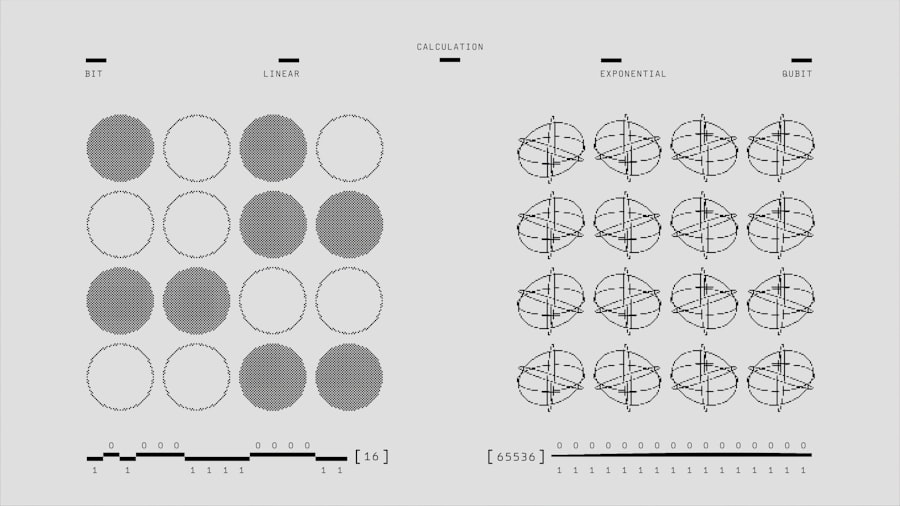
At the heart of quantum computing lies the qubit, the quantum analogue of the classical bit. Unlike a classical bit, which can only exist in one of two states (0 or 1) at any given time, a qubit can exist in a superposition of both states simultaneously. This property, known as superposition, allows a quantum computer to represent and process an exponentially larger amount of information compared to its classical counterpart.
Understanding the Superposition Principle
The mathematical representation of a qubit’s state is a linear combination of its basis states, $|0rangle$ and $|1rangle$. This combination can be expressed as $alpha|0rangle + beta|1rangle$, where $alpha$ and $beta$ are complex probability amplitudes. The square of the magnitude of these amplitudes, $|alpha|^2$ and $|beta|^2$, represents the probability of measuring the qubit in the $|0rangle$ or $|1rangle$ state, respectively. The condition $|alpha|^2 + |beta|^2 = 1$ ensures that the probabilities sum to one. This ability to be in multiple states at once is the first critical aspect of quantum parallelism. A system of $n$ qubits can thus exist in a superposition of $2^n$ states simultaneously, a stark contrast to the $n$ bits in a classical system, which can only represent one of $2^n$ states at a time.
The Measurement Problem
The fragile nature of superposition is also its greatest challenge: measurement. When a qubit is measured, its superposition collapses into a single classical state (either 0 or 1) with a probability determined by its amplitudes. This means that while computations can explore vast parallel spaces, the final outcome must be extracted through measurement, which inherently introduces probabilistic results. The art and science of quantum algorithm design involve orchestrating these superpositions and interferences to amplify the probability of measuring the desired correct output and minimize the probability of measuring incorrect ones.
Quantum computing has opened up fascinating possibilities by enabling computations in parallel spaces, which could revolutionize various fields such as cryptography, material science, and artificial intelligence. For a deeper understanding of this topic and its implications, you can explore the related article on Freaky Science that discusses the advancements in quantum computing and its potential to operate in multiple dimensions simultaneously. To read more, visit Freaky Science.
Quantum Parallelism: The Engine of Expanded Computation
Quantum parallelism is the phenomenon where a quantum computer, through the properties of superposition and entanglement, can explore a multitude of possibilities concurrently. This is not the same as classical parallel processing, where multiple processors work on sub-tasks independently. Instead, quantum parallelism exploits the ability of qubits to represent and operate on many states simultaneously within a single computational framework.
Exploiting Multiple States Simultaneously
Consider a problem requiring the evaluation of a function $f(x)$ for many different input values of $x$. A classical computer would have to compute $f(x)$ for each $x$ sequentially or in parallel using multiple processors. A quantum computer, by preparing its qubits in a superposition of all possible input states, can evaluate $f(x)$ for all these inputs in a single quantum operation. This is often referred to as “quantum parallelism” or “super-parallelism.” It is crucial to understand that this parallelism is not directly observable. After the quantum computation, a single measurement yields only one of the computed results. The power comes from designing algorithms that manipulate the amplitudes of these superimposed states such that the desired outcome’s probability is significantly enhanced.
The Role of Entanglement
Entanglement is another fundamental quantum phenomenon that plays a crucial role in quantum parallelism. Entangled qubits are linked in such a way that their fates are correlated, regardless of the distance separating them. Measuring the state of one entangled qubit instantaneously influences the state of the other. This interconnectedness allows for complex correlations to be established and manipulated within the quantum computation, enabling more sophisticated parallel processing and the exploration of highly intricate computational spaces. Entanglement can be seen as a resource that allows for richer correlations between the states explored in superposition, thereby enhancing the computational power beyond what superposition alone could achieve.
Algorithmic Advantages in Expanded Spaces
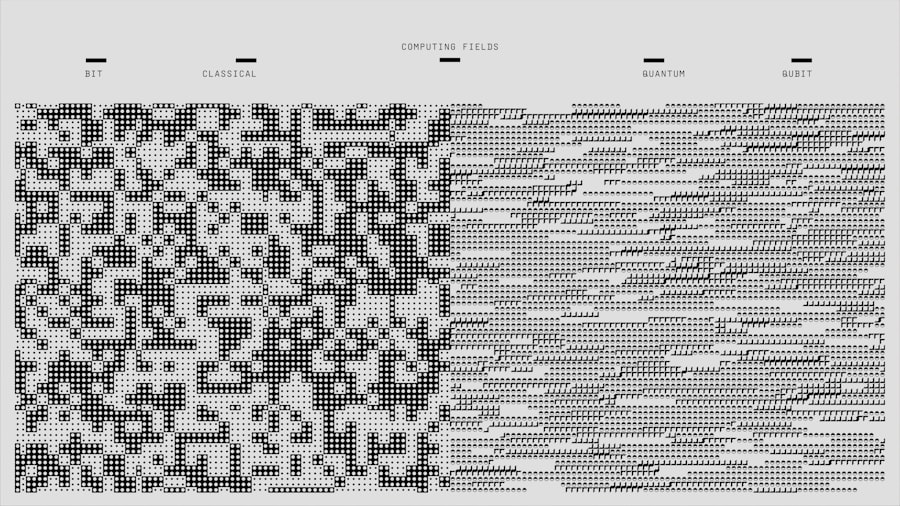
The ability to explore parallel spaces via quantum parallelism directly translates into significant algorithmic advantages for specific classes of problems. Algorithms designed to leverage these properties can achieve exponential or polynomial speedups over their best-known classical counterparts.
Shor’s Algorithm for Factoring
One of the most celebrated examples is Shor’s algorithm for integer factorization. Given a large composite number, Shor’s algorithm can find its prime factors exponentially faster than any known classical algorithm. This has profound implications for cryptography, as many modern encryption schemes rely on the computational difficulty of factoring large numbers. The quantum parallelism enables the simultaneous exploration of potential factors, dramatically reducing the search space.
Grover’s Algorithm for Searching
Another prominent example is Grover’s algorithm for searching an unsorted database. While a classical algorithm requires, on average, $N/2$ operations to find a target item in a database of size $N$, Grover’s algorithm can achieve this in approximately $sqrt{N}$ operations. This quadratic speedup, while not as dramatic as Shor’s exponential speedup, is still substantial and has applications in various search and optimization problems. The quantum parallelism allows the algorithm to explore the database in parallel, amplifying the amplitude of the target item’s state.
Optimization Problems and Quantum Annealing
Broadly applicable to optimization problems, quantum approaches offer promising avenues for finding near-optimal solutions more efficiently. Quantum annealing, a specific type of quantum computation leveraging quantum fluctuations, is particularly suited for solving combinatorial optimization problems. By mapping an optimization problem onto a quantum system’s energy landscape, quantum annealers can explore multiple potential solutions simultaneously, seeking the lowest energy state, which corresponds to the optimal or near-optimal solution. This parallel exploration of the solution space is a key advantage.
Architectures Enabling Parallel Exploration
The practical realization of quantum computing’s potential for parallel exploration hinges on the development of robust and scalable quantum hardware. Various architectural approaches are being pursued, each with its unique strengths and challenges in harnessing quantum phenomena for computation.
Superconducting Qubits
Superconducting qubits are a leading technology in quantum computing. These circuits are fabricated using superconducting materials cooled to extremely low temperatures. They leverage the quantization of electrical currents and charges in superconducting loops to create qubits. Their scalability and relatively fast gate operations make them attractive for building larger quantum processors capable of exploring more parallel states. The control mechanisms allow for the manipulation of individual qubits and their interactions, facilitating complex quantum operations.
Trapped Ions
Trapped-ion quantum computers use individual ions, suspended in vacuum by electromagnetic fields, as qubits. Lasers are used to cool the ions and manipulate their quantum states. This approach offers very high qubit coherence times and fidelity. The long coherence times are crucial for maintaining superposition and entanglement over longer computational periods, allowing for more complex parallel computations before decoherence sets in. Entanglement between trapped ions can be more naturally implemented, further enhancing the multi-dimensional parallel information processing.
Photonic Quantum Computing
Photonic quantum computing utilizes photons as qubits, encoding quantum information in their properties such as polarization or spatial modes. Photons are naturally robust against decoherence, making them ideal for transmitting quantum information. However, creating interactions between photons, which is essential for gates and computations, presents a significant challenge. Nonetheless, the ability of photons to traverse distances and be manipulated through optical components offers a distinct path towards scalable quantum computing with inherent parallelism for information encoding and propagation.
Topological Quantum Computing
Topological quantum computing is a more theoretical approach that proposes encoding quantum information in the exotic properties of topological states of matter. This approach is intrinsically more resistant to errors caused by local perturbations, potentially offering a more fault-tolerant path to quantum computation. The robustness of the encoded information in topological qubits means that the quantum states can be maintained for longer periods, allowing for more extensive computations across parallel spaces without succumbing to environmental noise.
Recent advancements in quantum computing have opened up fascinating possibilities, particularly in the realm of parallel spaces. This emerging technology allows for computations that can occur simultaneously across multiple dimensions, vastly increasing processing power and efficiency. For a deeper understanding of how these concepts are being explored, you can read more in this insightful article on quantum mechanics and its implications for computing. Check it out here.
Future Frontiers and Broader Implications
| Metrics | Data |
|---|---|
| Number of qubits | 100 |
| Quantum volume | 256 |
| Gate error rate | 0.1% |
| Coherence time | 200 microseconds |
The expansion of quantum computing into parallel spaces is not merely an academic pursuit. It holds the potential to unlock solutions to some of humanity’s most pressing challenges and usher in a new era of scientific and technological innovation.
Drug Discovery and Materials Science
The ability to accurately simulate molecular interactions and material properties at the quantum level is a long-sought goal. Classical computers struggle with the exponential complexity of these simulations. Quantum computers, by their very nature, are well-suited for this task. By exploring the vast array of possible molecular configurations and quantum states in parallel, quantum simulations can accelerate the discovery of new drugs, design novel materials with tailored properties, and deepen our understanding of complex chemical and biological processes.
Financial Modeling and Optimization
The financial sector is characterized by complex systems with numerous interacting variables and the need to make predictions and optimize strategies under uncertainty. Quantum computing offers the potential to revolutionize financial modeling, risk analysis, portfolio optimization, and fraud detection. The parallel exploration of market dynamics and the evaluation of complex financial instruments can lead to more sophisticated and efficient financial strategies.
Artificial Intelligence and Machine Learning
Quantum computing can enhance artificial intelligence and machine learning in several ways. Quantum algorithms can potentially speed up training times for machine learning models, enable the analysis of larger and more complex datasets, and lead to entirely new approaches to AI. Quantum machine learning algorithms are being developed to leverage quantum parallelism for tasks such as pattern recognition, classification, and generative modeling, potentially unlocking new levels of intelligence from data.
Cryptography and Security
As mentioned with Shor’s algorithm, quantum computing poses a significant threat to current public-key cryptography. However, it also offers a pathway to developing new, quantum-resistant cryptographic methods. Furthermore, quantum key distribution (QKD) promises fundamentally secure communication channels, leveraging quantum mechanics to ensure that any eavesdropping attempt is detectable. The ability to explore the vast cryptographic search space in parallel is at the core of both the threat and the solution.
The journey of quantum computing into these parallel computational spaces is still in its early stages. Challenges remain in increasing qubit counts, improving error correction, and developing user-friendly programming tools. Nevertheless, the foundational principles of quantum mechanics offer a compelling framework for expanding our computational horizons, promising a future where problems previously considered insurmountable can be addressed with unprecedented efficiency and insight. The exploration of these expanded computational dimensions will undoubtedly continue to reshape our understanding of science, technology, and our place in the universe.
FAQs
What is quantum computing?
Quantum computing is a type of computing that takes advantage of the strange ability of subatomic particles to exist in more than one state at any time.
How does quantum computing differ from classical computing?
Classical computing relies on bits, which can be either a 0 or a 1, while quantum computing uses quantum bits or qubits, which can be both 0 and 1 simultaneously due to the principles of quantum mechanics.
What are parallel spaces in the context of quantum computing?
Parallel spaces in quantum computing refer to the ability of qubits to exist in multiple states simultaneously, allowing for parallel processing and the potential to solve complex problems much faster than classical computers.
What are the potential applications of quantum computing reaching into parallel spaces?
Quantum computing reaching into parallel spaces has the potential to revolutionize fields such as cryptography, drug discovery, optimization problems, and machine learning by solving complex problems that are currently intractable for classical computers.
What are the current challenges in quantum computing reaching into parallel spaces?
Some of the current challenges in quantum computing include maintaining the stability of qubits, reducing error rates, and scaling up the number of qubits to build practical quantum computers.