
So, you’ve seen them around – those streetlights casting a distinctly purple glow. It’s not just a quirky aesthetic choice; there’s some interesting tech packed into those fixtures. Essentially, the purple isn’t the light itself, but rather a byproduct of how certain LEDs are engineered to produce a broader spectrum of light, aiming to improve visibility without those harsh white tones. Let’s dive into what makes them tick.
The Science of the Purple Hue
Those purple streetlights aren’t a deliberate fashion statement from the city planners, but a consequence of how they achieve their lighting goals. It’s all about the interplay between the LED chip and the phosphors coating it.
How LEDs Produce Light
At its core, an LED (Light Emitting Diode) is a semiconductor device. When an electric current passes through it, electrons jump between energy levels, releasing photons – tiny packets of light. The color of this light is determined by the specific semiconductor material used and its band gap, which dictates the energy of the emitted photons. Standard LEDs often emit a bluish-white light.
The Role of Phosphors
To get different colors, especially white light that mimics daylight, manufacturers coat the blue LED chip with a layer of phosphors. These are special powders that absorb the energy from the blue light and then re-emit it at different wavelengths. By carefully selecting and mixing different phosphors, engineers can create a spectrum of light that appears white to the human eye.
Why Purple Appears
The “purple” effect in these streetlights often arises from a specific phosphor mix designed to enhance color rendering. Instead of a perfectly balanced white, this mix might emit a bit more blue and red light, with less green and yellow. When the blue light from the LED interacts with these phosphors, the resulting emission spectrum, when viewed from a distance or at certain angles, can lean towards a violet or purple appearance. It’s a subtle imbalance in the spectrum that our eyes perceive as a shift towards purple. The goal is often to create a light that is perceived as more natural or less stark than traditional high-pressure sodium or even some cooler white LEDs, without venturing into the yellow or orange territory.
In recent discussions about urban infrastructure, the controversial purple streetlight teardown has garnered significant attention. For those interested in exploring the implications of such changes on community safety and aesthetics, a related article can be found at Freaky Science, which delves into the science behind street lighting and its effects on urban environments. This article provides valuable insights into the reasons behind the decision to remove the purple lights and the potential benefits of alternative lighting solutions.
Beyond the Color: Practical Lighting Goals

The choice of this specific lighting technology isn’t just about looking different; it’s driven by practical considerations for urban environments. Visibility, energy efficiency, and ecological impact all play a role.
Enhancing Visibility and Color Rendering
One of the primary reasons for using LEDs with this particular spectral output is to improve visibility, especially at night. The aim is to make it easier for drivers and pedestrians to distinguish colors and details. For instance, a better ability to discern the color of traffic lights or identify objects on the road can contribute to safety. This relates to the concept of Color Rendering Index (CRI), which measures how accurately a light source reveals the true colors of objects compared to a natural light source. Some of these purple-leaning lights are designed with a higher CRI in mind, aiming for a more natural visual experience.
Energy Efficiency and Longevity
Like most LED technologies, these purple-hued streetlights offer significant advantages in terms of energy efficiency compared to older lighting systems like mercury vapor or high-pressure sodium lamps. LEDs consume less power to produce the same amount of light, leading to substantial cost savings for municipalities. Furthermore, LEDs have a much longer lifespan, meaning fewer replacements and reduced maintenance costs. This longevity also translates to less waste generated over time.
Reducing Light Pollution and Ecological Impact
The specific spectrum of light emitted by these fixtures can also be designed to minimize certain types of light pollution. By avoiding excessively blue-rich light, which can scatter more in the atmosphere and is known to disrupt nocturnal wildlife and human circadian rhythms, these lights aim to be more environmentally conscious. While the purple hue itself isn’t the primary factor in reducing light pollution, the underlying spectral tuning to be less intrusive to wildlife and sleep patterns is a key consideration in their development. The goal is to illuminate the intended area effectively without casting excessive light upwards or outwards.
The Core Components: What’s Inside?

Peeling back the casing of one of these purple streetlights reveals a sophisticated assembly of components, each with a specific job to do in generating and distributing light.
The LED Array and Driver
At the heart of the fixture is the LED array – a collection of individual LED chips. These chips are typically mounted on a heat sink to dissipate the thermal energy they generate. Connected to the LED array is the LED driver. This is a crucial electronic circuit that regulates the voltage and current supplied to the LEDs, ensuring they operate at their optimal performance and preventing damage from power fluctuations. The driver is responsible for converting the AC power from the grid into the DC power required by the LEDs.
The Phosphor Coating and Optics
As mentioned earlier, the specific color and spectral properties of the light are largely determined by the phosphors applied to the LED chips. These phosphors are typically a blend of rare-earth phosphors or quantum dots, carefully chosen to absorb the blue light from the LED and re-emit it in a way that creates the desired white or near-white light with the characteristic spectral signature. Above the LED array, and often integrated with the phosphor layer, are the optical elements. These can include lenses or reflectors designed to precisely control the direction and spread of the light, ensuring it illuminates the street or pathway effectively and minimizes light trespass into surrounding areas. The design of these optics is critical for achieving uniform illumination and meeting specific lighting standards.
Thermal Management Systems
LEDs, while efficient, do generate heat. Effective thermal management is essential to ensure the longevity and performance of the LEDs. This typically involves a heat sink, often made of aluminum, with fins designed to increase the surface area for heat dissipation. In some higher-power fixtures, active cooling systems, like small fans, might be incorporated, though these are less common in standard streetlights due to reliability concerns and power consumption. The goal is to keep the LED junction temperature within a safe operating range.
Manufacturing and Installation Considerations
Bringing these purple streetlights from concept to reality involves a meticulous process, from the initial design and component sourcing to their final installation on city streets.
Sourcing and Quality Control
The manufacturing process begins with sourcing high-quality components. This includes the LED chips themselves, the phosphors, the driver electronics, and the housing materials. Reputable manufacturers establish stringent quality control measures at every stage of production to ensure consistency and reliability. This involves testing individual components and the assembled fixtures to verify their performance against specified standards, including light output, color consistency, and power consumption. The specific phosphors used are often proprietary formulations, and their precise ratios are critical for achieving the desired spectral output.
Environmental Durability and Housing
Streetlights operate in demanding outdoor environments, exposed to weather, dust, and potential vandalism. The housing of these fixtures is therefore designed to be robust and weather-resistant, typically made from durable materials like cast aluminum or high-impact polycarbonate. They need to meet rigorous environmental protection standards, such as IP (Ingress Protection) ratings, to prevent the ingress of water and dust. The design also considers ease of maintenance, allowing for replacement of components like drivers or the LED module when necessary.
Installation and Calibration
Once manufactured, the streetlights are installed by utility crews or specialized contractors. This involves mounting them on poles and connecting them to the electrical grid. Calibration and aiming are crucial steps to ensure the light is directed where it’s needed most. This might involve adjusting the tilt of the fixture or the orientation of the optics to achieve uniform illumination across the roadway and pedestrian areas, while also minimizing light spill into private properties or the night sky. Modern systems may also incorporate smart controls for dimming or on-demand lighting, requiring careful integration and calibration.
The recent purple streetlight teardown has sparked considerable interest among residents and city officials alike, raising questions about the implications for urban lighting and safety. For those looking to delve deeper into the topic, a related article discusses the science behind streetlight colors and their effects on visibility and mood. You can read more about it in this insightful piece found here. This exploration not only sheds light on the reasons behind the color choices but also examines community responses to the changes.
The Future of Urban Illumination
| Component | Material | Dimensions | Power Consumption | Function | Notes |
|---|---|---|---|---|---|
| LED Array | Gallium Nitride (GaN) | 50mm x 50mm | 15W | Light Emission | Purple wavelength (~400-450nm) |
| Heat Sink | Aluminum Alloy | 100mm x 100mm x 20mm | N/A | Thermal Management | Finned design for heat dissipation |
| Driver Circuit | PCB with electronic components | 80mm x 40mm | Input: 120V AC, Output: 15W DC | Power Regulation | Includes current regulation and surge protection |
| Lens Cover | Polycarbonate | 60mm diameter | N/A | Light Diffusion | UV resistant coating |
| Housing | Die-cast Aluminum | 150mm x 150mm x 80mm | N/A | Structural Support | Weatherproof and corrosion resistant |
The deployment of purple-hued streetlights is part of a broader evolution in how cities approach lighting. As technology advances, we can expect further refinements in efficiency, controllability, and environmental impact.
Smarter and More Adaptive Lighting
The trend is moving towards “smart” streetlights that are interconnected and can be remotely controlled and monitored. This allows for dynamic adjustments to lighting levels based on time of day, traffic flow, or even the presence of pedestrians. Adaptive lighting can lead to even greater energy savings and a more responsive urban environment. These systems can also provide valuable data on streetlight performance, identifying potential issues before they lead to outages.
Evolving Spectral Tuning
While the current purple-hued lights represent a specific approach to spectral tuning, research continues into optimizing light spectra for various applications. Future streetlights might feature even more precisely controlled spectra, potentially offering enhanced visual comfort, better support for plant and animal life, or even capabilities for data transmission. The science of how light impacts our biology and the environment is constantly evolving, and lighting technology will likely adapt accordingly.
Integration with Urban Infrastructure
Streetlights are increasingly being viewed not just as sources of light, but as potential platforms for a range of urban technologies. Future fixtures could integrate sensors for environmental monitoring (air quality, noise levels), traffic management, or even Wi-Fi hotspots. This convergence of lighting and communication infrastructure could unlock new possibilities for smart city development, making urban environments more efficient, sustainable, and livable. The purple glow might just be the visible sign of a much deeper technological integration happening overhead.
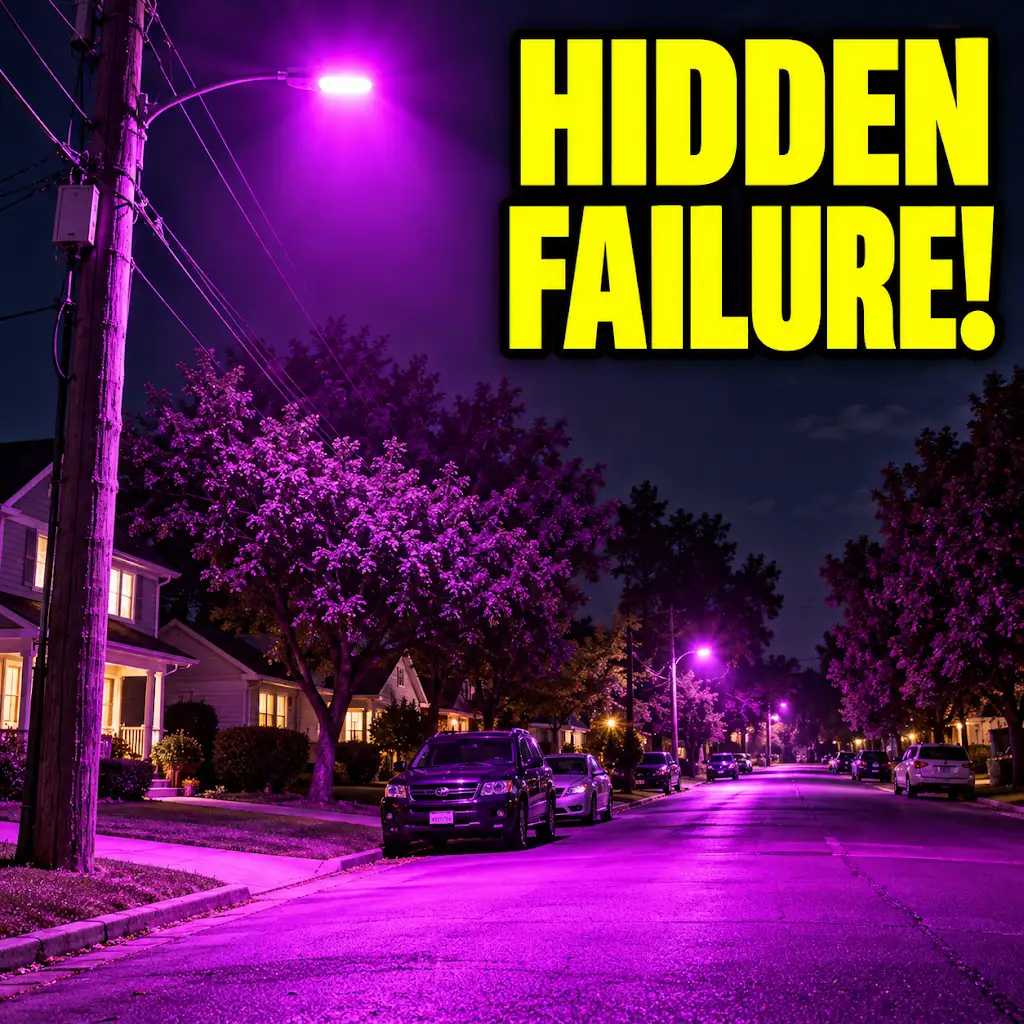
Why The Streetlights Are Turning Purple
FAQs
What is the purpose of a purple streetlight?
A purple streetlight is typically used for aesthetic purposes, creating a unique and colorful ambiance in a specific area.
How does a purple streetlight differ from traditional streetlights?
A purple streetlight differs from traditional streetlights in terms of its color output, as it emits a purple light instead of the typical white or yellow light.
What components are typically found inside a purple streetlight?
Components commonly found inside a purple streetlight include LED bulbs, a power supply, a housing unit, and a control mechanism for adjusting the light intensity.
Are purple streetlights energy-efficient compared to traditional streetlights?
Generally, purple streetlights that use LED technology are more energy-efficient than traditional streetlights, as LEDs consume less power and have a longer lifespan.
Can purple streetlights have any impact on the environment or wildlife?
There is ongoing research to determine if purple streetlights, or any colored streetlights, can have an impact on the environment or wildlife, particularly in terms of disrupting natural behaviors or ecosystems.