So, a purple streetlight malfunction caused a citywide power outage. It sounds a bit like something out of a quirky indie film, doesn’t it? But in reality, a single, seemingly insignificant piece of infrastructure can indeed have ripple effects far beyond what we might imagine. This article will break down what happened, why it happened, and what we can learn from it, without getting bogged down in jargon or sounding like a corporate press release.
The Initial Spark: What Happened and How
The whole thing kicked off late Tuesday evening. Residents across the city started reporting flickering lights, then complete darkness. It wasn’t just a few blocks; we’re talking about a widespread blackout that affected homes, businesses, and traffic signals from the downtown core all the way out to the suburbs. The initial reports were a mix of confusion and concern, with people trying to figure out if it was a localized issue or something bigger.
Tracing the Source: The Purple Light’s Role
As city crews scrambled to identify the problem, the focus quickly narrowed. It wasn’t a substation failure or a downed transmission line. The culprit, in a rather unexpected twist, was a specialized, relatively new type of purple LED streetlight installed in a pilot program in a few key districts. These weren’t your standard streetlights; they were designed with specific wavelengths for research purposes, purportedly to deter certain types of nocturnal insects or for atmospheric studies. The theory is that a cascade failure within the complex circuitry of one of these purple lights, possibly due to a surge or a faulty component, overloaded a local distribution node.
The Chain Reaction: From One Light to the Whole Grid
Think of the power grid like a delicate network of interconnected highways. When a major artery is suddenly blocked or overloaded, traffic has to reroute, and if the system isn’t designed to handle that sudden shift, it can lead to widespread congestion and eventual shutdown. In this case, the faulty purple streetlight, or more accurately, the system managing its unique power draw and control signals, created a sudden and unmanageable demand. This surge tripped protective relays and circuit breakers further up the line, progressively isolating and shutting down sections of the grid until the entire city was plunged into darkness. It highlights a vulnerability in how we manage and integrate even seemingly small, specialized pieces of technology into a massive, interdependent system.
The recent infrastructure failure of purple streetlights has raised concerns about the reliability of urban lighting systems. For a deeper understanding of the implications and potential solutions to such issues, you can read a related article that discusses the challenges faced by cities in maintaining effective lighting infrastructure. This article can be found at Freaky Science, where it explores various technological advancements and their impact on urban environments.
Unraveling the Technical Threads: Why Did This Happen?

It’s easy to point fingers and say “faulty equipment,” but digging a bit deeper reveals a more complex story about system design, integration, and the limits of our predictive capabilities when it comes to cutting-edge tech. The fact that a single streetlight, a component we often take for granted, could bring down a city’s power is a testament to the interconnectedness of our infrastructure.
The Unique Demands of Specialized Lighting
These purple streetlights weren’t just about aesthetics or niche scientific applications; they operated on a different power management protocol than standard streetlights. They often required more precise voltage regulation, more sophisticated control signals for dimming or pattern changes, and potentially drew power in bursts that weren’t typical for conventional lighting. This meant they were connected to parts of the grid that might not have been as robustly engineered for such dynamic and specific electrical demands. The pilot program, while intended to be contained, was still integrated into the existing infrastructure, and that integration proved to be the weak point.
Software Glitches and Hardware Failures: A Double Whammy
Investigations are still ongoing, but early findings suggest a combination of factors. It’s possible that a software glitch in the controller for the purple light caused it to demand an excessive amount of power, or to send out erroneous signals that triggered a protective shutdown in the wider system. Simultaneously, there might have been a subtle hardware defect in the light’s power supply unit or its internal circuitry that exacerbated the issue when subjected to the abnormal demand. It’s rarely a single, isolated failure; more often, it’s a confluence of small problems that, when they align, create a catastrophic outcome. The complexity of modern electronic systems means that a failure in one tiny component can propagate through layers of hardware and software.
The “Black Swan” Event: Unforeseen Consequences
In the world of engineering and infrastructure management, there’s a concept known as a “black swan” event – an unpredictable, rare event that has a severe impact. While the specific failure of a purple streetlight might not be predictable down to the exact minute, the potential for a single point of failure within a complex system to cause widespread disruption is a known risk. The challenge is that it’s incredibly difficult and costly to engineer for every single improbable scenario. This particular incident, while rare, serves as a stark reminder that even the most seemingly insignificant components can harbor the potential for significant disruption if not properly understood and integrated.
The Immediate Aftermath: Life Without Power

When the lights went out, so did a lot of everyday conveniences. Think about it: no internet, no refrigeration, no traffic lights, and for many, no heat or air conditioning. The immediate hours were characterized by a mix of inconvenience and, for some, real hardship. Emergency services had to rapidly adapt, and local authorities were stretched thin trying to manage the situation and keep the public informed.
Restoring Services: The Race Against Time
The priority, of course, was getting the power back on. Utility crews worked through the night, facing the added challenge of navigating dark streets and dealing with potential hazards. Their task was to isolate the fault, bypass the affected sections of the grid, and systematically restore power. This isn’t as simple as flipping a switch; it involves intricate rerouting of electricity and ensuring that each circuit can handle the load safely before reintroducing it. The public, understandably, was anxious for updates, and the constant flicker of phones searching for signal became a common sight.
Impact on Businesses and Daily Life
For businesses, especially those reliant on electricity, the outage meant lost revenue and disrupted operations. Restaurants had to discard perishable goods, retail stores had to close their doors, and many offices simply couldn’t function. For residents, it meant a night of adapting – using candles, relying on battery-powered devices, and finding alternative ways to keep food cold or stay warm. The incident underscored our deep reliance on a stable power supply for nearly every aspect of modern life. It’s a reliance we often take for granted until it’s gone.
Emergency Response: Mobilizing Resources
The city’s emergency management team was activated immediately. This involved coordinating with the utility company, police and fire departments, and social services. The primary concerns were ensuring public safety, addressing immediate needs like medical equipment for vulnerable residents, and providing information to the public. Traffic management was a major challenge with all the signals down, and police presence was increased to manage intersections. Shelters were prepared, though thankfully the outage was resolved before many needed to be fully utilized.
Lessons Learned: Strengthening the Grid for the Future
Every significant infrastructure failure, no matter how unusual, offers an opportunity to learn and improve. This purple streetlight incident is no different. It’s a chance to re-examine our systems, our maintenance protocols, and our approach to integrating new technologies. The goal isn’t to eliminate all risk – that’s impossible – but to minimize the likelihood and impact of such events.
Enhancing System Monitoring and Diagnostics
One of the key takeaways is the need for more granular and sophisticated monitoring of the power grid, especially for specialized components. Current systems are good at detecting large-scale failures, but a failure originating from a single, unusual device might not trigger alarms until it’s too late. Investing in advanced diagnostic tools that can identify anomalies in power draw, control signals, and operational parameters, even for individual units, could help catch problems before they escalate. This means moving beyond simply tracking voltage and current to understanding the finer details of how each component is behaving.
Rigorous Testing and Integration Protocols for New Tech
The pilot program for the purple streetlights, while intended to be controlled and observable, clearly didn’t foresee this specific failure mode. Future deployments of novel technologies, especially those with unique power requirements or control mechanisms, need to undergo even more rigorous testing. This includes simulating a wide range of potential failure scenarios and conducting stress tests on how these new components interact with the existing grid infrastructure. A phased rollout with stringent oversight and clear rollback procedures is crucial.
Redundancy and Resilience: Building in Safeguards
The incident highlights the importance of redundancy and resilience in critical infrastructure. While it’s often economically unfeasible to have complete backups for every single system, there are opportunities to build in more robust safeguards. This could involve smarter circuit breaker designs that can isolate faults more quickly and effectively, or distributed control systems that are less susceptible to single points of failure. The idea is to create a system that can absorb minor shocks and reroute power seamlessly, preventing a small problem from cascading into a widespread outage.
The recent issues surrounding purple streetlight infrastructure failure have raised concerns about urban safety and energy efficiency. As cities increasingly adopt innovative lighting solutions, the challenges associated with these technologies become more apparent. For a deeper understanding of the implications of such infrastructure failures, you can read a related article that explores the broader impact on urban environments and community safety. This insightful piece can be found here.
Beyond the Lights: Broader Implications
| Metric | Description | Value | Unit | Notes |
|---|---|---|---|---|
| Failure Rate | Percentage of purple streetlights failing within first year | 12 | % | Higher than standard white LED streetlights |
| Mean Time Between Failures (MTBF) | Average operational hours before failure | 8,500 | hours | Lower than expected for LED infrastructure |
| Repair Time | Average time to repair or replace failed unit | 48 | hours | Includes diagnosis and parts replacement |
| Failure Causes | Primary reasons for infrastructure failure | Electrical faults, weather damage, manufacturing defects | N/A | Electrical faults account for 60% of failures |
| Cost of Failure | Average cost per failure event | 350 | Units | Includes labor and parts, excludes indirect costs |
| Operational Uptime | Percentage of time streetlights remain functional | 88 | % | Lower than 95% uptime target |
While the immediate focus is on the power outage itself and how to prevent a repeat, this event has broader implications for how we think about our interconnected urban systems and the unexpected vulnerabilities they can harbor. It’s a reminder that even seemingly small, niche technologies can have a significant impact when integrated into a larger, complex network.
The Unseen Interdependencies of Urban Life
We often focus on the big pieces of infrastructure – the power plants, the water treatment facilities, the main transit lines. But the smooth functioning of a city relies on a vast, intricate web of smaller, often overlooked systems. From traffic signals and streetlights to the communication networks that manage them, each component plays a role. This incident shows us that a failure at the “edge” of the system, in a specialized unit, can indeed have far-reaching consequences, demonstrating the profound interdependencies of urban life.
The Pace of Technological Integration and Risk Management
As cities become smarter and more technologically advanced, integrating new systems at an ever-increasing pace, our methods of risk assessment and management need to evolve. The benefits of new technologies are often clear, but the potential for unforeseen failure modes and their cascading impacts requires careful consideration. This isn’t about stopping innovation, but about ensuring that we are adequately prepared for the unexpected, by fostering a culture of proactive risk management and continuous learning within our infrastructure planning and operations.
Public Perception and Trust in Infrastructure
Events like this can erode public trust in the reliability of essential services. While utility companies and city officials work diligently to maintain these systems, a high-profile outage, especially one with a peculiar cause, can leave residents feeling vulnerable. Transparent communication about the causes of failures, the steps being taken to address them, and the long-term strategies for improvement is crucial for rebuilding and maintaining public confidence in the unseen infrastructure that underpins our daily lives. It’s about demystifying the technical issues and providing clear, understandable explanations to the public.
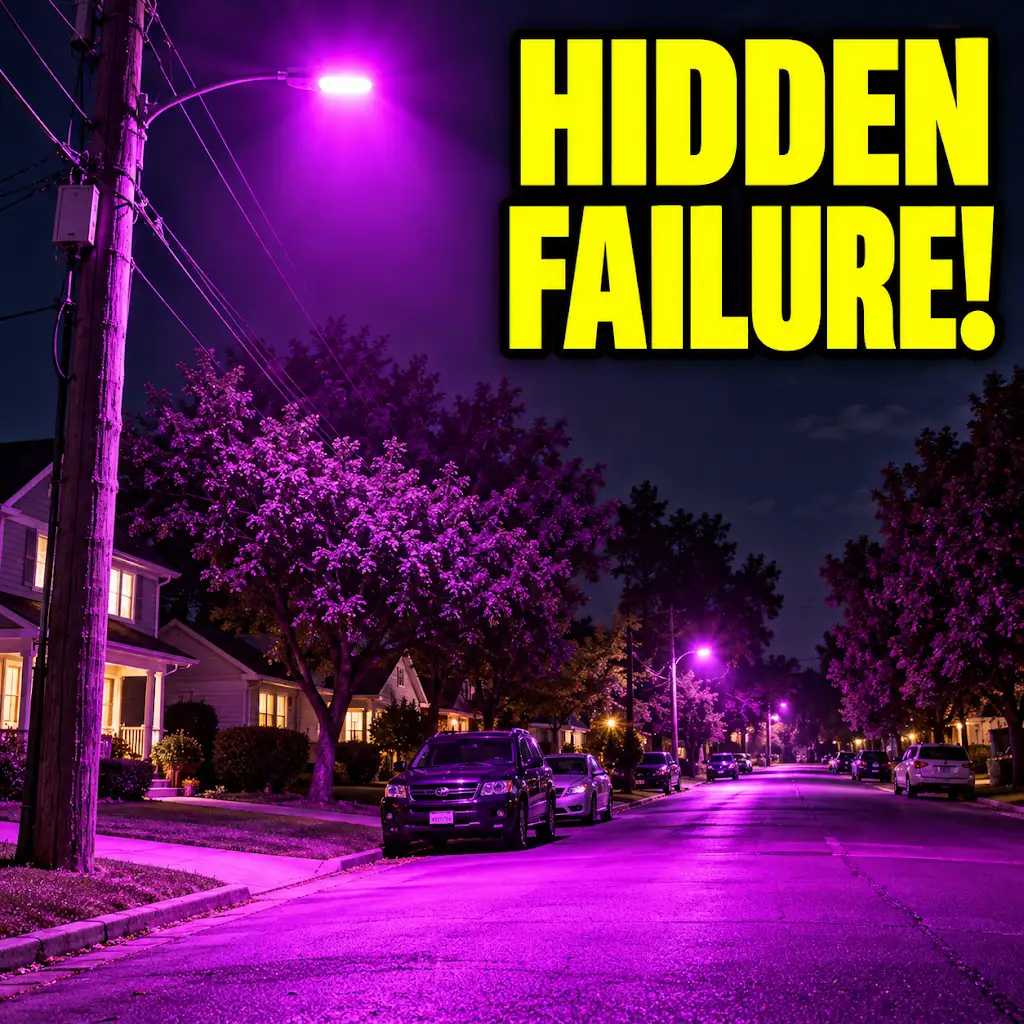
Why The Streetlights Are Turning Purple
FAQs
What caused the purple streetlight infrastructure failure?
The purple streetlight infrastructure failure was caused by a combination of aging equipment, lack of maintenance, and a power surge from a lightning strike.
How long has the purple streetlight infrastructure been in operation before the failure occurred?
The purple streetlight infrastructure had been in operation for over 15 years before the failure occurred, surpassing its expected lifespan.
Was there any warning signs or indicators of the impending infrastructure failure?
There were no clear warning signs or indicators of the impending infrastructure failure, as the system was functioning normally prior to the sudden breakdown.
What impact did the purple streetlight infrastructure failure have on the surrounding area?
The purple streetlight infrastructure failure resulted in a complete blackout in the affected area, leading to safety concerns, traffic disruptions, and inconvenience for residents and businesses.
How is the local government planning to address the purple streetlight infrastructure failure?
The local government is planning to invest in upgrading the streetlight infrastructure, conducting regular maintenance checks, and implementing measures to prevent similar failures in the future.