
So, why are some streetlights in Florida glowing purple? It’s not some mysterious new trend; it’s usually down to a specific technical issue with the LED bulbs themselves. These bulbs contain phosphors that, over time, degrade and start to emit a purple hue instead of the intended white light. Think of it like a paint fading – the colors get a bit mixed up and distorted. While it might look a bit unusual, the main concern is actually about its impact on safety.
The Science Behind the Purple Glow
It all boils down to the technology inside those LED streetlights. LEDs, or Light Emitting Diodes, are designed to produce a white light by combining different colored light emissions, often with the help of a phosphor coating. This coating is crucial for transforming the initial blue light from the LED chip into the broader spectrum we perceive as white.
How LEDs Create White Light
At its core, an LED is a semiconductor device. When an electric current passes through it, electrons recombine with electron holes, releasing energy in the form of photons – light particles. For a standard white LED, the underlying LED chip often emits light in the blue part of the spectrum. This blue light then interacts with a phosphor material layered on top. The phosphor absorbs some of the blue light and re-emits it at longer wavelengths, typically in the yellow or green range. When this re-emitted light combines with the remaining blue light, our eyes perceive it as white. The specific blend of phosphors determines the exact shade of white light, ranging from cool white (more blue) to warm white (more yellow).
The Role of Phosphor Degradation
The problem with the purple streetlights arises when these phosphors begin to break down. This degradation can happen due to various factors, including prolonged exposure to heat and the constant operation of the light. As the phosphor material deteriorates, its ability to accurately convert blue light into the correct spectrum for white light diminishes. The blue light starts to dominate, and the emitted light takes on a distinct purple or magenta cast. This isn’t a planned feature; it’s a sign that the component is no longer functioning as intended. It’s a bit like how a white shirt can develop yellowing over time with repeated washing and drying; the underlying structure has changed.
Common Causes of Phosphor Failure
Several factors can accelerate the degradation of phosphor coatings in LED streetlights:
- Heat: LEDs generate heat during operation. While they are designed to manage this, excessive heat, especially in Florida’s climate, can put stress on the phosphor material. Poor heat dissipation in the fixture can exacerbate this.
- Time and Usage: Like any electronic component, phosphors have a lifespan. The more hours a streetlight is on, the more wear and tear the phosphor undergoes.
- Manufacturing Defects: Sometimes, there might be inconsistencies in the manufacturing process, leading to a batch of bulbs with a higher susceptibility to degradation. This is less common but can explain why certain areas or models of streetlights might be more affected.
- Environmental Factors: While less of a direct cause of phosphor degradation itself, prolonged exposure to moisture or corrosive elements (though streetlights are typically well-sealed) could indirectly contribute to the overall stress on the bulb’s components.
When these factors combine, the result is often that distinctive purple light that has become noticeable in many parts of Florida.
In recent discussions about the unusual purple streetlights appearing in Florida, many residents have been curious about their purpose and origin. A related article that delves into the topic is available at this link: Freaky Science. This article explores the reasons behind the installation of these lights and addresses the various theories circulating in the community.
Safety Implications of Purple Streetlights
The immediate reaction to purple streetlights is often aesthetic or a curiosity about the cause. However, the implications extend beyond just how the street looks. The change in light color can subtly but significantly impact how we perceive our surroundings and can have practical safety consequences.
Impaired Color Perception
One of the most significant issues with purple-tinged light is its effect on color perception. Our ability to accurately distinguish colors is crucial for many aspects of safety, from identifying road signs to spotting potential hazards.
- Traffic Signals: This is a critical concern. While the fundamental colors of traffic lights (red, yellow, green) are distinct, the purple hue can distort how they are perceived, especially under low light conditions. A driver might find it harder to quickly and definitively identify the color of a traffic signal, potentially leading to confusion or delayed reactions. The subtle shades of green or yellow could be masked or altered, and even red might appear differently.
- Road Markings and Signs: Similarly, road markings like lane dividers, crosswalks, and warning signs rely on their specific colors for immediate recognition. Purple light can make these harder to distinguish from the asphalt or surrounding environment. A yellow cautionary sign or white pedestrian crossing line might appear muted or strangely colored, reducing their effectiveness.
- Identifying Objects: In a broader sense, the ability to accurately perceive the color of objects around us is important for identifying them. This could be anything from distinguishing a person’s clothing to spotting debris on the road. Purple light can make it harder to make these fine distinctions, potentially leading to misidentification or overlooking important details.
Reduced Visibility and Contrast
Beyond just color, the quality of light itself is affected. The shift towards a more purple spectrum can alter the overall contrast and clarity of the illuminated environment.
- Depth Perception: White light, especially the type intended for street lighting, is formulated to provide good contrast and allow for clear depth perception. When the spectrum shifts towards purple, this balance is disrupted. Objects might appear flatter or harder to judge the distance to. This can be particularly problematic for drivers and pedestrians navigating uneven surfaces or busy intersections.
- Detecting Obstacles: Reduced contrast means that obstacles, pedestrians, or animals on the road may blend in more with their surroundings. This makes them harder to spot in time for drivers to react, increasing the risk of accidents. A dark-colored animal or a person wearing dark clothing can become significantly more difficult to see under a predominantly purple light.
- General Illumination Quality: The overall “brightness” and clarity of the scene can be diminished. While the light might still be technically producing lumens, the quality of illumination is degraded, making it feel dimmer and less effective for navigation and safety.
Psychological and Perceptual Effects
While less directly quantifiable than impaired color vision or reduced contrast, there can also be subtle psychological and perceptual effects.
- Disorientation: An unfamiliar and unusual light color can be slightly disorienting. While most people will adapt, the initial experience might create a sense of unease or make an area feel less welcoming or safe.
- Increased Glare: Depending on the specific composition of the degraded phosphor and the fixture design, the purple light might also be more prone to glare, especially when reflecting off wet surfaces. This can further impair visibility.
It’s important to remember that while these effects might seem subtle, they can accumulate, particularly in situations where drivers or pedestrians are already dealing with fatigue, distractions, or adverse weather conditions. The goal of street lighting is to enhance safety and visibility, and a compromised light spectrum directly undermines this purpose.
Who is Responsible for Fixing Purple Streetlights?
When you notice a purple streetlight, the first thought might be who is actually supposed to be taking care of it. Generally, the responsibility falls to the local municipality or the specific utility company that manages the streetlights in that area. It’s not usually something for individual citizens to fix themselves, nor is it a widespread problem caused by individual bulbs failing in isolation.
Local Government and Municipalities
In many cities and towns, the municipal public works department or a similar governmental body is responsible for the upkeep and maintenance of public infrastructure, including streetlights. They typically contract with utility companies for the installation and servicing of these lights.
- Reporting Issues: If you notice a purple streetlight, the most practical first step is to report it to your local government. Many municipalities have dedicated online portals, phone numbers, or apps for residents to report non-emergency issues like this. Providing the exact location (street name, nearest cross-street, pole number if visible) is crucial for them to pinpoint the problem.
- Budgetary Allocation: Municipalities allocate budgets for infrastructure maintenance. The repair or replacement of malfunctioning streetlights would fall under this. The pace at which these repairs are made can depend on budget constraints, the number of reported issues, and the priority assigned to them.
Utility Companies
Florida has several major electric utility companies, such as Florida Power & Light (FPL), Duke Energy, and Tampa Electric. These companies often own and maintain the vast majority of streetlights within their service territories, even if the municipality ultimately requests the work.
- Service Territories: Each utility company serves specific geographic areas. Identifying which utility company is responsible for the streetlights in your area is usually straightforward. You can often find this information on your electric bill or by looking at the signage on the utility poles themselves.
- Maintenance Contracts: Utility companies have contracts with municipalities to provide streetlight services. When a municipality receives a report, they often forward it to the relevant utility company for action. The utility company then dispatches technicians to assess and repair the faulty lights.
- Standard Operating Procedures: Utility companies have established procedures for dealing with streetlight issues. They are typically equipped to handle the technical aspects of diagnosing and replacing faulty LED bulbs or fixtures. They also have access to the necessary replacement parts.
The Reporting Process: What to Expect
The process of getting a purple streetlight fixed usually involves a few steps:
- Citizen Report: You (or another concerned resident) report the issue to either the municipality or the utility company directly.
- Verification: The relevant authority (municipality or utility) will typically log the report and may perform an initial check to confirm the problem. Some systems allow you to track the status of your report.
- Dispatch: A work order is created and dispatched to a maintenance crew.
- Inspection and Repair: The crew will visit the site, diagnose the problem, and, if it’s a phosphor degradation issue, replace the LED module or the entire fixture if necessary.
- Follow-up: While not always guaranteed, some systems might provide notification upon completion of the repair.
It’s worth noting that the purple light itself doesn’t necessarily mean an immediate electrical hazard, but rather a functional degradation that impacts safety. Therefore, it’s typically treated as a maintenance issue rather than an emergency. Patience is often required, as resources and schedules dictate the pace of repairs.
How to Report a Purple Streetlight
If you’ve spotted a purple streetlight and want to help get it fixed, the process is pretty straightforward. The key is to provide the right information to the right people. Don’t just glance at it and hope for the best; taking a few minutes to report it can make a real difference in your neighborhood’s safety.
Gathering Necessary Information
Before you pick up the phone or open a webpage, have a few details ready. This will make your report much more efficient and effective.
- Precise Location: This is the most crucial piece of information. Instead of saying “on Main Street,” be specific. “On Main Street, near the intersection with Oak Avenue,” or “on Main Street, directly in front of house number 1234.”
- Pole Identification Number: Many utility poles have a unique identification number, often a metal tag with numbers and letters. This number is like a street address for the pole itself and is invaluable for the utility or municipality to locate the exact fixture. Look for it on the pole itself, usually a few feet off the ground.
- Description of the Problem: Clearly state that the streetlight is emitting a “purple light” or “purple hue.” You can also mention if it’s flickering or if the brightness seems significantly altered, though the purple color is the primary concern here.
- Your Contact Information (Optional but Recommended): Providing your name and a phone number or email address can be helpful if the reporting agency needs clarification or wants to update you on the status of the repair. However, many reporting systems allow for anonymous reports.
Channels for Reporting
There are typically a few ways to get your report to the right authorities:
- Online Reporting Portals: Most municipalities and major utility companies in Florida have dedicated sections on their websites for reporting issues. Search for terms like “report streetlight outage,” “streetlight repair request,” or “public works request” on your local government’s website or the website of your electric utility (e.g., FPL, Duke Energy). These portals often have interactive maps where you can pinpoint the location.
- Mobile Apps: Some cities and utility companies offer dedicated mobile apps that streamline the reporting process. These apps often allow you to take photos of the issue and submit them directly.
- Phone Numbers: If online reporting isn’t an option or you prefer to speak to someone, you can call your local government’s public works department or the customer service line for your electric utility company. They will have a specific number for streetlight maintenance issues.
What Happens After You Report?
Once you’ve submitted your report, here’s a general idea of what happens next:
- Logging and Ticketing: Your report will be logged into a system, creating a work order or ticket for the responsible department.
- Prioritization: While a purple light isn’t usually an emergency, it is a safety concern. It will be prioritized based on factors like the volume of reports, available resources, and internal policies.
- Field Technicians: A crew of technicians will be dispatched to investigate the reported location. They will assess the streetlight, confirm the purple hue, and determine the cause (likely phosphor degradation).
- Repair or Replacement: The technicians will then carry out the necessary repairs, which typically involves replacing the LED module or, in some cases, the entire streetlight fixture if the damage is more extensive.
- Confirmation (Sometimes): In some systems, you might receive a confirmation that the work order has been completed.
By taking these simple steps, you contribute directly to improving public safety and the overall quality of your community’s infrastructure.
In recent discussions about the unusual purple streetlights appearing across Florida, many residents have been curious about their purpose and origin. A related article explores the science behind these lights and their potential benefits for public safety and energy efficiency. For more insights into this phenomenon, you can read the full article here: freakyscience.com.
The Future of LED Streetlights and Color Issues
| Metric | Data/Information |
|---|---|
| Location | Various cities in Florida |
| Purpose of Purple Streetlights | Raise awareness for domestic violence prevention |
| Initiating Organization | Local domestic violence advocacy groups and city councils |
| Year Started | Approximately 2019-2020 |
| Number of Purple Streetlights Installed | Varies by city; typically 10-50 per participating city |
| Duration of Illumination | Often during Domestic Violence Awareness Month (October) |
| Community Impact | Increased public awareness and support for domestic violence victims |
| Related Events | Fundraisers, educational programs, and vigils |
As LED technology becomes even more ubiquitous, especially for public lighting, ongoing research and development are focused on improving bulb longevity and consistency. The purple streetlight phenomenon, while concerning, is also a learning opportunity that drives innovation in the industry.
Advancements in LED Technology
The evolution of LED technology is rapid, and manufacturers are constantly refining their designs and materials.
- Improved Phosphor Formulations: Research is actively underway to develop more stable and durable phosphor materials that are less prone to degradation from heat and operational stress. This includes exploring new phosphor compounds and encapsulation techniques to protect them.
- Enhanced Thermal Management: Fixture design plays a critical role in the lifespan of LED bulbs. Newer streetlight fixtures are being engineered with more efficient heat sinks and ventilation systems to dissipate heat more effectively, thereby reducing stress on the LED components, including the phosphors.
- Quality Control Measures: As the industry matures, quality control processes in manufacturing are becoming more rigorous. This helps to identify and eliminate batches of LEDs that might have a higher likelihood of premature failure or color shift.
- Smart Lighting Integration: The shift towards “smart cities” and interconnected lighting systems also offers new avenues for monitoring and proactive maintenance.
Proactive Monitoring and Predictive Maintenance
The purple streetlight issue highlights the benefits of moving beyond reactive maintenance (fixing things only when they break) towards more proactive and predictive approaches.
- Remote Monitoring: With the advent of smart streetlights equipped with sensors and communication capabilities, it’s possible to remotely monitor the performance of individual bulbs and fixtures. This can include tracking lumen output, color temperature, and operational hours.
- Data Analytics: By collecting data on streetlight performance across a city, algorithms can identify patterns and predict when a bulb is likely to fail or begin to degrade. This allows maintenance crews to schedule replacements before the light turns purple or burns out completely.
- Targeted Replacements: Predictive maintenance enables more efficient allocation of resources. Instead of randomly replacing bulbs, crews can target specific fixtures that are flagged as being at risk, reducing waste and ensuring that problematic lights are addressed proactively.
Long-Term Goals for Public Lighting
The ultimate goal for public street lighting is to provide consistent, reliable, and safe illumination while also being energy-efficient and cost-effective.
- Standardized Performance: The aim is to achieve a more uniform and predictable performance from LED streetlights across different manufacturers and models. This reduces the occurrence of issues like premature color shifts.
- Extended Lifespan: Manufacturers are striving to increase the operational lifespan of LED bulbs, meaning they will last longer and require less frequent replacement, which in turn reduces maintenance costs and waste.
- Optimal Light Spectrum: While the purple light is a problem, research also continues into the optimal light spectrum for urban environments that maximizes visibility, minimizes light pollution, and potentially has positive impacts on human well-being and ecological systems. This might involve fine-tuning the “white” light to be more effective for certain tasks or environments.
The purple streetlight phenomenon, while a current concern in places like Florida, is likely to become less common as technology advances and maintenance practices evolve. It serves as a reminder of the complex engineering involved in something as seemingly simple as lighting our streets and the continuous effort to improve these essential services.
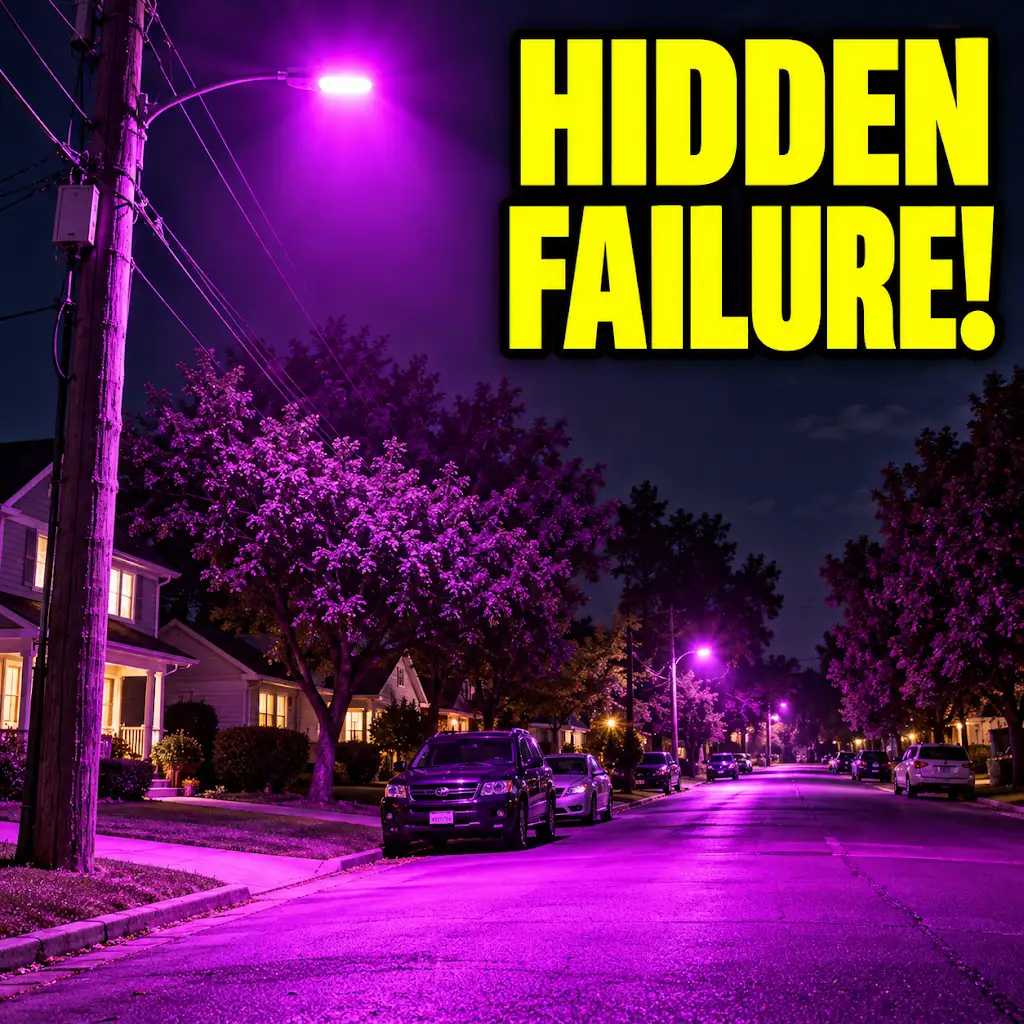
Why The Streetlights Are Turning Purple
FAQs
What is the cause of purple streetlights in Florida?
The purple streetlights in Florida are caused by the presence of LED lights that emit a bluish-white light which, when combined with the moisture in the air, creates a purple hue.
Are purple streetlights harmful to the environment?
There is no evidence to suggest that purple streetlights are harmful to the environment. However, the color may affect wildlife behavior and disrupt ecosystems in certain areas.
Do purple streetlights affect human health?
While there is no direct evidence that purple streetlights have negative health effects, the color may impact people’s circadian rhythms and sleep patterns, leading to potential health issues over time.
Can the purple streetlights in Florida be changed to a different color?
Yes, the color of the streetlights can be changed by adjusting the LED bulbs or using different filters to alter the light emitted. However, this process may require significant resources and approval from local authorities.
Are there any benefits to having purple streetlights in Florida?
Some potential benefits of purple streetlights include reduced light pollution, lower energy consumption, and a unique aesthetic appeal. However, these benefits may vary depending on the specific location and community preferences.