
So, you’ve seen them – those streetlights with a distinct purple glow. It’s natural to wonder what’s going on. The “purple streetlight conspiracy” isn’t really a conspiracy at all, but rather a fascinating technical issue stemming from the way modern LED streetlights are designed and how they degrade over time. It’s a story about materials science, manufacturing, and the lifecycle of technology.
The Curious Case of the Violet Glow
It’s hard to miss a streetlamp casting a distinctly purple hue. At first, it might seem like a deliberate choice, some sort of urban aesthetic experiment or even a sign of something more clandestine. But the reality is far less dramatic, though no less interesting. This shift in color is a widespread phenomenon affecting a specific type of LED streetlight, and it’s happening for a very predictable reason related to the components used in their construction. Think of it as a technological aging process.
What Makes an LED Light Up?
Before we dive into the purple problem, it’s helpful to understand how an LED (Light Emitting Diode) creates light in the first place. Unlike old incandescent bulbs that heat a filament until it glows, LEDs are semiconductors. When an electric current passes through them, electrons jump across a junction, releasing energy in the form of photons – light.
The color of the light emitted by an LED depends on the specific semiconductor material used. For white light, which is what most streetlights aim for, a common approach is to use a blue LED and then coat it with a phosphor. This phosphor absorbs some of the blue light and re-emits it at different wavelengths, combining to create a white light. Different types of phosphors can be used to achieve different “color temperatures” of white, from warm yellow to cool blue.
The Phosphor’s Predicament
The problem that leads to the purple glow lies specifically with the phosphor coating used in many early LED streetlights. These lights often employed a “blue LED with YAG:Ce phosphor” system. YAG (Yttrium Aluminum Garnet) is a crystal, and when doped with Cerium (Ce), it effectively converts blue light into yellow light. The combination of the original blue light and the re-emitted yellow light appears white to our eyes.
However, over time and with constant exposure to light and heat, this specific type of YAG:Ce phosphor can degrade. This degradation doesn’t cause the light to simply dim; it alters the phosphor’s ability to emit yellow light. As the yellow emission weakens, more of the original blue light from the LED shines through unfiltered.
The Vanishing Yellow and the Ascending Blue
When the yellow component of the white light starts to diminish, the balance shifts. What we perceive as white light is a blend of colors. If you remove a significant portion of the yellow, the remaining light will appear to have more blue. But it’s not just the blue that becomes more prominent; the subtle red and green wavelengths that were also part of the original white light are also affected by the phosphor degradation.
The key issue is that the phosphor doesn’t just stop working evenly. It’s the specific wavelengths responsible for producing the warmer parts of the white spectrum that are most susceptible to breakdown. As these wavelengths weaken, the light source starts to lean towards the bluer end of the spectrum. But the “conspiracy” part comes in because, with certain phosphor formulations and degradation patterns, the relative intensity of the blue light actually increases more than the reduction in other colors, leading to a visible shift towards violet. Violet is what you get when you have a strong blue component with less of the other colors, especially the reds and greens that would normally balance it out into a pure white.
The phenomenon of purple streetlights has sparked numerous conspiracy theories, with many people speculating about their purpose and origin. For those interested in exploring this topic further, a related article that delves into the various theories and explanations surrounding these unusual lights can be found at Freaky Science. This article provides insights into the potential reasons behind the installation of purple streetlights and the myths that have emerged as a result.
Why Only Some Lights Turn Purple

It’s not like every single streetlight in the world suddenly goes purple. This phenomenon is specific to certain models and manufacturers, and even within those, it’s not every single unit. Several factors contribute to why you’ll see a mix of white and purple streetlights in the same area.
Manufacturing Variations Matter
Even with strict quality control, there are always slight variations in manufacturing processes. This applies to the purity of the materials used, the thickness of the phosphor coating, and how evenly it’s applied to the LED chip. A batch of LEDs might have a slightly different phosphor composition or a microscopic flaw that makes them more prone to degradation.
Think of it like baking cookies. Even if you follow the same recipe, some batches might turn out a little crispier or chewier than others due to minor differences in oven temperature or dough consistency. In the case of LEDs, these small variations can significantly impact their long-term performance and color stability.
Environmental Stressors Play a Role
Streetlights are out in the elements 24/7. They endure heat, cold, moisture, and UV radiation. These environmental factors can accelerate the degradation process of the phosphor. Lights that are located in areas with harsher conditions – perhaps more direct sunlight, higher ambient temperatures, or greater humidity – might show the purple hue sooner or more intensely than lights in more sheltered environments.
The specific stresses a streetlight is subjected to can also differ. A light facing directly south in a hot climate might experience different degradation than one facing north in a cooler, more temperate zone. The housing and sealing of the fixture also play a role in protecting the sensitive LED components from the elements.
The “Generational” Aspect of LED Technology
The purple streetlight issue is most commonly associated with earlier generations of LED street lighting. When LED technology was first being widely adopted for public lighting, manufacturers were still refining the materials and processes. The YAG:Ce phosphor system was a cost-effective and technically viable solution at the time for producing white light. However, as the technology matured and more research was done, newer formulations of phosphors and different methods of creating white light were developed.
So, you’re less likely to see new installations exhibiting this problem because newer LEDs often use different phosphor blends or alternative white light generation techniques (like using multiple LEDs of different colors that blend together, or improved phosphor compounds that are more resistant to degradation).
The Science Behind the Shift: Phosphor Degradation in Detail

Let’s get a bit more technical about what’s happening with that YAG:Ce phosphor. It’s a chemical and physical breakdown that alters how it interacts with light.
Chemical Instability of YAG:Ce
The YAG:Ce phosphor, while effective, has certain chemical bonds that are susceptible to breaking down under prolonged exposure to high-energy blue light and heat. This breakdown can lead to the formation of defects within the crystal structure of the phosphor. These defects can trap electrons or disrupt the energy transfer process, making it less efficient at converting blue photons into yellow ones.
The Cerium ions within the YAG crystal are the active sites for this conversion. When these sites are damaged or altered by the high-energy environment, their ability to efficiently emit yellow light is compromised.
Photochemical Reactions and Aging
The process is essentially a form of photochemical degradation. The intense blue light emitted by the LED acts as an energy source that can drive chemical reactions within the phosphor. Over time, these reactions alter the phosphor’s composition and structure. This isn’t an overnight process; it happens gradually over thousands of hours of operation.
Think of how colors in fabrics fade over time when exposed to sunlight. While not identical, the principle of light energy causing physical and chemical changes that alter the material’s properties is similar. In the case of the phosphor, these changes manifest as a reduced output of yellow light.
The Specifics of Spectral Shift
As the YAG:Ce phosphor degrades, its emission spectrum changes. The peak wavelength for its yellow emission might shift slightly, or the intensity at that peak (and other yellow-producing wavelengths) significantly decreases. Simultaneously, the blue LED continues to emit its original blue light.
When the white light spectrum is plotted, you’d see a reduction in the “hump” corresponding to the yellow emission. The blue peak, however, might become proportionally more prominent. The overall spectral power distribution of the light source changes, and our eyes interpret this altered distribution as a shift towards bluer and, in some cases, violet hues. The specific chemical reactions and defects can lead to an overemphasis on the blue wavelengths relative to the remaining red and green components.
Is It Harmful or Dangerous?
This is a common concern when people see something unusual. Does the purple light pose a health risk, or is it a sign of malfunctioning equipment that could be dangerous? Fortunately, in this case, the answer is generally no.
No Known Health Risks Associated with Purple Streetlights
There is no scientific evidence to suggest that the purple hue of these degraded LED streetlights is harmful to human health. While the color may be aesthetically displeasing or confusing, it doesn’t emit any more harmful radiation than a standard white LED. The light is still within the visible spectrum.
Concerns sometimes arise about the increased blue light component, as excessive exposure to blue light (especially at night) can disrupt sleep patterns. However, the light from streetlights, even those that have shifted to a more bluish or purplish hue, is generally not intense enough or directed in a way that would cause significant physiological disruption compared to other sources of artificial light we encounter daily.
Not a Sign of Imminent Failure or Safety Hazard
The purple color is not an indication that the streetlight is about to fail completely or that it’s a safety hazard. The light is still functioning and providing illumination. The change in color is simply a consequence of the materials aging, as discussed.
While the light output might be slightly less efficient or the color rendering might be poorer, the primary function of providing visibility is still being met. Municipalities may eventually replace these lights, but it’s usually done for reasons of aesthetics, standardization, or when the light output has degraded to a point where it’s no longer effective, rather than due to an immediate safety concern.
A Matter of Aesthetics and Uniformity
The primary “danger” of these purple streetlights is their impact on the visual environment. They can be jarring, create an unsettling atmosphere, and lead to confusion or speculation. For residents and businesses, it can simply be an annoyance. For municipalities, it can lead to complaints and a desire for a more uniform and aesthetically pleasing streetscape.
The replacement of these lights is often driven by the desire to maintain a consistent look and feel for public lighting, ensuring that all streetlights in an area emit a standard, neutral white light.
The phenomenon of purple streetlights has sparked numerous theories and discussions, leading many to explore the implications of this unusual occurrence. For those interested in delving deeper into the topic, a related article can be found at Freaky Science, where various conspiracy theories surrounding the purple streetlights are examined in detail. This resource provides insights into the origins of the color change and the speculations that have emerged in response to it, making it a valuable read for anyone curious about the mysteries behind urban lighting.
The Solution: Replacement and Future-Proofing
| Aspect | Description | Details |
|---|---|---|
| Conspiracy Name | Purple Streetlight Conspiracy | Belief that purple streetlights are used for secret surveillance or control |
| Origin | Urban Legends and Online Forums | Started circulating in social media and conspiracy theory communities |
| Purpose Claimed by Theorists | Surveillance, Mind Control, or Health Effects | Some claim purple lights are used to monitor citizens or affect mental states |
| Scientific Explanation | LED Technology and Energy Efficiency | Purple or violet hues result from LED streetlights designed for better energy use and visibility |
| Evidence Supporting Conspiracy | None Verified | No credible evidence supports the conspiracy claims |
| Public Reaction | Mixed | Some fear or distrust, others accept scientific explanations |
| Official Statements | Local Governments and Utility Companies | Confirm lights are for energy efficiency and public safety |
So, what’s being done about the purple glow? The solution is straightforward, though it involves time and resources.
Replacing the Degraded Units
The most direct and effective solution is to replace the streetlights that have begun to emit a purple light. Municipalities and utility companies are aware of the issue and have programs to identify and replace these units. This is often done during routine maintenance or when specific complaints are received.
The process involves removing the old fixture, which contains the degraded LED module, and installing a new one. This ensures that the street is once again illuminated with consistent, neutral white light.
Advancements in LED Technology
The purple streetlight phenomenon has served as a valuable lesson for the LED industry. Manufacturers have since improved their designs and materials to prevent this type of degradation. Newer LED streetlights often use:
- Different Phosphor Blends: Instead of YAG:Ce, newer lights might use more stable phosphors, or combinations of different phosphors to achieve white light.
- Improved Encapsulation: Better sealing and protective materials around the LED chips and phosphors can shield them from environmental stressors.
- Alternative White Light Generation: Some newer designs use a “chip-on-board” (COB) approach with multiple LED dies of different colors (like red, green, and blue) that blend to create white light, or use different methods entirely to achieve the desired spectrum without relying on a single, vulnerable phosphor coating.
- Higher Quality Control: Increased understanding of material science and manufacturing processes leads to more robust and reliable LED products.
Long-Term Benefits of Modern LEDs
While the initial investment in LED street lighting was significant, the long-term benefits are substantial. LEDs are far more energy-efficient than older lighting technologies, leading to reduced electricity consumption and lower operating costs for municipalities. They also have a much longer lifespan, meaning fewer replacements are needed over time.
The purple streetlight issue was a teething problem with an early iteration of this technology. By understanding the cause and implementing solutions, we’ve moved towards more durable and reliable LED lighting for our streets. The next time you see a purple streetlight, you’ll know it’s not a secret code, but simply a testament to how technology evolves and sometimes, a bit of light science gone a little off-key.
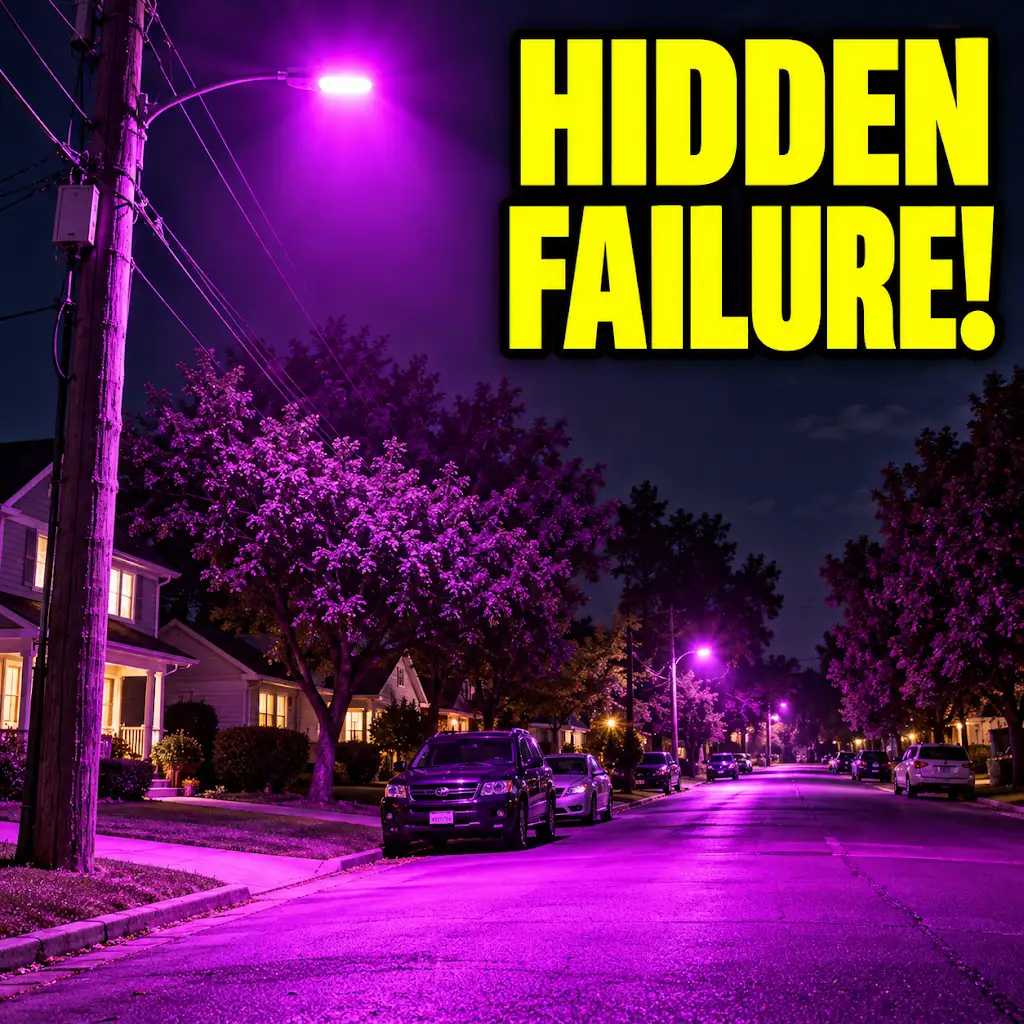
Why The Streetlights Are Turning Purple
FAQs
What is the purple streetlight conspiracy?
The purple streetlight conspiracy is a theory that suggests the existence of a secret government program using purple streetlights for mind control purposes.
Are there any real purple streetlights in existence?
No, there are no known instances of actual purple streetlights being used in any city or town. The conspiracy theory is based on speculation and has no concrete evidence to support it.
Who started the purple streetlight conspiracy theory?
The origins of the purple streetlight conspiracy theory are unclear, but it is believed to have originated online and spread through various conspiracy theory forums and social media platforms.
What are some arguments against the purple streetlight conspiracy?
Skeptics of the purple streetlight conspiracy point out the lack of evidence supporting the theory, the impracticality of implementing such a program on a large scale, and the absence of any reported incidents involving purple streetlights and mind control.
How can we debunk the purple streetlight conspiracy theory?
To debunk the purple streetlight conspiracy theory, it is important to rely on factual information, critical thinking, and evidence-based reasoning. Encouraging open dialogue and promoting media literacy can also help combat the spread of misinformation.