
Flatworm snails, a fascinating group of mollusks, inhabit a unique niche within the aquatic ecosystem. These creatures, belonging to the class Gastropoda, are characterized by their distinctive flat bodies and coiled shells. You may find them in various freshwater and marine environments, where they play essential roles in the food web.
As you delve into the world of flatworm snails, you will discover that they possess a range of adaptations that allow them to thrive in diverse habitats. Their flat bodies enable them to navigate through tight spaces and access food sources that other mollusks might struggle to reach.
Additionally, their unique reproductive strategies and feeding habits contribute to their resilience in changing environments. By exploring the anatomy and behavior of flatworm snails, you can gain insights into the evolutionary processes that have shaped these remarkable creatures.
Key Takeaways
- Flatworm snails have pulsating eyestalks that are unique among mollusks.
- The anatomy of flatworm snail eyestalks includes specialized cells and muscles for pulsation.
- Pulsating eyestalks in flatworm snails serve the function of enhancing visual perception.
- Evolutionary adaptations have shaped the development of pulsating eyestalks in flatworm snails.
- Flatworm snails exhibit behavioral responses to visual stimuli, indicating the importance of their vision in their survival.
Anatomy of Flatworm Snail Eyestalks
The eyestalks of flatworm snails are among their most distinctive features, serving as a critical component of their sensory apparatus.
As you observe these eyestalks, you may notice their pulsating movements, which are not merely for show but serve essential functions in the snail’s interaction with its environment.
Anatomically, the eyestalks are equipped with specialized photoreceptor cells that enable flatworm snails to detect light and movement. The pulsating action of these eyestalks enhances their ability to gather visual information, allowing them to respond quickly to potential threats or opportunities. This unique adaptation is a testament to the evolutionary pressures that have shaped the sensory systems of these mollusks, providing them with a competitive edge in their habitats.
The Function of Pulsating Eyestalks
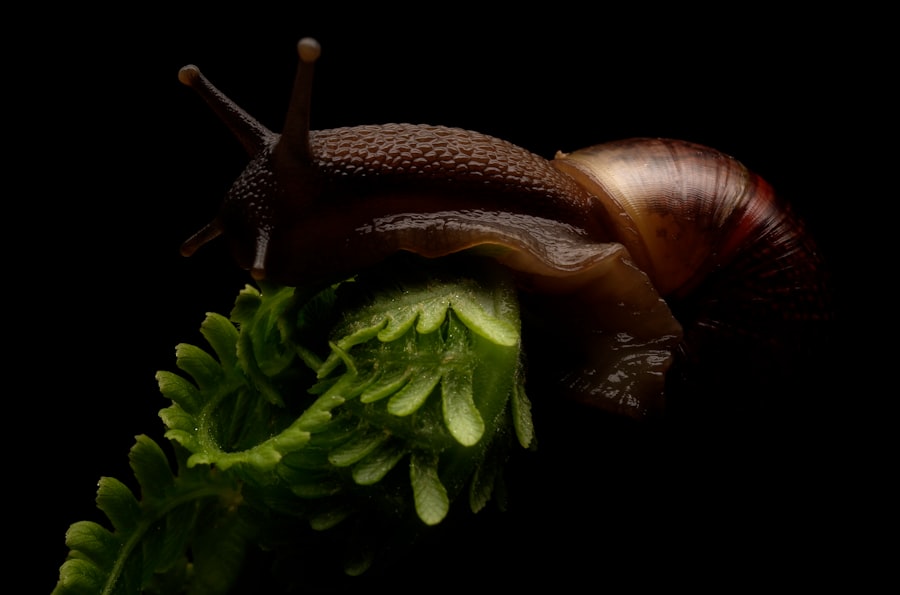
The pulsating eyestalks of flatworm snails serve multiple functions that are crucial for their survival. One primary role is to enhance their visual acuity, allowing them to detect changes in light intensity and movement in their surroundings. As you observe these snails in their natural habitat, you may notice how their eyestalks rhythmically extend and retract, creating a dynamic visual field that helps them navigate through complex environments.
Moreover, the pulsating motion of the eyestalks can also serve as a form of communication among flatworm snails. By varying the speed and intensity of their pulsations, these snails may convey information about their reproductive status or territorial boundaries. This fascinating aspect of their behavior highlights the intricate social dynamics that exist within snail populations and underscores the importance of visual signals in their interactions.
Evolutionary Adaptations of Pulsating Eyestalks
| Adaptation | Description |
|---|---|
| Increased visual acuity | Pulsating eyestalks allow for rapid adjustments in focus and improved vision in changing light conditions. |
| Enhanced camouflage | The ability to change the color and pattern of the eyestalks helps in blending with the surroundings and avoiding predators. |
| Improved communication | Pulsating eyestalks can be used to convey signals and messages to other organisms, aiding in social interactions and mating rituals. |
| Increased awareness | The ability to move the eyestalks independently allows for a wider field of view and better detection of potential threats. |
The evolution of pulsating eyestalks in flatworm snails is a remarkable example of how species adapt to their environments over time. These adaptations have likely arisen in response to various ecological pressures, such as predation and competition for resources. As you explore the evolutionary history of these mollusks, you will find that their eyestalks have undergone significant modifications to enhance their survival prospects.
One key factor driving the evolution of pulsating eyestalks is the need for improved sensory perception. In environments where visibility may be limited due to murky waters or dense vegetation, having highly mobile and responsive eyestalks allows flatworm snails to detect predators and prey more effectively. This evolutionary advantage not only increases their chances of survival but also influences their reproductive success by enabling them to locate mates more efficiently.
Visual Perception of Flatworm Snails
Flatworm snails possess a unique visual perception system that sets them apart from other mollusks. Their eyestalks are equipped with photoreceptors that allow them to perceive light in ways that are adapted to their specific habitats. As you study these creatures, you will come to appreciate how their visual capabilities are finely tuned to meet the demands of their environment.
Interestingly, flatworm snails have been found to exhibit a form of vision that is not solely reliant on color perception but rather on detecting contrasts in light intensity. This adaptation is particularly advantageous in dimly lit aquatic environments where subtle changes in light can signal the presence of predators or food sources. By understanding how flatworm snails perceive their surroundings, you can gain insights into the evolutionary pressures that have shaped their sensory systems.
Behavioral Responses to Visual Stimuli
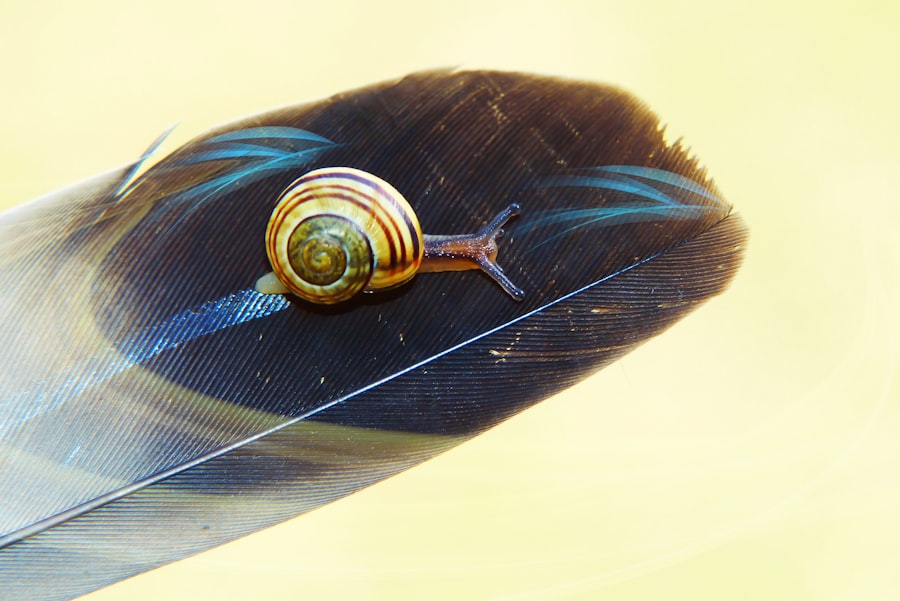
The behavioral responses of flatworm snails to visual stimuli are both fascinating and complex. When exposed to changes in light or movement, these snails exhibit a range of behaviors that reflect their adaptability and survival instincts. You may observe them retreating into their shells or altering their movement patterns in response to perceived threats, showcasing their ability to react swiftly to environmental cues.
In addition to defensive behaviors, flatworm snails also display positive responses to visual stimuli associated with food sources or potential mates. Their pulsating eyestalks play a crucial role in this process, as they help the snails locate and assess these stimuli from a distance. By studying these behavioral responses, you can gain a deeper understanding of how flatworm snails interact with their environment and make decisions that impact their survival.
Comparison of Pulsating Eyestalks to Other Mollusk Vision
When comparing the pulsating eyestalks of flatworm snails to the visual systems of other mollusks, several intriguing differences emerge. While many mollusks possess simple eyes or ocelli that provide basic light detection capabilities, flatworm snails have evolved more complex structures that enhance their visual perception. As you explore these differences, you will find that the adaptations seen in flatworm snails reflect their unique ecological niches.
For instance, cephalopods like octopuses and squids possess highly developed eyes that allow for acute vision and color discrimination. In contrast, flatworm snails rely on their pulsating eyestalks for detecting movement and changes in light intensity rather than color perception. This distinction highlights the diverse evolutionary paths taken by different mollusk groups in response to their specific environmental challenges.
Research and Studies on Flatworm Snail Vision
Research on flatworm snail vision has gained momentum in recent years as scientists seek to unravel the complexities of their sensory systems. Various studies have focused on understanding the anatomical structure of their eyestalks and how these adaptations contribute to their visual capabilities. As you delve into this body of research, you will discover innovative techniques used by scientists to study these fascinating creatures.
One area of interest has been the investigation of how environmental factors influence the development and function of pulsating eyestalks in flatworm snails. Researchers have conducted experiments examining how changes in light conditions affect the behavior and physiology of these snails, providing valuable insights into the relationship between sensory perception and environmental adaptation. By staying informed about ongoing research efforts, you can appreciate the broader implications of these studies for understanding mollusk evolution and ecology.
Threats to Pulsating Eyestalk Function
Despite their remarkable adaptations, flatworm snails face several threats that could impact the function of their pulsating eyestalks and overall survival. Habitat degradation due to pollution, climate change, and invasive species poses significant challenges for these mollusks. As you consider these threats, it becomes clear that preserving their natural habitats is crucial for maintaining healthy populations.
Additionally, changes in water quality can directly affect the sensory systems of flatworm snails. Pollutants may disrupt the delicate balance required for optimal functioning of their eyestalks, leading to impaired vision and reduced ability to respond to environmental cues. Understanding these threats is essential for developing effective conservation strategies aimed at protecting flatworm snail populations and ensuring the continued functioning of their unique adaptations.
Conservation Efforts for Flatworm Snail Populations
Conservation efforts aimed at protecting flatworm snail populations are increasingly important as awareness grows about the threats they face. Various organizations and researchers are working collaboratively to develop strategies that address habitat preservation and restoration. As you explore these initiatives, you will find that community engagement plays a vital role in promoting awareness about the ecological significance of flatworm snails.
One effective approach has been the establishment of protected areas where flatworm snail populations can thrive without the pressures of habitat degradation or pollution. Additionally, educational programs aimed at local communities help foster a sense of stewardship for aquatic ecosystems, encouraging individuals to take action in preserving these unique habitats. By supporting conservation efforts, you can contribute to safeguarding the future of flatworm snails and ensuring that their remarkable adaptations continue to flourish.
Future Directions in Flatworm Snail Vision Research
Looking ahead, future research on flatworm snail vision holds great promise for uncovering new insights into sensory biology and evolution. As scientists continue to explore the intricacies of pulsating eyestalks and visual perception, innovative technologies such as advanced imaging techniques and genetic analysis will likely play a pivotal role in advancing our understanding. Moreover, interdisciplinary approaches that integrate ecology, physiology, and behavioral science will provide a more comprehensive view of how flatworm snails interact with their environment.
By fostering collaboration among researchers from various fields, we can deepen our knowledge of these fascinating creatures and contribute to broader discussions about biodiversity conservation and ecosystem health. In conclusion, your exploration into the world of flatworm snails reveals a complex interplay between anatomy, behavior, and environmental adaptation. Their pulsating eyestalks serve as a remarkable example of evolutionary innovation, allowing them to thrive in diverse habitats while facing numerous challenges.
By continuing to study these unique mollusks, we can gain valuable insights into the intricate web of life within aquatic ecosystems and work towards ensuring a sustainable future for all species involved.
Flatworm-infected snails exhibit a fascinating and somewhat eerie phenomenon where their eyestalks pulsate in vibrant colors, mimicking caterpillars to attract birds. This bizarre behavior is a result of the parasitic flatworm, Leucochloridium paradoxum, which manipulates the snail to increase its chances of reaching its next host. For more intriguing insights into the world of peculiar scientific phenomena, you can explore a related article on Freaky Science, where they delve into various unusual and captivating occurrences in nature.
WATCH THIS! Meet the Ocean Virus Rewiring Your Brain — New Science Reveals Its Shocking Influence
FAQs
What are flatworm snail pulsating eyestalks?
Flatworm snail pulsating eyestalks are a unique feature of certain species of flatworm snails. These eyestalks are specialized structures that protrude from the snail’s head and are capable of pulsating or moving rhythmically.
What is the purpose of flatworm snail pulsating eyestalks?
The exact purpose of flatworm snail pulsating eyestalks is not fully understood, but they are believed to play a role in sensory perception and possibly in communication with other snails. They may also aid in detecting changes in the environment and locating food sources.
How do flatworm snail pulsating eyestalks function?
Flatworm snail pulsating eyestalks function through a combination of muscular contractions and hydrostatic pressure. The snail is able to control the movement of its eyestalks to scan its surroundings and gather information about its environment.
Are flatworm snail pulsating eyestalks found in all snails?
No, flatworm snail pulsating eyestalks are a unique feature specific to certain species of flatworm snails. Not all snails have this specialized adaptation.
Can flatworm snail pulsating eyestalks regrow if they are damaged?
In some cases, flatworm snail pulsating eyestalks have the ability to regrow if they are damaged or lost. This regrowth process can vary depending on the species and the extent of the damage.