The concept of reality as a simulated environment has transcended the realms of science fiction and entered serious academic discourse. This ‘simulation hypothesis’ proposes that our perceived universe, including all of existence, may be an artificial construct, similar to a sophisticated computer program. While seemingly outlandish, various arguments and observations lend credence to this theory, prompting a re-evaluation of fundamental philosophical and scientific assumptions.
The simulation hypothesis is not a modern invention; its roots can be traced to ancient philosophical thought and thought experiments.
Plato’s Allegory of the Cave and the Illusion of Reality
Plato’s Allegory of the Cave, penned in The Republic in the 4th century BCE, serves as an early conceptual precursor. In this allegory, prisoners chained in a cave perceive shadows cast on a wall as their entire reality, unaware of the true objects and sunlight outside. This metaphor succinctly illustrates the possibility that our perceived world might be a mere projection, or a shadow, of a deeper, more fundamental reality. The allegory challenges the assumption that our senses provide a direct and unmediated access to truth, instead suggesting that what we experience could be a limited and manipulated representation.
Descartes’ Malicious Demon and Skepticism
Centuries later, René Descartes explored a similar theme in his Meditations on First Philosophy. He posited the concept of an “evil demon,” an omnipotent and cunning deceiver who could manipulate all his perceptions and thoughts, making him believe in a world that did not exist. This thought experiment, while not directly advocating for a simulated reality, highlights the epistemological problem of certainty and the inherent difficulty in distinguishing between genuine experience and elaborate deception. Descartes’ systematic doubt laid the groundwork for questioning the very nature of existence and perception, paving the way for more modern simulation theories.
Simulation theory has gained significant attention in recent years, prompting various discussions and analyses regarding its implications and potential proofs. A related article that delves deeper into the nuances of simulation theory can be found at Freaky Science. This resource explores the philosophical and scientific perspectives surrounding the idea that our reality may be a sophisticated simulation, offering insights that challenge our understanding of existence and consciousness.
Computational Limits and Resource Optimization
One of the most compelling arguments for the simulation hypothesis stems from the practical considerations of running an immense computational system. Any sufficiently advanced civilization, or “base reality,” attempting to simulate a universe would likely encounter constraints on processing power and data storage.
The Granularity of Reality and Discretization
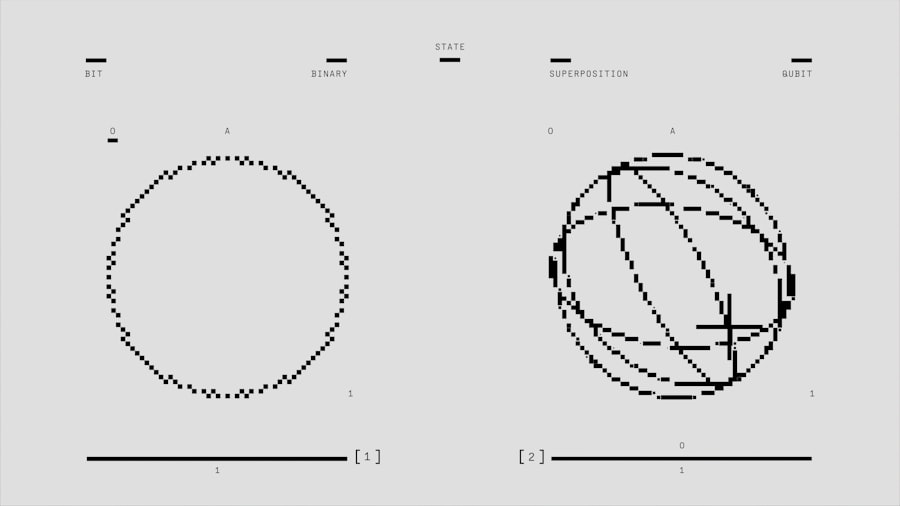
If our universe is a simulation, it would likely operate on discrete units, much like pixels on a screen or individual data points in a computer program, rather than being infinitely continuous. Quantum mechanics, with its quantization of energy, momentum, and other physical properties, offers suggestive parallels. The Planck length and Planck time, the smallest conceivable units of length and time respectively, could be interpreted as the ‘pixels’ or ‘frame rate’ of our simulated reality. If reality were truly continuous, it would require infinite computational resources to render every infinitesimal detail, a feat likely impossible even for a super-civilization. The discrete nature of the universe, therefore, could be seen as an optimization strategy to conserve computational power.
Information Theory and the Universe as Code
The entire universe, from elementary particles to galaxy superclusters, can be described through information. Entropy, a measure of disorder in thermodynamics, is also fundamentally linked to information. As physicist John Wheeler famously stated, “It from bit,” implying that every physical entity and event derives its existence from underlying informational bits. If the universe fundamentally operates as a vast information processing system, then it naturally lends itself to the interpretation of being a computer program. The laws of physics, in this view, are merely algorithms governing the interactions of these informational bits, and the physical constants are parameters set within the code.
The Fermi Paradox and the Abundance of Simulations

The Fermi Paradox, which questions the apparent contradiction between the high probability of extraterrestrial life and the lack of observational evidence for it, finds a peculiar resolution within the simulation hypothesis.
The Rarity of “Base Reality” Civilizations
If advanced civilizations capable of creating simulations are common, and if such simulations are also common, then the vast majority of conscious observers would likely reside within simulations rather than a “base reality.” Imagine an advanced civilization creating thousands, or even millions, of ancestral simulations. For every one base reality, there could be countless simulated realities. Therefore, statistically speaking, it is far more probable that we are in one of these simulated realities. The silence of the night sky, therefore, might not indicate a paucity of life, but rather our confinement to a carefully controlled computational environment designed to run historical simulations.
The Control Group Argument and Observational Bias
A base reality civilization might have strong ethical or practical motivations to limit interaction with its simulated inhabitants. Interference could corrupt the data, invalidate the simulation’s purpose, or even pose a risk to the base reality itself. Consequently, any observational evidence of alien life might be suppressed or simply not allowed to manifest within our simulation. Our inability to detect extraterrestrial intelligence, then, would not be an anomaly, but a feature of our simulated existence, much like characters in a video game cannot directly perceive the game developers. It’s a question of observational bias: we are looking for evidence of other “players” in a game that might only be designed for us to experience, or where other “players” are intentionally rendered imperceptible.
Fine-Tuning and the Goldilocks Enigma
The uncanny precision of the universe’s fundamental constants and laws has been a persistent source of wonder and bewilderment for scientists and philosophers alike. This phenomenon is often referred to as the “fine-tuning problem.”
The Improbable Constants of Nature
The values of fundamental physical constants, such as the gravitational constant, the strong nuclear force coupling constant, and the mass of the electron, appear to be exquisitely tuned for the existence of life as we know it. Even a minuscule deviation in these values would result in a universe where stars couldn’t form, atoms wouldn’t be stable, or carbon-based life would be impossible. The probability of these constants spontaneously aligning so perfectly seems astronomically small, leading some to invoke a multiverse hypothesis (where our universe is just one of many, and we observe the one conducive to life) or a divine creator. However, the simulation hypothesis offers another explanation: the constants were simply “programmed” to be that way. They are the parameters set by the simulators to allow for the emergence of complex systems and conscious observers.
Debugging and Patching the Universe
If our reality is a simulation, then anomalies or unexpected phenomena could be interpreted as “bugs” or “glitches” in the code. Some researchers have suggested that events like unexplained quantum phenomena, or even certain aspects of consciousness, might be emergent properties or unintended consequences of the simulation’s algorithms. Furthermore, the possibility of “patches” or “updates” to the simulation could explain seemingly sudden shifts in physical laws or unexpected cosmological events in the future. Imagine a universe where certain parameters needed adjustment for the simulation to continue effectively, much like a software developer applies an update to fix critical vulnerabilities. This perspective provides a framework for understanding cosmological puzzles that otherwise defy conventional explanation.
Simulation theory has sparked intriguing discussions about the nature of reality, and a related article explores various proofs and arguments that support this hypothesis. For those interested in delving deeper into the subject, the article provides a comprehensive overview of the philosophical implications and scientific considerations surrounding the idea that we might be living in a simulated universe. You can read more about it in this insightful piece here.
Observable Phenomena and Potential Glitches
| Proof/Metric | Description | Key Researcher(s) | Year | Evidence Type | Significance Level |
|---|---|---|---|---|---|
| Computational Limits of the Universe | Analysis of the universe’s finite computational capacity suggesting a simulated environment | Seth Lloyd | 2006 | Theoretical Physics | Moderate |
| Pixelation of Space-Time | Hypothesis that space-time is quantized, similar to pixels in a simulation | Silas Beane et al. | 2012 | Experimental Physics (Cosmic Rays) | Low to Moderate |
| Mathematical Universe Hypothesis | Proposal that reality is a mathematical structure, implying a programmed simulation | Max Tegmark | 2014 | Philosophical/Mathematical | Speculative |
| Quantum Indeterminacy as Simulation Artifacts | Interpretation of quantum randomness as computational shortcuts in a simulation | Nick Bostrom (inspired) | 2003 | Philosophical/Interpretative | Speculative |
| Simulation Argument Probability | Statistical argument estimating likelihood that we live in a simulation | Nick Bostrom | 2003 | Philosophical/Statistical | High (Theoretical) |
While direct proof remains elusive, certain observations and theoretical constructs have been posited as potential “tells” of a simulated reality.
“Render Distance” and the Edge of the Observable Universe
The finite speed of light limits our observable universe to a sphere approximately 46.5 billion light-years in radius. We cannot see beyond this ‘cosmic horizon’. In a simulated environment, a similar limitation might be imposed to conserve computational resources. Why “render” areas of the universe that no observer within the simulation can ever perceive? This “render distance” optimization is a common technique in video games, allowing for the creation of vast virtual worlds without taxing the system with rendering all details simultaneously. The cosmic horizon, therefore, could be interpreted as the limit of our universe’s computational rendering.
The Simulation Argument and Computational Power
Nick Bostrom’s seminal 2003 paper “Are You Living in a Computer Simulation?” presents a trilemma, arguing that at least one of three propositions must be true:
- The fraction of human-level civilizations that reach a posthuman stage (i.e., develop the computing power to run ancestral simulations) is very close to zero.
- The fraction of posthuman civilizations that are interested in running a significant number of ancestral simulations is very close to zero.
- We are almost certainly living in a computer simulation.
Bostrom argues that if the first two propositions are false, meaning that advanced civilizations are common and do run simulations, then the statistical probability strongly favors us being in a simulation. The sheer number of potential simulated realities would vastly outweigh the single “base reality.” This argument provides a probabilistic framework for considering the simulation hypothesis, shifting the burden of proof to those who would dismiss it outright.
The Search for “Glitches” and Discrepancies
Researchers actively look for physical phenomena that might not conform perfectly to our current understanding of physics, or that appear to be unusual when viewed from a computational perspective. For example, some theorize about the possibility of “bit errors” or computational artifacts manifesting in cosmic ray anomalies, unexpected data fluctuations, or deviations from expected probabilities in quantum experiments. While no definitive “glitch” has been unequivocally identified as proof of simulation, the ongoing search highlights a methodological approach to testing the hypothesis. The notion is that if our universe is a program, there might be traces of its underlying code, even if subtle.
The simulation hypothesis, while radical, offers a compelling reinterpretation of many enduring scientific and philosophical puzzles. It challenges us to question the fundamentals of our existence, much like a fish might question the water it lives in. While direct proof remains elusive, the convergence of philosophical arguments, computational insights, and cosmological observations provides a rich ground for further exploration, urging us to consider the possibility that our perceived reality might be a meticulously crafted illusion. The implications of such a revelation would be profound, fundamentally altering our understanding of ourselves, our universe, and our place within existence.
FAQs
What is simulation theory?
Simulation theory is the hypothesis that reality, including the Earth and the universe, could be an artificial simulation, such as a computer simulation, rather than actual physical reality.
Are there any scientific proofs supporting simulation theory?
Currently, there are no definitive scientific proofs that confirm simulation theory. While some theoretical arguments and thought experiments suggest it is possible, empirical evidence remains lacking.
What kind of evidence do proponents of simulation theory cite?
Proponents often point to phenomena such as the mathematical nature of physical laws, quantum mechanics’ probabilistic behavior, and computational limits in physics as indirect hints that reality might be simulated.
Can simulation theory be tested or falsified?
Testing simulation theory is challenging because any evidence found could itself be part of the simulation. Some researchers have proposed experiments to detect anomalies or “glitches,” but no conclusive tests have been established.
Who are some notable figures associated with simulation theory?
Philosopher Nick Bostrom is well-known for formalizing the simulation argument. Additionally, scientists and technologists like Elon Musk have publicly discussed the possibility that we live in a simulation.