Prions are unique infectious agents that, unlike viruses or bacteria, consist solely of a misfolded protein. Their persistence in the environment, particularly in soil, is a significant concern for disease transmission. This article delves into the intricate relationship between prions and soil components, exploring the mechanisms by which these rogue proteins bind to soil minerals and clay. Understanding these interactions is crucial for developing effective strategies to mitigate prion spread and contamination.
The Challenge of Decontamination
The prion, a proteinaceous infectious particle, presents a formidable challenge for decontamination. Unlike conventional pathogens that can be inactivated by heat, radiation, or chemical agents that target their genetic material or cellular structures, prions exhibit remarkable resistance to these treatments. This resilience stems from their simple proteinaceous nature and their ability to induce a conformational change in their healthy counterparts, leading to a cascade of misfolding. Imagine a rogue domino in a line, capable of toppling all the others in its path, but without any inherent vulnerability in its physical form. This inherent stability makes their eradication from contaminated environments exceptionally difficult.
Prion Persistence in Soil Ecosystems
Soil has emerged as a critical reservoir for prions. Following the shedding of infectious material, such as from infected animals or their carcasses, prions can enter the soil environment. Here, they do not simply degrade. Instead, they can persist for extended periods, acting as a potential source of infection for scavenging animals, or through uptake by plants, although plant uptake is a less definitively established pathway for significant prion dissemination in all contexts. The soil acts as a vast, complex matrix, and prions find unlikely allies within its mineral and organic components. This persistence is not merely a matter of passive lodging; it involves active interactions that anchor prions firmly within the soil structure.
Environmental Transmission Pathways
The presence of prions in soil opens several pathways for environmental transmission. Ingestion of contaminated soil by livestock, particularly grazing animals, is a primary concern. This can occur incidentally during grazing or through disturbed soil from agricultural practices or burrowing animals. Furthermore, water runoff from contaminated areas can transport prions to new locations, potentially contaminating water sources. Even subtle environmental disturbances, like wind erosion, can mobilize prion-laden soil particles. The soil, therefore, acts not just as a passive sink but as an active disseminator of these formidable infectious agents.
Recent research has shed light on the intriguing mechanisms by which prions bind to soil minerals and clay, significantly impacting their environmental stability and transmission. For a deeper understanding of this phenomenon, you can explore the article on prions and their interactions with soil components at Freaky Science. This resource provides valuable insights into the implications of prion behavior in the ecosystem and its potential effects on agriculture and public health.
Mechanisms of Prion Binding to Soil Minerals
Electrostatic Interactions: The Foundation of Adsorption
Electrostatic interactions form a cornerstone of prion binding to soil minerals. Soil mineral surfaces often carry a net charge, which can be positive or negative depending on the mineral composition, pH, and the presence of dissolved ions. Prions themselves possess charged amino acid residues on their surface. At the physiological pH range commonly found in soils (typically between 5 and 8), the prion protein exhibits both positively and negatively charged regions. This allows for complementary electrostatic attraction to mineral surfaces with opposite charges. Consider a lock and key mechanism; the charged regions on the prion act as the key, and the oppositely charged sites on the mineral surface act as the lock, facilitating a strong initial bond.
Adsorption Isotherms: Quantifying the Binding Strength
The extent of prion adsorption to soil minerals can be quantified using adsorption isotherms. These experimental plots relate the amount of prion adsorbed to the mineral surface to the concentration of prions in the surrounding solution at a constant temperature. Common isotherm models, such as the Langmuir and Freundlich models, can be applied to assess the adsorption capacity and binding affinity. The Langmuir model, for instance, assumes monolayer adsorption on a homogeneous surface with a finite number of binding sites. The Freundlich model, on the other hand, describes adsorption on a heterogeneous surface, where the binding sites vary in energy. The results from these isotherms provide crucial data for understanding how effectively prions are retained by different mineral types.
Role of Surface Heterogeneity and Functional Groups
Soil mineral surfaces are not uniform; they are characterized by a high degree of heterogeneity. This includes variations in surface topography, crystal defects, and the presence of various functional groups. These functional groups, such as hydroxyl (-OH), carboxyl (-COOH), and amine (-NH2) groups, can participate in specific chemical interactions with prions, going beyond simple electrostatic attraction. For example, hydrogen bonding can occur between polar groups on the prion protein and similar groups on the mineral surface. These specific interactions can significantly enhance the affinity and stability of prion binding, making the adsorption process more complex and robust.
The Crucial Role of Clay Minerals in Prion Sequestration
Clay Surfaces: A Vast Network of Binding Sites
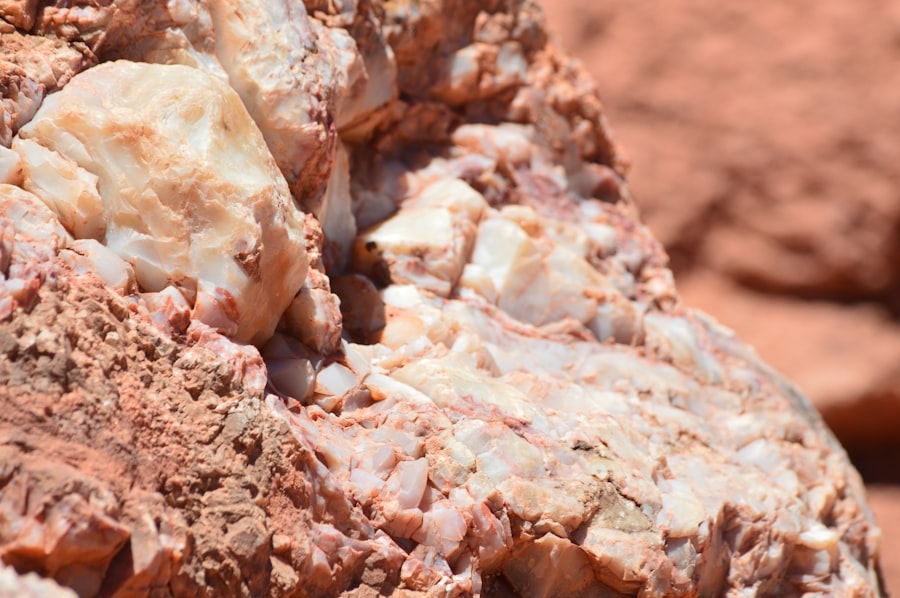
Clay minerals, with their incredibly small particle size and large surface area to volume ratio, are particularly adept at binding a wide array of molecules, including prions. Their layered structure creates a vast network of potential binding sites, both on their external surfaces and within their interlayer spaces. Imagine a tightly packed library of books, where each book is a potential binding site. The extensive surface area of clay minerals dramatically increases the probability of encountering and binding prion molecules. This makes clay a significant factor in the sequestration and stabilization of prions within the soil matrix.
Intercalation and Entrapment: Beyond Surface Binding
Beyond simple surface adsorption, clay minerals can also trap prion proteins within their structural lattices. This process, known as intercalation, can occur in certain types of clays where the layers can expand to accommodate guest molecules. The confined space within the clay layers can further protect prions from degradation and denaturation, effectively shielding them from environmental factors that might otherwise break them down. This internal entrapment provides a robust form of prion stabilization, making them even more persistent. Think of it as not just placing a note on a bulletin board, but tucking it away securely inside a book on a shelf.
Influence of Clay Type and Properties
The type and properties of clay minerals significantly influence their prion binding capacity. Smectites, such as montmorillonite, with their ability to expand their interlayers, are known to exhibit strong prion binding. Illite and kaolinite, on the other hand, have less expansive structures and may bind prions primarily through surface interactions. Factors like the cation exchange capacity (CEC) of the clay, which reflects its ability to exchange positively charged ions, also play a critical role. Clays with higher CEC can effectively bind and retain positively charged prion molecules. The diversity of clay types acts like a varied set of specialized containers, some of which are far more effective at holding onto prions than others.
Prion Conformation and Its Impact on Soil Binding
The Prion Protein: A Shapeshifter of Infection
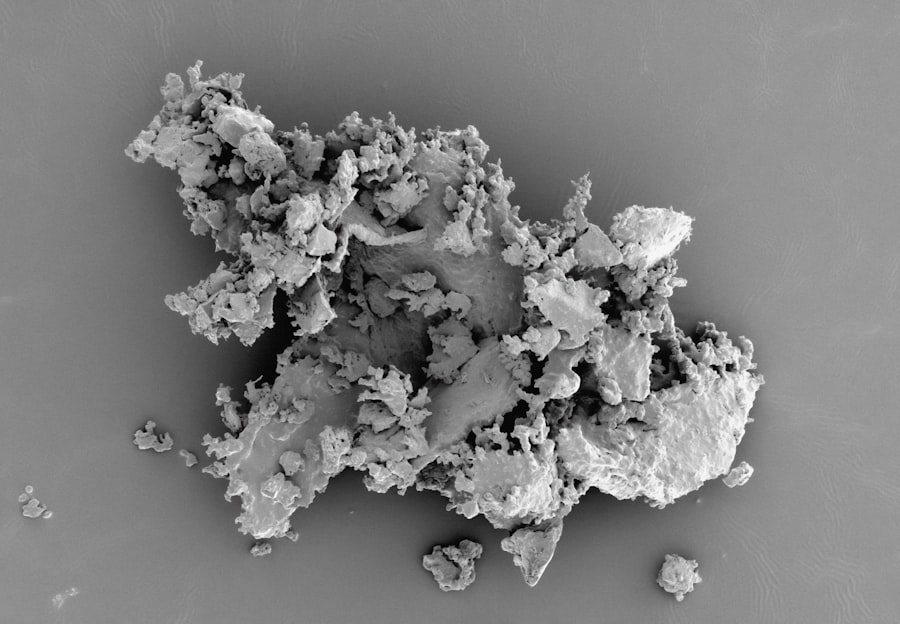
The prion protein, denoted as PrP, exists in two main conformations: the normal cellular form (PrPC) and the disease-associated, misfolded form (PrPSc). PrPC is soluble and found on cell surfaces, while PrPSc is insoluble, prone to aggregation, and infectious. The structural differences between these two conformations are profound and directly influence their interaction with soil components. The conversion from PrPC to PrPSc is the hallmark of prion diseases, and this transformation also alters its physical and chemical properties, including its affinity for mineral surfaces. The shapeshifting ability of the prion protein is not just about infectivity; it’s also about how it interacts with the world around it.
PrPSc: Enhanced Affinity for Mineral Surfaces
Emerging research indicates that the misfolded PrPSc conformation exhibits a significantly higher affinity for soil minerals and clay compared to the normal PrPC form. This enhanced binding is attributed to the exposed hydrophobic regions and the altered surface charge distribution in PrPSc, which are more conducive to interactions with mineral surfaces. The aggregation of PrPSc molecules into amyloid fibrils further increases their surface area and creates a more favorable substrate for adsorption. This means that the very property that makes prions infectious also makes them stickier to the soil. Imagine a smooth ball versus a rougher, jagged object – the latter would likely catch more easily on a textured surface.
Influence of Aggregation State on Binding
The aggregation state of PrPSc plays a crucial role in its binding to soil components. Prions do not necessarily bind as individual molecules. Instead, they often form larger aggregates or fibrils. These aggregates, with their increased mass and altered surface properties, can bind more strongly and stably to soil minerals. This means that as prions accumulate and clump together in the environment, they become even more effectively sequestered within the soil matrix. The formation of these prion ‘rafts’ allows them to anchor more firmly to the soil’s surface.
Recent research has shed light on the intriguing interactions between prions and soil minerals, particularly clay, which play a crucial role in the stability and transmission of these infectious proteins. For a deeper understanding of this phenomenon, you can explore a related article that discusses the implications of prion binding to soil components and its potential environmental impact. This article provides valuable insights into the mechanisms at play and can be found here. Understanding these interactions is essential for developing strategies to mitigate the risks associated with prion contamination in the environment.
Implications for Prion Detection and Mitigation
| Soil Mineral/Clay Type | Binding Mechanism | Binding Strength (Kd, L/kg) | Influencing Factors | Notes |
|---|---|---|---|---|
| Montmorillonite (Smectite) | Electrostatic attraction and hydrophobic interactions | 10³ – 10⁴ | pH, ionic strength, organic matter content | High surface area enhances prion adsorption |
| Kaolinite | Hydrogen bonding and van der Waals forces | 10² – 10³ | pH, presence of divalent cations (Ca²⁺, Mg²⁺) | Lower binding affinity compared to smectite clays |
| Goethite (Iron oxide) | Electrostatic interactions and ligand exchange | 10³ – 10⁵ | pH, redox conditions, surface charge | Strong binding due to iron oxide surface groups |
| Humic substances (organic matter) | Hydrophobic interactions and complexation | Variable, often 10² – 10⁴ | Organic carbon content, pH | Can enhance or inhibit prion binding depending on composition |
| Illite | Electrostatic and van der Waals forces | 10² – 10³ | pH, ionic strength | Moderate binding affinity |
Soil as a Prion Reservoir: Detection Challenges
The strong binding of prions to soil minerals presents significant challenges for their detection. Conventional prion detection methods often rely on the extraction and analysis of prions from biological tissues. However, efficiently extracting prions that are tightly bound to soil particles requires specialized protocols. These extraction processes can be laborious and may not always achieve complete recovery of adsorbed prions. Therefore, developing sensitive and efficient methods for detecting prions directly in soil samples is a critical area of research.
Impact on Prion Infectivity and Persistence
The binding of prions to soil minerals can influence their infectivity and persistence. While binding can protect prions from degradation, it is not entirely clear whether this bound state always preserves infectivity. Some studies suggest that the adsorbed state might even enhance infectivity by facilitating oral uptake and presentation to the host immune system. Furthermore, the stable adsorption to soil means that prions can remain infectious for extended periods in the environment, posing a long-term risk. The soil, in this regard, can act as a protective cocoon, preserving the infectious potential of the prion.
Strategies for Prion Decontamination and Remediation
Understanding the mechanisms of prion binding to soil minerals is vital for developing effective strategies for prion decontamination and remediation. These strategies might involve interventions that disrupt the prion-mineral bond, such as altering soil pH or ionic strength, or employing specific cleaning agents that can elute bound prions. Alternatively, strategies could focus on immobilizing prions by altering soil properties to favor less persistent binding or by introducing agents that promote prion degradation. The ultimate goal is to neutralize the infectious potential of these tenacious protein molecules within their earthy sanctuary. Future research will undoubtedly continue to unravel the complex interplay between prions and their soil environment, paving the way for more robust management and control of prion diseases.
FAQs
What are prions and why is their interaction with soil minerals important?
Prions are misfolded proteins that can cause neurodegenerative diseases in animals and humans. Understanding how prions bind to soil minerals is important because it affects their persistence and mobility in the environment, influencing the spread of prion diseases.
Which soil minerals and clays are known to bind prions effectively?
Prions have been shown to bind strongly to minerals such as montmorillonite, kaolinite, and illite clays, as well as to iron oxides and quartz. The specific binding affinity varies depending on the mineral’s surface properties and charge.
How do prions attach to soil minerals and clay particles?
Prions bind to soil minerals primarily through electrostatic interactions, hydrophobic forces, and hydrogen bonding. The protein’s surface charge and conformation influence its ability to adhere to mineral surfaces, often involving specific amino acid residues.
Does binding to soil minerals affect the infectivity of prions?
Yes, binding to certain soil minerals can either stabilize prions, preserving their infectivity over time, or in some cases reduce their bioavailability. For example, prions bound to montmorillonite clay have been found to retain infectivity, potentially facilitating environmental transmission.
What implications does prion binding to soil have for environmental health and disease control?
The strong binding of prions to soil minerals can lead to long-term environmental reservoirs of infectious agents, complicating efforts to control prion diseases in wildlife and livestock. Understanding these interactions helps in developing strategies for soil remediation and disease management.