The Mystical Origins of Prince Rupert’s Drop
Imagine a droplet of molten glass, shimmering and incandescent, plunging into a bath of cool water. As it hits the surface, a transformation occurs, a process both scientifically profound and visually captivating. This, in essence, is the genesis of Prince Rupert’s Drop, a peculiar phenomenon that has intrigued scientists and artisans for centuries. The story begins in the 17th century, a time of burgeoning scientific inquiry, with Prince Rupert of the Rhine, a charismatic royal who brought this fascinating curiosity to the attention of the Royal Society of London. While the exact origins of the technique are debated, with some suggesting it was a long-held secret of Venetian glassblowers, it was Prince Rupert who popularized it, demonstrating its remarkable properties to an astonished European court. The fascination stemmed from the sheer visual drama of its creation and the seemingly paradoxical nature of its strength and fragility. When you witness a drop of molten glass being swiftly quenched, it’s not merely cooled; it undergoes a rapid, controlled thermal shock. The outer surface solidifies almost instantaneously, forming a hard shell. Meanwhile, the inner core of the glass remains molten and still contracting as it cools. This internal contraction creates immense compressive stress on the outer surface and tensile stress within the core. It’s this internal tension, held in a delicate equilibrium, that imbues the drop with its extraordinary properties. This seemingly simple act of cooling a molten glass droplet is, in reality, a masterful demonstration of controlled material science, laying the groundwork for understanding how stress and structure can dramatically alter a material’s behavior. The very name itself, “Prince Rupert’s Drop,” evokes a sense of history and aristocracy, a testament to its royal introduction to the scientific world, but its underlying principles are rooted in fundamental physics.
The Ancient Art and the Royal Introduction
The practice of shaping glass through molten techniques dates back millennia, to the ancient Egyptians and Mesopotamians who crafted beads, amulets, and vessels. However, the specific method of creating these teardrop-shaped wonders, with their elongated tails and bulbous heads, was a closely guarded secret for a considerable period. While the precise moment of its invention remains elusive, the widespread acknowledgment of Prince Rupert’s Drops arrived in the mid-17th century. Prince Rupert, a dashing and adventurous figure, a nephew of King Charles I of England, is credited with bringing these glass curiosities to the attention of the scientific elite. His demonstrations, often conducted with a flourish, were designed to showcase the unusual strength of the bulbous head, which could withstand considerable force. He would reportedly hurl them against hard surfaces, and they would remain largely intact, defying expectations. This spectacle, a blend of scientific curiosity and royal intrigue, captivated the Royal Society, an esteemed institution dedicated to the advancement of knowledge. It was through these demonstrations that the “Prince Rupert’s Drop” earned its enduring name, forever linking it to the adventurous prince who unveiled its mysteries. The scientific community, eager to unravel the underlying principles, began to dissect the phenomenon, laying the foundation for future research into glass properties.
The Science of Controlled Stress
At the heart of the Prince Rupert’s Drop lies a remarkable interplay of thermal expansion and contraction, resulting in a state of highly organized internal stress. When the molten glass, at temperatures exceeding 1000 degrees Celsius, is plunged into cool water, a dramatic temperature gradient is established. The outer layer of the drop cools and solidifies almost instantly. As this happens, the molten glass within the core continues to contract due to cooling. This contraction creates a powerful inward pull, effectively stretching the solidified outer shell. This process imbues the outer surface of the drop with significant compressive stress, while the interior of the glass experiences tensile stress. Imagine a tightly wound spring; the outer layers are pushing inwards, while the inner core is pulling outwards. This internal tension is what gives the drop its seemingly paradoxical properties. The bulbous head, bearing the brunt of the external compressive stress, can withstand considerable impact. However, this strength is precarious; it is a testament to the delicate balance of forces. The elongated tail, on the other hand, is under high tensile stress. A small perturbation, a minor crack or a sudden shock, can disrupt this equilibrium, causing the entire structure to disintegrate instantaneously. This rapid shattering, known as dicing, is a dramatic visual representation of the stored energy being released. Understanding this stress distribution is crucial to appreciating how such a seemingly fragile object can exhibit surprising resilience.
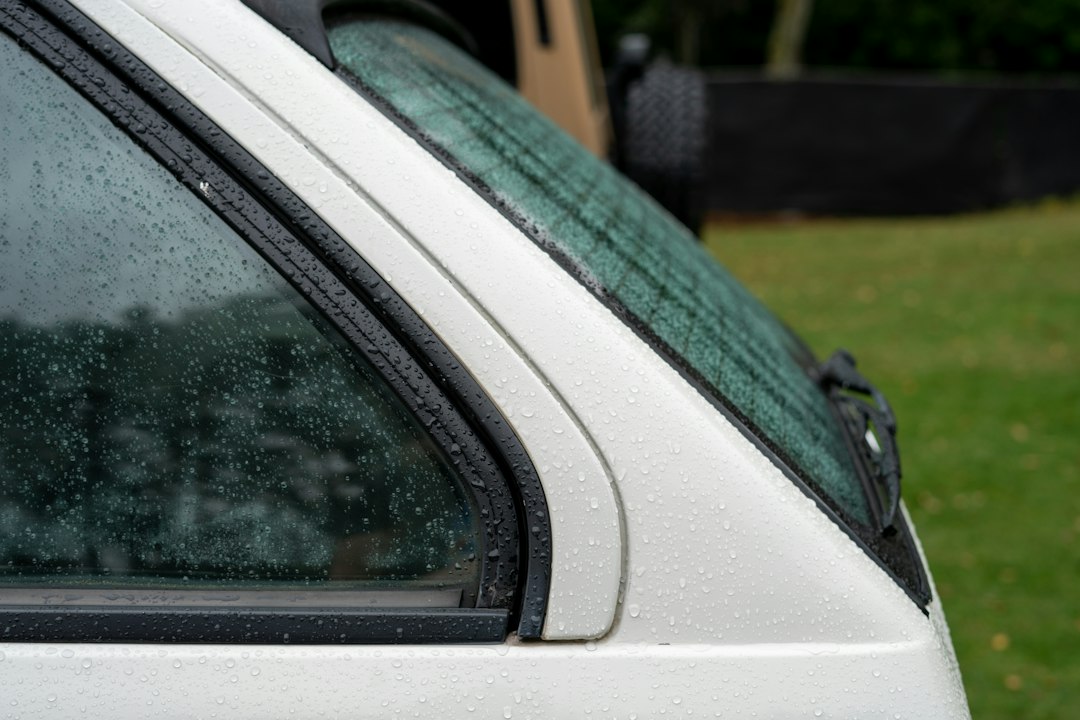
Prince Rupert’s drop, a fascinating example of glass science, showcases the unique properties of tempered glass, which is often used in car windows for enhanced safety and durability. For those interested in exploring more about the science behind glass and its various applications, you can read a related article that delves into the intriguing aspects of glass materials and their behavior under stress. Check it out here: Freaky Science.
The Astonishing Strength of the “Tail”

The true marvel of Prince Rupert’s Drop, and the aspect that captivated early observers, is the astonishing strength of its bulbous head. This strength isn’t a result of the glass being inherently tougher; rather, it’s a consequence of the carefully engineered internal stress. When you attempt to strike the bulbous end of a Prince Rupert’s Drop with a hammer, the impact is absorbed by the thick, curved glass. More importantly, the compressive stress on the outer surface actively counteracts the tensile stress introduced by the impact. This dual resistance allows the head to withstand forces that would easily shatter a conventional piece of glass of similar thickness. It’s a testament to how manipulating the internal structure of a material can dramatically alter its macroscopic properties. The energy of the impact is distributed across a large surface area, and the pre-existing compressive stress acts like a cushion, mitigating the tensile forces that would normally lead to fracture. This is why, even when subjected to significant force, the head of the drop can remain intact, a seemingly impossible feat that has amazed onlookers for centuries. It’s this resilience that sparked imaginations and hinted at applications beyond mere scientific curiosity.
Withstanding Impact: The Role of Compressive Stress
The primary reason for the bulbous head’s impressive resilience lies in the immense compressive stress locked within its outer layers during the quenching process. When you strike the head of the drop, the external force attempts to create tensile stress – the kind that breaks glass. However, the glass is already under a significant internal compressive stress. This pre-existing compression effectively neutralizes a portion of the impact’s tensile force, making it much harder for a crack to initiate and propagate. Think of it like trying to bend a metal rod that’s already being squeezed from both ends; it requires significantly more force to bend it further. The rapid cooling process creates a situation where the outer shell is essentially “pinched” by the contracting core. This internal pinching manifests as an outward pressure on the surface, a state of compression. This is precisely the opposite of what is needed to fracture brittle materials like glass, which are inherently weak in tension. The curved shape of the bulb also plays a role, distributing the impact force over a larger area and further reducing the localized stress concentration. This intricate balance of forces allows the head to absorb considerable energy without succumbing to fracture, making it surprisingly robust against direct impact.
The Tail’s Predicament: A Ticking Time Bomb
While the head of the Prince Rupert’s Drop is remarkably strong, its elongated tail is its Achilles’ heel. The very process that creates the compressive stress on the head results in significant tensile stress within the interior of the drop, and this tensile stress is most concentrated in the thin, elongated tail. The tail acts as a point of extreme vulnerability. Imagine a rubber band stretched taut; a small nick can cause it to snap. Similarly, any minor imperfection, a microscopic flaw, or a sudden vibration in the tail can provide a point for fracture to initiate. Once a crack begins in the tail, the stored tensile energy is rapidly released, propagating through the entire drop at an astonishing speed, often exceeding the speed of sound in glass. This creates the spectacular dicing effect, where the entire drop disintegrates into a shower of tiny, sharp shards. The tail, therefore, embodies the inherent fragility that coexists with the surprising strength of the head. It’s a visual demonstration of the extreme stress concentrations that are at play within the glass. The tail isn’t just a decorative appendage; it’s a critical component in the drop’s structural integrity, and its instability is the key to its dramatic self-destruction.
The Fragility Revealed: The Shattering Phenomenon

The dramatic shattering of a Prince Rupert’s Drop, often referred to as “dicing,” is as integral to its character as its surprising strength. This explosive disintegration, triggered by even the slightest disturbance to the tail, is a breathtaking display of stored energy release. The contrast between the robust head and the instantaneous demise of the entire structure is what makes these glass curiosities so captivating. This phenomenon isn’t just a visual spectacle; it provides invaluable insights into the mechanics of fracture in brittle materials. Understanding why and how this shattering occurs is key to harnessing the principles behind Prince Rupert’s Drops for practical applications. The speed and violence of the disintegration are a direct consequence of the immense tensile stress built up within the glass, particularly in the tail. This stored energy, held in delicate balance, is unleashed in an instant when that balance is upset. The rapid propagation of the crack is a testament to the inherent weaknesses within the material’s structure, weaknesses that are amplified by the internal stresses.
The Trigger: Disrupting the Delicate Equilibrium
The trigger for the catastrophic shattering of a Prince Rupert’s Drop is invariably the disruption of the delicate internal stress equilibrium, most commonly initiated at the tail. The tail, being under immense tensile stress, is highly susceptible to even minor stresses or flaws. A small nick from a sharp object, a sudden vibration, or even a significant temperature fluctuation can be enough to initiate a fracture. Once a crack begins, it propagates rapidly through the glass. The surrounding material, already under immense tension, is unable to resist the relentless spread of this crack. It’s a chain reaction, a cascade of failure. The speed at which this occurs is staggering, often exceeding 1,500 meters per second. This is because the crack propagates through the already stressed material, with the stored energy of the glass itself driving its expansion. The phenomenon is akin to a loaded spring suddenly being released; the potential energy is converted into kinetic energy in a very dramatic fashion. The tail, therefore, serves as the weak point, the fuse that ignites the explosive disintegration of the entire drop.
Dicing: The Physics of Instantaneous Fracture
The term “dicing” aptly describes the rapid fragmentation of a Prince Rupert’s Drop into thousands of small, sharp shards. This instantaneous fracture is a direct consequence of the high tensile stress concentrated in the interior of the glass, particularly in the tail. When a crack is initiated, it propagates through the glass at an incredibly high speed. This rapid propagation is not only due to the inherent strength of the glass but also to the fact that the glass itself is storing a tremendous amount of potential energy. As the crack moves, it releases this stored energy, driving the fracture forward. The speed of this crack propagation can exceed 1,500 meters per second, making the disintegration appear almost instantaneous to the human eye. The result is a shower of tiny, razor-sharp fragments, each a testament to the extreme forces at play. The physics of this dicing process is a fascinating subject of study, revealing how stress concentrations can lead to catastrophic failure in brittle materials. It’s a stark reminder that even in seemingly robust structures, hidden stresses can render them susceptible to sudden and dramatic collapse.
Revolutionizing Car Glass: From Curiosity to Innovation
For centuries, Prince Rupert’s Drops remained a captivating scientific curiosity, a demonstration of physics that delighted and intrigued. However, the remarkable properties of these glass teardrops – specifically, the ability to create a surface with high compressive stress – have laid the groundwork for a revolution in a very modern and essential application: automotive safety glass. The principles behind these ancient drops offer a powerful pathway to creating windshields and windows that are significantly stronger, more shatter-resistant, and ultimately, safer for drivers and passengers. The transformation from a historical parlor trick to a cutting-edge automotive technology highlights the enduring relevance of understanding fundamental material science. The journey of Prince Rupert’s Drop from a royal exhibit to a critical component in vehicle safety is a compelling narrative of scientific discovery and its practical application.
The Principle of Tempered Glass
The most direct and impactful application of the principles behind Prince Rupert’s Drops in modern technology is the manufacturing of tempered glass, commonly known as toughened glass. This is the material used in the side and rear windows of most vehicles today. The process of tempering glass bears a striking resemblance to the creation of a Prince Rupert’s Drop, albeit on a much larger and more controlled scale. Instead of quenching in water, the glass is heated to a high temperature and then rapidly cooled by blasts of air. This rapid cooling creates the same effect as the water bath for the drop: the outer surfaces solidify and contract first, while the interior remains hotter and continues to contract. This results in a layer of compressive stress on the outer surfaces of the glass and tensile stress in the interior. This distribution of stress is precisely what makes tempered glass so strong and safe. When tempered glass breaks, it does so in a way that minimizes injury. Instead of shattering into sharp, jagged shards like ordinary glass, it breaks into small, blunt, pebble-like pieces. This is because the stored tensile stress in the interior is released more evenly, causing the glass to fracture along numerous planes rather than creating long, dangerous shards. The inherent strength of the compressive surface layer prevents the propagation of large cracks.
Enhanced Durability and Impact Resistance
The application of tempering principles, directly inspired by the behavior of Prince Rupert’s Drops, has fundamentally enhanced the durability and impact resistance of automotive glass. A side window made of tempered glass is significantly stronger than a piece of ordinary glass of the same thickness. This increased strength makes it far more resistant to everyday impacts, such as those from flying debris on the road, hailstones, or even accidental impacts during loading and unloading. The compressive stress on the surface acts as a formidable barrier against the initiation of cracks. When an impact does occur, the glass is far less likely to fracture. And if it does break, as mentioned, the resulting fragments are far less hazardous. This translates directly into improved safety for occupants. A windshield, for instance, is typically made of laminated glass (two layers of glass with a plastic interlayer), which is designed to stay intact even when cracked, preventing penetration. However, the side and rear windows, where a quick escape might be necessary in an emergency, benefit immensely from the self-fragmenting, less dangerous nature of tempered glass. The development of this technology has undoubtedly saved countless lives and prevented numerous injuries on the road, all stemming from the understanding of a seemingly simple, ancient glass formation.
Prince Rupert’s drop, a fascinating example of tempered glass, has intrigued scientists and enthusiasts alike due to its unique properties and resilience under stress. For those interested in exploring more about the science behind this remarkable material, you can read a related article that delves into the principles of glass strength and the intriguing phenomena associated with it. This article can be found at Freaky Science, where you will discover how such materials can withstand immense pressure while remaining fragile under impact.
The Future of Glass: Beyond the Windshield
| Property | Value | Unit | Notes |
|---|---|---|---|
| Composition | Soda-lime glass | – | Typical glass used in Prince Rupert’s drops |
| Cooling Method | Quenching in water | – | Rapid cooling forms the drop shape |
| Surface Compressive Stress | 700 – 1000 | MPa | High compressive stress on the outer surface |
| Core Tensile Stress | 500 – 700 | MPa | Tensile stress inside the core |
| Impact Resistance | Very high | – | Can withstand hammer blows on the bulbous end |
| Tail Sensitivity | Very fragile | – | Tail breaks easily causing the entire drop to shatter |
| Typical Size | 2 – 5 | cm | Diameter of the bulbous end |
| Use in Car Glass | Experimental / Research | – | Potential for impact-resistant glass applications |
The revolutionary impact of Prince Rupert’s Drop principles on automotive glass safety is undeniable, but the story doesn’t end with windshields and side windows. The underlying science – the ability to engineer glass with specific internal stress distributions to achieve enhanced strength and controlled fracture behavior – holds immense potential for a wide array of future applications. As our understanding of material science deepens and manufacturing techniques become more sophisticated, we can expect to see this principle integrated into even more innovative and safety-critical areas. The journey from a curious teardrop to a cornerstone of modern safety technology is a testament to the power of scientific inquiry and the continuous pursuit of improvement. The inherent properties that made Prince Rupert’s Drops so fascinating – their strength, their controlled fragility, and the dramatic nature of their failure – are precisely the characteristics that engineers are now actively exploiting for a safer, more resilient future.
Smart Glass and Advanced Composites
The principles of stress engineering, exemplified by Prince Rupert’s Drops, are paving the way for the development of “smart glass” technologies. Imagine windows that can dynamically change their tint or transparency in response to sunlight or electrical signals. The controlled application of stress and the understanding of how it affects optical properties are crucial in achieving these advanced functionalities. Furthermore, the concept of creating materials with specific internal stress profiles can be extended to the realm of advanced composite materials. By carefully layering and treating different materials, engineers can create composites with tailored strength, flexibility, and fracture characteristics, moving beyond the limitations of single materials. This could lead to lighter, stronger, and more durable components for everything from aerospace to consumer electronics. The ability to precisely control the internal state of a material, learned from the simple act of dropping molten glass into water, is opening up a universe of possibilities for materials that are not only stronger but also smarter and more responsive to their environment.
Enhanced Structural Integrity in Everyday Objects
Beyond the high-tech applications, the principles learned from Prince Rupert’s Drops can also contribute to enhancing the structural integrity of everyday objects. Consider items like mobile phone screens, tablet displays, or even delicate laboratory glassware. By incorporating elements of controlled stress engineering into their manufacturing, these items could become significantly more resistant to accidental drops and impacts. The goal is not necessarily to make them unbreakable, but to make them safer and more durable, reducing the likelihood of catastrophic failure and the associated hazards. This could involve subtle modifications to the manufacturing process, introducing localized compressive stresses in critical areas or designing shapes that better distribute impact forces. The underlying concept is to apply the lessons of the Prince Rupert’s Drop: that understanding and controlling internal stresses can unlock remarkable improvements in a material’s performance and safety, making our daily lives just a little bit more resilient.

Your Car Window Can Keep You In—Even When You Need Out
FAQs
What is a Prince Rupert’s drop?
A Prince Rupert’s drop is a glass object created by dripping molten glass into cold water, resulting in a teardrop-shaped glass piece with unique properties.
How are Prince Rupert’s drops used in car glass?
Prince Rupert’s drops are used in car glass as a protective layer to increase the strength and durability of the glass, making it more resistant to impacts and shattering.
What makes Prince Rupert’s drop car glass different from regular car glass?
Prince Rupert’s drop car glass is different from regular car glass because of its unique molecular structure, which provides increased strength and resistance to breakage.
Are there any downsides to using Prince Rupert’s drop car glass?
One downside of using Prince Rupert’s drop car glass is that it can be more expensive to produce than regular car glass, which may result in higher costs for consumers.
Can Prince Rupert’s drop car glass be customized for different car models?
Yes, Prince Rupert’s drop car glass can be customized for different car models by adjusting the size, shape, and thickness of the glass to fit specific design requirements.