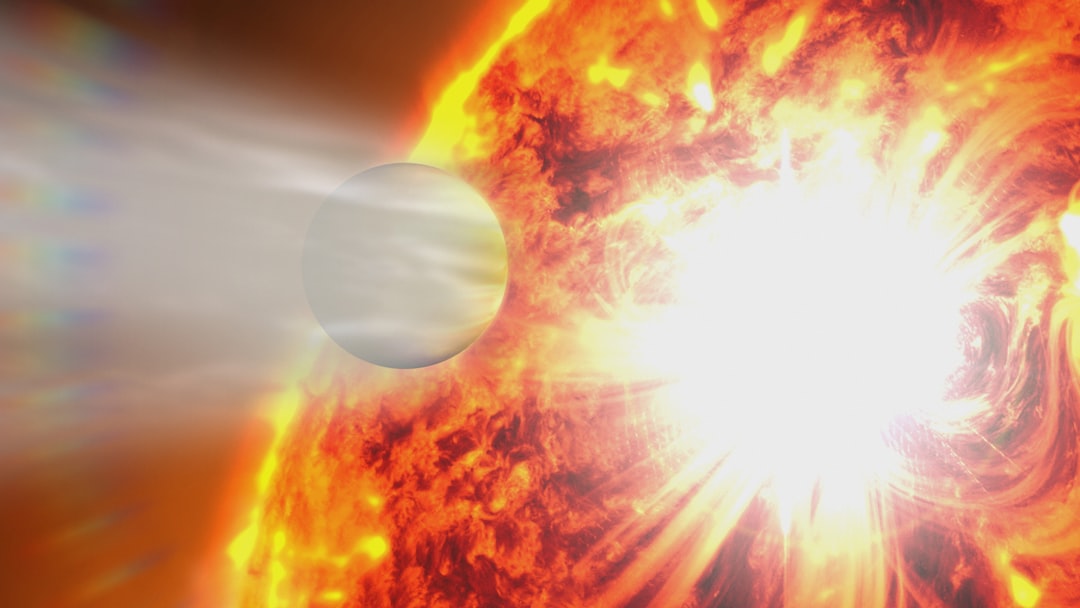
The year 2025 has garnered significant attention from the scientific community and preparedness organizations due to predictions of heightened solar activity, potentially leading to impactful solar storms. While the sun’s cycles are well-understood, the precise timing and intensity of individual events remain challenging to forecast with absolute certainty. This article explores the current understanding of Solar Cycle 25, potential impacts of solar storms, and the steps individuals, communities, and nations can take to mitigate their effects.
The sun, our star, operates on an approximately 11-year cycle of magnetic activity, characterized by fluctuations in sunspot numbers, solar flares, and coronal mass ejections (CMEs). Solar Cycle 25 officially began in December 2019, marked by a minimum of solar activity. However, projections from various scientific bodies, including NASA and NOAA, indicate that Cycle 25 is progressing more vigorously than initially anticipated.
The Solar Cycle and its Phases
Solar cycles are generally described by their ascending phase, solar maximum, and descending phase. During the ascending phase, sunspot numbers increase, leading to a greater frequency of solar flares and CMEs. The solar maximum represents the peak of this activity, after which it gradually declines towards the next solar minimum. Current models suggest Solar Cycle 25 could reach its peak, or solar maximum, sometime between late 2024 and mid-2026, with an increasing likelihood of intense solar events during this period.
Sunspots, Flares, and Coronal Mass Ejections
Sunspots are cooler, darker regions on the sun’s surface where strong magnetic fields are concentrated. These magnetic fields can become twisted and tangled, eventually releasing massive bursts of energy in the form of solar flares. Solar flares are intense bursts of radiation that travel at the speed of light, reaching Earth in approximately eight minutes. While these can cause temporary radio blackouts, their primary threat is not direct.
Of greater concern are Coronal Mass Ejections (CMEs). CMEs are gigantic clouds of magnetized plasma and radiation ejected from the sun’s corona. These can travel at speeds ranging from a few hundred to over 2,000 kilometers per second. If a CME is directed towards Earth, it can arrive within one to four days, depending on its velocity. Upon impact, the CME’s magnetic field interacts with Earth’s magnetosphere, potentially triggering a geomagnetic storm.
As scientists continue to study the potential impacts of solar storms, predictions for 2025 have become a focal point of research and discussion. These solar events can disrupt communication systems, power grids, and even satellite operations, making preparation essential for mitigating their effects. For more insights on the predictions and necessary preparations for solar storms, you can read a related article at Freaky Science, which delves into the science behind solar activity and offers guidance on how to stay safe.
Potential Impacts of a Severe Solar Storm
The Earth’s magnetic field acts as a shield, deflecting most of the sun’s harmful radiation. However, extremely powerful CMEs can significantly disturb this protective barrier, leading to a range of potential impacts on technological infrastructure. Imagine our modern world as a vast, interconnected nervous system; a severe geomagnetic storm is akin to an electromagnetic shockwave that could disrupt this delicate balance.
Grid Instability and Power Outages
One of the most significant concerns associated with a severe geomagnetic storm is its potential to induce geomagnetically induced currents (GICs) in long-distance electrical transmission lines. These currents can overload transformers, potentially causing them to fail and leading to widespread power outages. The Québec blackout of 1989, driven by a moderate solar storm, offers a chilling preview of such vulnerabilities. While that event was relatively localized, a more powerful storm could affect entire regions or even continents, leading to outages lasting days, weeks, or even months. The longer the duration of an outage, the more severe the cascading effects on society.
Disruption to Satellite Communications and GPS
Satellites, particularly those in higher orbits, are highly susceptible to the charged particles from CMEs. A strong solar storm can damage sensitive electronics, reduce satellite lifespan, and disrupt their signals. This has profound implications for a wide array of services that rely on satellite communication, including television broadcasting, internet access, weather forecasting, emergency services, and aviation. The integrity of GPS signals, crucial for navigation, precision agriculture, and financial transactions, could also be compromised, leading to inaccuracies or complete outages.
Aviation and Space Travel Risks
For aviation, geomagnetic storms pose several threats. Increased radiation levels at high altitudes can be a health concern for flight crews and passengers, necessitating re-routing or even grounding of flights. Furthermore, disruptions to radio communications and GPS navigation become critical safety issues, particularly during long-haul flights over polar regions where the Earth’s magnetic field is weaker. Astronauts on the International Space Station and future missions to the Moon or Mars face even greater radiation exposure risks, requiring enhanced shielding and precautionary measures.
Damage to Pipelines and Rail Systems
Large, metallic infrastructures like oil and gas pipelines and long-distance rail lines can also act as unintended antennas for GICs. While usually less severe than the impact on power grids, these induced currents can accelerate corrosion and potentially damage control systems or signaling equipment, leading to operational disruptions and safety concerns. The longevity of these critical infrastructure components could be subtly but significantly compromised over time by repeated exposure to such events.
National and International Preparedness Strategies
Recognizing the multifaceted threats posed by solar storms, governments and international organizations have been developing and implementing preparedness strategies. These efforts span from scientific research to infrastructure hardening and public awareness campaigns.
Strengthening Power Grids
A cornerstone of national preparedness is the enhancement of power grid resilience. This involves identifying vulnerable transformers, implementing protective measures such such as neutral-grounding resistors, and developing protocols for quickly isolating and restoring damaged sections of the grid. Investment in “smart grid” technologies that can automatically detect and respond to GICs is also crucial. Furthermore, maintaining strategic reserves of replacement transformers, which can take months to manufacture and transport, is a vital component of long-term recovery plans.
Enhancing Satellite and Communication Resilience
For satellite systems, strategies include developing radiation-hardened spacecraft, implementing redundant systems, and designing autonomous operational capabilities that can function even in the absence of ground control during a storm. For terrestrial communication networks, emphasis is placed on diversifying transmission methods (e.g., fiber optics alongside satellite links) and ensuring backup power supplies for critical infrastructure like data centers and cellular towers.
Developing Early Warning Systems
Effective early warning systems are paramount, acting as the eyes and ears of our planet against space weather. Agencies like NOAA’s Space Weather Prediction Center (SWPC) continuously monitor the sun and disseminate alerts and forecasts. These systems leverage a network of ground-based observatories and space-based satellites (e.g., SOHO, SDO, STEREO, GOES) to detect solar flares and CMEs. Improved modeling capabilities are crucial for accurately predicting the arrival time, intensity, and potential impact of CMEs on Earth, providing valuable lead time for mitigation efforts.
International Collaboration and Research
Space weather is a global phenomenon, and thus, international cooperation is essential. Organizations like the World Meteorological Organization (WMO) and the Committee on Space Research (COSPAR) facilitate data sharing, joint research initiatives, and the standardization of space weather metrics. Collaborative efforts are vital for pooling resources, advancing scientific understanding, and developing a unified global response to potential space weather hazards.
Individual and Community Preparedness
While national and international bodies work on large-scale mitigation, individual and community-level preparedness forms the foundational layer of resilience. Imagine a community as a ship, and individual preparedness as the watertight compartments; each one contributes to the overall buoyancy.
Emergency Kits and Communication Plans
Every household should maintain an emergency kit similar to those recommended for other natural disasters. This should include at least three days’ supply of water and non-perishable food, a battery-powered or hand-crank radio, flashlights with extra batteries, a first-aid kit, and any necessary medications. A communication plan detailing how family members will contact each other if regular communication channels are down is also crucial. Consider having a designated out-of-state contact for relaying messages.
Backup Power and Off-Grid Solutions
The prospect of extended power outages necessitates consideration of backup power solutions. For some, this might involve generators, though fuel storage and maintenance need to be factored in. For others, simpler solutions like power banks for charging essential devices are critical. Exploring off-grid alternatives, such as solar-powered chargers for small electronics, can significantly enhance individual resilience during a prolonged outage. These small steps, when multiplied across a community, create a robust safety net.
Information Seeking and Community Engagement
Staying informed about space weather predictions and local emergency preparedness plans is vital. Subscribe to alerts from official sources like NOAA’s SWPC or local emergency management agencies. Engage with local community preparedness groups, as collective action and mutual support are invaluable during disruptive events. Knowledge sharing and collaborative planning can foster a stronger, more resilient community capable of withstanding potential challenges.
As scientists continue to study the potential impacts of solar storms, the predictions for 2025 have garnered significant attention. Understanding the implications of these solar events is crucial for both individuals and infrastructure. For those interested in learning more about the necessary preparations and the latest forecasts, a related article provides valuable insights into how we can safeguard our technology and daily lives. You can read more about these preparations in this informative piece on solar storm predictions and readiness by visiting this link.
The Long-Term Outlook and Continued Vigilance
| Metric | Prediction / Data | Preparation Recommendations |
|---|---|---|
| Solar Storm Intensity | Predicted to reach G3 (Strong) to G4 (Severe) on the NOAA scale | Monitor space weather alerts; prepare for potential power grid fluctuations |
| Expected Date Range | March to September 2025 (peak solar activity period) | Increase readiness during this window; review emergency protocols |
| Geomagnetic Disturbance Duration | 6 to 12 hours per event | Ensure backup power systems are operational; secure sensitive electronics |
| Potential Impact on Power Grids | Voltage irregularities and transformer damage risk in high-latitude regions | Grid operators to implement protective measures and load management |
| Satellite Communication Disruption | Possible signal degradation and temporary outages | Schedule critical satellite operations outside peak storm times |
| Aviation Risks | Increased radiation exposure on polar routes | Reroute flights away from polar regions during peak storm activity |
| Public Awareness Level | Currently moderate; expected to increase as event approaches | Launch educational campaigns on solar storm preparedness |
| Emergency Services Preparedness | Ongoing drills and coordination with utility companies | Enhance communication systems and resource allocation plans |
The sun’s activity is cyclical, and while Solar Cycle 25 is predicted to be more active than the previous cycle, it is merely one chapter in the sun’s ongoing narrative. Preparing for a potential severe solar storm in 2025 is not a one-time event but rather a continuous process of learning, adapting, and enhancing our resilience.
Advancements in Space Weather Forecasting
Scientific research and technological advancements continue to refine our ability to forecast space weather. New missions and instruments will provide an even clearer view of the sun’s behavior, allowing for more accurate predictions of CME trajectories and impacts. Improvements in computational models will enable more precise assessments of geomagnetic storm effects on Earth’s infrastructure, empowering decision-makers with better information.
Adapting Infrastructure and Technologies
As technology evolves, so too do its vulnerabilities and its potential for resilience. Future infrastructure designs will likely incorporate space weather considerations more explicitly, moving towards inherently robust and adaptable systems. The move towards decentralized energy grids and the proliferation of low-earth orbiting satellites, while introducing new challenges, also present opportunities for greater resilience through redundancy and distributed systems.
A Culture of Preparedness
Ultimately, truly resilient societies foster a culture of preparedness, where individuals, communities, and governments understand the risks, embrace mitigation strategies, and are equipped to respond effectively. The lessons learned from preparing for Solar Cycle 25 will lay the groundwork for future cycles, ensuring that humanity is not caught off guard by the powerful forces of our dynamic star. The sun’s influence, though distant, permeates our technological world, and our ability to thrive amidst its ebbs and flows depends on our unwavering commitment to preparedness.
FAQs
What is a solar storm and how does it occur?
A solar storm, also known as a geomagnetic storm, occurs when the Sun emits a burst of solar wind and magnetic fields, often from solar flares or coronal mass ejections (CMEs). These charged particles interact with Earth’s magnetic field, potentially causing disturbances in satellite operations, communications, and power grids.
What are the predictions for solar storms in 2025?
Solar activity follows an approximately 11-year cycle, with solar maximum expected around 2025. During this period, the Sun is more active, increasing the likelihood of solar storms. Scientists predict a higher frequency of solar flares and CMEs, which could lead to significant geomagnetic storms affecting Earth.
How can individuals and organizations prepare for solar storms in 2025?
Preparation includes safeguarding electronic devices by using surge protectors, backing up important data, and having contingency plans for power outages. Organizations, especially those managing critical infrastructure, should implement monitoring systems and develop response strategies to mitigate the impact of solar storms.
What are the potential impacts of a strong solar storm on Earth?
Strong solar storms can disrupt satellite communications, GPS navigation, and radio signals. They may cause power grid failures, damage to electrical transformers, and increased radiation exposure for high-altitude flights and astronauts. Auroras may also be visible at lower latitudes than usual.
How do scientists monitor and forecast solar storms?
Scientists use space-based observatories like the Solar and Heliospheric Observatory (SOHO) and the Solar Dynamics Observatory (SDO) to monitor solar activity. They analyze solar flares, sunspots, and CMEs to forecast potential geomagnetic storms. Agencies like NOAA provide alerts and warnings to help prepare for solar storm events.