The Curious Case of Porous Ice Strength
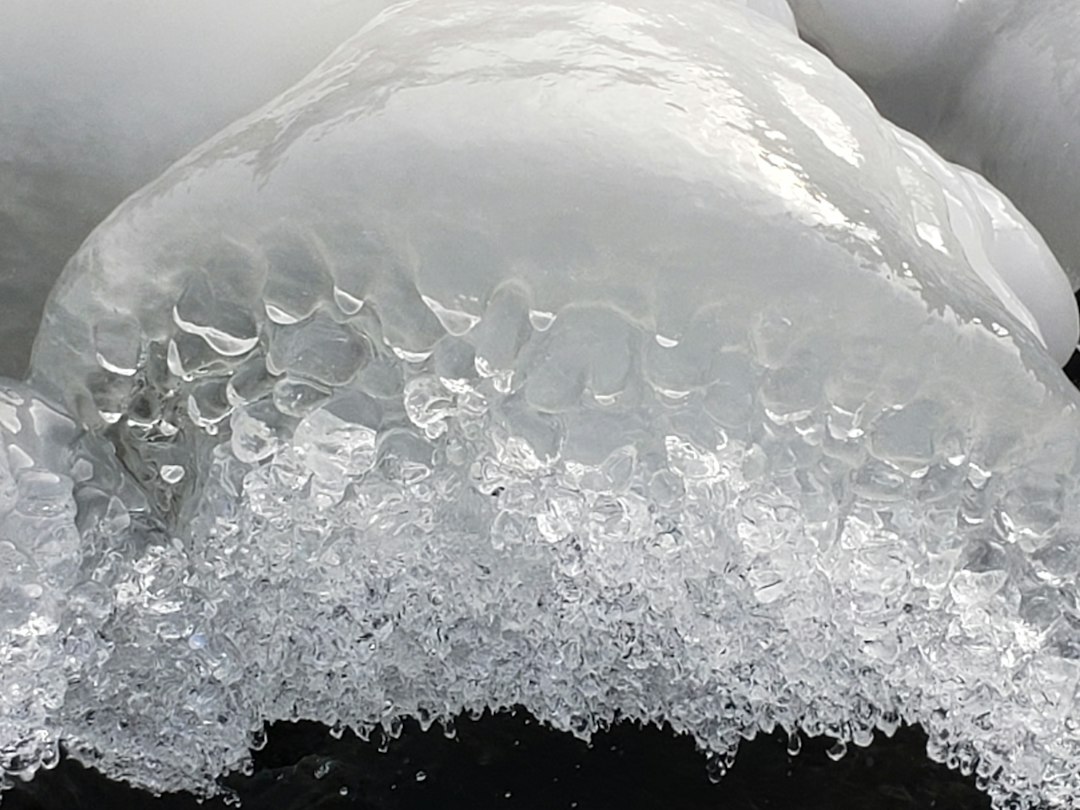
Ice, a ubiquitous solid form of water, often conjures images of crystalline perfection and unyielding strength. Yet, the reality of ice is far more nuanced, particularly when it possesses a porous structure. Unlike dense, homogeneous ice, porous ice, characterized by the presence of voids or air bubbles within its matrix, exhibits a distinctly different mechanical profile. This article delves into the complex world of porous ice strength, exploring how its internal structure dictates its durability under pressure and the factors that influence its resilience. Understanding this seemingly counterintuitive phenomenon is crucial for a range of applications, from Arctic engineering and climate modeling to the design of cold-region infrastructure and even the study of extraterrestrial ice formations. The presence of pores, far from being a mere aesthetic imperfection, fundamentally alters the stress distribution and fracture mechanics of ice, leading to a strength that can be surprisingly robust or alarmingly brittle, depending on a multitude of conditions.
Porous ice, often found in polar regions and glacial environments, exhibits unique structural properties that influence its strength and stability. Understanding the mechanics of porous ice is crucial for predicting its behavior under various environmental conditions. For a deeper exploration of this topic, you can read the article on the properties and implications of porous ice at Freaky Science. This resource provides valuable insights into the formation, characteristics, and applications of porous ice in scientific research and environmental studies.
Microstructural Foundations of Porous Ice Behavior

The strength of any material is intrinsically linked to its internal structure at the microscopic level. For porous ice, this microstructural assessment is paramount. The size, distribution, and connectivity of these internal voids play a decisive role in how the ice responds to applied forces. Understanding these relationships allows scientists and engineers to predict the material’s behavior and, in some cases, to engineer solutions that leverage or mitigate the effects of porosity. The formation process of porous ice, whether through freezing from dissolved air in water, entrapping atmospheric gases during snowfall, or undergoing phase transitions in older ice formations, directly influences these microstructural characteristics.
The Role of Pore Size and Distribution
The dimensions and spatial arrangement of pores within an ice matrix are primary determinants of its mechanical integrity. Smaller, more uniformly distributed pores tend to have a less detrimental effect on overall strength compared to larger, irregularly shaped voids. Larger pores act as significant stress concentrators, initiating cracks at much lower applied loads. The interconnectedness of these pores is also critical. A network of interconnected voids can create pathways for crack propagation, leading to a more brittle failure mode. Conversely, isolated pores, while still acting as stress risers, may require more energy for a crack to bridge between them and propagate through the material. Imagine a solid wall versus a wall with strategically placed small holes versus a wall with large, gaping holes – the latter two will clearly be weaker and more prone to collapse. This analogy, though simplified, captures the essence of how pore geometry influences bulk strength.
The Impact of Air Entrapment
Air trapped within the ice lattice, in the form of bubbles or gas pockets, is a common feature of porous ice. The pressure of the entrapped air itself can exert an internal stress within the ice, pre-weakening it. Furthermore, the interface between the air bubble and the ice is a region of potential weakness. During deformation, these air-ice interfaces can act as initiation sites for microcracks. The process of ice formation, particularly rapid freezing, can lead to more significant air entrapment as dissolved gases are expelled from the growing ice crystals and get trapped. Conversely, slow freezing allows for more efficient gas diffusion, resulting in denser ice with fewer pores. The chemical composition of the trapped gas can also play a minor role, though the physical presence of the void is the dominant factor.
Crystalline Structure and Grain Boundaries
While the pores are the most obvious structural anomaly, the underlying crystalline structure of the ice itself and the nature of the grain boundaries also contribute to porous ice strength. Ice exists in various polymorphs, with hexagonal ice (Ice Ih) being the most common on Earth. The orientation of ice crystals within the porous matrix influences how stresses are transmitted. Grains of ice with misaligned crystallographic axes can create stress concentrations at their boundaries, even in the absence of pores. In porous ice, these grain boundary weaknesses can be exacerbated by the presence of pores, providing additional pathways for crack initiation and propagation. The size and shape of these ice grains also play a role; smaller grains often lead to a stronger material due to a higher density of grain boundaries, which can hinder dislocation movement and thus deformation.
Quantifying Porous Ice Strength Under Load
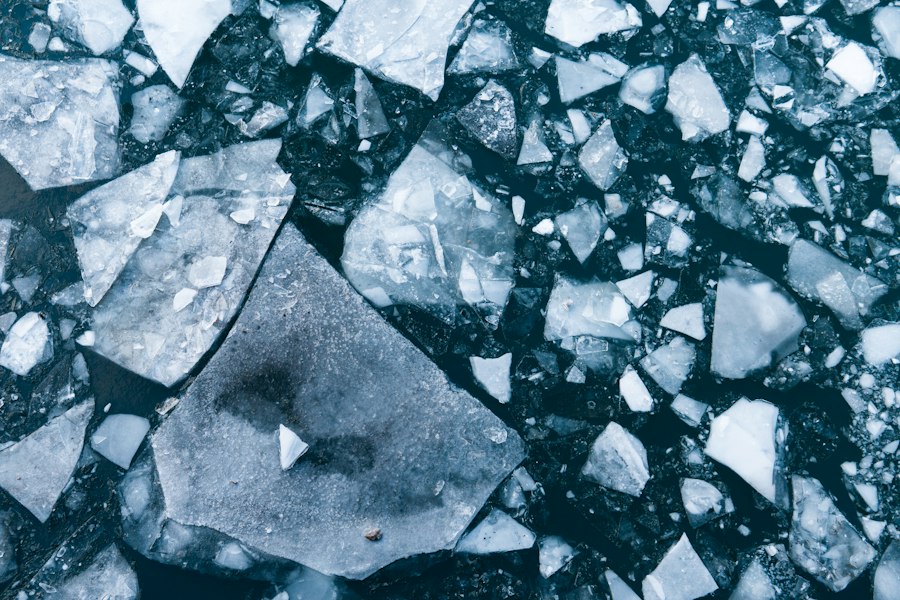
The strength of porous ice is not a singular value but rather a spectrum influenced by numerous variables. Quantifying this strength involves understanding its behavior under various types of stress and over different timescales. This section explores the methods used to measure and model porous ice strength and the typical ranges observed. The inherent variability of porous ice makes precise prediction challenging, necessitating the use of statistical approaches and sophisticated modeling techniques.
Compressive Strength Variations
Compressive strength, the ability of a material to withstand forces pushing it together, is a key parameter for porous ice. Under compression, the pores can have a complex effect. Initially, small pores might even contribute to a slight increase in apparent strength by hindering the movement of dislocations within the ice. However, as the applied pressure increases, these pores act as significant stress raisers, leading to localized yielding and crack formation. The bulk compressive strength of porous ice is generally lower than that of dense ice, with values varying significantly based on pore characteristics. For instance, ice with a high volume fraction of large, interconnected pores can be quite weak, failing under relatively modest loads. Conversely, ice with a low volume fraction of small, isolated pores might exhibit a compressive strength surprisingly close to that of homogeneous ice. The rate of loading also plays a critical role; porous ice tends to be more brittle under rapid loading conditions.
Tensile Strength Limitations
Tensile strength, the resistance to being pulled apart, is typically much lower for porous ice than its compressive counterpart. In tension, the pores act as pre-existing flaws that readily facilitate crack initiation and propagation. The stress at the tip of a crack, or at the edge of a void, can become extremely high, leading to fracture even under relatively small applied tensile forces. The presence of even a few pores can dramatically reduce the tensile strength of ice. This is particularly relevant in scenarios involving ice expansion due to freezing or thawing cycles, where tensile stresses are naturally generated. The lack of material to bridge across voids makes it inherently difficult for porous ice to withstand tensile loads.
Shear Strength and Ductility Considerations
Shear strength, the resistance to sliding forces, and ductility, the ability to deform without fracturing, are also significantly influenced by porosity. Under shear, the presence of pores can disrupt the sliding planes within the ice crystals. Depending on the pore distribution, shear deformation can lead to localized yielding around the voids, potentially increasing the overall resistance to shear. However, if the shear forces lead to crack propagation between pores, the shear strength will be compromised. Porous ice generally exhibits lower ductility compared to dense ice. The stress concentrations around pores can promote brittle fracture rather than ductile flow, meaning the ice is more likely to break suddenly rather than deform slowly and visibly under stress.
Modeling Approaches and Experimental Techniques
Researchers employ a variety of modeling approaches and experimental techniques to quantify porous ice strength. Finite element analysis (FEA) is widely used to simulate stress distributions within porous ice models, allowing for the prediction of failure mechanisms. Micro-CT scanning provides detailed 3D imaging of pore structures, enabling the creation of realistic computational models. Experimental methods include uniaxial and triaxial compression tests, tensile tests, and fracture toughness tests conducted on ice samples with controlled porosity. Acoustic emission monitoring is also employed to detect micro-cracking events during deformation, providing insights into the fracture process. These combined approaches offer a comprehensive understanding of porous ice behavior under various loading conditions.
Factors Influencing Porous Ice Durability
Beyond its intrinsic microstructural characteristics, the external environmental conditions and the history of the porous ice itself exert profound influences on its durability. These external factors can either reinforce or degrade the ice’s structural integrity, making the prediction of its performance a complex interplay of internal properties and external stimuli. Understanding these modulating factors is essential for accurate assessment and forecasting.
Temperature Effects on Strength
Temperature is a critical variable affecting the mechanical properties of all ice, and porous ice is no exception. As temperature increases, the ice crystals become more ductile and less brittle. This means that under higher temperatures, porous ice may exhibit greater deformability and a higher apparent strength under slow loading conditions, as the ice can deform around the pores more readily. Conversely, at very low temperatures, ice becomes more brittle, and the presence of pores becomes even more detrimental, leading to a significant reduction in strength. Furthermore, temperature fluctuations can lead to freeze-thaw cycles, which can introduce new cracks or widen existing ones, further weakening the porous ice over time. The presence of impurities within the ice, often associated with pore formation, can also depress the freezing point, leading to a more complex temperature-dependent behavior.
Impurities and Salinity
The presence of impurities, particularly salts, within porous ice can dramatically alter its mechanical properties. Salty ice, common in sea ice and some glacial environments, has a significantly lower freezing point than freshwater ice. This means that even at temperatures below the freezing point of freshwater, sea ice can contain pockets of brine. These brine inclusions act as localized regions of weakness and can significantly reduce the overall strength of the ice. The distribution and interconnectedness of these brine channels are crucial. High salinity can lead to a more brittle and less predictable behavior, especially under dynamic loading conditions. The interaction between pores and brine inclusions creates a complex material with unique failure mechanisms.
Loading Rate and Time-Dependent Behavior
The rate at which a load is applied significantly influences the observed strength of porous ice. Under rapid loading, the ice behaves in a more brittle manner, and the pre-existing flaws (pores) become dominant factors, leading to lower strength. Under slow, sustained loading, however, porous ice can exhibit time-dependent deformation, often referred to as creep. In some instances, this creep can lead to a redistribution of stress around the pores, potentially increasing the overall load-bearing capacity over extended periods, up to a certain limit. However, prolonged creep can also lead to fatigue and eventual failure. The interplay between rapid loading and time-dependent deformation is a crucial aspect of understanding the durability of porous ice in dynamic environments.
Environmental Cycling and Degradation
Environmental cycling, such as repeated freeze-thaw events or variations in pressure, can lead to the degradation of porous ice over time. Freeze-thaw cycles can promote the growth of existing cracks and the formation of new ones as water seeps into and freezes within these voids. Repeated mechanical loading, even below the fracture strength, can lead to fatigue damage, weakening the ice structure incrementally. In the context of sea ice, processes like brine drainage and refreezing can alter the pore structure and salinity distribution, leading to changes in mechanical strength. Understanding these degradation processes is vital for predicting the long-term performance of structures built on or interacting with porous ice.
Recent studies have shed light on the unique properties of porous ice, revealing its surprising strength and resilience under various conditions. This fascinating material, often found in polar regions, plays a crucial role in understanding climate change and its effects on ecosystems. For a deeper dive into the science behind porous ice and its implications, you can read more in this related article on Freaky Science. The findings not only challenge previous assumptions but also open new avenues for research in materials science and environmental studies.
Applications and Implications of Porous Ice Strength
| Property | Value | Unit | Notes |
|---|---|---|---|
| Porosity | 30 – 70 | % | Typical range for porous ice samples |
| Compressive Strength | 0.1 – 1.5 | MPa | Depends on porosity and temperature (-10°C to -50°C) |
| Tensile Strength | 0.05 – 0.3 | MPa | Lower than compressive strength due to porous structure |
| Young’s Modulus | 0.5 – 5 | GPa | Varies with porosity and temperature |
| Density | 300 – 700 | kg/m³ | Lower than solid ice due to pores |
| Temperature Range | -50 to 0 | °C | Typical range for strength measurements |
The understanding of porous ice strength extends far beyond theoretical curiosity, holding significant practical implications across various scientific and engineering disciplines. From the stability of polar infrastructure to the evolution of planetary ice bodies, the mechanical behavior of porous ice plays a critical role. This section explores some of the key areas where this knowledge is applied and the broader consequences of its understanding.
Arctic Engineering and Infrastructure
In Arctic regions, where temperatures are consistently low, ice is a pervasive material that must be contended with for any form of construction or transportation. The presence of porous ice in sea ice, ice sheets, and permafrost necessitates careful consideration of its mechanical properties. For offshore platforms, pipelines, and ice roads, the strength and deformation characteristics of the ice are paramount to ensure structural integrity and safety. Engineers must account for the reduced tensile strength and potential for brittle fracture in porous ice when designing foundations and assessing loads. The variability in pore structure and salinity within Arctic ice formations presents a significant challenge, requiring robust design methodologies that can accommodate a range of ice conditions. Furthermore, the impact of climate change on ice porosity and thus its strength is a growing concern for long-term infrastructure planning.
Climate Modeling and Paleoclimate Reconstruction
Porous ice, particularly in the form of glaciers and ice sheets, acts as a vital archive of Earth’s past climate. The trapped air bubbles within these ice cores contain samples of the ancient atmosphere, providing invaluable data on past greenhouse gas concentrations, temperatures, and atmospheric composition. The process of ice formation and densification, which leads to the entrapment and sealing of these air bubbles, is directly related to the mechanical behavior of the ice. Understanding how pressure affects the porosity and consolidation of snow into ice is crucial for accurately interpreting the climate signals preserved within ice cores. Changes in ice porosity over geological timescales can also reflect variations in accumulation rates and ice flow dynamics, providing insights into past climatic regimes.
Cryoseismology and Geophysical Investigations
The study of seismic activity within ice bodies, known as cryoseismology, also benefits from an understanding of porous ice strength. Cracks and fractures within glaciers, ice shelves, and sea ice generate seismic waves. The characteristics of these seismic signals are influenced by the mechanical properties of the ice, including its porosity. For instance, the speed at which seismic waves travel through the ice and their attenuation are directly related to the ice’s density and the presence of voids. By analyzing seismic data, researchers can infer information about the internal structure of ice masses, identify areas of weakness, and monitor changes in ice stability. This is particularly relevant for understanding calving events from ice sheets and the dynamics of sea ice breakup.
Astrobiology and Extraterrestrial Ice
The principles governing the strength of porous ice on Earth have direct relevance to the study of icy bodies in our solar system and beyond. Many moons, comets, and dwarf planets are composed largely of ice. Understanding the mechanical behavior of these extraterrestrial ices, which may possess varying degrees of porosity and be composed of different volatile compounds, is crucial for planetary science. For example, the structural integrity of icy moons like Europa or Enceladus, which are thought to harbor subsurface oceans, is influenced by the mechanical properties of their icy shells. The potential for life on these worlds is inextricably linked to the physical processes occurring within their icy crusts, and the strength of porous ice plays a fundamental role in these processes.
Future Directions and Unanswered Questions
Despite considerable progress in understanding the strength of porous ice, several avenues of research remain to be explored. The complexity of pore structures and their interaction with external factors present ongoing challenges. Future investigations will likely focus on refining predictive models, exploring novel characterization techniques, and addressing the impact of evolving environmental conditions. The quest for a complete understanding of this seemingly simple yet profoundly complex material continues.
Advanced Characterization and Modeling
Future research will likely involve the development and application of even more sophisticated techniques for characterizing the 3D pore structure of ice. This includes advancements in X-ray tomography, neutron scattering, and other non-destructive imaging methods that can provide higher resolution and greater detail. Coupling these advanced characterization techniques with increasingly powerful computational modeling platforms, such as machine learning-driven approaches, will allow for more accurate predictions of porous ice behavior under a wider range of conditions. The integration of multi-scale modeling, from the atomic level of ice crystals to the macroscopic behavior of ice formations, is another promising area.
Long-Term Durability Under Climate Change
As the Earth’s climate continues to change, the properties of ice, including its porosity and strength, are likely to evolve. Understanding how increasing temperatures, altered precipitation patterns, and ocean warming will affect the formation and degradation of porous ice is of paramount importance. This includes studying the long-term effects of freeze-thaw cycles on permafrost and glacier ice, as well as the impact of brine dynamics on sea ice strength. Predictive models that can accurately forecast these changes will be crucial for adaptation strategies in vulnerable regions. The interaction between melting ice and the underlying bedrock, and the resulting changes in ice flow and stability, also warrants further investigation.
The Role of Biological Activity
In some icy environments, biological activity can influence the structure and properties of ice. Microbes living within ice can produce organic compounds that alter ice crystal growth and potentially create or enlarge pores. While this is a more specialized area, its influence on the mechanical strength of porous ice in specific biological contexts, such as subglacial environments or hypersaline ice, could be significant. Further research into the bio-geochemical interactions within porous ice could reveal novel mechanisms affecting its durability.
Novel Applications and Material Design
Beyond understanding existing natural porous ice formations, there is potential for designing engineered porous ice materials with specific mechanical properties. By controlling pore size, distribution, and the inclusion of various additives, it may be possible to create ice-based materials with enhanced strength, toughness, or insulation properties for specialized applications. This could range from temporary structures in cold environments to novel materials for heat management or even for use in space exploration. The fundamental principles of porous ice strength provide a foundation for such innovative material design.

Water Boiled While Ice Formed. Could a Lander Sink Into It?
FAQs
What is porous ice?
Porous ice is a type of ice that contains small pockets of air or other gases trapped within its structure, giving it a porous or sponge-like appearance.
How is porous ice formed?
Porous ice is typically formed when ice crystals trap air bubbles or other gases during the freezing process, creating a porous structure. This can happen under certain conditions such as rapid freezing or the presence of impurities in the water.
Is porous ice weaker than regular ice?
Yes, porous ice is generally weaker than regular ice due to its porous structure. The air pockets within porous ice can make it less dense and more prone to breaking or melting faster than solid ice.
Can porous ice be used for structural purposes?
Due to its weaker nature, porous ice is not typically used for structural purposes. It is more commonly found in natural formations or as a result of specific freezing conditions rather than being intentionally created for practical applications.
How strong is porous ice compared to other materials?
Porous ice is not as strong as solid ice or other materials like concrete or metal. Its porous structure makes it less dense and more fragile, limiting its strength and durability for certain applications.