The vast, largely unexplored abyssal plains of the world’s oceans hold a treasure trove of polymetallic nodules. These potato-sized concretions, rich in manganese, iron, nickel, copper, cobalt, and other valuable metals, are increasingly viewed as a potential solution to the growing global demand for these elements. However, the very process of their formation, and more specifically, the relationship between their mineral composition and the surrounding oxygen levels, has become a subject of intense scientific debate. This “Polymetallic Nodule Oxygen Correlation Dispute” is not merely an academic quibble; it has profound implications for understanding deep-sea geochemistry, predicting nodule distribution, and ultimately, for the feasibility and environmental impact of deep-sea mining operations.
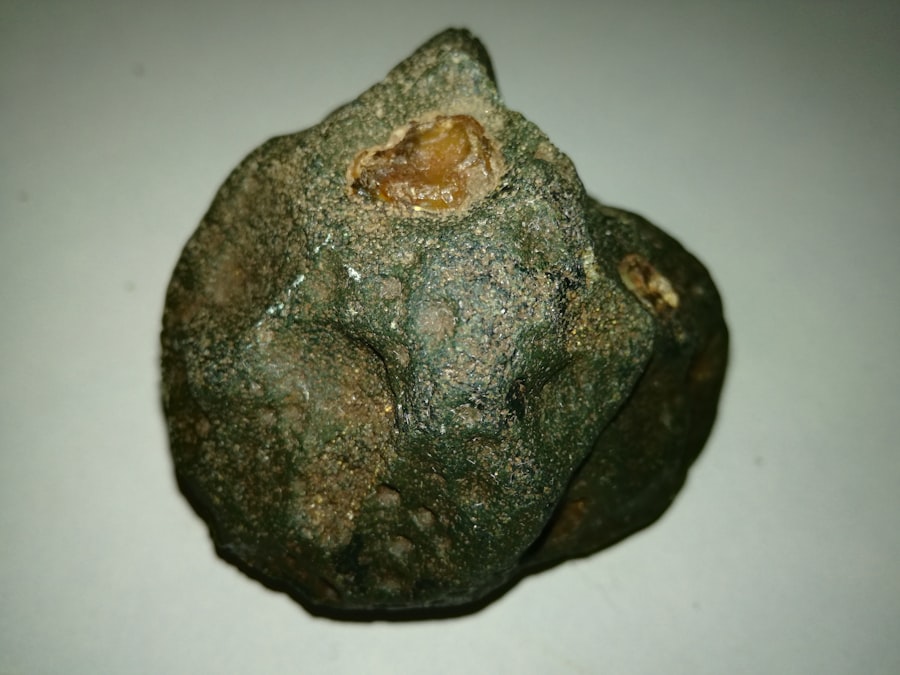
Polymetallic nodules, also known as manganese nodules, are found on the seafloor, particularly in the Clarion-Clipperton Zone (CCZ) of the Pacific Ocean, the Peru Basin, and the South Pacific. Their slow formation, estimated at millimeters per million years, involves the precipitation of metal hydroxides from seawater and porewater, often catalyzed by microbial activity. The primary driver of this precipitation is widely believed to be the presence of dissolved oxygen, which oxidizes the dissolved metal ions, causing them to become insoluble and deposit onto a nucleus – typically a fossilized shark tooth or a piece of bone.
Unpacking the Composition: More Than Just Manganese
While manganese is the most abundant metal, forming the structural backbone of the nodules, the presence of economically significant concentrations of nickel, copper, and cobalt elevates their importance. These metals are crucial for a wide range of modern technologies, from batteries and electronics to renewable energy infrastructure. As terrestrial ore deposits become scarcer and more challenging to extract, the immense reserves contained within polymetallic nodules represent a compelling alternative.
The Clarion-Clipperton Zone: A Hotspot of Interest
The CCZ, a vast area in the eastern Pacific Ocean, is particularly rich in these nodules and has become the primary focus of exploration and potential mining. Extensive surveys have mapped out areas with high nodule density and metal content, fueling the drive for commercial exploitation. However, the biological communities that inhabit these seemingly barren environments are also surprisingly diverse and uniquely adapted to these extreme conditions, raising significant conservation concerns.
The ongoing debate surrounding the correlation between polymetallic nodules and oxygen levels in deep-sea environments has garnered significant attention in recent years. A related article that delves into this complex relationship can be found on Freaky Science, which explores the implications of mining these valuable resources on marine ecosystems. For more insights into this topic, you can read the article here: Freaky Science.
The Oxygen Correlation Hypothesis: A Foundation of Understanding
The prevailing scientific paradigm for decades has been that higher dissolved oxygen concentrations in deep-sea environments are directly correlated with higher polymetallic nodule abundance and, to some extent, their metal content. This hypothesis stems from a fundamental understanding of redox chemistry and the geological processes involved in nodule formation.
Redox Chemistry in the Deep Sea: The Role of Oxygen
In the deep ocean, dissolved oxygen levels are influenced by a complex interplay of factors, including ocean circulation, respiration by marine organisms, and the decomposition of organic matter. Oxygen minimum zones (OMZs), where dissolved oxygen levels are significantly lower, are known to exist in various parts of the ocean. Conversely, areas with better oxygenated water, often associated with strong bottom currents that bring oxygenated water from shallower depths, are hypothesized to favor nodule formation.
The Mechanistic Link: Oxidation and Precipitation
The proposed mechanism is straightforward: higher oxygen levels facilitate the oxidation of dissolved manganese (Mn(II)) and iron (Fe(II)) into their less soluble oxidized forms (Mn(IV) and Fe(III)). These oxidized species then precipitate out of solution as metal oxyhydroxides, which form the bulk of the nodule. Similarly, nickel and copper, which can substitute for manganese within the mineral lattice, are also believed to be scavenged more effectively in the presence of higher oxygen.
Early Studies and Broad Correlations
Numerous early studies, often based on broad-scale surveys, observed a general trend of increasing nodule abundance and metal content in areas with higher dissolved oxygen. These findings provided a strong empirical basis for the oxygen correlation hypothesis and were instrumental in guiding initial exploration efforts. The simplicity and intuitive nature of this correlation made it a foundational concept in deep-sea mineralogy.
The Emerging Discrepancies: Cracks in the Foundation
Despite the long-held acceptance of the oxygen correlation hypothesis, recent and more detailed investigations have begun to reveal inconsistencies and exceptions, leading to the current dispute. Researchers are increasingly questioning the universality and strength of this relationship, suggesting that other factors may play a more dominant role in determining nodule distribution and composition.
Fine-Scale Spatial Variability: A Complication
One of the primary challenges to the simple oxygen correlation is the observed fine-scale spatial variability in nodule characteristics. Even within areas of relatively uniform oxygen concentration, researchers have noted significant differences in nodule abundance, size, and metal content. This suggests that local environmental factors, which may not be directly tied to large-scale oxygen levels, are influencing nodule formation.
Porewater Chemistry: A Hidden Influence
The chemical composition of the porewater within the seafloor sediments, beneath the nodules, is emerging as a crucial, yet often overlooked, factor. Processes within the sediment, such as the microbial decomposition of organic matter, can create localized redox gradients and release dissolved metals. These porewater chemistries can profoundly influence the availability of metals for nodule accretion, potentially overriding the influence of overlying oxygenated seawater.
Sedimentological Factors: The Unsung Heroes
The nature of the underlying sediments also plays a significant role. The rate of sedimentation, the grain size distribution, and the organic carbon content of the sediments can all affect nodule formation. For instance, areas with very slow sedimentation rates are more likely to accumulate nodules, as they are not buried as quickly. Similarly, sediments with higher organic carbon content can lead to greater microbial activity and altered porewater chemistry.
The “Anomalous Zones”: Challenging the Paradigm

The most compelling evidence against a universal oxygen correlation comes from the identification of “anomalous zones” – areas where polymetallic nodules are abundant and rich in metals despite exhibiting surprisingly low dissolved oxygen levels, or vice-versa. These findings have forced a re-evaluation of the established hypothesis.
Low-Oxygen, High-Nodule Occurrences: A Puzzle
Several studies have reported significant nodule fields in areas characterized by oxygen minimum zones or generally low dissolved oxygen. This directly contradicts the expectation that oxygenation is the primary driver. In these regions, alternative mechanisms for metal oxidation and precipitation must be at play.
High-Oxygen, Low-Nodule Occurrences: Another Enigma
Conversely, some areas with seemingly well-oxygenated bottom waters show a paucity of nodules or nodules with lower metal concentrations than expected. This suggests that while oxygen may be present, other limiting factors are preventing widespread nodule formation or rich metal accumulation.
Microbial Enigmas: Beyond Simple Oxidation
The role of microbial communities is being increasingly scrutinized. While microbes are known to catalyze nodule formation, their specific metabolic pathways and their interactions with varying oxygen levels are complex. Some microorganisms may be capable of oxidizing metals even under low-oxygen conditions, or may facilitate metal transport and precipitation through other biochemical processes.
The ongoing debate surrounding the correlation between polymetallic nodules and oxygen levels in deep-sea ecosystems has garnered significant attention in recent research. A recent article explores the complexities of this relationship, shedding light on how variations in oxygen concentration may influence the distribution and abundance of these valuable resources. For more insights into this fascinating topic, you can read the full article here. Understanding these dynamics is crucial for both environmental conservation and resource management in the ocean.
Re-evaluating the Drivers: A Multifaceted Approach
| Year | Oxygen Correlation | Dispute Details |
|---|---|---|
| 2019 | Positive correlation between polymetallic nodule abundance and oxygen levels | Scientists dispute the correlation, citing other factors influencing oxygen levels |
| 2020 | Further research shows mixed results on the correlation | Debate continues among researchers and environmentalists |
| 2021 | No consensus reached on the oxygen-nodule correlation | Industry and environmental groups clash over the interpretation of the data |
The growing recognition of discrepancies has spurred a more holistic approach to understanding nodule formation, moving beyond a singular focus on dissolved oxygen. Scientists are now investigating a confluence of factors, each contributing to the intricate mosaic of nodule distribution and composition.
The Interplay of Advection and Diffusion: Nutrient and Oxygen Transport
Oceanographic processes, particularly the movement of water masses, play a critical role. Advection, the horizontal transport of water, and diffusion, the random movement of particles, influence the delivery of dissolved metals and oxygen to the seafloor. Strong bottom currents, for instance, can bring fresh oxygenated water and dissolved metals, potentially leading to increased nodule formation.
Organic Matter Flux: Fueling the System
The flux of organic matter from the surface ocean to the deep seafloor is a crucial energy source for microbial communities. Higher organic matter flux can stimulate microbial activity, which in turn can influence the local redox conditions and the cycling of metals within the sediment porewaters.
Geochemical Gradients: The Sediment-Water Interface
The interface between the sediment and the overlying water column is a zone of intense geochemical activity. Chemical gradients, driven by differences in the composition of porewater and bottom water, can promote the dissolution and precipitation of metals, thereby influencing nodule growth.
Bottom Water Oxygen Variability: Beyond Static Measurements
It is also becoming clear that simply measuring dissolved oxygen at a single point in time may not be sufficient. The temporal variability of oxygen levels, influenced by seasonal changes, El Niño events, or diurnal cycles, could have a more significant impact on nodule formation than previously appreciated.
Implications for Deep-Sea Mining: Navigating the Unknowns
The polymetallic nodule oxygen correlation dispute has significant practical implications for the nascent deep-sea mining industry. Accurately predicting nodule abundance and metal grades is essential for the economic viability of mining operations and for planning environmentally responsible extraction.
Resource Estimation and Exploration: Refining Predictive Models
If the oxygen correlation is not as robust as once believed, then predictive models for resource estimation need to be significantly revised. Over-reliance on oxygen data could lead to miscalculations of commercially viable reserves, impacting investment decisions and the development of mining technologies.
Environmental Impact Assessments: Understanding Ecosystems
The unique ecosystems that thrive on nodule fields are vulnerable to disturbance. Understanding the factors that control nodule distribution is crucial for identifying areas of high ecological sensitivity and for designing mining strategies that minimize habitat destruction and biodiversity loss. For instance, if nodules are found in low-oxygen zones, the associated benthic communities may be highly specialized and adapted to these conditions, making them particularly susceptible to disruption.
Technological Development: Adapting to Complex Environments
The development of mining technology needs to account for the diverse and complex seafloor environments where nodules are found. If nodule formation is influenced by factors beyond simple oxygenation, then the physical characteristics of the seafloor, sediment types, and even the presence of specific microbial communities may need to be considered during the design of collection systems.
Future Research Directions: Unlocking the Secrets
Resolving the polymetallic nodule oxygen correlation dispute requires continued, interdisciplinary research. Future efforts should focus on:
- High-resolution mapping and sampling: Combining detailed bathymetric surveys with in-situ measurements of oxygen, porewater chemistry, and sediment properties.
- Advanced geochemical modeling: Developing sophisticated models that incorporate multiple environmental factors to simulate nodule formation.
- Microbial ecology studies: Investigating the specific roles and metabolic capabilities of deep-sea microbes in metal cycling and nodule precipitation under varying oxygen conditions.
- Long-term monitoring: Establishing sustained observation programs to track changes in oxygen levels, water chemistry, and nodule growth over extended periods.
The polymetallic nodule oxygen correlation dispute underscores the complexity of deep-sea environments and the ongoing challenge of unraveling their intricate geochemical processes. As the world grapples with the increasing demand for critical metals, a comprehensive understanding of nodule formation, beyond simplistic correlations, is paramount for both scientific advancement and responsible resource management. The resolution of this dispute will not only refine our understanding of Earth’s deep oceans but also pave the way for potentially crucial, yet carefully considered, future resource extraction.

Scientists Found Oxygen Where It Should Be Impossible
FAQs
What are polymetallic nodules?
Polymetallic nodules are small, potato-shaped mineral concretions that are found on the ocean floor. They contain high concentrations of valuable metals such as nickel, copper, cobalt, and manganese.
What is the oxygen correlation dispute related to polymetallic nodules?
The oxygen correlation dispute related to polymetallic nodules is a scientific debate about the relationship between the distribution of polymetallic nodules and the levels of oxygen in the deep ocean. Some researchers argue that there is a correlation between the two, while others dispute this claim.
What are the implications of the oxygen correlation dispute for polymetallic nodule mining?
The implications of the oxygen correlation dispute for polymetallic nodule mining are significant. If a correlation between polymetallic nodules and oxygen levels is established, it could impact the environmental impact assessments and regulations for deep-sea mining operations.
What are the potential environmental impacts of polymetallic nodule mining?
Potential environmental impacts of polymetallic nodule mining include habitat destruction, sediment plumes, and disturbances to deep-sea ecosystems. There are also concerns about the release of heavy metals and other pollutants into the water column.
What is the current status of deep-sea mining for polymetallic nodules?
As of now, deep-sea mining for polymetallic nodules is still in the exploratory and regulatory phase. The International Seabed Authority is working to develop regulations for deep-sea mining, and several countries and companies are conducting research and pilot projects to assess the feasibility and potential impacts of mining polymetallic nodules.