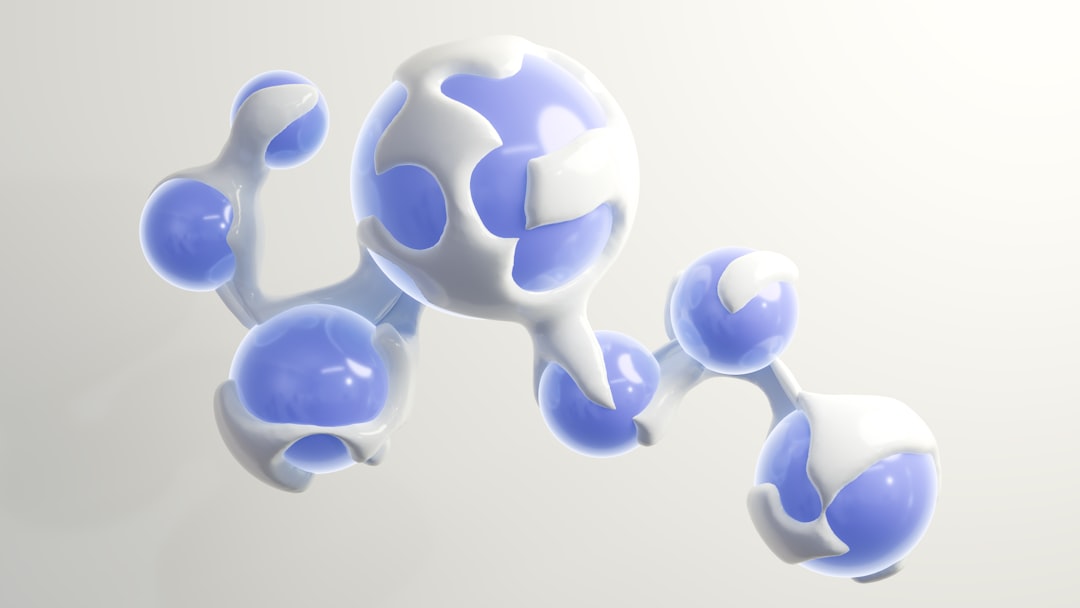
Imagine you’re standing in your kitchen, a steaming mug of tea warming your hands. You reach for the microwave, and with a flick of a switch, your leftovers are perfectly heated in minutes. But have you ever stopped to wonder how that magic box works? It’s not some kind of arcane sorcery; it’s all down to the fascinating interplay between the invisible waves and the very building blocks of your food: molecules. Specifically, we’re talking about polar molecules and their electrifying dance with microwaves.
Before we dive into the microwave magic, it’s crucial to understand the fundamental nature of molecules. Think of them as the LEGO bricks of everything you see and touch. They are formed when atoms bond together, and the way these atoms are arranged, along with the types of atoms involved, dictates the molecule’s behavior.
The Foundation: Atoms and Their Electrons
Atoms themselves are composed of a nucleus (containing protons and neutrons) and a cloud of negatively charged electrons orbiting this nucleus. The number of protons in an atom’s nucleus defines the element. For instance, oxygen has 8 protons, while hydrogen has just 1.
The Crucial Bond: Covalent Connections
In most molecules, atoms share electrons to achieve a more stable configuration. This sharing forms what we call covalent bonds. It’s like two people holding hands to stay together. However, not all sharing is equal.
Electronegativity: The Electron Grabbers
Here’s where things get interesting. Some atoms are naturally “greedier” for electrons than others. This tendency is called electronegativity. Oxygen, for example, is much more electronegative than hydrogen. When oxygen and hydrogen bond to form water (H₂O), the oxygen atom pulls the shared electrons closer to itself.
Polar molecules exhibit unique behaviors when exposed to microwaves, primarily due to their dipole moments, which allow them to interact with the electromagnetic fields generated by microwave radiation. This interaction causes the molecules to rotate and generate heat, a principle that underlies the functioning of microwave ovens. For a deeper understanding of how polar molecules respond to microwaves and the science behind it, you can explore a related article at Freaky Science.
Unveiling Polarity: The Uneven Distribution of Charge
This unequal sharing of electrons is the very essence of molecular polarity.
What Exactly is a Polar Molecule?
A polar molecule is essentially an electrically asymmetrical molecule. Because certain atoms within the molecule hog the electrons more than others, one end of the molecule develops a slight negative charge (where the electrons are concentrated), while the other end develops a slight positive charge (where the electrons are pulled away). This creates what’s known as a dipole, a region with two opposite electric poles.
The Case of Water: A Classic Example
Water (H₂O) is the quintessential example of a polar molecule. The oxygen atom, being highly electronegative, draws the electron density from the two hydrogen atoms towards itself. This results in the oxygen side of the water molecule having a partial negative charge (often denoted as δ⁻), and the hydrogen sides having partial positive charges (denoted as δ⁺). Imagine a tiny tug-of-war where oxygen always wins, leaving the hydrogens with a bit of a positive deficit.
Nonpolar Molecules: The Balanced Act
In contrast, nonpolar molecules have an even distribution of electron density. This can happen in a couple of ways:
- Atoms with equal electronegativity: When two atoms of the same element bond, like in oxygen gas (O₂) or nitrogen gas (N₂), they have the same “electron-grabbing power,” so the electrons are shared equally.
- Symmetrical arrangement of polar bonds: Some molecules contain polar bonds, but their symmetrical shape cancels out the individual dipoles. Carbon dioxide (CO₂) is a good illustration. The C-O bonds are polar, with oxygen being more electronegative. However, the molecule is linear, with the two polar bonds pointing in opposite directions. The positive charge on the carbon is effectively “balanced” by the negative charges on the oxygens, resulting in a nonpolar molecule overall.
The Importance of Molecular Geometry
You can see that it’s not just about the types of atoms but also about how they are arranged in space. The three-dimensional shape of a molecule, its molecular geometry, plays a critical role in determining whether it’s polar or nonpolar.
Microwaves: The Electromagnetic Waves That Energize
Now, let’s shift our attention to the other half of our equation: microwaves.
What are Microwaves?
Microwaves are a form of electromagnetic radiation, just like visible light, radio waves, and X-rays. They occupy a specific portion of the electromagnetic spectrum, falling between radio waves and infrared radiation.
The Anatomy of a Microwave: Electric and Magnetic Fields
Electromagnetic waves are characterized by oscillating electric and magnetic fields that are perpendicular to each other and to the direction of propagation. When a microwave interacts with matter, it’s primarily the oscillating electric field that does the heavy lifting.
Frequency and Wavelength: The Energy Carriers
The energy carried by a microwave is determined by its frequency and wavelength. Microwaves used in ovens typically have a frequency of around 2.45 gigahertz (GHz), which corresponds to a specific wavelength. This particular frequency is chosen because it efficiently interacts with water molecules, which are abundant in most foods.
The Energetic Dance: How Polar Molecules Interact with Microwaves
This is where the magic truly happens. When you place food in a microwave oven, the microwaves generated by the magnetron inside begin to bombard the food.
The Electric Field’s Influence on Dipoles
Remember those polar molecules with their slight positive and negative ends? The oscillating electric field of the microwave is like a constantly changing magnetic force, trying to align these tiny dipoles.
Rotation and Friction: The Heating Mechanism
Imagine a tiny magnet being flipped back and forth rapidly. The polar molecules in your food are essentially doing the same thing. As the electric field of the microwave oscillates, the polar molecules try to align themselves with this ever-changing field. This rapid rotation and reorientation of the molecules cause them to bump into and rub against their neighbors. This friction, this molecular jostling, is what generates heat.
Dielectric Heating: The Technical Term
This process is known as dielectric heating. The microwave’s energy is absorbed by the polar molecules, increasing their kinetic energy, which we perceive as heat. It’s a highly efficient way to cook food because it directly heats the molecules responsible for absorbing the energy, rather than relying on conductive heat transfer from the outside in, as a conventional oven does.
Why Water is Key: The Ultimate Microwave Receiver
Water molecules (H₂O) are excellent absorbers of microwave energy precisely because they are highly polar. Since most foods contain a significant amount of water, they heat up quickly and efficiently when exposed to microwaves. This is why foods with higher water content, like vegetables, tend to cook faster than drier foods.
Polar molecules exhibit unique behaviors when exposed to microwaves, primarily due to their dipole moments which allow them to interact with electromagnetic fields. This interaction leads to the rotation of the molecules, generating heat and enabling various applications in cooking and industrial processes. For a deeper understanding of how these molecular interactions work, you can explore a related article that delves into the science behind microwave heating and its effects on different substances. Check out this insightful piece on Freaky Science for more information.
Beyond Water: Other Polar Molecules in Food
| Metric | Description |
|---|---|
| Dipole moment | Polar molecules have a permanent dipole moment, which causes them to align with the alternating electric field of microwaves. |
| Rotation | When exposed to microwaves, polar molecules rotate to align with the changing electric field, leading to energy absorption and heating. |
| Heating effect | The rotation of polar molecules in response to microwaves causes a heating effect, which is utilized in microwave ovens for cooking food. |
While water is the primary driver of microwave heating, other polar molecules also contribute to the process.
Fats and Sugars: Contributors to the Heat
Fats and sugars are also polar, although generally less so than water. They can absorb some microwave energy, contributing to the overall heating of the food. However, their polarity is often influenced by their molecular structure. For instance, long chains of fatty acids can lead to less pronounced polarity compared to the tightly bound structure of a water molecule.
Proteins: A Nuanced Response
Proteins are complex molecules with varying degrees of polarity depending on their amino acid composition and the way they fold. Some regions of a protein might be quite polar, while others are more hydrophobic (water-repelling) and less interactive with microwaves.
The Role of Ionic Compounds: A Different Kind of Interaction
It’s important to note that ionic compounds, like salt (NaCl), behave differently in a microwave. While they are charged, they don’t have distinct positive and negative ends like polar molecules. Instead, they consist of positively charged ions (cations) and negatively charged ions (anions) held together by electrostatic forces. Microwaves can cause these ions to move back and forth, generating heat through a process called resistive heating or ionic conduction. This is why foods with high salt content can sometimes get very hot, and why metal is a no-go in a microwave.
Limitations and Considerations: When Microwaves Meet Their Match
While the interaction between polar molecules and microwaves is incredibly useful, it’s not without its nuances and limitations.
Uneven Heating: The Hot Spots and Cold Spots
One common issue with microwave cooking is uneven heating. This can occur for several reasons:
- Variations in water content: Different parts of your food will have varying amounts of water, leading to some areas absorbing more energy than others.
- Shielding effect: Denser parts of the food can shield less dense parts from the microwaves.
- Microwave distribution: The way microwaves are distributed within the oven cavity can also be uneven. This is why rotating the food or stirring it during cooking is often recommended.
Microwave Penetration Depth: Not Infinite
Microwaves don’t penetrate infinitely deep into food. The penetration depth depends on the frequency of the microwaves and the dielectric properties of the food. Thicker items might cook on the outside before the inside is adequately heated, leading to a raw center and overcooked edges.
The Impact of Packaging: What You Put In Matters
The material of your food packaging is crucial.
- Microwave-safe plastics: These are designed to allow microwaves to pass through them without significant absorption or interaction.
- Non-microwave-safe materials: Metals, for instance, reflect microwaves, which can cause arcing (sparking) and damage the oven. Some plastics can melt or leach chemicals into your food when heated. Always check for “microwave-safe” labels.
The “Cooking” of Polar Molecules Themselves
While the interaction is primarily about heating the food, the intense energy of microwaves can also, in some cases, affect the molecular structure of polar molecules. This is a more advanced topic, but it underlies why you don’t want to overcook food to the point of charring. The extreme agitation can lead to chemical changes and degradation of molecules.
Conclusion: A Symphony of Waves and Molecules
So, the next time you heat up your meal in the microwave, take a moment to appreciate the invisible dance happening within. It’s a testament to the fundamental principles of chemistry and physics, where the simple fact that water molecules are slightly lopsided (polar) allows them to efficiently absorb the energy of electromagnetic waves, transforming them into the delicious, warm food we enjoy. It’s a brilliant example of how understanding the microscopic world can have a profound impact on our everyday lives, making our kitchens more efficient and our meals more enjoyable. This intricate interaction between polar molecules and microwaves is a fundamental process that underpins a significant portion of modern food preparation.
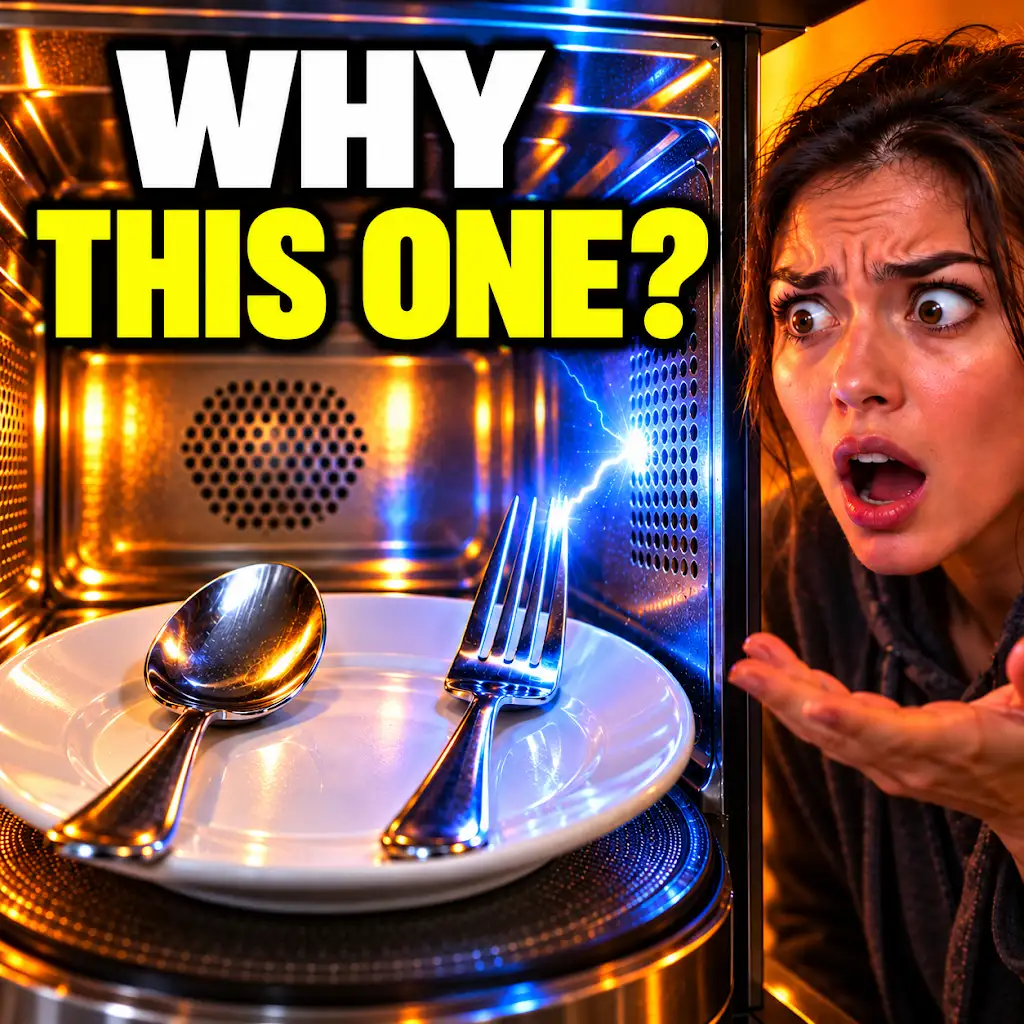
A Fork and a Spoon React Differently in a Microwave. Why?
FAQs
What are polar molecules?
Polar molecules are molecules that have a slight imbalance of electrical charge, with one end being slightly positive and the other end being slightly negative. This occurs when the electrons are not evenly distributed around the molecule.
How do polar molecules respond to microwaves?
When polar molecules are exposed to microwaves, the electric field of the microwaves causes the molecules to rotate rapidly. This rotation generates heat as the molecules try to align themselves with the changing electric field of the microwaves.
What are some examples of polar molecules?
Examples of polar molecules include water (H2O), ammonia (NH3), and hydrogen fluoride (HF). These molecules have a noticeable difference in electronegativity between the atoms, resulting in a polar covalent bond.
Why do polar molecules heat up in a microwave oven?
Polar molecules heat up in a microwave oven because the rapidly rotating molecules generate heat as they try to align themselves with the changing electric field of the microwaves. This heat is then transferred to the surrounding food or substance.
Are all molecules affected by microwaves in the same way?
No, not all molecules are affected by microwaves in the same way. Only polar molecules, which have an uneven distribution of charge, respond to the electric field of microwaves by rotating and generating heat. Non-polar molecules do not respond to microwaves in the same manner.