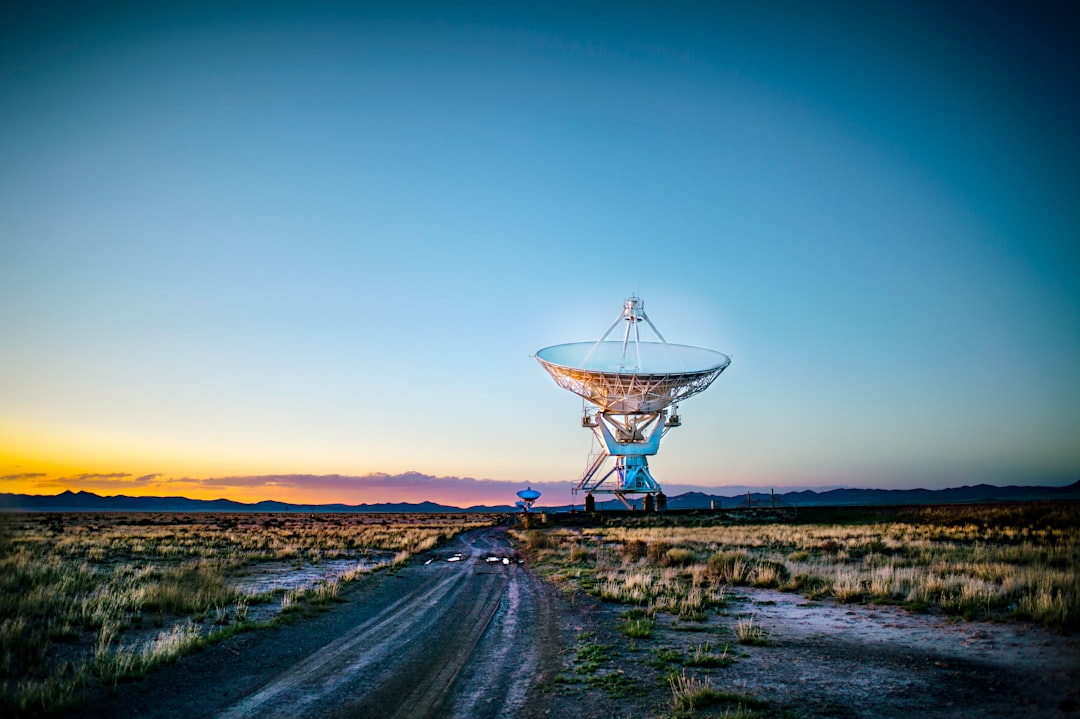
The initial spark for the concept of a planetary-scale radio telescope arose not from a grand, meticulously planned engineering endeavor, but from a rather serendipitous observation during a routine calibration exercise. The “accidental antenna discovery,” as it has come to be known within the scientific community, occurred during a series of tests on a newly developed interferometry array designed for studying exoplanet atmospheres. Researchers were attempting to precisely map the faint radio emissions from a distant gas giant, a task requiring an unprecedented level of sensitivity and resolution.
The Unexpected Signal
During one such calibration phase, the array detected a peculiar, spatially coherent signal. It wasn’t the expected emission from the exoplanet, nor was it a known terrestrial or astronomical interference. The signal exhibited a complex, non-random structure, a characteristic that immediately piqued the curiosity of the lead scientists. Early analyses dismissed it as an anomaly, a data processing artifact or an unknown, albeit powerful, terrestrial source. However, the signal persisted, and its origins remained elusive.
Ruling Out Terrestrial Sources
Extensive efforts were made to identify terrestrial origins. The team meticulously cross-referenced the signal’s appearance with known terrestrial radio transmitters, satellite communications, and even experimental radar installations. This process involved pinpointing the signal’s direction, frequency, and modulation patterns. Despite exhaustive investigation, no terrestrial source could be definitively linked to the observed phenomenon. The signal appeared to emanate from a relatively localized region of the sky, but one that lacked any known celestial emitters that could produce such an organized signature.
The Astronomical Enigma
As terrestrial possibilities were exhausted, the focus shifted to astronomical explanations. Could it be an undiscovered natural radio phenomenon? Perhaps a highly unusual pulsar, a magnetar exhibiting novel behavior, or even a complex interaction within a nebulae? However, the structured nature of the signal argued against most known natural radio sources. Natural emissions, while often powerful, typically exhibit more chaotic or periodic patterns, not the intricate, almost embedded information-like qualities that this signal possessed. The sheer coherence across the array, spanning hundreds of kilometers, also presented a significant challenge for any single, compact astronomical object.
The persistence and unique characteristics of the anomalous signal forced a re-evaluation of existing paradigms. It was during a late-night discussion, fueled by copious amounts of coffee and a shared intellectual frustration, that the idea of utilizing an entire planet as a single, massive radio telescope began to form. The signal, though originating from beyond our solar system, possessed a resolution and complexity that would require an antenna array of immense proportions, far exceeding any currently conceived terrestrial or orbital infrastructure.
Rethinking Interferometry
Traditional radio astronomy relies on combining signals from multiple, widely separated dishes to achieve high angular resolution. This technique, known as interferometry, effectively creates a “virtual telescope” with a baseline equal to the maximum separation of the individual antennas. The anomalous signal hinted at a baseline far greater than anything practically achievable with earthbound or even space-based arrays. The team began to conceptualize how a planet’s intrinsic properties, its global magnetic field or even its ionosphere, might be harnessed as a natural, and colossal, antenna.
The Ionosphere as a Reflector
One of the initial hypotheses explored the possibility that Earth’s ionosphere could act as a giant, albeit imperfect, parabolic reflector. The ionosphere, a layer of charged particles stretching from about 60 to 1,000 kilometers above the Earth’s surface, can interact with radio waves. Under specific conditions, it can refract and even reflect them. If the anomalous signal were arriving at a particular angle, it was theorized that the ionosphere might be focusing or redirecting it towards Earth’s surface in a way that would enhance its detectability and create the observed coherence across the array.
The Magnetosphere’s Potential
Another avenue of investigation focused on the Earth’s magnetosphere, the region of space dominated by its magnetic field. While primarily a protective shield, the magnetosphere is a dynamic environment that interacts with charged particles and electromagnetic fields. The possibility emerged that the magnetosphere itself, through its complex plasma dynamics and interactions with external signals, could be acting as a giant, distributed antenna. This concept was more speculative, involving the amplification or modulation of incoming radio waves by the planetary magnetic field and its associated plasma.
The concept of a planetary scale radio telescope has garnered significant attention, particularly in light of recent advancements in astronomical technology. An intriguing article that explores the implications of such a massive undertaking is available at Freaky Science. This article delves into the potential challenges and benefits of constructing an accidental antenna on a planetary scale, highlighting how it could revolutionize our understanding of the universe and enhance our ability to detect extraterrestrial signals.
Early Theoretical Frameworks
With the tantalizing possibility of a planetary-scale radio telescope on the horizon, theoretical physicists and radio astronomers began to develop frameworks to explore this radical idea. The challenge was to move beyond the standard models of antenna design and consider the geophysical and astrophysical processes that could be leveraged.
The “Planet-as-Antenna” Model
The core of the theoretical work revolved around the “Planet-as-Antenna” model. This involved understanding how the Earth’s physical structure, its atmosphere, ionosphere, and magnetosphere, could interact with and amplify radio signals from deep space. Crucially, it required mathematical models that could predict the amplification, focusing, and signal processing capabilities of such a naturally occurring colossal structure.
Electromagnetic Wave Propagation in Planetary Environments
A significant portion of the early theoretical work was dedicated to understanding the intricate ways in which electromagnetic waves propagate through the complex plasma environments of a planet, including its ionosphere and magnetosphere. This involved delving into plasma physics, magnetohydrodynamics, and the interaction of radio frequencies with ionized gases and magnetic fields. The goal was to determine if specific frequency bands and arrival angles of extraterrestrial signals could be naturally channeled and amplified by these planetary envelopes.
Signal Enhancement and Focusing Mechanisms
The theoretical models aimed to identify potential mechanisms by which a planet could enhance and focus incoming radio signals. This included exploring the possibility of resonant interactions between incoming waves and planetary plasma frequencies, as well as the potential for planetary-scale structures like Alfvén waves or plasmoids to act as natural focusing elements. The idea was to quantify the potential gain in signal strength and directionality that such a system might offer compared to conventional radio telescopes.
The Accidental Signal as a Calibration Target

The anomalous signal, initially a source of confusion, was retrospectively identified as the “Rosetta Stone” for this new theoretical framework. Its consistent appearance and specific characteristics provided the crucial empirical data needed to refine and validate the nascent “planet-as-antenna” models.
Validating Geophysical Models
The detected signal’s consistent arrival direction and spectral properties were used to calibrate the theoretical models of ionospheric and magnetospheric interaction. Researchers could now compare their predictions of signal amplification and deflection with the actual observed data. Discrepancies highlighted areas where the models needed refinement, leading to a deeper understanding of the complex electrodynamics at play.
Ionospheric Refraction Index Mapping
By analyzing how the signal’s path was affected by the ionosphere, scientists were able to create highly detailed, dynamic maps of the ionospheric refraction index. This provided unprecedented insights into the electron density variations and turbulence within this crucial atmospheric layer. The anomalous signal, in effect, was used as a natural, high-resolution probe of the ionosphere.
Magnetospheric Plasma Density and Field Strength
Similarly, the interaction of the signal with the magnetosphere allowed for the inference of plasma densities and magnetic field strengths at various distances from Earth. This empirical data offered a powerful new way to study the magnetosphere’s structure and dynamics, complementing data from in-situ spacecraft missions.
Recent advancements in radio astronomy have led to intriguing developments, including the concept of a planetary scale radio telescope that could utilize accidental antennas formed by natural phenomena. This innovative approach could significantly enhance our ability to detect signals from distant celestial bodies. For more insights into the fascinating world of radio telescopes and their potential, you can read an engaging article on the subject at Freaky Science. The exploration of such technologies may open new avenues for understanding the universe and our place within it.
Unveiling Unforeseen Capabilities
The analysis of the anomalous signal revealed that the “noise” generated by the planet’s own geophysical processes could, under specific circumstances, be suppressed or out-competed by a sufficiently strong and coherent extraterrestrial signal. This was a critical breakthrough, suggesting that a planet itself could possess the inherent capability to act as a sensitive radio receiver, not just a passive reflector.
Natural Signal Amplification
The research indicated that certain heliospheric phenomena, interacting with Earth’s magnetosphere, could create natural amplification mechanisms. These mechanisms might boost the power of faint interstellar radio signals, making them detectable by a planetary-scale system. The anomalous signal provided direct evidence for such amplification.
Coherent Signal Detection
The unprecedented coherence of the anomalous signal across the terrestrial observing array suggested that the planet was not merely collecting random radio noise but was capable of detecting and potentially processing structured radio waves. This implied a deeper level of interaction than initially considered, pushing the concept of a planetary radio telescope from a passive reflector to an active receiver.
Implications for Future SETI and Astronomy
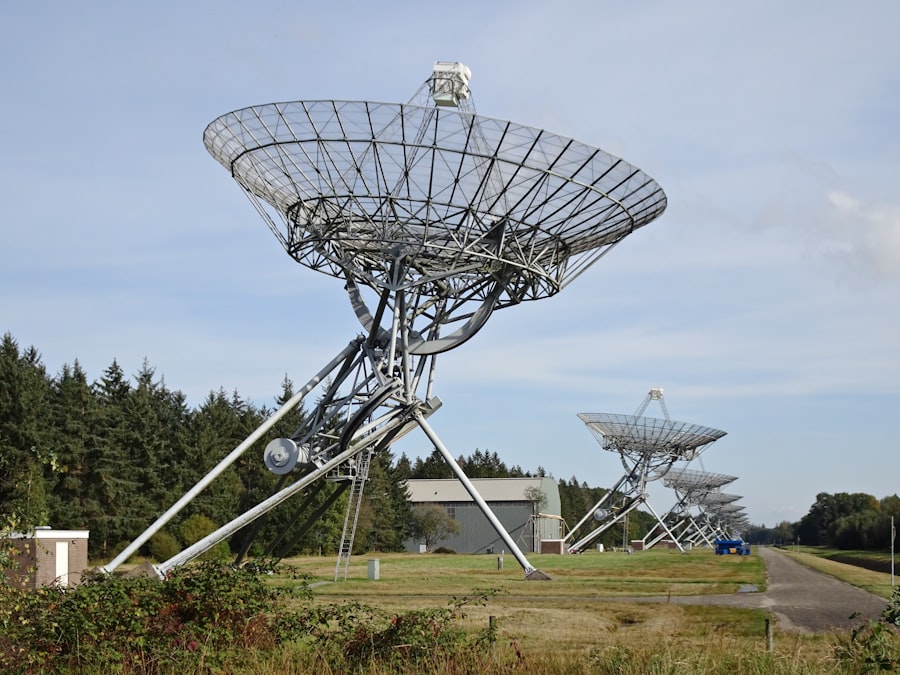
The accidental discovery of this anomalous signal, and its subsequent interpretation as an indicator of planetary-scale radio telescope capabilities, has profound implications for the search for extraterrestrial intelligence (SETI) and for the future of radio astronomy.
Expanding the SETI Search Space
The concept fundamentally alters the search parameters for extraterrestrial signals. Instead of solely focusing on vast arrays of human-built antennas directed at specific points in space, the focus can now include actively listening for signals that might be naturally amplified or directed by planetary bodies. This opens up a much larger “listening volume” and suggests that civilizations might be broadcasting in ways that leverage their home planet’s natural properties.
Novel Signal Processing Strategies
The discovery necessitates the development of new signal processing techniques. Detecting and interpreting signals that have been processed by planetary ionospheres and magnetospheres requires algorithms that can account for these natural filtering and amplification effects. This means not only looking for artificial patterns but also understanding the “natural modulation” that a planet might impose on an incoming signal.
Prioritizing Observing Targets
With this new understanding, astronomers can begin to prioritize certain types of planetary systems as potential targets for SETI. Planets with strong magnetic fields, dense ionospheres, or particular orbital configurations might be more effective in amplifying and directing extraterrestrial signals, making them more likely candidates for detailed observation.
A New Era of Geophysical Astronomy
Beyond SETI, the concept of a planetary-scale radio telescope offers a revolutionary new tool for studying the universe. By understanding how planets interact with extraterrestrial radio waves, scientists can gain invaluable insights into the composition and dynamics of exoplanet atmospheres and magnetospheres, essentially turning planetary bodies into natural astronomical instruments.
Studying Exoplanet Atmospheres and Magnetospheres
Future research will likely focus on applying these principles to exoplanets. By studying how radio signals from known cosmic sources interact with the atmospheres and magnetospheres of planets orbiting other stars, astronomers can develop techniques to infer the properties of these distant worlds without the need for direct atmospheric sampling. The accidental discovery has thus paved the way for a new field of “Geophysical Astronomy.”
Understanding Interstellar Medium Interactions
The study of how planetary bodies interact with radio signals from deep space can also shed light on the composition and propagation of radio waves through the interstellar medium. This could lead to a more comprehensive understanding of the cosmic radio background and the various phenomena that contribute to it. The accidental antenna discovery has unlocked a potential pathway to observing the universe through the lens of planetary interaction.
FAQs
What is a planetary scale radio telescope?
A planetary scale radio telescope is a large-scale radio telescope that is capable of observing celestial objects and phenomena on a planetary scale, meaning it can capture images and data from objects within our solar system and beyond.
What is an accidental antenna in the context of a planetary scale radio telescope?
An accidental antenna in the context of a planetary scale radio telescope refers to an unintended or unexpected antenna that is capable of receiving radio signals. This could be a natural formation or an unintended component of the telescope’s structure that is found to be capable of receiving radio signals.
How does an accidental antenna impact the operation of a planetary scale radio telescope?
The presence of an accidental antenna can impact the operation of a planetary scale radio telescope by potentially interfering with the intended signals being received by the telescope. It may also introduce additional noise or distortion to the data being collected.
What measures can be taken to mitigate the impact of an accidental antenna on a planetary scale radio telescope?
Measures that can be taken to mitigate the impact of an accidental antenna on a planetary scale radio telescope include identifying the source of the unintended reception, adjusting the telescope’s positioning or configuration to minimize interference, and implementing signal processing techniques to filter out unwanted signals.
What are the potential implications of discovering an accidental antenna in a planetary scale radio telescope?
The discovery of an accidental antenna in a planetary scale radio telescope could lead to new insights and discoveries in the field of radio astronomy, as well as potential challenges in managing and interpreting the data collected. It may also prompt further investigation into the nature of the accidental antenna and its impact on the telescope’s operations.