The Vast Emptiness and the Light That Braved It
The universe, a tapestry woven from galaxies, stars, and nebulae, is also characterized by a profound, almost unimaginable emptiness. These are the cosmic voids, gargantuan regions of space that contain astonishingly few galaxies, vast deserts where the density of matter plummets to a fraction of the cosmic average. For decades, these voids have been considered mere passive backdrops, the negative space in the cosmic structure. Yet, as our observational capabilities sharpen and our theoretical understanding deepens, these seemingly barren expanses are revealing themselves to be active participants in the grand cosmic narrative, particularly through the journey of light – the photons – that traverse them. The study of photons crossing cosmic voids offers a unique window into the fundamental properties of the universe, testing our models of gravity, dark energy, and the very nature of spacetime.
In the fascinating realm of astrophysics, the behavior of photons as they traverse vast cosmic voids offers intriguing insights into the nature of light and the universe. For a deeper understanding of this phenomenon, you can explore a related article that delves into the implications of photons crossing these empty expanses and how it affects our observations of distant celestial bodies. To read more, visit this article.
Probing the Intergalactic Medium with Ancient Light

The light that travels through cosmic voids originates from distant galaxies, quasars, and other luminous objects. These photons embark on journeys spanning billions of light-years, carrying information about their sources and the vast expanses they have traversed. As these photons pass through the sparse intergalactic medium (IGM) within the voids, they interact with the diffuse gas and magnetic fields that, while sparse, are not entirely absent. These interactions, though subtle, leave an imprint on the light, allowing astronomers to probe the otherwise elusive nature of the IGM.
Redshift as a Cosmic Speedometer
The most fundamental piece of information carried by photons is their redshift. As the universe expands, the wavelength of light emitted from distant objects is stretched, causing it to shift towards the red end of the spectrum. The greater the redshift, the further away the object and the longer the journey the photon has undertaken. By meticulously measuring the redshift of countless photons from sources behind and within cosmic voids, cosmologists can map the large-scale structure of the universe and infer the expansion history. This expansion, driven by dark energy, is intricately linked to the geometry and evolution of these voids.
Absorption Lines: Fingerprints of Intergalactic Gas
As photons from a distant quasar or galaxy pass through the IGM, they can be absorbed by the sparse atoms of hydrogen and other elements present. These absorptions create distinct dips in the observed spectrum of the light, known as absorption lines. Each element has a unique set of absorption lines, acting as a fingerprint. By analyzing these absorption lines, astronomers can determine the chemical composition, temperature, and density of the IGM within the voids. This is crucial because while voids are characterized by low galaxy density, they are not entirely devoid of matter. The IGM, though diffuse, contains a significant fraction of the baryonic (normal) matter in the universe. Studying its properties within voids provides insights into how this matter is distributed and evolves on the largest scales.
The Lyman-alpha Forest and its Voidal Insights
A particularly important phenomenon observed in the spectra of distant quasars is the Lyman-alpha forest. This is a dense collection of absorption lines caused by neutral hydrogen in the intervening IGM. While the densest parts of the Lyman-alpha forest are found in the filaments and walls connecting galaxies, even within the voids, a sparser collection of these lines can be detected. The presence and characteristics of the Lyman-alpha forest within voids offer vital clues about the ionization state of the IGM and the distribution of neutral hydrogen. Deviations from expected patterns within voids can point to variations in the ultraviolet background radiation or unusual gas dynamics.
Gravitational Lensing: Bending the Fabric of Spacetime

The presence of even diffuse matter, or indeed any mass, warps the fabric of spacetime. This warping, predicted by Einstein’s theory of General Relativity, causes light to bend as it passes by. This phenomenon, known as gravitational lensing, acts like a cosmic magnifying glass or distorting lens. Photons crossing cosmic voids, despite the low density of luminous matter, still encounter the gravitational influence of the underlying dark matter distribution and the curvature of spacetime itself. Studying these lensing effects allows us to map the distribution of dark matter, which dominates the mass content of voids, and to test the validity of General Relativity on these vast scales.
Weak Lensing: Subtle Distortions in the Cosmic Background
Cosmic voids are ideal laboratories for studying weak gravitational lensing. In this scenario, the gravitational influence of the intervening matter causes only subtle distortions in the shapes of distant galaxies. These distortions are too small to be noticed for individual galaxies, but when averaged over millions of galaxies, a coherent pattern of shear can be detected. By observing how the shapes of background galaxies are subtly distorted by the matter distribution within and around voids, astronomers can infer the distribution of dark matter. This provides a direct probe of the “cosmic web” and its underdense regions. The observed alignment of these distortions can also reveal information about the growth of structure over cosmic time.
Strong Lensing: Rare but Powerful Demonstrations
While strong gravitational lensing, where light is bent dramatically to produce multiple images or Einstein rings, is less common in the sparsely populated voids themselves, the principles of lensing are still at play. The edges of voids, where they transition into filaments and clusters, can exhibit strong lensing. Studying these events, even if they are not strictly within the void, provides crucial information about the total mass enclosed and the gravitational potential. The absence of strong lensing events within the core of a void is itself a significant observation, confirming the low density of luminous and dark matter in these regions.
Dark Energy’s Influence: The Accelerating Expansion of Nothingness
Cosmic voids are not static entities. They are dynamic, evolving regions that expand along with the rest of the universe. However, the rate of their expansion is a key indicator of the universe’s acceleration, a phenomenon attributed to dark energy. The fact that these vast, seemingly empty regions are expanding at an ever-increasing pace is one of the most profound discoveries of modern cosmology, and photons crossing these voids provide direct evidence for this acceleration.
The Baryon Acoustic Oscillations (BAO) as a Cosmic Ruler
One of the most powerful tools for measuring cosmic distances and the expansion history is Baryon Acoustic Oscillations (BAO). These are characteristic ripples in the distribution of matter in the universe, imprinted from the early universe. Photons traveling through voids reveal the statistical imprint of these BAO. By measuring the apparent size of these BAO “rulers” at different redshifts, astronomers can constrain the properties of dark energy, including its equation of state, which describes how its density changes with expansion. The size and distribution of voids are intimately linked to the BAO scale.
Redshift-Space Distortions (RSD) and the Growth of Structure
As photons travel from distant galaxies, their observed redshifts are affected not only by the cosmic expansion but also by the peculiar velocities of the galaxies themselves – their motion through space due to the gravitational pull of surrounding matter. This phenomenon, known as redshift-space distortion (RSD), provides a way to probe the growth of structure in the universe. Within cosmic voids, where gravitational forces are weaker, peculiar velocities are expected to be lower. However, the subtle gravitational influence of the surrounding filaments and walls still affects the motion of galaxies within voids. Studying RSD in voids allows cosmologists to test whether dark energy is a cosmological constant or something more dynamic, and to understand how structure formation is suppressed in these underdense regions.
In the fascinating realm of astrophysics, the behavior of photons as they traverse the vast voids of space has captivated researchers for years. These tiny particles of light can travel immense distances, providing us with invaluable information about the universe. For those interested in exploring this topic further, a related article can be found at Freaky Science, where the complexities of light and its interactions in the cosmos are discussed in detail. Understanding how photons navigate these empty expanses not only enhances our knowledge of light but also sheds light on the fundamental nature of the universe itself.
Testing the Cosmological Model: Pushing the Boundaries of Understanding
| Metric | Description | Typical Value | Unit | Relevance |
|---|---|---|---|---|
| Photon Mean Free Path | Average distance a photon travels before interacting with matter in a void | 106 – 109 | light years | Determines transparency of cosmic voids |
| Void Density | Average matter density inside cosmic voids | 0.1 – 0.3 | times mean cosmic density | Influences photon scattering and absorption |
| Photon Redshift | Change in photon wavelength due to cosmic expansion while crossing voids | 0.01 – 0.1 | dimensionless | Used to measure void size and expansion rate |
| Integrated Sachs-Wolfe Effect | Temperature fluctuations in CMB photons crossing voids | 10-6 – 10-5 | Kelvin | Probes dark energy and large-scale structure |
| Photon Travel Time Delay | Additional time photons take crossing underdense void regions | 105 – 107 | years | Impacts timing of signals from distant sources |
The journey of photons across cosmic voids serves as a crucial testing ground for our current standard model of cosmology, the Lambda-CDM model. This model posits a universe dominated by dark energy (Lambda) and cold dark matter (CDM), with a small fraction of ordinary baryonic matter. The existence, size, and evolution of cosmic voids, and the light that traverses them, provide stringent constraints on this model.
Void Abundance and Size as Cosmological Probes
The number of cosmic voids of a certain size, and their typical sizes, are directly predicted by cosmological simulations based on the Lambda-CDM model. By observing and cataloging these voids across vast volumes of space and at different epochs, astronomers can compare their findings with theoretical predictions. Discrepancies between observed void statistics and predictions could indicate that the Lambda-CDM model is incomplete or that our understanding of dark matter and dark energy needs revision. For example, if voids are found to be larger or more numerous than expected, it might suggest a different behavior of dark energy or modifications to gravity on large scales.
The Cosmic Microwave Background (CMB) and Void Interactions
While the cosmic microwave background (CMB) radiation is a snapshot of the universe when it was only about 380,000 years old, the photons that make up the CMB have also traveled across the entire cosmic history, including through the voids that have formed since then. The interactions of CMB photons with the tenuous gas and gravitational potentials within voids can leave subtle imprints on the CMB itself. The Sunyaev-Zel’dovich effect, for instance, occurs when CMB photons scatter off hot electrons in galaxy clusters, but similar, albeit weaker, effects can occur in voids. Studying these subtle distortions in the CMB as it passes through voids can provide an independent confirmation of the properties of the IGM and dark matter distribution within these regions.
The Future of Void Astronomy: Unveiling Deeper Mysteries
The exploration of cosmic voids through the study of photons is an ongoing and rapidly evolving field. As new telescopes and observational techniques come online, our ability to probe these vast empty spaces will only increase, promising to unlock even deeper mysteries about the universe.
Next-Generation Surveys and Enhanced Precision
Upcoming large-scale galaxy surveys, such as the Dark Energy Spectroscopic Instrument (DESI) and the Vera C. Rubin Observatory’s Legacy Survey of Space and Time (LSST), will map billions of galaxies with unprecedented precision. These surveys will dramatically increase the number of identified cosmic voids and provide more detailed information about the distribution of matter within and around them. This will enable more robust statistical analyses of void properties, leading to tighter constraints on cosmological parameters and potentially revealing subtle deviations from the standard model.
The Search for Non-Gaussianity and Exotic Physics
The standard Lambda-CDM model predicts a highly Gaussian distribution of matter fluctuations in the early universe. However, subtle deviations from this Gaussianity, known as non-Gaussianity, could be a signature of more complex physics, such as the effects of primordial gravitational waves or exotic dark matter candidates. Cosmic voids, being underdense regions, are particularly sensitive to these non-Gaussian features. By carefully analyzing the statistical properties of void populations and their contents, future observations may be able to detect and characterize such non-Gaussianities, opening a new frontier in fundamental physics. The journey of photons across these immense stretches of emptiness, therefore, is not just a passive observation of the past but an active exploration of the very fabric of reality, pushing the boundaries of our understanding with every photon that braves the void.
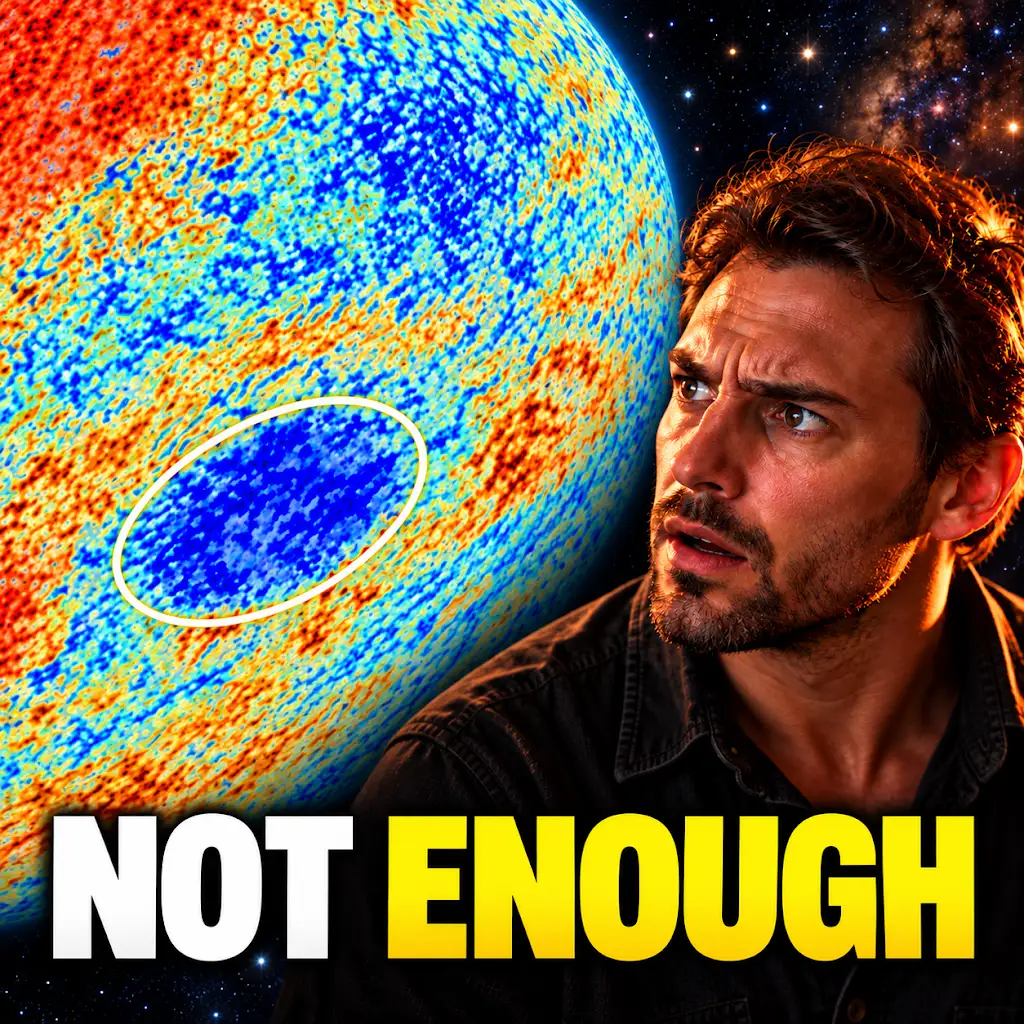
The Universe’s Cold Spot Has an Explanation. It’s Not Enough.
FAQs
What are photons?
Photons are particles of light that carry electromagnetic radiation.
What are voids in the context of photons crossing them?
Voids are vast regions of space in the universe that contain very few or no galaxies or matter.
How do photons behave when crossing voids?
Photons can travel through voids in space without being absorbed or scattered by matter, allowing them to maintain their energy and direction.
What challenges do photons face when crossing voids?
One challenge photons face when crossing voids is the potential for gravitational lensing, where the path of the photon is bent by the gravitational pull of massive objects along its journey.
What can studying photons crossing voids tell us about the universe?
Studying photons crossing voids can provide insights into the large-scale structure of the universe, the distribution of matter, and the effects of dark energy on the expansion of the universe.