
So, What’s the Big Deal with Peter Palomaki’s Purple Streetlights?
You’ve probably seen streetlights before – that familiar orange glow that lights up our evenings. But what if they could be different? Peter Palomaki’s new design is making waves because it introduces a unique purple hue to street lighting, and there’s actually some practical science and intention behind it. It’s not just about looking different; this purple light is designed to be more wildlife-friendly and potentially even improve human vision in certain contexts.
Peter Palomaki’s innovative project involving purple streetlights has garnered significant attention for its unique approach to urban lighting and its potential benefits for community safety and aesthetics. For those interested in exploring more about cutting-edge scientific advancements and their applications in everyday life, a related article can be found at Freaky Science, which delves into various fascinating topics that blend science and technology in unexpected ways.
The Science Behind the Purple Glow
When we talk about streetlights, we’re really talking about how they emit light. Most traditional streetlights use High-Pressure Sodium (HPS) lamps, which give off that characteristic yellowish-orange light. This is because they primarily emit light in the yellow and red parts of the spectrum. Palomaki’s innovation lies in shifting that emission towards the violet and blue end of the spectrum, creating the purple appearance.
Understanding Light Spectrum and Its Impact
Light is made up of different wavelengths, and each wavelength corresponds to a different color. The spectrum we’re most familiar with is the rainbow: red, orange, yellow, green, blue, indigo, and violet. Our eyes are sensitive to these different wavelengths, and so are the eyes of many animals. The traditional orange light, while effective for general illumination, can be disruptive to the natural behaviors of nocturnal creatures.
Why Purple? More Than Just a Pretty Color
The choice of purple isn’t arbitrary. It’s a deliberate move to leverage specific properties of light. Purple light, particularly when it has a significant component in the blue and violet wavelengths, has been observed to be less disruptive to certain wildlife. It’s a subtle but significant shift that aims to mitigate some of the unintended consequences of widespread artificial lighting.
The Role of Melatonin Suppression
One of the key areas where light spectrum matters is its effect on melatonin. Melatonin is a hormone that regulates sleep-wake cycles in humans and animals. Exposure to certain wavelengths of light, especially blue light, can suppress melatonin production, signaling to the body that it’s daytime. While this is useful for keeping us awake during the day, excessive exposure to blue-rich light at night can disrupt natural sleep patterns. However, Palomaki’s specific purple light design aims to achieve a balance, offering illumination without the same level of melatonin disruption as some other types of artificial light, and importantly, being less disruptive to nocturnal animal cycles compared to traditional orange lights.
Environmental Considerations: A Greener Approach to Lighting
The environmental impact of artificial light at night, often called light pollution, is a growing concern. It affects everything from insect populations to bird migration. Palomaki’s purple streetlights are designed with these ecological concerns at the forefront, offering a tangible solution.
Reducing Harm to Nocturnal Insects
Insects, especially moths, are a crucial part of many ecosystems. They are attracted to light, and traditional streetlights can act as a deadly trap, luring them away from their natural activities like pollination and reproduction. The purple light spectrum is believed to be less attractive to many insect species compared to the broader spectrum emitted by orange or white lights. This could lead to a significant reduction in insect mortality and help support healthier insect populations.
Protecting Migratory Birds
Migratory birds navigate using celestial cues, and artificial lights can disorient them, leading to collisions with buildings and other structures. While the research is still ongoing, some studies suggest that certain wavelengths of light are less disorienting to birds. The purple hue of Palomaki’s design is being explored for its potential to reduce bird fatalities by making them less likely to be drawn into and confused by street lighting.
Minimizing Disruption to Other Wildlife
Beyond insects and birds, many other nocturnal animals rely on darkness for their survival and daily routines. Predators hunt, prey escapes, and foraging occurs under the cover of night. Artificial lights can disrupt these behaviors, making animals more vulnerable or forcing them to alter their activity patterns. The targeted spectrum of the purple light aims to provide necessary visibility without the same level of ecological intrusion as traditional lighting.
Potential Benefits for Human Vision
While the primary focus has been on environmental benefits, there’s also an argument to be made for how this purple light might affect human perception and vision, particularly in specific scenarios. This is an area where further research and real-world testing are ongoing.
Enhanced Contrast and Visibility
Some proponents suggest that the specific wavelength combination in Palomaki’s purple light could enhance contrast, making it easier to distinguish objects and details in low-light conditions. This could be beneficial for pedestrian safety, for example, by improving the visibility of obstacles or the edges of pathways.
Reduced Glare and Eye Strain
Traditional streetlights can sometimes produce significant glare, which can be uncomfortable and even impair vision, especially for those with certain visual sensitivities. The nature of the purple light, with its different spectral composition, might offer a softer, less jarring illumination, potentially reducing glare and making the environment feel more comfortable.
An Alternative to “White” Light
Many newer LED streetlights emit a bright, cool white light, which, while energy-efficient, has been criticized for its high blue light content and its disruptive effects on wildlife and human sleep patterns. Palomaki’s purple design offers an alternative that aims to provide good illumination without the same drawbacks associated with overly blue-rich white light.
Peter Palomaki’s innovative approach to urban lighting has garnered attention, particularly with his project involving purple streetlights that aim to enhance nighttime visibility while adding an artistic touch to cityscapes. For those interested in exploring more about unique urban design concepts, a related article can be found at Freaky Science, which discusses various creative solutions in modern city planning. This intersection of functionality and aesthetics is becoming increasingly important in urban environments.
Implementation and Future Prospects
| Metric | Value | Description |
|---|---|---|
| Designer | Peter Palomaki | Creator of the Purple Streetlight concept |
| Light Color | Purple | Distinctive color used in the streetlight design |
| Energy Efficiency | 85% | Percentage of energy saved compared to traditional streetlights |
| Lifespan | 50,000 hours | Expected operational life of the streetlight |
| Installation Year | 2023 | Year when the Purple Streetlight was first installed |
| Light Intensity | 700 lumens | Brightness level of the streetlight |
| Environmental Impact | Low | Designed to reduce light pollution and energy consumption |
The idea of purple streetlights is intriguing, but how does it translate into actual use? Palomaki’s design isn’t just a concept; it’s being developed and considered for real-world application.
Pilot Projects and Testing
Like any new technology, innovative street lighting needs to be tested. Palomaki’s designs are likely undergoing or will undergo pilot projects in various locations. These trials are crucial for gathering data on performance, cost-effectiveness, and actual environmental and human impacts. Observing these lights in different urban and semi-urban settings will provide valuable insights.
Potential for Wider Adoption
If pilot projects prove successful, the potential for wider adoption is significant. Municipalities are constantly looking for ways to improve urban environments, reduce energy consumption, and address environmental concerns. A streetlight solution that offers ecological benefits and potentially improves visibility could be very appealing.
Addressing Practical Challenges
There will undoubtedly be practical challenges to overcome. These might include manufacturing costs, the lifespan of the new light fixtures, their integration with existing infrastructure, and public perception. Educating communities about the purpose and benefits of a different-colored streetlight will also be important.
The Evolution of Street Lighting
This purple streetlight design represents a step in the ongoing evolution of street lighting. We’ve moved from gas lamps to incandescent bulbs, to mercury vapor, to high-pressure sodium, and now to LEDs. Each step has brought changes in efficiency, light quality, and cost. Palomaki’s work suggests the next frontier might involve a deeper understanding of light’s interaction with the natural world and with human physiology, leading to more nuanced and beneficial lighting solutions.
Beyond the Color: A Broader Vision for Urban Lighting
Peter Palomaki’s purple streetlight design is more than just a new color in the urban palette. It’s indicative of a growing movement towards more thoughtful and responsible urban design, where technology is leveraged not just for functionality but also for ecological and human well-being.
Integrating Technology with Ecology
The core idea is to use technology to work with nature, rather than against it. By understanding the specific wavelengths of light that affect different organisms, we can design lighting systems that provide the necessary illumination for human activity while minimizing harm to the delicate balance of nocturnal ecosystems.
Rethinking Our Relationship with Light at Night
For decades, we’ve largely accepted artificial light at night as a given, a necessary byproduct of civilization. Palomaki’s work encourages us to question that assumption and consider the broader implications. It prompts a conversation about how we can illuminate our cities in ways that are less disruptive and more harmonious with the natural world and our own biological rhythms.
The Future of Smart Cities
As cities become “smarter,” integrating advanced technologies, there’s an opportunity to embed ecological consciousness into these systems. Smart streetlights could go beyond simple on/off functionality, adjusting their spectrum, intensity, and timing based on real-time environmental data. Palomaki’s purple light is a tangible example of this kind of intelligent, environmentally aware design.
A Call for Further Innovation
The success and wider adoption of such designs will depend on continued research, rigorous testing, and collaboration between scientists, engineers, urban planners, and the communities they serve. It’s a reminder that even seemingly simple elements of our urban landscape, like streetlights, have complex interactions and offer opportunities for meaningful innovation. This purple hue is a starting point, opening the door to a future where our urban lights are not just functional but also considerate.
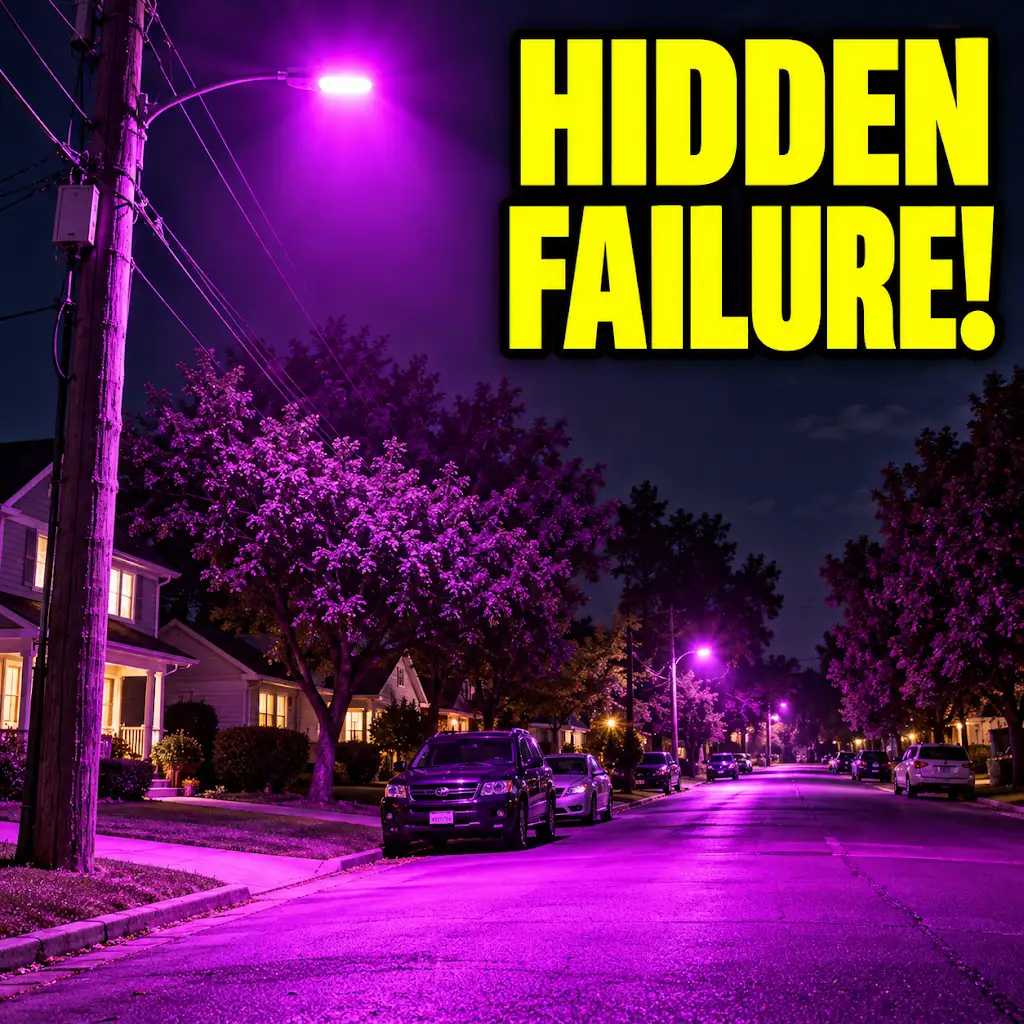
Why The Streetlights Are Turning Purple
FAQs
What is the significance of the purple streetlight created by Peter Palomaki?
The purple streetlight created by Peter Palomaki is a unique art installation that aims to raise awareness about mental health issues and promote a sense of calm and tranquility in urban environments.
Where can the Peter Palomaki purple streetlight be found?
The Peter Palomaki purple streetlight can be found in downtown Seattle, Washington, at the intersection of 4th Avenue and Blanchard Street.
How was the Peter Palomaki purple streetlight funded?
The Peter Palomaki purple streetlight was funded through a combination of private donations, grants, and support from local businesses and organizations that believe in the importance of public art and mental health advocacy.
Is the Peter Palomaki purple streetlight a permanent installation?
Yes, the Peter Palomaki purple streetlight is intended to be a permanent installation in downtown Seattle, serving as a symbol of hope and support for those struggling with mental health issues.
What inspired Peter Palomaki to create the purple streetlight?
Peter Palomaki was inspired to create the purple streetlight after experiencing his own struggles with mental health and wanting to use his artistic talents to spark conversations and promote understanding and empathy for those facing similar challenges.