
The Dawn of Dynamic E Ink: A Shift in Low-Power Display Technology
For decades, E Ink displays have been synonymous with static, paper-like visuals. Their monochrome nature and slow refresh rates, while ideal for e-readers and electronic shelf labels, have largely relegated them to applications where constant visual change is not a primary requirement. However, a quiet revolution has been brewing, one that promises to redefine the capabilities of low-power screens. Partial update E Ink displays are emerging as a transformative technology, breaking free from the limitations of their predecessors and opening up a vast new landscape of possibilities for devices that demand both visual clarity and energy efficiency. This paradigm shift moves E Ink beyond static content to dynamic, interactive experiences, fundamentally altering the perceived limitations of this venerable display technology.
The core innovation behind partial update E Ink lies in its ability to selectively refresh only specific portions of the screen, rather than the entire display. Traditional E Ink technology, often referred to as “full refresh,” necessitates a complete redraw of every pixel to change any part of the image. This process is akin to erasing a blackboard and rewriting the entire message, even if only a single word needs alteration. While effective for presenting static text or simple images, this full refresh cycle is inherently slow and energy-intensive, consuming a noticeable amount of power with each update. This limitation has been a significant barrier to E Ink’s adoption in applications requiring more frequent visual changes, such as digital signage, smartwatches, or even complex user interfaces.
Partial update technology, in contrast, is more akin to editing a document on a computer screen. Instead of redrawing the entire page, only the altered characters or images are updated. This granular control over pixel refreshing drastically reduces the time and energy required for screen transitions. The implications are profound. Suddenly, E Ink displays become viable for applications that demand real-time or near real-time updates. This breakthrough is not merely an incremental improvement; it represents a fundamental leap forward, democratizing the use of E Ink technology for a broader spectrum of consumer electronics and industrial applications. The transition from full refresh to partial update is not just about speed; it’s about unlocking new use cases and enhancing the user experience in ways previously unimaginable for E Ink.
Recent advancements in e-ink technology have led to the development of partial update capabilities, allowing for faster refresh rates and improved user experiences. For more insights on this topic, you can read a related article that explores the implications of these innovations on e-readers and digital displays. To learn more, visit this article.
Unpacking the Mechanics of Partial Updates

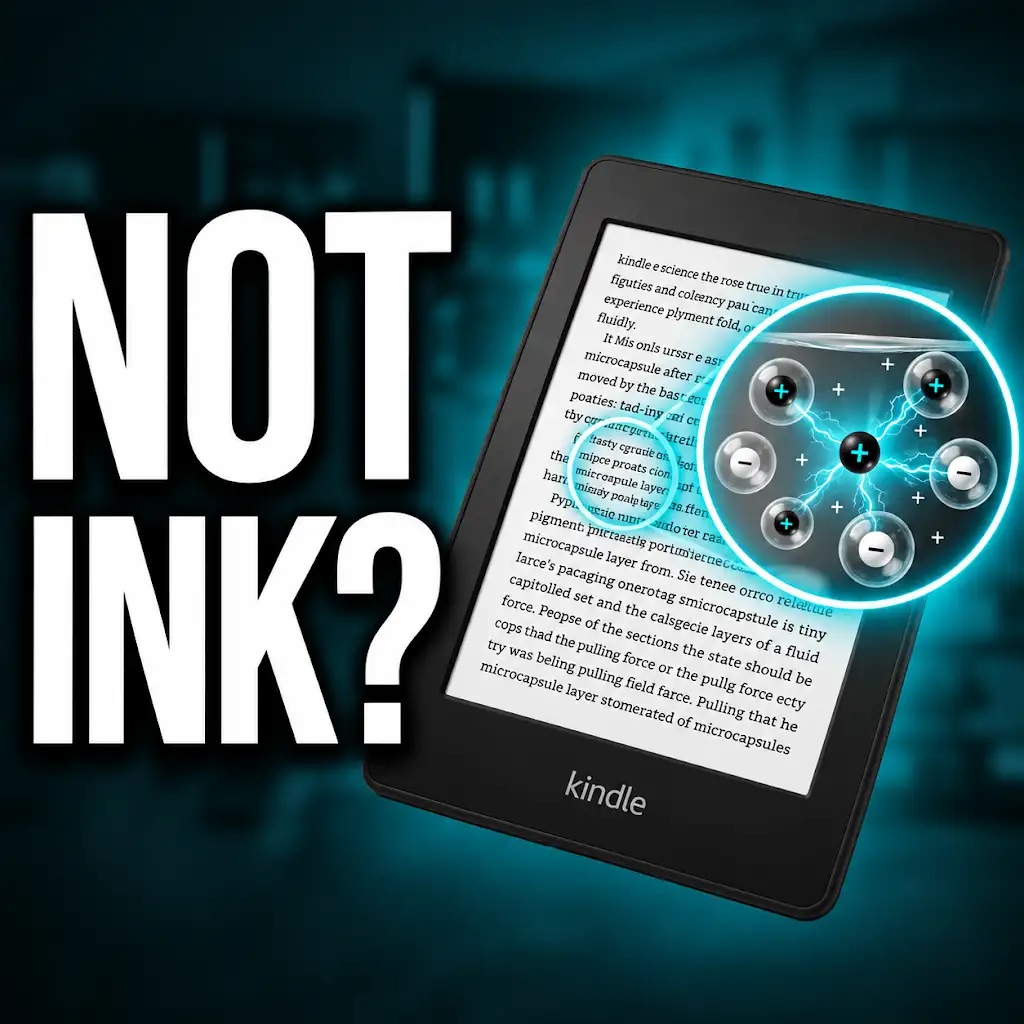
The technical underpinnings of partial update E Ink displays are a testament to sophisticated engineering. While the fundamental electrophoretic principle remains the same – charged pigment particles moving within microcapsules – the control mechanisms and driving algorithms are vastly more advanced. Understanding these nuances is key to appreciating the transformative nature of this technology.
The Art of Targeted Pixel Manipulation
At its heart, partial update relies on a much more intelligent and precise control of the electrical fields applied to the E Ink display. In a full refresh cycle, a standardized sequence of electrical pulses is applied across the entire panel to clear the existing image and then render the new one. This comprehensive approach ensures that all pixels are reset and updated correctly, but it comes at the cost of time and energy. Partial update, however, bypasses this global reset. Instead, it identifies the specific regions of the display that need to change. This is achieved through sophisticated software algorithms that compare the current display content with the intended new content. Once the differences are identified, a targeted electrical signal is sent only to the pixels within those identified areas.
This targeted approach can be thought of as a highly localized manipulation of the pigment particles. Instead of a blanket instruction for the entire screen, specific instructions are issued to individual pixels or small groups of pixels. This requires a much finer level of control over the waveform generation and the timing of electrical pulses. The driving circuitry and the underlying firmware are designed to analyze the frame buffer, identify areas of change, and then precisely orchestrate the movement of black and white (or colored) particles within the microcapsules only in those affected zones. This precision is paramount; incorrect or incomplete targeted updates could lead to ghosting or visual artifacts, making the underlying technology even more impressive.
Overcoming the Specter of Ghosting and Artifacts
One of the primary challenges in developing and implementing partial update E Ink technology has been the potential for “ghosting” and other visual artifacts. Ghosting occurs when remnants of the previous image persist on the screen after an update, leading to a blurred or smudged appearance. This is a consequence of the E Ink particles not fully returning to their resting state or not being perfectly repositioned during a targeted update. Early implementations of partial update systems were often plagued by this issue, making them unsuitable for many applications where a crisp, clean display is essential.
Engineers have employed several strategies to mitigate ghosting. One key approach involves developing more sophisticated “clearing” or “resetting” patterns for the targeted areas. Even though a full refresh of the entire screen is avoided, a localized, rapid clearing of the affected pixels can still be performed before the new content is displayed. This involves applying a specific sequence of electrical pulses designed to move the pigment particles back to a neutral state within the microcapsules. Another crucial element is the fine-tuning of the update waveforms themselves. By carefully designing the voltage and timing of the electrical pulses applied during the partial update, manufacturers can ensure that the pigment particles move precisely to their intended positions without leaving residual traces. Furthermore, advanced image processing algorithms can be employed to detect and even correct minor ghosting artifacts in real-time, further enhancing the visual fidelity of partial update displays. The ongoing refinement of these techniques has been instrumental in making partial update E Ink a reliable and visually appealing technology.
Expanding Horizons: New Applications for Dynamic E Ink

The ability to update E Ink displays selectively and rapidly has unlocked a plethora of new applications, moving the technology far beyond its traditional e-reader niche. This expanded scope promises to impact various industries, from consumer electronics to industrial automation and beyond.
Beyond the Book: Smart Devices and Wearables
Smartwatches and fitness trackers are prime candidates for the benefits of partial update E Ink. Current smartwatches often rely on power-hungry OLED or LCD displays, necessitating frequent charging. E Ink, with its inherent low power consumption, offers a compelling alternative. Partial update technology allows for dynamic watch faces, notifications, and even simple app interfaces to be displayed with minimal battery drain. Imagine a smartwatch where the time and basic stats are always visible, updating only when necessary, extending battery life for days or even weeks. This significantly enhances the user experience, removing the anxiety of constant charging.
Beyond wearables, consider smart home devices. Smart thermostats, digital picture frames, and even smart refrigerators could benefit from E Ink’s unique advantages. A smart thermostat could display the current temperature, upcoming schedule, and user input options, updating only when a setting is changed or a new schedule is programmed. Digital picture frames could cycle through photos without the harsh backlight of traditional screens, offering a more ambient and energy-efficient way to display memories. The ability to show dynamic information like weather updates or appointment reminders on these devices without significant power expenditure is a game-changer.
Industrial and Commercial Deployments Transformed
The commercial and industrial sectors stand to gain immensely from partial update E Ink. Electronic shelf labels (ESLs) are already a significant market for E Ink, but partial updates will allow for dynamic pricing and promotional information to be updated instantly across entire retail chains. This eliminates the need for manual price changes, saving labor and reducing errors. Furthermore, retailers can react more swiftly to market fluctuations and implement targeted promotions in real-time.
In logistics and warehousing, handheld scanners and inventory management devices can leverage partial update E Ink for clear, always-on displays that consume minimal power, even when not actively in use. This is crucial for devices that are constantly on the move and need to conserve battery life. Digital signage, often power-hungry, can also see a revolution. While full-color, high-refresh-rate video might still be the domain of other technologies, static or semi-dynamic signage in environments where power is a concern or where ultra-low power is critical will find a new lease on life with partial update E Ink. Think of public transportation information displays, digital directories in large buildings, or even informational boards in remote locations where power infrastructure is limited. The ability to update information remotely and efficiently makes partial update E Ink an ideal solution.
Enhanced User Interfaces and Accessibility
The user interface (UI) design possibilities for partial update E Ink are vast. Developers can now create more interactive and engaging UIs without sacrificing the benefits of E Ink’s readability and low power consumption. Menus, buttons, and interactive elements can be designed to update dynamically, providing visual feedback to user actions. This opens the door for more complex applications to be built on E Ink displays, including specialized industrial control panels, point-of-sale systems, and even educational tools.
Accessibility is another area where partial update E Ink can make a significant impact. The paper-like quality of E Ink is highly beneficial for individuals with visual impairments or dyslexia, as it reduces eye strain and glare. With partial updates, these users can interact with more dynamic content, such as guided instructions or interactive learning modules, in a comfortable and accessible format. The ability to provide clear, high-contrast, and easily readable information that can change as needed offers a compelling advantage for a wide range of users.
The Color Dimension: Towards Vibrant, Low-Power Displays
While monochrome E Ink displays have dominated the market, the advent of color E Ink technology, coupled with partial update capabilities, represents another significant leap forward. This development promises to make E Ink displays not only more dynamic but also more visually appealing and versatile.
The Evolution of Color E Ink
Early attempts at color E Ink were often limited by muted color palettes, slow refresh rates, and the need for multiple color layers, which added complexity and cost. However, advancements in materials science and display architecture have led to the development of more vibrant and responsive color E Ink technologies. These new generations of color E Ink often incorporate colored pigment particles alongside black and white ones, or utilize filter technologies to achieve color.
The integration of partial update capabilities with these color E Ink technologies is where the true potential lies. Imagine a digital signage board that can display full-color advertisements that update periodically without draining significant power. Or consider a foldable smartphone where the entire outer display, now in color and capable of dynamic updates, can showcase notifications, time, and even simple apps, all while extending battery life considerably. This combination moves E Ink from a niche display technology to a more mainstream contender in the color display market, particularly for applications where power efficiency is paramount.
Challenges and Future Prospects of Color Partial Updates
Despite the promising advancements, bringing full-color, high-performance partial update E Ink to market at a mass-market price point still presents challenges. Achieving vibrant colors comparable to emissive displays like OLED or LCD, while maintaining the ultra-low power consumption and sunlight readability of E Ink, is a complex engineering feat. The speed at which full-color images can be updated through partial refresh also needs continuous improvement to compete with the fluidity of existing display technologies.
However, the trajectory is undeniably positive. Ongoing research and development are focused on improving color saturation, reducing ghosting in color displays, and increasing refresh rates. As manufacturing processes become more refined and economies of scale are achieved, color partial update E Ink is poised to become a dominant force in low-power display applications. The future likely holds devices that seamlessly blend the readability and power efficiency of E Ink with the visual richness of color, creating entirely new product categories and enhancing existing ones.
Recent advancements in partial update technology for e-ink displays have significantly improved the user experience by allowing for faster refresh rates and reduced power consumption. This innovation is particularly beneficial for applications such as e-readers and digital signage, where static images can be updated without the need for a complete screen refresh. For a deeper dive into the implications of these developments, you can read more in this insightful article on Freaky Science, which explores the future of e-ink technology and its potential impact on various industries.
The Economic and Environmental Imperative
| Metric | Description | Typical Value | Unit | Notes |
|---|---|---|---|---|
| Update Time (Full Refresh) | Time taken to refresh the entire e-ink display | 1.0 – 2.0 | seconds | Depends on display size and resolution |
| Update Time (Partial Refresh) | Time taken to refresh a portion of the e-ink display | 0.1 – 0.5 | seconds | Faster than full refresh, reduces ghosting |
| Power Consumption (Full Refresh) | Energy used during a full screen update | 50 – 100 | mJ (millijoules) | Higher due to full pixel activation |
| Power Consumption (Partial Refresh) | Energy used during a partial screen update | 5 – 20 | mJ (millijoules) | Lower power usage, extends battery life |
| Ghosting Effect | Residual image artifacts after update | Low to Moderate | N/A | Partial updates may increase ghosting |
| Refresh Rate | Maximum number of partial updates per second | 2 – 10 | Hz | Limited by e-ink technology speed |
| Contrast Ratio | Difference between black and white levels | 10:1 to 15:1 | Ratio | Maintained during partial updates |
The adoption of partial update E Ink technology is not solely driven by technological innovation; it is also underscored by significant economic and environmental benefits. The inherent power efficiency of E Ink translates directly into cost savings for both manufacturers and end-users, while its reduced energy consumption contributes to a more sustainable future.
Cost-Effectiveness and Extended Device Lifespans
From an economic perspective, the appeal of partial update E Ink is multifaceted. For device manufacturers, the potential for extended battery life in consumer electronics means less reliance on large, heavy, and expensive batteries. This can lead to smaller, lighter, and more cost-effective product designs. Furthermore, the reduced power consumption can translate into lower operational costs for businesses deploying E Ink-based solutions, such as digital signage or inventory management systems.
For end-users, the most tangible economic benefit is the reduction in charging frequency. Devices that can last for weeks or months on a single charge are not only more convenient but also less likely to become obsolete due to battery degradation. The longer lifespan of devices powered by efficient E Ink displays contributes to a more sustainable consumption model, reducing the overall lifecycle cost of electronics. The long-term savings associated with reduced electricity consumption for charging devices, especially in large-scale deployments, are also substantial and often overlooked.
Contributing to a Greener Future
The environmental advantages of partial update E Ink are equally compelling. The reduced energy consumption directly translates into a lower carbon footprint. By requiring less electricity to operate, devices equipped with E Ink displays contribute to a decrease in greenhouse gas emissions associated with power generation. This is particularly important in an era where environmental sustainability is a growing global concern.
Moreover, the extended lifespan of E Ink-enabled devices means less electronic waste. Fewer devices needing to be replaced translates into reduced demand for raw materials, less energy expended in manufacturing, and less waste generated at the end of a device’s life. The inherent disposability of many electronic gadgets is a significant environmental problem, and technologies like partial update E Ink offer a pathway towards a more circular economy for electronics, where devices are designed to last longer and be more repairable or recyclable. The shift towards E Ink is not just a technological evolution; it’s a step towards a more responsible and sustainable approach to technology consumption.
Why Your Kindle Screen Doesn’t Work the Way You Think
FAQs
What is a partial update in E Ink technology?
A partial update in E Ink technology refers to the process of refreshing only the parts of the screen that have changed, rather than updating the entire display. This helps conserve power and improves the overall efficiency of E Ink devices.
How does partial update benefit E Ink devices?
Partial update benefits E Ink devices by reducing the amount of power required to refresh the screen, which in turn extends the battery life of the device. It also helps in faster screen updates and smoother user experience.
Can all E Ink devices perform partial updates?
No, not all E Ink devices are capable of performing partial updates. This feature depends on the specific technology and hardware used in the device. Newer E Ink displays and devices are more likely to support partial updates.
Are there any drawbacks to partial updates in E Ink technology?
One potential drawback of partial updates in E Ink technology is the possibility of ghosting or image retention issues, where remnants of the previous image may still be visible after the update. However, manufacturers are continuously working to minimize these issues.
How can users take advantage of partial updates on their E Ink devices?
Users can take advantage of partial updates on their E Ink devices by ensuring that the device’s software and firmware are up to date. Additionally, using apps and features that support partial updates can help optimize the device’s performance and battery life.