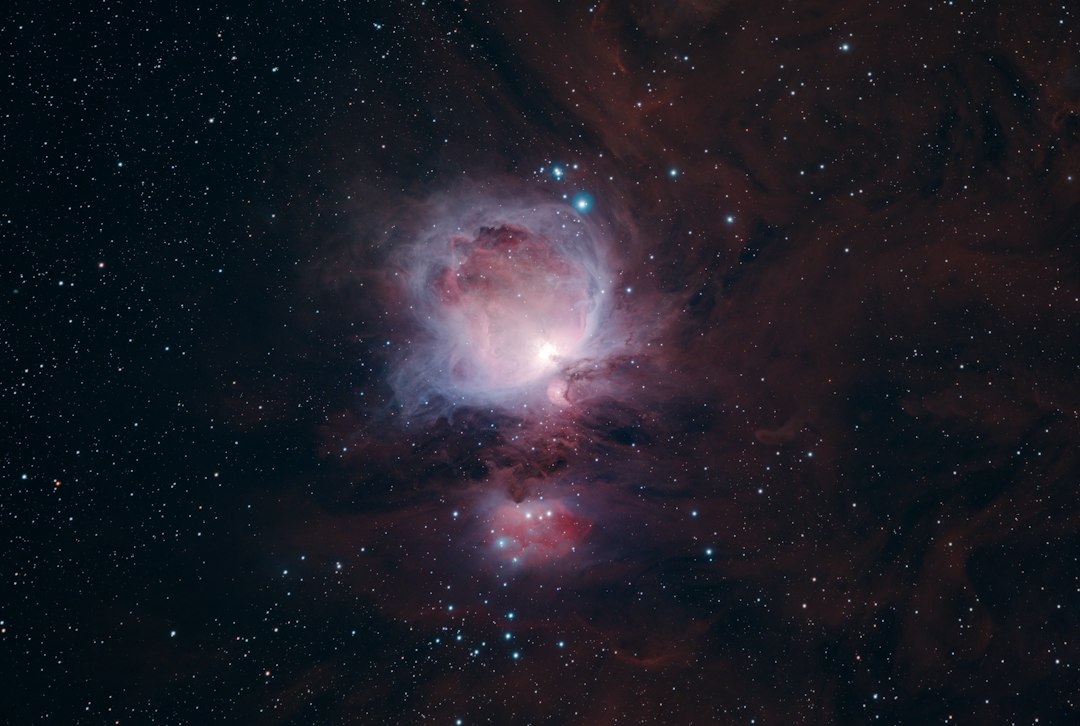
The Orion Nebula, a celestial marvel visible to the naked eye, has captivated stargazers for millennia. This vast stellar nursery, also known as Messier 42 (M42) or NGC 1976, is a breathtaking spectacle, a swirling cloud of gas and dust where new stars are born. Its prominence in the night sky, gracing the sword of the constellation Orion the Hunter, makes it an accessible and enduring source of wonder for both amateur and professional astronomers. More than just a pretty sight, the Orion Nebula is a crucial subject of study, offering invaluable insights into the processes of star formation and the evolution of galaxies.
The Orion Nebula’s allure lies in its sheer magnificence and its accessibility. Located approximately 1,344 light-years away in the constellation Orion, it is the closest large-scale star-forming region to Earth. This proximity, coupled with its inherent brightness, allows it to be seen without the aid of a telescope, appearing as a fuzzy patch of light within Orion’s iconic sword. For those equipped with binoculars or a small telescope, the nebula’s intricate details begin to emerge – delicate filaments of gas, vibrant hues of pink and blue, and the distinctive Trapezium cluster at its heart.
A Glimpse Through History
The Orion Nebula’s prominent position in the night sky has ensured its observation and documentation throughout human history. Ancient civilizations, gazing upon the stars, undoubtedly noticed this luminous anomaly. While specific ancient records attributing it to a nebula are scarce, its presence in the constellation of Orion, a prominent feature in many ancient mythologies, suggests it was observed and integrated into celestial lore.
Early Astronomical Observations
The first recorded telescopic observation of the Orion Nebula is attributed to the French astronomer Nicolas-Claude Fabri de Peiresch in 1610. However, it was later observed and cataloged by Charles Messier in 1769, who designated it as M42. Messier, a prolific comet hunter, created a catalog of celestial objects that were not comets, and the Orion Nebula became one of its most famous entries. His detailed descriptions and meticulous record-keeping laid the groundwork for future astronomical studies.
The Dawn of Astrophotography
The advent of astrophotography in the 19th century revolutionized our understanding of celestial objects, and the Orion Nebula was no exception. Early photographs, though less detailed than modern images, began to reveal the nebula’s complex structure and its gaseous nature. These images moved beyond simple point-like observations, offering visual evidence of the vast, ethereal clouds that constitute this stellar nursery.
Navigating the Constellation of Orion
The Orion Nebula is intrinsically linked to its namesake constellation. Orion the Hunter is one of the most recognizable and striking constellations in the night sky, visible from virtually anywhere on Earth. Its distinct shape, featuring a prominent belt of three stars and the bright stars Betelgeuse and Rigel, makes it an easy landmark for locating other celestial objects.
The Hunter’s Sword: A Cosmic Landmark
The Orion Nebula is situated within the “sword” of Orion, hanging below the constellation’s famous belt. This distinctive placement serves as an immediate guide for astronomers and casual stargazers alike. Identifying the three stars of Orion’s belt is the first step in locating the nebula, which then appears as a smudge of light just below them.
Stellar Neighbors in Orion
Beyond the nebula itself, the constellation of Orion is home to numerous other notable celestial objects. The bright red supergiant Betelgeuse, marking Orion’s shoulder, and the brilliant blue supergiant Rigel, marking his foot, are both stars that have been studied extensively. The constellation also hosts several other nebulae and star clusters, making it a veritable treasure trove for astronomical exploration.
The Orion Nebula, a stunning region of star formation located in the Milky Way, presents a breathtaking view that is often enhanced by the use of telescopes and imaging technology. To understand what this celestial wonder looks like to the naked eye, you can explore the fascinating insights provided in the article titled “What Does the Orion Nebula Look Like to Human Eyes?” on Freaky Science. This article delves into the visual experience of observing the nebula without the aid of instruments, highlighting the colors and features that can be perceived under optimal conditions. For more information, visit Freaky Science.
The Heart of Creation: Star Formation in M42
The Orion Nebula is not merely a static cloud of gas; it is a dynamic, bustling birthplace of stars. Within its vast expanse, gravitational forces are at work, drawing together interstellar gas and dust to ignite the fusion furnaces that will become new suns. This process, though occurring over immense timescales, is observable in M42, offering a unique window into the fundamental processes of stellar evolution.
The Role of Molecular Clouds
The Orion Nebula is part of a much larger structure known as the Orion Molecular Cloud Complex. This immense collection of cold, dense gas and dust is the raw material from which stars are formed. Within these molecular clouds, regions of slightly higher density begin to collapse under their own gravity.
Gravitational Collapse and Fragmentation
As these denser regions collapse, they fragment into smaller clumps. Each clump continues to contract, increasing its density and temperature. This gravitational collapse is the initial step in the formation of a protostar.
Protostars: The Embryonic Stars
A protostar is a nascent star that has not yet begun nuclear fusion. It is still accreting mass from its surrounding envelope of gas and dust. During this phase, protostars are often obscured by the very material from which they are forming, making them difficult to observe directly in visible light. However, they emit strongly in infrared radiation, which can penetrate the dust.
The Trapezium Cluster: A Stellar Nursery in Miniature
At the very center of the Orion Nebula lies the Trapezium cluster, a group of four massive, young, and extremely hot stars. These O and B-type stars are the most luminous and energetic stars in the nebula and are responsible for much of its illumination. Their intense ultraviolet radiation ionizes the surrounding gas, causing it to glow with the vibrant colors we observe.
Illuminating the Nebula
The Trapezium stars act like cosmic spotlights, energizing the hydrogen gas in the nebula and causing it to emit light, primarily in red and pink hues. Other elements within the nebula also contribute to the spectrum of colors, with oxygen often producing a greenish glow. The intricate patterns and structures within the nebula are sculpted by the stellar winds and radiation emanating from these young stars.
Evidence of Ongoing Star Birth
The Trapezium cluster is not a static entity; it is a testament to ongoing star formation. Observations have revealed that new stars are continuously forming within the cluster and its surrounding environment. Some of these young stars are still embedded in their cocoons of gas and dust, demonstrating the active and dynamic nature of this stellar nursery.
The Orion Nebula as a Laboratory for Stellar Evolution
The Orion Nebula provides astronomers with an unparalleled opportunity to study the earliest stages of stellar evolution. By observing stars at various points in their formation and early life, scientists can test and refine their theories about how stars are born, how they evolve, and how they influence their surroundings.
Studying Young Stellar Objects (YSOs)
The nebula is teeming with Young Stellar Objects (YSOs), stars in various stages of development from protostars to pre-main-sequence stars. By studying these YSOs, astronomers can learn about the accretion processes, the formation of protoplanetary disks, and the expulsion of jets of material that are characteristic of young stars.
The Impact of Massive Stars
The massive stars in the Trapezium cluster, while beautiful, also have a profound impact on their environment. Their powerful stellar winds can carve out cavities in the nebula and trigger or even suppress further star formation in different regions. Studying these interactions helps us understand the complex feedback mechanisms that shape galactic evolution.
A Canvas of Cosmic Colors: The Composition and Structure of M42
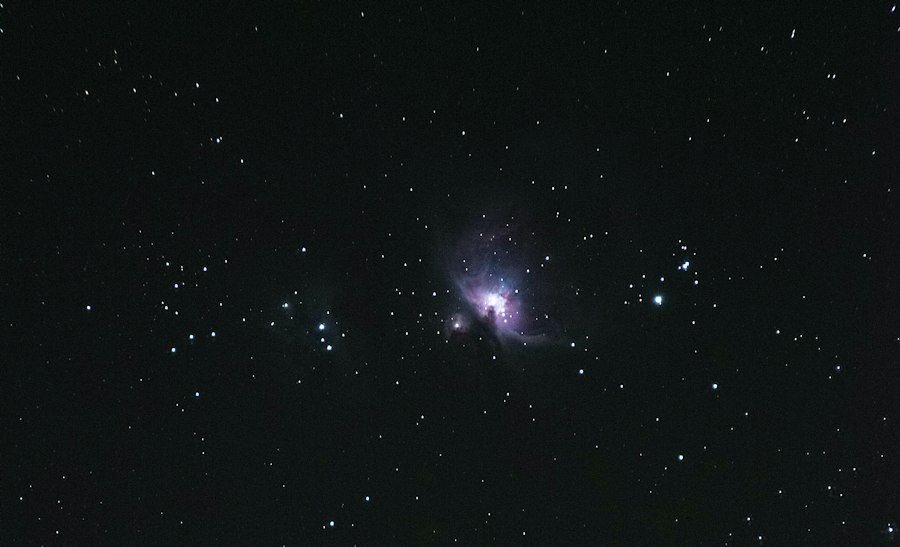
The breathtaking visual appeal of the Orion Nebula is a direct result of its rich composition and intricate structure. The nebula is composed primarily of hydrogen and helium, with trace amounts of heavier elements. These elements, when energized, emit light at specific wavelengths, creating the vibrant palette of colors that characterize M42.
The Dominance of Hydrogen and Helium
Hydrogen, the most abundant element in the universe, forms the bulk of the Orion Nebula. When ionized by the intense radiation from the young stars, hydrogen atoms emit light, predominantly in the red spectrum. Helium, the second most abundant element, also contributes to the nebula’s luminosity.
Ionized Hydrogen (H II Regions)
The glowing regions of the nebula, often appearing red, are known as H II regions. These are areas where hydrogen gas has been ionized by ultraviolet radiation from hot, young stars. The electrons, stripped from the hydrogen nuclei, recombine with them, releasing energy in the form of photons of light.
Other Elements and Their Colors
While hydrogen dominates, other elements also play a crucial role in the nebula’s visual spectacle.
- Oxygen: Ionized oxygen atoms emit light in the green and blue parts of the spectrum, often appearing as delicate, ethereal tendrils within the nebula.
- Sulfur: Ionized sulfur can contribute to the red hues, sometimes appearing in conjunction with hydrogen emissions.
- Other Trace Elements: While less visually dominant, other elements like nitrogen and carbon are also present and contribute to the complex spectral signature of the nebula.
The Interstellar Medium: A Cosmic Tapestry
The Orion Nebula is a prime example of the interstellar medium (ISM) – the matter and radiation that exist in the space between the stars within a galaxy. The ISM is not uniform; it varies in density, temperature, and composition, and the Orion Nebula showcases this complexity.
Dust Lanes and Dark Nebulae
Interspersed within the bright, glowing gas are darker regions. These are often caused by dense clouds of interstellar dust that block the light from behind. These dust lanes contribute to the three-dimensional appearance of the nebula and are also sites where new stars may be forming, hidden from direct view in visible light.
Filaments and Structures
The nebula is characterized by a mesmerizing array of filaments, arcs, and knots. These structures are shaped by a combination of gravitational forces, stellar winds, and magnetic fields. The intricate patterns are a testament to the dynamic interplay of forces at work within the nebula.
Infrared and Radio Observations: Peering Through the Dust
Visible light is not the only way to study the Orion Nebula. Because interstellar dust can obscure visible light, astronomers also use infrared and radio telescopes to probe deeper into the nebula and observe phenomena that are hidden from optical view.
Infrared Light and Hidden Stars
Infrared light has longer wavelengths than visible light and can penetrate the dust clouds more effectively. Infrared observations have revealed a wealth of deeply embedded protostars and young stellar objects that would otherwise be invisible. This has significantly advanced our understanding of the earliest stages of star formation.
Radio Waves and Molecular Gas
Radio telescopes can detect the emission from various molecules in the nebula, particularly carbon monoxide, which is a tracer for cold molecular gas. These observations allow astronomers to map the distribution and kinematics of the dense gas clouds where star formation is actively occurring.
A Window to Other Worlds: The Formation of Planetary Systems
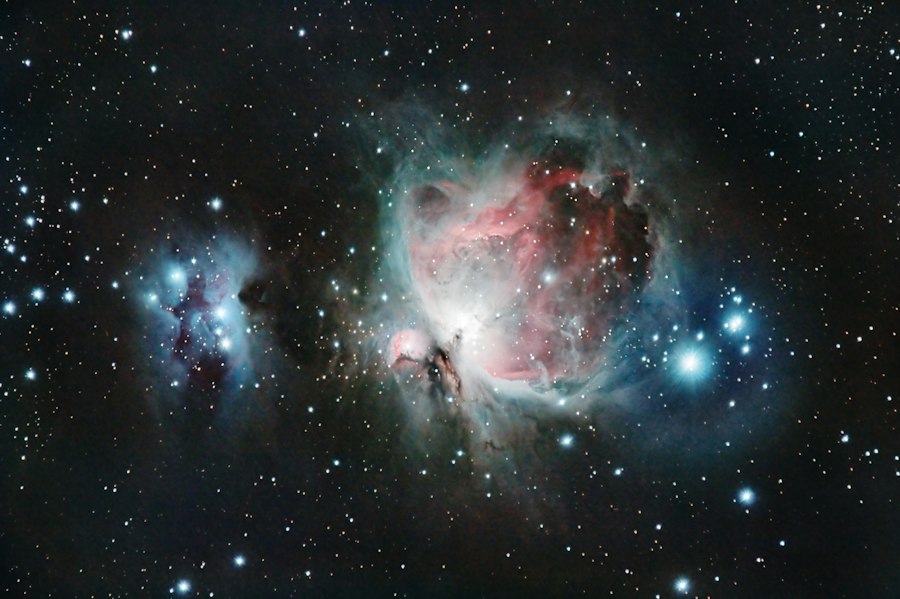
The processes occurring within the Orion Nebula are not just about the birth of stars; they are also intrinsically linked to the formation of planets. Around many of the young stars within M42, protoplanetary disks are forming – the very cradles from which planets will eventually emerge.
Protoplanetary Disks: The Birthplaces of Planets
As a star forms, it is often surrounded by a rotating disk of gas and dust. These protoplanetary disks are crucial for planet formation. Within these disks, dust grains collide and stick together, gradually growing into larger bodies.
Accretion and Planetesimals
The process begins with microscopic dust grains. Through collisions, these grains aggregate into larger particles, then into pebbles, and eventually into planetesimals – bodies ranging in size from a few kilometers to hundreds of kilometers.
The Role of Gravity and Collisions
Once planetesimals form, their gravitational attraction becomes significant. They begin to attract and collide with each other, growing larger over time. These collisions are often violent, but they are essential for the growth of planets.
Evidence of Exoplanet Formation in M42
While direct imaging of young planets within the Orion Nebula is challenging due to their distance and the overwhelming brightness of the nebula itself, indirect evidence strongly suggests that planet formation is occurring.
Observations of Protoplanetary Disks
Astronomers have observed numerous protoplanetary disks around young stars in the Orion Nebula using instruments like the Atacama Large Millimeter/submillimeter Array (ALMA). These observations reveal the structure and composition of these disks, providing clues about the conditions for planet formation.
Gaps and Rings in Protoplanetary Disks
The presence of gaps and rings within protoplanetary disks is often interpreted as evidence for the gravitational influence of forming planets. These structures suggest that young planets are clearing out material in their orbits as they grow.
The Orion Nebula as a Template for Our Solar System
Studying planet formation in the Orion Nebula can provide valuable insights into the formation of our own solar system. By examining the diverse range of conditions and outcomes in M42, scientists can better understand the specific circumstances that led to the formation of Earth and its planetary neighbors.
Diverse Planetary Systems
The Orion Nebula is a rich environment that is likely to give rise to a wide variety of planetary systems. Some may be similar to our own, while others might be radically different, offering a glimpse into the vast potential for planetary diversity in the universe.
Understanding Planetary System Architectures
The study of protoplanetary disks and forming planets in M42 helps astronomers understand the different architectures that planetary systems can adopt. This includes the size, spacing, and composition of planets, which are influenced by factors like the mass of the host star and the initial conditions of the disk.
The Orion Nebula, a stunning region of star formation, captivates astronomers and stargazers alike with its vibrant colors and intricate structures. To gain a deeper understanding of what this celestial wonder looks like to the human eye, you might find it interesting to explore a related article that discusses the visual experience of observing the nebula without the aid of telescopes. For more insights, check out this fascinating article that delves into the beauty of the cosmos and how our perception of it can differ from the images captured by advanced technology.
Observing the Orion Nebula: A Journey for Every Stargazer
| Aspect | Description |
|---|---|
| Color | The Orion Nebula appears as a pinkish-red cloud with hints of green and blue. |
| Shape | It has a roughly circular shape with wispy tendrils extending outward. |
| Brightness | It is one of the brightest nebulae visible to the naked eye, especially in dark sky locations. |
| Size | It covers an area of about 3 degrees in the sky, which is roughly 6 times the diameter of the full moon. |
| Visibility | It is easily visible to the naked eye and is a popular target for amateur astronomers. |
The Orion Nebula’s status as a readily observable celestial object makes it an ideal target for astronomers of all levels, from casual observers to seasoned professionals. Its beauty and scientific significance ensure it remains a perennial favorite for those who gaze skyward.
Naked-Eye Observation: A First Encounter
The most accessible way to experience the Orion Nebula is with the naked eye. During the winter months in the Northern Hemisphere (and summer months in the Southern Hemisphere), Orion the Hunter is a prominent figure in the night sky. Locating the three stars of the belt and then looking for the faint, fuzzy patch just below it reveals M42.
When and Where to Look
The Orion Nebula is best observed during the winter months when the constellation Orion is high in the sky. Clear, dark nights away from light pollution are essential for the best viewing experience. Its position in the sky means it is visible in the late evening and through the night.
What to Expect with the Naked Eye
Even without optical aid, the Orion Nebula presents a captivating sight. It appears as a diffuse, elongated smudge of light, a testament to its vastness and luminous nature. Its presence adds a layer of depth and wonder to an already impressive constellation.
Binoculars and Small Telescopes: Revealing Deeper Details
For those seeking a more detailed view, binoculars and small telescopes offer an enhanced perspective on the Orion Nebula. These instruments begin to resolve some of the nebula’s finer structures and bring out more of its colors.
Binocular Views
With binoculars, the Orion Nebula transforms from a mere smudge into a more discernible cloud of gas. Hints of its intricate structure begin to emerge, and the central bright region, hinting at the Trapezium cluster, becomes more apparent. The fuzzy, ethereal nature of the nebula is more pronounced.
The Magic of Small Telescopes
A small telescope can reveal the Orion Nebula in stunning detail. The distinct shape of the nebula becomes clearer, and the Trapezium cluster at its heart can often be resolved into its individual bright stars. The delicate filaments and internal structures of the gas clouds start to become visible, showcasing the nebula’s complexity. The colors, though subtle in smaller instruments, also begin to emerge more distinctly.
Advanced Observation and Astrophotography: Capturing the Cosmic Beauty
For dedicated astronomers and astrophotographers, the Orion Nebula is a prime target for capturing its breathtaking beauty and studying its scientific properties. Advanced imaging techniques allow for the extraction of incredible detail and color.
Long-Exposure Astrophotography
Long-exposure astrophotography is essential for capturing the faint details and vibrant colors of the Orion Nebula. By accumulating light over extended periods, even the faintest structures and subtle hues become visible. Specialized filters can also be used to isolate specific wavelengths of light, revealing the contributions of different elements.
Scientific Imaging and Analysis
Beyond aesthetic appeal, astrophotography of the Orion Nebula plays a crucial role in scientific research. Detailed images can be analyzed to study the morphology of star-forming regions, the dynamics of gas flows, and the distribution of different chemical elements. These observations contribute to our ongoing understanding of stellar evolution and the universe.
The Orion Nebula, a radiant beacon in the night sky, continues to inspire awe and fuel scientific inquiry. From its historical observations to its role as a cradle of stars and planets, M42 remains a spectacular vision, inviting us to contemplate our place in the vast cosmic tapestry. It is a constant reminder of the universe’s dynamic nature and the enduring mystery of creation.

The Space Photos Are Real—But Your Eyes Would See This
FAQs
What is the Orion Nebula?
The Orion Nebula is a diffuse nebula situated in the Milky Way, being south of Orion’s Belt in the constellation of Orion. It is one of the brightest nebulae, and is visible to the naked eye in the night sky.
What does the Orion Nebula look like to human eyes?
To the human eye, the Orion Nebula appears as a faint, fuzzy patch of light in the night sky. It is not as vibrant and colorful as the images captured by telescopes and cameras, but it is still a remarkable sight.
What colors can be seen in the Orion Nebula?
The human eye can perceive the Orion Nebula as a pale, greenish-gray cloud with hints of pink and orange. These colors are a result of the ionized gases and dust particles within the nebula, which emit light at different wavelengths.
Can the Orion Nebula be seen from both hemispheres?
Yes, the Orion Nebula is visible from both the northern and southern hemispheres. It is best observed during the winter months in the northern hemisphere and during the summer months in the southern hemisphere.
How far away is the Orion Nebula from Earth?
The Orion Nebula is located approximately 1,344 light years away from Earth. This makes it one of the closest regions of massive star formation to our planet.