
You’ve always marvelled at the human body, haven’t you? From the intricate dance of your limbs to the silent, vital work of your internal organs, there’s a profound complexity that often leaves you breathless. But have you ever stopped to truly consider how it all came to be? How did those initial simple cells, through a convoluted journey of division and specialization, transform into the perfectly formed heart that pumps your blood, the intricate network of lungs that fill with air, or the labyrinthine kidneys that filter your waste? You might think it’s just a matter of genetic blueprints, but that’s only part of the story. The true architects of this astonishing feat, the silent conductors of this biological orchestra, are what scientists call “growth signals.” They are the mystery at the heart of organ development, the invisible whispers that guide every cell, dictating its fate and its function.
Imagine yourself as a single-celled organism, a tiny speck of life. Your existence is simple, your needs singular. Now, fast forward a few weeks of your development. You’re not a speck anymore. You’re a burgeoning human, a complex tapestry of trillions of cells, each with a specific role. How did this happen? It all begins with that miraculous moment of fertilization, a spark of creation that ignites a cascade of events. This initial cell, the zygote, is totipotent – it possesses the potential to become any cell in your burgeoning body. But it doesn’t stay that way for long.
The Dawn of Differentiation: Unveiling Cellular Destiny
Very early on, the zygote begins to divide. With each division, the cells become less generalized and start to commit to specific paths. This is the nascent stage of differentiation, where cells begin to acquire unique characteristics that will define their eventual function. But what dictates this unwavering march towards specialization? It’s not random chance. It’s the subtle, yet powerful, influence of growth signals. These signals, often protein molecules, act as tiny messengers, binding to specific receptors on the cell surface and triggering a chain of molecular events within. Think of them like postal workers, delivering crucial instructions to each cell, telling them what to become and what to do.
The Embryonic Germ Layers: The Foundation of All Organs
The first major decision point for these differentiating cells is their arrangement into three primary germ layers: the ectoderm, mesoderm, and endoderm. Each layer is destined to give rise to specific tissues and organs. The ectoderm, the outermost layer, will form your skin, nervous system, and sensory organs. The mesoderm, the middle layer, will develop into your muscles, bones, circulatory system, and kidneys. And the endoderm, the innermost layer, will give rise to your digestive tract, liver, pancreas, and lungs. But even within these seemingly predetermined layers, the precise patterning and organization of cells into distinct organs is a testament to the sophisticated language of growth signals.
Recent research has shed light on the fascinating mechanisms that guide organ development and growth in living organisms. Scientists are uncovering how cells communicate and respond to various signals that dictate their location and function within the body. For an in-depth exploration of this topic, you can read more in the article found here: How Organs Know Where to Grow. This article delves into the intricate processes that ensure organs develop in the right place and at the right time, highlighting the importance of cellular signaling in developmental biology.
The Language of Life: Decoding Growth Signals and Their Receptors
Growth signals aren’t just generic “grow” commands. They are a complex and nuanced language, a sophisticated communication system that directs cellular behavior with astonishing precision. These signals are predominantly proteins, secreted by specialized cells and then detected by their target cells through specific protein receptors on their surfaces. The binding of a signal to its receptor is the initiating event, unlocking a cascade of intracellular events that ultimately alter the cell’s behavior – whether it’s to divide, migrate, differentiate, or even undergo programmed cell death.
Ligands and Receptors: The Lock and Key Mechanism
The interaction between growth signals and their receptors is often described as a lock-and-key mechanism. The growth signal, known as a ligand, has a specific three-dimensional structure that allows it to fit precisely into the binding pocket of its corresponding receptor. When the ligand binds, it causes a conformational change in the receptor, which then activates a series of downstream signaling pathways within the cell. These pathways can involve other proteins, enzymes, and changes in gene expression, ultimately leading to a specific cellular response.
Types of Growth Signals: A Diverse Arsenal
The repertoire of growth signals involved in organ development is vast and diverse. Some of the key players include:
- Growth Factors: These are a large family of proteins that promote cell growth, proliferation, and survival. Examples include epidermal growth factor (EGF), fibroblast growth factor (FGF), and platelet-derived growth factor (PDGF). You can think of these as powerful stimulators, pushing cells to multiply and expand.
- Hormones: While often associated with endocrine signaling throughout the body, hormones also play critical roles in embryonic development, influencing cell differentiation and organogenesis.
- Cytokines: These signaling molecules are involved in regulating cell growth, differentiation, and immune responses. They often act at lower concentrations than growth factors and can have a wide range of effects.
- Morphogens: These are signaling molecules that not only specify cell fate but also provide positional information along a developing axis. They are secreted in a graded fashion, meaning their concentration is higher at the source and decreases with distance. Cells interpret these gradients to determine their position and, consequently, their developmental fate. This is a crucial concept for understanding how organs acquire their specific shapes and structures.
Signal Transduction Pathways: The Intracellular Relay Race
Once a growth signal binds to its receptor, the message needs to be relayed within the cell to enact the desired change. This is achieved through a series of interconnected biochemical reactions known as signal transduction pathways. Imagine a complex chain of dominoes: the initial signal knocks over the first domino, which triggers the next, and so on, until the final ultimate response is achieved. These pathways are highly regulated and can involve phosphorylation events (adding phosphate groups to proteins), activation of enzymes, and changes in the expression of specific genes.
The Role of Gene Expression: The Blueprint for Action
Ultimately, many of the actions triggered by growth signals involve changes in gene expression. This means that the signals can turn genes on or off, leading to the production of specific proteins that are essential for cell differentiation, migration, or function. For example, a growth signal might activate a gene that produces a protein crucial for muscle development, or it might suppress a gene that promotes cell division, thus halting proliferation once a certain size is reached. This intricate control over gene expression is what underlies the remarkable diversity of cell types and the intricate architecture of organs.
Sculpting Complexity: How Signals Guide Organ Formation

Organ development, or organogenesis, is not simply about cells growing and dividing. It’s a highly orchestrated process of sculpting, folding, and organizing tissues into precise three-dimensional structures. Growth signals are the chisel and hammer, guiding this intricate process with remarkable finesse. They dictate not only what a cell becomes but also where it goes and how it interacts with its neighbors.
Pattern Formation: Establishing the Blueprint for an Organ
Before an organ can truly form, its basic blueprint needs to be established. This involves establishing spatial patterns of cell types and organizing them into specific arrangements. Morphogens play a critical role here, creating concentration gradients that provide positional information to cells. For instance, gradients of certain signaling molecules can define the anterior-posterior axis of an developing limb bud, dictating which cells will form the wrist and which will form the fingers.
Cell Migration and Adhesion: The Building Blocks in Motion
Developing organs are dynamic structures. Cells don’t just stay put; they migrate to their appropriate locations. Growth signals can either attract or repel cells, guiding them along specific pathways. Furthermore, cell-cell adhesion molecules, also regulated by signaling pathways, play a crucial role in holding cells together to form tissues and organs. You can imagine cells needing to “stick” to each other in specific ways to form the smooth lining of your gut or the tough outer layer of your skin. Signals dictate when and where these adhesive forces should be strong or weak.
Morphogenesis: The Art of Shaping Tissues
Once cells are in the right place and have expressed the correct genes, they need to be shaped into functional tissues and organs. This process, known as morphogenesis, involves a variety of cellular behaviors, including cell shape changes, cell intercalation (cells sliding past each other), and programmed cell death (apoptosis). Growth signals orchestrate these events. For example, signals can instruct cells to elongate and form tubes, a crucial step in the development of blood vessels or the ducts of glands. Apoptosis, often triggered by specific signals, is essential for refining organ structures, such as sculpting the fingers and toes from webbing.
Feedback Loops and Self-Organization: The Organ’s Internal Compass
The development of organs is not a one-way street of instruction. Cells also receive feedback from their environment and from each other. Complex feedback loops ensure that the developmental process stays on track. Moreover, many aspects of organogenesis appear to be self-organizing, meaning that the simple rules of interaction between cells and signals can lead to the emergent formation of complex structures without constant external direction. You can think of it as a tiny ecosystem within your developing body, where the internal dynamics naturally lead to the formation of a functional organ.
When Things Go Wrong: The Impact of Signaling Errors
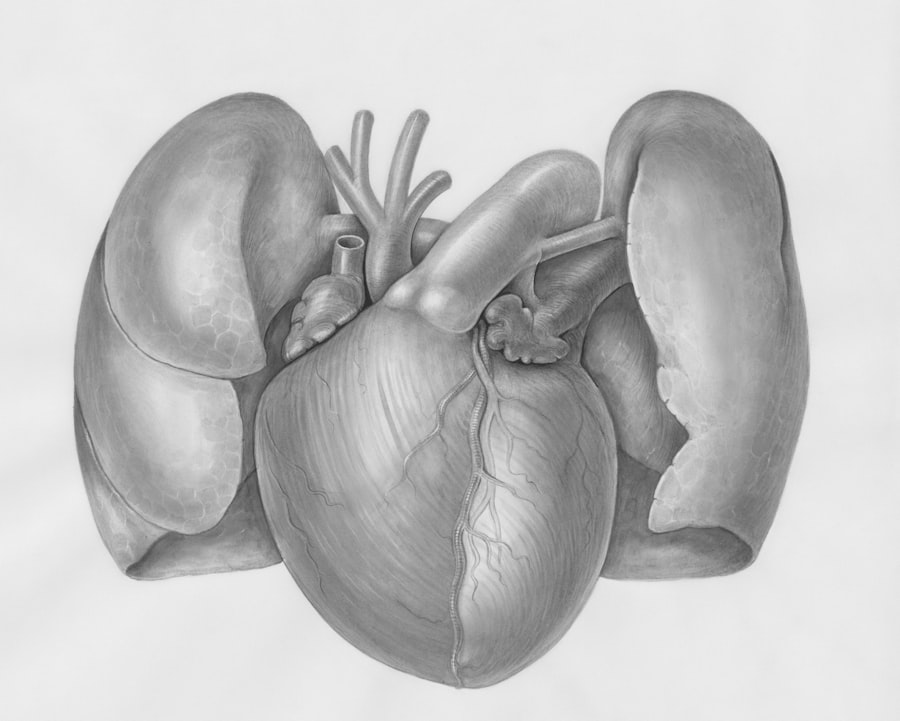
Given the incredible complexity of growth signal networks, it’s not surprising that errors can occur. These disruptions can have profound consequences, leading to a range of developmental defects and diseases. Understanding these signaling errors is crucial for both diagnosing and treating various medical conditions.
Congenital Abnormalities: When Development Takes a Detour
Many congenital abnormalities, birth defects, are a direct result of faulty growth signaling during embryonic development. For example, disruptions in the signaling pathways that control limb development can lead to missing fingers or toes, or to more severe limb malformations. Similarly, errors in the signaling that guides heart development can result in congenital heart defects. These conditions highlight the critical importance of precise signaling for normal organ formation.
Cancer: Uncontrolled Growth and Aberrant Signaling
Perhaps one of the most striking examples of growth signal dysregulation is cancer. Cancer cells are characterized by their uncontrolled proliferation and their ability to invade and spread to other parts of the body. This uncontrolled growth is often driven by mutations in genes that encode for growth signaling proteins or their receptors, or in genes that regulate the downstream signaling pathways. Cancer cells essentially hijack the body’s own growth machinery, leading to a devastating disease.
Therapeutic Interventions: Harnessing Signals for Healing
The growing understanding of growth signal networks has opened up exciting avenues for therapeutic interventions. By manipulating these signals, scientists and clinicians aim to restore normal function or combat disease.
Targeted Therapies: Precision Strikes Against Disease
Targeted therapies represent a major advancement in cancer treatment. These drugs are designed to specifically inhibit the aberrant growth signals that drive cancer cell proliferation. For instance, many treatments for breast cancer target receptors that are overexpressed on cancer cells, blocking the signals that promote their growth. This approach offers a more precise and less toxic alternative to traditional chemotherapy.
Regenerative Medicine: Rebuilding with Growth Signals
The field of regenerative medicine holds immense promise for repairing damaged or diseased tissues and organs. Growth factors and other signaling molecules are being used to stimulate the regeneration of cells and tissues. For example, research is exploring the use of growth signals to promote the healing of wounds, to regenerate heart muscle after a heart attack, or even to grow new organs in the laboratory for transplantation. You might be able to imagine a future where scientists can guide the regrowth of your own damaged kidney using carefully orchestrated signals.
Recent research has shed light on the fascinating mechanisms that guide organ growth, revealing how cells communicate and coordinate their development. Understanding these processes is crucial for advancements in regenerative medicine and tissue engineering. For a deeper dive into the science behind organ growth and cellular communication, you can explore this insightful article on Freaky Science, which discusses the latest findings in this intriguing field.
The Unfolding Mystery: Future Directions in Growth Signal Research
| Organ | Growth Signal | Mechanism |
|---|---|---|
| Heart | Fibroblast Growth Factor | Guided by surrounding tissues |
| Brain | Sonic Hedgehog | Controlled by gradients of signaling molecules |
| Liver | Wnt signaling | Regulated by cell-cell communication |
Despite the remarkable progress in understanding growth signals, much remains to be discovered. The intricate interplay between different signaling pathways, the precise mechanisms by which they are regulated, and their role in a vast array of biological processes continue to be active areas of research.
Systems Biology: Understanding the Network Effect
The future of growth signal research lies in adopting a systems biology approach. This means moving beyond studying individual signals in isolation and instead focusing on understanding the complex networks and interactions between multiple signaling pathways. By analyzing these networks as interconnected webs, scientists can gain a more holistic understanding of how organ development is orchestrated and how disruptions can lead to disease.
The Microbiome and Signaling: A Surprising Connection
Emerging research suggests a fascinating connection between your gut microbiome – the vast community of microorganisms living in your digestive tract – and your own cellular signaling. The metabolites produced by these microbes can influence your body’s signaling pathways, potentially impacting everything from your immune system to your brain function. This opens up entirely new avenues for understanding how external factors can influence internal development and health.
Artificial Intelligence and Big Data: Unraveling Complexity
The sheer volume of data generated by modern biological research is staggering. Artificial intelligence (AI) and big data analytics are becoming indispensable tools for sifting through this information, identifying patterns, and uncovering new insights into growth signal networks. AI algorithms can help predict the outcomes of specific signaling perturbations or design novel therapeutic strategies. You might soon see AI playing a crucial role in understanding the subtle whispers of growth signals that you can’t even perceive.
The mystery of growth signals is one that continues to captivate scientists. It’s a testament to the elegance and complexity of nature, a reminder of the profound processes that have shaped you into the intricate being you are. As you continue to explore the wonders of your own body, remember the silent, invisible language of growth signals – the architects of your development, the sculptors of your organs, and a constant source of scientific wonder and potential healing.

Your Body Knows Something You Don’t
FAQs
1. How do organs know where to grow?
Organs know where to grow through a process called organogenesis, which involves complex signaling pathways and genetic instructions that guide the development and positioning of organs within the body.
2. What factors influence the growth and positioning of organs?
Factors such as genetic programming, signaling molecules, cell-cell interactions, and environmental cues all play a role in influencing the growth and positioning of organs during development.
3. Can organs relocate or change position within the body after they have grown?
In some cases, organs can change position within the body due to developmental processes or certain medical conditions. However, the overall positioning of organs is largely determined during embryonic development.
4. How do stem cells contribute to organ growth and development?
Stem cells have the unique ability to differentiate into various cell types, including those needed for organ growth and development. They play a crucial role in replenishing and repairing tissues within organs.
5. What happens when organs do not grow or develop properly?
When organs do not grow or develop properly, it can lead to congenital abnormalities, developmental disorders, or functional impairments. These conditions may require medical intervention or treatment to address the underlying issues.