Oceanographic mooring lines, often unseen beneath the waves, are the workhorses of oceanographic research, acting as the backbone for a multitude of scientific investigations. These anchored arrays of instruments, deployed for extended periods, provide a constant stream of data that illuminates the complex and dynamic processes of the marine environment. Their importance lies not only in their ability to collect data but also in their versatility, enabling scientists to explore a wider spectrum of oceanographic phenomena than ever before. This article will delve into the fundamental aspects of oceanographic mooring lines, examining their construction, their diverse applications, the technological advancements driving their evolution, and the critical role they play in our understanding of the ocean.
A typical oceanographic mooring line is a sophisticated engineering marvel, a carefully orchestrated assembly of interconnected components designed to withstand the harsh conditions of the ocean and to deploy scientific instruments at precise depths. The fundamental structure of a mooring line begins with an anchor, a heavy mass, often made of concrete or cast iron, that secures the entire system to the seafloor. This anchor acts as the unyielding root of a sub-surface tree, grounding the entire endeavor against the relentless tug of currents and waves.
The Vertical Backbone: The Mooring Wire or Rope
Connecting the anchor to the surface float is the mooring wire or rope, the primary structural element. This line is typically constructed from high-strength materials such as stainless steel, galvanized steel, or robust synthetic fibers like Dyneema or Spectra. The choice of material is dictated by factors such as the required strength, the corrosive environment, expected lifespan, and cost. The diameter and composition of the mooring line are crucial; a thicker, stronger line is necessary for deeper waters and more powerful currents, while a lighter, more flexible line might be chosen for shallower deployments or where minimizing acoustic signature is paramount. The mooring line itself can be considered the central nervous system of the entire mooring, transmitting the forces from the anchor to the instruments and the surface.
Structural Integrity and Material Considerations
The selection of mooring wire or rope is a critical decision, balancing tensile strength, abrasion resistance, and resistance to corrosion. Stainless steel alloys, such as 316L, offer excellent corrosion resistance in saltwater environments. However, they are heavier and more expensive. Galvanized steel provides a more economical alternative but has a shorter lifespan due to oxidation. Synthetic fibers, on the other hand, are lightweight, highly resistant to corrosion, and offer excellent tensile strength for their weight. However, they can be susceptible to UV degradation if exposed at the surface for extended periods and can experience creep under sustained load. Understanding the mechanical properties of these materials is as vital as understanding the biology of the ocean itself when designing a robust mooring.
Buoyancy and Stability: The Surface Float
At the upper extremity of the mooring line is the surface float. This component is essential for maintaining the tension in the mooring line and for supporting the instruments that are designed to be near the surface. Floats are typically spherical or cylindrical and are constructed from materials like syntactic foam, which is a composite material made of hollow microscopic glass microspheres embedded in a resin matrix. Syntactic foam offers high buoyancy with low compressibility, allowing it to maintain its integrity under immense pressure. The size and number of floats are calculated to provide the necessary uplift to counteract the weight of the submerged components and to keep the mooring taut. Without the float, the mooring line would lie inert on the seabed, a silent monument to unrealized research potential.
The Role of Syntactic Foam and Other Buoyancy Materials
Syntactic foam is the material of choice for deep-sea moorings due to its ability to withstand extreme pressures without significant volumetric change. For shallower deployments, less expensive materials like polyethylene or fiberglass may be employed. The design of the float also incorporates features for attaching instruments, lights, and radio beacons, ensuring visibility and accessibility. The float is the beacon, the lighthouse of the submerged research station, signaling its presence and its purpose to the world above.
Instrument Platforms: Disguised or Prominent
A significant aspect of any mooring line is the array of scientific instruments it carries. These instruments are attached to the mooring line at various depths, effectively creating a three-dimensional sampling grid within the water column. Some instruments are housed in protective housings, appearing as discrete, often cylindrical packages, while others might be more integrated into the mooring line itself. Sensors measuring temperature, salinity, current speed and direction, pressure, dissolved oxygen, chlorophyll fluorescence, and acoustic signals are commonly deployed. The intelligent placement of these instruments transforms the passive mooring line into an active observer, a tireless sentinel gathering intel from every stratum of the ocean.
In-line and Outrigger Instrument Configurations
Instruments can be attached directly to the mooring line at specific intervals, known as in-line configurations. Alternatively, they can be deployed on short branches extending from the main line, referred to as outrigger configurations. The choice between these configurations depends on the scientific objectives, the types of instruments, and the desired spatial coverage. Careful consideration is given to minimize the interference between instruments and to ensure optimal data collection. Each instrument is a specialized eye, meticulously placed to observe a particular facet of the ocean’s grand design.
Recent advancements in oceanographic mooring lines have been highlighted in an article that discusses the expansion of these critical tools for marine research. The article emphasizes how improved mooring technology enhances data collection and monitoring of oceanographic conditions, ultimately contributing to a better understanding of climate change impacts on marine ecosystems. For more insights on this topic, you can read the full article here: Freaky Science.
Expanding the Horizon: Diverse Applications of Mooring Lines
The versatility of oceanographic mooring lines means they are employed across a vast spectrum of research disciplines, each contributing to a deeper understanding of our planet’s oceans. From tracking the movement of vital ocean currents to monitoring the subtle impacts of climate change, moorings serve as indispensable tools for scientists worldwide. The data they provide forms the bedrock of our knowledge about phenomena that are otherwise invisible and inaccessible.
Climate Change Monitoring: A Vigilant Watch
One of the most critical applications of mooring lines is in the continuous monitoring of climate change indicators. Instruments deployed on moorings can record sea surface temperature, ocean heat content, sea level, and the concentration of greenhouse gases in the ocean. This long-term data collection is essential for understanding how the ocean is absorbing heat and carbon dioxide from the atmosphere and how these processes are affecting global climate patterns. The ocean, a vast thermodynamic engine, is meticulously monitored by these submerged observers, providing a clear picture of its evolving thermal state.
Tracking Ocean Heat Content and Sea Level Rise
By measuring temperature profiles at various depths, moorings contribute significantly to understanding ocean heat storage and its implications for sea level rise due to thermal expansion. Acoustic Doppler Current Profilers (ADCPs) mounted on moorings also help in monitoring ocean currents, which play a crucial role in redistributing heat around the globe. These instruments are like thermometers and rulers for the ocean’s immensity, charting its temperature and its expanding volume.
Marine Ecosystem Studies: Unveiling Life’s Rhythms
Mooring lines are also vital for studying marine ecosystems. Instruments can monitor parameters such as chlorophyll concentration, which is an indicator of phytoplankton abundance and the base of the marine food web. Acoustic sensors can detect the presence and behavior of marine mammals and fish, providing insights into their distribution, migration patterns, and vocalizations. pH and dissolved oxygen sensors help in assessing the health of marine environments, particularly in the context of ocean acidification and deoxygenation. These moorings become underwater observatories, chronicling the pulse of marine life and the health of its intricate web.
Monitoring Phytoplankton Blooms and Zooplankton Populations
Chlorophyll fluorometers and transmissometers deployed on moorings can track the timing and intensity of phytoplankton blooms, which are crucial events in the marine carbon cycle and food web dynamics. Hydrophones can record the ambient noise levels and specific vocalizations of marine life, helping scientists understand species distribution and behavioral patterns. The data gathered is akin to a biological census, providing a glimpse into the vibrant and complex tapestry of ocean life.
Ocean Circulation and Dynamics: Mapping the Invisible Rivers
Understanding the complex currents that circulate within the ocean is fundamental to meteorology, climate science, and marine biology. Mooring lines equipped with current meters, such as ADCPs, provide continuous measurements of current speed and direction at specific locations and depths. This data helps researchers map out oceanic gyres, boundary currents, and deep-water pathways, revealing the invisible rivers that shape our planet’s climate and transport nutrients and heat. These moorings are like highly sophisticated flow meters, charting the grand circulatory system of the planet.
Investigating Mesoscale Eddies and Deep Ocean Currents
By deploying moorings in strategic locations, scientists can investigate the formation and evolution of mesoscale eddies, which are significant features of ocean turbulence and energy transport. Furthermore, moorings in deep ocean basins can provide crucial data on the slow but powerful deep ocean currents, which play a vital role in global carbon sequestration and the distribution of oceanic heat. The data from these moorings helps to build a comprehensive map of the ocean’s dynamic architecture, from surface phenomena to the abyssal plains.
Coastal Zone Research: Guardian of Shoreline Processes
Moorings are not confined to the open ocean; they are also indispensable in coastal zones. Here, they can monitor wave action, tides, sediment transport, and the impact of offshore activities such as wind farms and aquaculture. This data is crucial for coastal management, hazard assessment, and understanding the ecological health of these highly productive and vulnerable regions. Moorings act as sentinels for our coastlines, guarding against erosion and monitoring the delicate balance of these dynamic interfaces.
Assessing Wave Energy and Coastal Erosion
Instruments like wave staffs and pressure sensors deployed on moorings can provide detailed information on wave climate, which is vital for coastal engineering and the design of protective infrastructure. Acoustic sensors can also detect the movement of sediment, offering insights into coastal erosion processes. The data collected forms the basis for informed decisions regarding coastal protection and sustainable development.
Technological Advancements: The Evolution of the Oceanic Sentinel
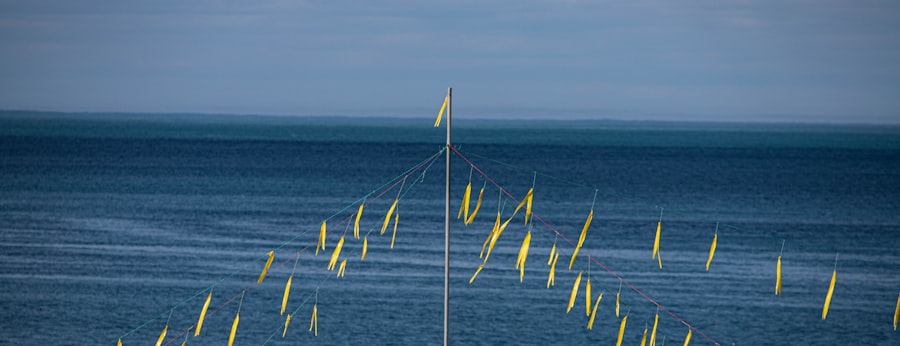
The capabilities of oceanographic mooring lines have been dramatically expanded by continuous technological advancements. Innovations in sensor technology, data telemetry, and mooring design have made it possible to collect more comprehensive and higher-resolution data than ever before. These advancements are akin to giving our submerged sentinels sharper eyes and swifter communication abilities.
Miniaturization and Increased Sensor Accuracy
Modern sensors are increasingly smaller, more power-efficient, and capable of measuring a wider range of parameters with greater accuracy. This miniaturization allows for the deployment of more instruments on a single mooring, providing a richer and more detailed picture of the marine environment. The development of solid-state sensors and improved data acquisition systems has been central to this progress. The instruments themselves have undergone a metamorphosis, becoming more adept and efficient in their data-gathering roles.
Advancements in CTD and ADCP Technology
Improvements in Conductivity, Temperature, and Depth (CTD) sensors have led to higher sampling rates and greater accuracy in measuring fundamental oceanographic properties. Similarly, Acoustic Doppler Current Profilers (ADCPs) have become more sophisticated, offering higher spatial and temporal resolution in current measurements. These refined instruments provide a finer-grained understanding of the ocean’s physical state.
Real-Time Data Transmission: Breaking the Time Barrier
Historically, data from moorings was collected only after instruments were retrieved, often months or even years after deployment. However, advances in satellite and acoustic telemetry systems now allow for real-time or near-real-time data transmission. This capability is transformative, enabling scientists to monitor changing conditions, detect anomalies, and even adjust experiments or respond to urgent events, such as harmful algal blooms or oil spills, in a timely manner. This ability to communicate in real-time is like giving the mooring line a direct line to the research vessel, enabling immediate insights and rapid response.
Satellite Telemetry and Acoustic Modems
Satellite telemetry allows for the transmission of data to shore from moorings equipped with suitable communication hardware. For submerged instruments, acoustic modems can transmit data through the water column to a surface buoy or a passing research vessel. This near-instantaneous feedback loop revolutionizes how oceanographic research is conducted, shifting from a historical record to a dynamic, live feed.
Enhanced Durability and Longevity: Weathering the Storm
Mooring designs have also evolved to improve their durability and longevity in harsh marine environments. The development of more robust materials, improved cable protection, and advanced deployment and recovery techniques have significantly increased the lifespan of moorings, reducing the frequency of costly and logistically challenging deployments. This enhanced resilience ensures that these scientific outposts can withstand the rigors of the ocean for longer durations.
Anti-fouling Techniques and Corrosion Resistance
The unchecked growth of marine organisms (biofouling) can impede instrument function and increase drag on mooring lines. Advanced anti-fouling coatings and materials are now routinely used to mitigate this problem. Furthermore, improved corrosion-resistant materials and protective sheathing further enhance the long-term integrity of mooring components. These measures are essential for maintaining the operational efficiency of the mooring over extended periods.
Challenges and the Future of Mooring Technology
Despite significant advancements, the deployment and maintenance of oceanographic mooring lines still present considerable challenges. The sheer scale of the ocean, the harsh environmental conditions, and the cost associated with long-term deployments necessitate continuous innovation. The future of mooring technology lies in developing even more autonomous systems, leveraging artificial intelligence, and fostering international collaboration to expand our global observational network.
Navigating the Depths: Deployment and Recovery Logistical Hurdles
Deploying and recovering moorings, especially in deep water or remote locations, is a complex and expensive undertaking requiring specialized vessels and highly trained personnel. The risk of equipment failure or loss due to extreme weather events or entanglement with fishing gear always exists. The ocean, a vast and unforgiving frontier, demands careful planning and execution for every deployment.
The Role of Specialized Research Vessels and Equipment
Dedicated oceanographic research vessels equipped with advanced winches, cranes, and navigation systems are essential for the safe and efficient deployment and recovery of moorings. Sophisticated acoustic positioning systems are used to precisely locate moorings on the seafloor. The logistical ballet required for these operations highlights the significant investment and expertise needed.
Autonomous Systems and Artificial Intelligence: The Next Frontier
The future of oceanographic moorings is increasingly leaning towards greater autonomy. Future systems may incorporate artificial intelligence to intelligently adapt sampling strategies based on observed oceanographic conditions, optimize data collection, and even perform basic self-diagnosis and maintenance. Acoustic communication networks of moorings could also form the basis for intelligent, adaptive observing systems. This evolution is akin to equipping our sentinels with the ability to learn and adapt, making them even more effective observers of the dynamic ocean.
Smart Moorings and Adaptive Sampling Strategies
The concept of “smart moorings” involves moorings that can make real-time decisions about data acquisition and transmission. For example, a mooring could increase its sampling rate for a particular parameter if an anomaly is detected. This adaptive approach promises to maximize the scientific return from each deployment.
International Collaboration: A Global Network for Global Understanding
To effectively monitor the vast and interconnected ocean, international collaboration is paramount. Sharing data, resources, and expertise through global observing networks allows for a more comprehensive and cohesive understanding of oceanic processes that transcend national boundaries. Initiatives like the Integrated Ocean Observing System (IOOS) in the United States and similar programs globally are building a robust framework for sustained ocean observation. Building a global network of these oceanic sentinels is crucial for understanding the planet’s intertwined systems.
Establishing Global Observing Networks and Data Sharing Initiatives
The establishment of standardized protocols for data collection, processing, and sharing is essential for creating interoperable global ocean observing systems. Open-access data policies further democratize oceanographic knowledge, enabling researchers worldwide to contribute to and benefit from collective observations. This collaborative spirit is vital for tackling the global challenges that the ocean presents.
Recent advancements in oceanographic mooring lines have significantly enhanced our ability to monitor marine environments. These innovations not only improve data collection but also ensure the durability and reliability of the equipment used in harsh ocean conditions. For a deeper understanding of these developments, you can explore a related article that discusses the implications of these advancements on marine research and environmental monitoring. Check it out here: related article.
Conclusion: The Unwavering Gaze of the Submerged Observer
| Parameter | Value | Unit | Description |
|---|---|---|---|
| Initial Length | 100 | m | Original length of the mooring line before expansion |
| Temperature Range | -2 to 30 | °C | Operating temperature range affecting line expansion |
| Thermal Expansion Coefficient | 1.2 x 10⁻⁵ | 1/°C | Coefficient of linear expansion for mooring line material |
| Maximum Expansion | 0.036 | m | Maximum expected expansion length due to temperature change |
| Load Capacity | 5000 | kg | Maximum load the mooring line can sustain |
| Elastic Modulus | 2.1 x 10⁹ | Pa | Material stiffness affecting elongation under load |
| Elongation Under Load | 0.005 | m | Additional elongation due to mechanical load |
| Total Expansion | 0.041 | m | Sum of thermal and mechanical elongation |
Oceanographic mooring lines, though often hidden from view, are indispensable tools for unraveling the mysteries of the ocean. From their fundamental construction of anchor, wire, and float, to their diverse applications in climate monitoring, ecosystem studies, and the mapping of ocean currents, these submerged systems provide a continuous and invaluable stream of data. The relentless march of technological innovation is only enhancing their capabilities, promising even greater insights into the future. As we continue to face pressing global challenges related to climate change, marine resource management, and understanding the delicate balance of marine ecosystems, the unwavering gaze of the oceanographic mooring line will remain a cornerstone of scientific inquiry, guiding our understanding and informing our actions towards a healthier and more sustainable planet.

WARNING: The Ocean Conveyor Belt Is Already Collapsing
FAQs
What are oceanographic mooring lines?
Oceanographic mooring lines are anchored cables or ropes used to secure scientific instruments and sensors in the ocean. They allow for the collection of data on ocean conditions such as temperature, salinity, currents, and biological activity over extended periods.
Why is there a need for the expansion of oceanographic mooring lines?
The expansion of oceanographic mooring lines is necessary to enhance data coverage and improve the understanding of ocean dynamics. Expanding these networks allows scientists to monitor larger areas, capture more detailed environmental changes, and support climate research and marine ecosystem management.
What materials are commonly used in oceanographic mooring lines?
Mooring lines are typically made from durable, corrosion-resistant materials such as synthetic fibers (e.g., polyester or nylon) or steel wire. These materials are chosen for their strength, flexibility, and ability to withstand harsh ocean conditions over long deployment periods.
How do oceanographic mooring lines contribute to climate research?
Oceanographic mooring lines provide continuous, real-time data on ocean temperature, salinity, and currents, which are critical for understanding climate patterns and changes. This data helps scientists model ocean-atmosphere interactions, track climate variability, and predict future climate scenarios.
What challenges are associated with expanding oceanographic mooring lines?
Challenges include the high cost of deployment and maintenance, technical difficulties in deep or rough ocean environments, potential damage from marine life or human activities, and the need for reliable data transmission systems. Addressing these challenges is essential for successful expansion and long-term operation.