The world of materials science often operates under predictable rules. When you apply pressure to most substances, they shrink. When you release that pressure, they expand back to their original volume. This intuitive understanding of compression and expansion is so fundamental that it’s rarely questioned. However, a fascinating and counterintuitive phenomenon known as negative compressibility challenges this very notion, revealing materials that defy conventional volume changes. These materials, when subjected to pressure, don’t simply decrease in volume; in some cases, their volume can actually increase, or their response is dramatically different from what classical physics would predict. This peculiar behavior arises from intricate internal structures and dynamic atomic arrangements, opening up a realm of possibilities for novel applications and a deeper understanding of matter.
To truly appreciate the anomaly of negative compressibility, one must first grasp the principles governing typical material behavior under pressure. The compressibility of a material quantifies how much its volume changes in response to applied pressure. For most everyday materials, this relationship is straightforward and governed by well-established physical laws.
Atomic Packing and Interatomic Forces
At the heart of conventional compressibility lies the arrangement of atoms and the forces that bind them. In most solids, atoms are packed relatively closely together. The spaces between these atoms, while microscopic, represent a potential for closer packing. When external pressure is applied, it overcomes the repulsive forces between atoms and the inherent stiffness of the atomic bonds, forcing the atoms to move closer to one another. This reduction in interatomic distances directly translates to a decrease in the macroscopic volume of the material.
Interatomic Potential Energy Curves
The interaction between two atoms can be visualized using an interatomic potential energy curve. This curve typically shows a minimum energy at a certain equilibrium separation distance. As atoms are brought closer than this equilibrium distance, the repulsive forces increase sharply. When they are pulled further apart, attractive forces become dominant, but eventually, the energy increases as the bond is stretched. Applying pressure essentially pushes the atoms along this potential energy curve towards smaller separation distances, leading to volume reduction.
Bulk Modulus: The Measure of Resistance
The resistance of a material to uniform compression is quantified by its bulk modulus ($K$). A higher bulk modulus indicates that a material is less compressible. For most materials, the bulk modulus is a positive value, reflecting the fact that they resist compression. The relationship between pressure ($P$) and volume ($V$) can be approximated as:
$P = -K frac{Delta V}{V_0}$
where $Delta V$ is the change in volume and $V_0$ is the initial volume. As $K$ is positive, an increase in $P$ leads to a negative $Delta V$, meaning the volume decreases.
Everyday Examples of Compression
Everyday experiences reinforce this understanding. Imagine squeezing a sponge – it visibly reduces in size. A balloon, when deflated, becomes smaller. Even rigid materials like steel or concrete will, under immense pressure, exhibit a decrease in volume, albeit a much smaller one. This predictable response is fundamental to countless engineering applications, from the design of pressure vessels to the structural integrity of buildings.
Negative compressibility is a fascinating phenomenon that challenges our conventional understanding of materials and their responses to pressure. For a deeper exploration of this topic, you can refer to a related article that discusses the principles and implications of negative compressibility in various materials. This article provides insights into how certain substances can exhibit unusual behavior under compression, leading to intriguing applications in science and engineering. To learn more, visit the article here: Negative Compressibility Explained.
Unveiling the Anomaly: The Concept of Negative Compressibility
The term “negative compressibility” is indeed a paradox in itself. It signifies a scenario where applying pressure leads to an increase in volume, or at least a response that deviates significantly from the expected shrinkage. This phenomenon is not a widespread property of matter but is observed in specific materials with unique structural characteristics.
The Paradoxical Response to Pressure
In a conventionally compressible material, increasing external pressure forces atoms closer together, reducing the overall volume. Negative compressibility, however, suggests that under certain conditions, the application of pressure can lead to a rearrangement of the material’s internal structure in such a way that the distances between certain structural units increase, or the overall packing becomes less dense, resulting in a volume expansion. This is counterintuitive because one would expect pressure to always favor denser packing.
Macroscopic vs. Microscopic Volume Changes
It’s crucial to distinguish between macroscopic and microscopic volume changes. While the overall macroscopic volume might increase, the microscopic interactions between atoms could still be subject to compression. The key lies in the collective behavior and the geometry of the material’s structure. A material might exhibit negative compressibility over a certain range of pressures or in specific directions, while behaving conventionally under others.
Historical Discovery and Early Observations
The concept of negative compressibility, while seemingly modern, has roots in earlier observations and theoretical explorations of exotic materials. Early research often focused on specific crystal structures that exhibited unusual responses to stress. However, the systematic study and classification of materials exhibiting this property have gained significant momentum in recent decades with advancements in experimental techniques and theoretical modeling.
Mechanisms Behind Negative Compressibility
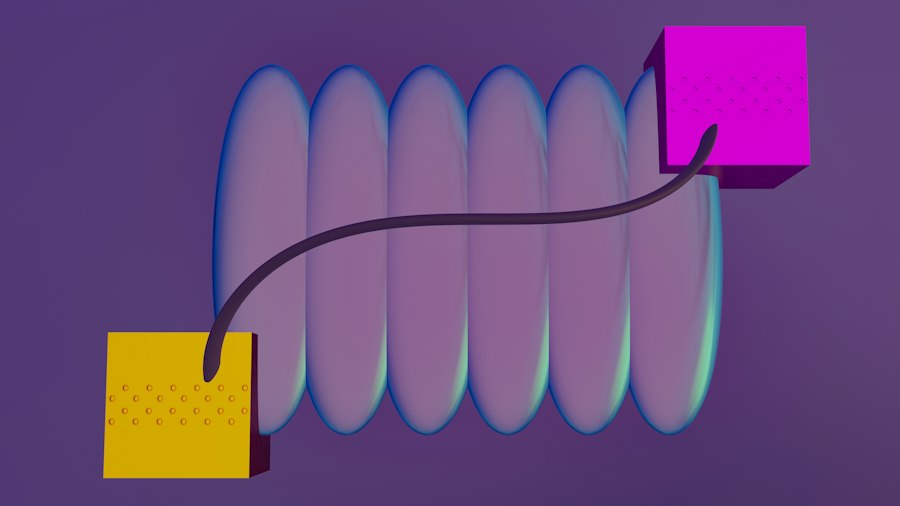
The existence of negative compressibility is not magic but a consequence of intricate internal structures and the specific ways in which these structures respond to external forces. Several distinct mechanisms have been identified that give rise to this peculiar behavior.
Auxetic Materials: The “Stretch When Squeezed” Phenomenon
Perhaps the most well-known class of materials exhibiting negative compressibility are auxetic materials. The term “auxetic” comes from the Greek word “auxesis,” meaning “to grow.” Unlike conventional materials that contract when stretched and expand when compressed, auxetic materials exhibit the opposite behavior: they contract when compressed and expand when stretched. This means that their Poisson’s ratio, which describes the ratio of transverse strain to axial strain under uniaxial stress, is negative.
Re-entrant Structures
The defining characteristic of many auxetic materials is their “re-entrant” structure. This refers to a geometry where pores or voids have inwardly pointing edges. Imagine a honeycomb structure where the struts are bent inwards. When such a structure is compressed, these re-entrant edges tend to pull away from each other, causing the material to expand in the perpendicular directions.
Examples of Re-entrant Geometries
Re-entrant structures can manifest in various forms, including:
- Chiral structures: Materials with asymmetrical building blocks that, when deformed, lead to a net expansion.
- Folded structures: Materials with specific folding patterns that open up under compression.
- Porous materials with specific pore geometries: The shape and connectivity of pores play a crucial role.
Molecular Auxetics
Beyond macroscopic structures, auxetic behavior can also be observed at the molecular level. Certain polymers and molecular frameworks can be designed to exhibit negative compressibility due to their specific molecular arrangements and the way their bonds respond to stress. These molecular auxetics often rely on specific molecular rotations or conformational changes that lead to an overall expansion under compression.
Crystal Lattice Softening and Phase Transitions
Another significant mechanism for negative compressibility involves specific crystal structures that undergo lattice softening or phase transitions under pressure. In some materials, the application of pressure can trigger a rearrangement of atoms within the crystal lattice, leading to a less dense packing or the formation of new phases with larger unit cells.
Soft Phonon Modes
In certain crystals, the vibrational modes of the lattice (phonons) can become very soft under pressure. This means that the atoms are easily displaced from their equilibrium positions. If the driving force of pressure aligns with a particular phonon mode that leads to an expansion of the unit cell, negative compressibility can be observed.
Examples in Layered Materials
Layered materials, such as certain transition metal dichalcogenides, can exhibit negative compressibility due to the weak interlayer bonding. Under pressure, the layers might slide and rearrange in a way that increases the interlayer spacing, leading to an overall volume expansion.
Pressure-Induced Phase Transitions
Some materials undergo phase transitions at specific pressures. If a higher-pressure phase has a larger volume than the lower-pressure phase, and the transition is triggered by compression, this can result in negative compressibility over a certain pressure range. This is counterintuitive because phase transitions are often associated with denser packing.
Exotic Electronic and Magnetic Interactions
In some specialized cases, negative compressibility can be linked to complex electronic or magnetic interactions within the material. These interactions can influence the interatomic distances and the overall stability of the material’s structure in ways that are not purely governed by mechanical forces.
Valence Transitions and Magnetovolume Effects
Certain elements, like cerium, can undergo valence transitions under pressure. This involves a change in the electronic configuration, which can lead to significant volume changes. In some instances, these pressure-induced electronic changes can result in an anomalous volume expansion. Similarly, magnetovolume effects, where magnetic ordering influences the material’s volume, can also contribute to negative compressibility in certain magnetic materials.
Applications of Negative Compressibility

The counterintuitive nature of negative compressibility makes these materials incredibly appealing for a wide range of innovative applications, where conventional materials fall short. Their ability to expand under pressure or contract when stretched opens up unique possibilities.
Advanced Protective Materials and Energy Absorption
The auxetic nature of some negative compressibility materials makes them excellent candidates for impact absorption and protective applications. When subjected to a sudden impact, instead of compressing and potentially transmitting the force through, an auxetic material would expand, effectively absorbing and dissipating the energy over a larger area.
Body Armor and Helmets
Materials with negative compressibility could revolutionize personal protective equipment. A helmet or body armor made from such a material would be able to deform in a way that distributes impact forces more effectively, reducing the risk of injury to the wearer.
Automotive Safety Features
In vehicles, negative compressibility materials could be integrated into crumple zones and impact-absorbing components, enhancing occupant safety during collisions.
Medical Devices and Biomedical Engineering
The unique deformation properties of negative compressibility materials are also valuable in the medical field.
Stents and Implants
Self-expanding stents, used to open blocked arteries, could be designed with materials that exhibit negative compressibility. When a compressed stent is introduced into a constricted vessel, the natural pressure from the vessel walls could trigger its expansion. Similarly, implants that need to conform to complex biological structures could benefit from materials that exhibit controlled expansion under pressure.
Drug Delivery Systems
Micro-scale devices or capsules made from negative compressibility materials could be designed to release drugs in response to specific internal pressures within the body.
Smart Structures and Adaptive Materials
The ability of negative compressibility materials to change their shape and volume in response to external stimuli makes them ideal for developing smart and adaptive structures.
Actuators and Sensors
Materials that expand when compressed can act as unique actuators, converting pressure into motion. Conversely, their deformation in response to pressure can also be used to create sensitive pressure sensors.
Morphing Aircraft Wings and Deployable Structures
In aerospace, negative compressibility materials could be used to create morphing aircraft wings that adapt their shape for optimal aerodynamic performance under varying flight conditions. Deployable structures, such as antennas or solar panels, could be designed to unfurl or expand under controlled pressure.
Filtration and Separation Technologies
The pore structure and mechanical response of negative compressibility materials can be exploited for advanced filtration and separation applications.
Microfiltration and Nanofiltration
Materials with tailored negative compressibility could be designed to selectively allow certain particle sizes through while resisting others, leading to more efficient filtration systems.
Gas Separation and Membrane Technology
The ability to control pore size and permeability under pressure could lead to breakthroughs in gas separation and the development of more efficient membranes for chemical processes.
Negative compressibility is a fascinating phenomenon that challenges our traditional understanding of materials and their responses to pressure. In a recent article, the concept is explored in depth, shedding light on how certain materials can exhibit this unusual behavior under specific conditions. For those interested in delving deeper into the science behind this topic, you can read more about it in the article found on Freaky Science. Understanding negative compressibility not only expands our knowledge of material science but also opens up potential applications in various fields. To learn more, check out the article here: Freaky Science.
Challenges and Future Directions
| Parameter | Description | Typical Values | Role in Negative Compressibility |
|---|---|---|---|
| Compressibility (κ) | Measure of volume change under pressure (κ = -1/V * dV/dP) | Negative values in specific materials, e.g., -10^-11 Pa^-1 | Negative compressibility means volume increases when pressure increases |
| Pressure (P) | External force applied per unit area | 0 to several GPa in experiments | Applied pressure induces structural changes causing negative compressibility |
| Volume Change (ΔV) | Change in material volume under pressure | Positive ΔV under increasing P for negative compressibility | Indicates expansion despite applied pressure |
| Elastic Modulus (E) | Material stiffness | Varies widely; lower modulus can facilitate negative compressibility | Soft materials or frameworks can exhibit negative compressibility |
| Structural Mechanism | Atomic or molecular rearrangement causing expansion | Framework rotation, bond angle changes | Key to enabling negative compressibility behavior |
| Material Examples | Known materials exhibiting negative compressibility | Metal-organic frameworks, some layered materials | Demonstrate practical negative compressibility |
Despite the immense potential, the widespread adoption of negative compressibility materials faces several hurdles. Ongoing research and development are actively addressing these challenges to unlock the full promise of these extraordinary substances.
Material Synthesis and Scalability
One of the primary challenges lies in the synthesis of these materials in a controlled and scalable manner. Many negative compressibility materials are synthesized using complex fabrication processes, which can be expensive and difficult to scale up for mass production.
Cost-Effective Manufacturing Techniques
Developing cost-effective and efficient manufacturing techniques is crucial for commercializing these materials. This includes exploring additive manufacturing (3D printing) techniques, advanced molding processes, and novel chemical synthesis routes.
Precision Engineering at the Micro and Nanoscale
Achieving the intricate micro- or nanostructures required for negative compressibility often demands high precision engineering. Maintaining the integrity of these delicate structures during large-scale production remains a significant challenge.
Understanding Structure-Property Relationships
While significant progress has been made, a complete understanding of the complex structure-property relationships governing negative compressibility is still an active area of research. Precisely predicting and controlling the response of a material to pressure requires a deep understanding of its internal architecture.
Advanced Computational Modeling
Sophisticated computational modeling techniques, such as density functional theory (DFT) and molecular dynamics simulations, are essential tools for investigating the atomic and electronic origins of negative compressibility. These models can help predict the behavior of new materials and guide experimental design.
In-situ Characterization Techniques
Developing and utilizing advanced in-situ characterization techniques, such as high-pressure X-ray diffraction and spectroscopy, allows researchers to observe the structural and electronic changes that occur within materials under pressure in real-time. This provides invaluable data for validating theoretical models and uncovering new mechanisms.
Expanding the Range of Properties and Applications
The current understanding and applications of negative compressibility are still in their nascent stages. There is a vast unexplored territory of potential materials and functionalities.
Tailoring for Specific Applications
Future research will focus on tailoring the properties of negative compressibility materials for specific applications. This involves fine-tuning their mechanical response, thermal stability, electrical conductivity, and other relevant characteristics through material design and composition.
Exploring Novel Material Classes
The exploration of new material classes, including organic frameworks, metamaterials, and hybrid materials, holds the promise of discovering novel forms of negative compressibility with unique and beneficial properties. The integration of different material types could lead to synergistic effects and enhanced functionalities.
Integrating with Existing Technologies
The successful integration of negative compressibility materials into existing technologies will require careful consideration of their compatibility with other materials and manufacturing processes. This includes addressing issues related to adhesion, durability, and long-term performance.
Conclusion: A Paradigm Shift in Material Behavior
Negative compressibility represents a profound departure from conventional material behavior, challenging our ingrained understanding of how matter responds to external forces. Materials that defy the expected volume changes under pressure are not merely scientific curiosities; they are harbingers of a new era in material science and engineering. The intricate mechanisms, ranging from re-entrant geometries to exotic electronic transitions, underscore the remarkable complexity and adaptability of matter at its most fundamental levels.
The potential applications of these extraordinary materials are vast and transformative, spanning critical sectors like defense, healthcare, aerospace, and advanced manufacturing. From revolutionizing protective gear and creating life-saving medical devices to enabling adaptive structures and pioneering new filtration technologies, the impact of negative compressibility is poised to be significant.
While challenges in synthesis, scalability, and a complete understanding of structure-property relationships persist, the relentless pursuit of knowledge and innovation in this field is steadily paving the way for their widespread adoption. As research progresses, we can anticipate the discovery of an even broader spectrum of negative compressibility materials, each with its unique set of properties and a distinct contribution to technological advancement. The study of negative compressibility is not just about understanding how materials can behave unexpectedly; it is about harnessing that unexpected behavior to build a more resilient, efficient, and advanced future. It is a testament to the fact that even in the seemingly immutable laws of physics, there exists room for profound and inspiring exceptions, leading to a paradigm shift in how we perceive and utilize the materials that shape our world.

Pull Harder… and This Material Suddenly Gets Shorter
FAQs
What is negative compressibility?
Negative compressibility is a phenomenon where a material expands when subjected to pressure, contrary to the normal behavior of materials which contract under pressure.
How does negative compressibility work?
Negative compressibility occurs when the material’s internal structure responds in a way that counteracts the external pressure applied to it, causing it to expand instead of contract.
What are some examples of materials exhibiting negative compressibility?
Some examples of materials that exhibit negative compressibility include certain types of rubber, auxetic materials, and certain crystal structures like zeolites and metal-organic frameworks.
What are the potential applications of negative compressibility?
Negative compressibility has potential applications in various fields such as engineering, materials science, and biomedicine. It can be used to create materials with unique properties like enhanced shock absorption, improved flexibility, and increased stability.
How is negative compressibility different from positive compressibility?
Negative compressibility is the opposite of positive compressibility, where materials contract under pressure. Positive compressibility is the more common behavior observed in most materials, while negative compressibility is a relatively rare and unique phenomenon.