Navigating the Expanding Universe: A Layered Masterpiece Map
The human endeavor to comprehend the cosmos has consistently been driven by the desire to map its immensity. For millennia, this mapping has evolved from rudimentary celestial charts to increasingly sophisticated models informed by advanced technological observation and theoretical physics. The concept of the expanding universe, confirmed through observations of redshift and cosmic microwave background radiation, necessitates a dynamic and layered approach to cartography. This article explores the development and implications of a “layered masterpiece map” as a conceptual framework for understanding our place within this evolving cosmic expanse.
The initial steps in charting the universe rely on observing and cataloging the fundamental building blocks of cosmic structure. These layers represent the bedrock of our understanding, establishing the relative positions and sizes of celestial objects.
Nebulae and Stellar Nurseries: The Genesis of Stars
At the most fundamental level, observatories painstakingly document nebulae, vast clouds of gas and dust where stars are born. These are not static entities but active regions of immense gravitational processes. Detailed mapping of nebulae allows astronomers to identify their composition, temperature, and density, providing crucial insights into the conditions necessary for stellar formation. Understanding the distribution and evolution of these stellar nurseries helps trace the chemical enrichment of galaxies over time. The sheer scale of these formations, often spanning light-years, presents an immediate challenge for any mapping endeavor. Precise localization within our own galaxy, the Milky Way, is a primary focus, but extending this to extragalactic nebulae requires sophisticated techniques to discern their often faint and diffuse light.
Stars and Their Systems: The Local Neighborhood
Once stars are formed, they become the next layer of observable structures. Cataloging individual stars by their spectral type, luminosity, and metallicity provides critical data for understanding stellar evolution and population synthesis. The mapping of star systems extends beyond individual stars to encompass planets, moons, and other orbiting bodies. While direct observation of exoplanets remains challenging, indirect methods like transit photometry and radial velocity measurements allow for the inference of their existence and some of their properties. Mapping these systems, even our immediate stellar neighbors, is a complex undertaking due to vast distances and the faintness of many observed objects.
Galaxies: Islands of Stars
Galaxies represent a significant leap in scale, encompassing billions or even trillions of stars. Mapping galaxies involves identifying their morphology – spiral, elliptical, irregular – and estimating their mass, star formation rate, and presence of active galactic nuclei. The Local Group, comprising our Milky Way, Andromeda, and several smaller galaxies, provides a relatively well-mapped starting point. However, charting galaxies across the entire observable universe presents a formidable challenge, requiring deep sky surveys that probe immense distances. The interconnectedness of galaxies through gravitational forces begins to emerge at this layer, hinting at larger cosmic structures.
In exploring the intricacies of a layered masterpiece universe, one can gain further insights by delving into a related article that discusses the expanding map of such universes. This article elaborates on the interconnectedness of various dimensions and how they contribute to the overall narrative structure. For a deeper understanding, you can read more about it in this fascinating piece at Freaky Science.
The Interstellar and Intergalactic Medium: The Unseen Fabric
Beyond discrete celestial objects lies the diffuse matter that permeates the space between them. This “unseen fabric” is crucial for understanding cosmic evolution and the dynamics of larger structures.
The Interstellar Medium (ISM): Within Galaxies
The interstellar medium within galaxies, composed of gas and dust, plays a critical role in star formation and galactic evolution. Mapping the distribution and properties of atomic hydrogen, molecular hydrogen, and dust grains across the Milky Way and other galaxies reveals regions of higher density that act as cosmic nurseries. The dynamics of the ISM, including stellar winds and supernova remnants, also shape galactic structures. Understanding the ionization states and chemical composition of the ISM is vital for tracing the history of heavy element production.
The Intergalactic Medium (IGM): Between Galaxies
The intergalactic medium, far more tenuous than the ISM, fills the voids between galaxies. While sparsely populated, the IGM contains a significant fraction of the universe’s baryonic matter. Observations of absorption lines in the spectra of distant quasars allow astronomers to probe the IGM’s composition, temperature, and ionization state. Mapping the IGM is essential for understanding the large-scale distribution of matter and the processes that reionized the universe after the Big Bang. This medium acts as a conduit for matter and energy flow between galaxies.
Cosmic Web Filaments and Voids: The Grand Design
On the largest scales, galaxies and clusters of galaxies are not randomly distributed but arranged in a vast, filamentary structure known as the cosmic web. This structure consists of dense filaments connecting massive clusters, separated by immense, nearly empty voids. Mapping the cosmic web involves charting the positions of millions of galaxies and inferring the underlying dark matter distribution. This layer of mapping reveals the imprint of initial density fluctuations in the early universe, amplified by gravity over cosmic time. Understanding the dynamics of this web is crucial for comprehending the large-scale structure of the universe and the future evolution of cosmic structures.
The Layer of Cosmic Expansion: A Dynamic Canvas
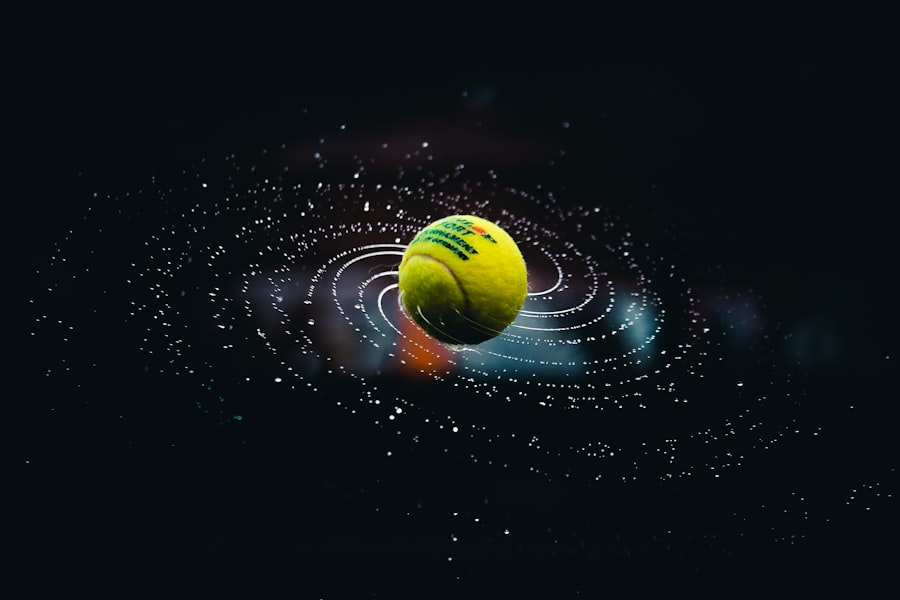
The concept of an expanding universe fundamentally alters how we perceive and map the cosmos. Distances are not static, and the very fabric of spacetime is stretching.
Redshift as a Cosmic Ruler: Measuring Distance and Velocity
The redshift observed in the light from distant galaxies is the primary evidence for cosmic expansion. As the universe expands, the wavelengths of light emitted by receding objects are stretched, shifting towards the red end of the spectrum. Mapping redshift provides a measure of a galaxy’s recessional velocity, which, according to Hubble’s Law, is proportional to its distance. This creates a dynamic map where objects further away are receding at greater speeds. However, the interpretation of redshift is complex, influenced by peculiar velocities of galaxies and the curvature of spacetime.
The Hubble Constant: The Rate of Expansion
The Hubble constant quantifies the current rate of cosmic expansion. Its precise measurement is a cornerstone of cosmological mapping. Different methods for determining the Hubble constant, such as using standard candles like Type Ia supernovae and Cepheid variables, have historically yielded slightly divergent values, leading to the “Hubble tension.” Resolving this tension is a critical and ongoing area of research, impacting our estimates of the age and size of the observable universe. A precise Hubble constant is essential for calibrating the distances within any cosmic map.
Cosmic Microwave Background (CMB): The Echo of the Big Bang
The cosmic microwave background radiation is a relic of the early universe, providing a snapshot of the universe approximately 380,000 years after the Big Bang. Mapping the tiny temperature fluctuations within the CMB reveals information about the initial conditions of the universe, including its composition, geometry, and the seeds of the large-scale structures we observe today. The CMB acts as a foundational map of the early universe, upon which subsequent gravitational collapse and expansion have built the structures we see. Variations in the CMB provide critical constraints for cosmological models.
The Deeper Layers: The Unseen Constituents of the Universe

Our current understanding suggests that the visible matter of the universe – stars, galaxies, and gas – constitutes only a small fraction of its total mass-energy content. The vast majority is composed of unseen components that profoundly influence cosmic evolution.
Dark Matter: The Gravitational Scaffolding
Dark matter is an enigmatic substance that interacts gravitationally but does not emit, absorb, or reflect light. Its presence is inferred from its gravitational effects on visible matter, such as the rotation curves of galaxies and the dynamics of galaxy clusters. Mapping the distribution of dark matter is crucial for understanding the formation and evolution of cosmic structures. Gravitational lensing, the bending of light by massive objects, provides a powerful tool for mapping the distribution of both visible and dark matter. It acts as an invisible scaffolding upon which galaxies form and gather.
Dark Energy: The Accelerating Expansion
Dark energy is the hypothesized force driving the accelerated expansion of the universe. Its nature remains one of the greatest mysteries in cosmology. Observations of distant supernovae indicate that the expansion of the universe is not only ongoing but also speeding up. Mapping the effects of dark energy requires understanding the expansion history of the universe over vast cosmological timescales. Its influence is felt primarily on the largest scales, pushing galaxies and clusters further apart at an ever-increasing rate. Understanding its properties is paramount for predicting the ultimate fate of the universe.
Neutrinos and Other Exotic Particles: The Subatomic Contributors
While dark matter and dark energy dominate the cosmic energy budget, other exotic particles, such as neutrinos, also play a role. Neutrinos, though weakly interacting, are produced in vast numbers by stars and supernovae. Their mass, though small, contributes to the overall density of the universe. Future mapping endeavors may aim to better constrain the properties and distribution of these subatomic contributors, further refining our cosmic panorama.
In exploring the expanding map of a layered masterpiece universe, one can gain deeper insights into the intricate connections between various dimensions and narratives. A related article that delves into this fascinating topic can be found at Freaky Science, where the complexities of universe layering are examined in detail. This resource offers a comprehensive look at how different layers interact and influence one another, enriching our understanding of the cosmos.
The Integrated Masterpiece: A Multidimensional Cosmic Atlas
| Layer | Dimension | Population | Resources |
|---|---|---|---|
| Surface | 2D | 10,000 | Wood, Stone |
| Underground | 3D | 5,000 | Minerals, Crystals |
| Sky Islands | 4D | 2,000 | Aether, Cloudstone |
The concept of a “layered masterpiece map” transcends simple positional cartography. It represents an integrated, multidimensional atlas that incorporates not only spatial location but also temporal evolution, composition, and dynamic processes.
The Temporal Dimension: A Four-Dimensional Perspective
A truly comprehensive cosmic map must incorporate the temporal dimension. The universe we observe today is a snapshot, but its history is etched in the light that reaches us from distant objects. Mapping the evolution of structures over cosmic time, from the early universe to the present day, requires correlating observations from different epochs. This temporal mapping allows us to understand the processes of galaxy formation, cluster growth, and the interplay between matter and energy. It transforms a static map into a dynamic chronicle.
The Multiphysics Approach: Beyond Pure Astronomy
Navigating this expanding universe demands a multiphysics approach. Understanding the layers of cosmic structure necessitates integrating knowledge from observational astronomy, theoretical physics, particle physics, and cosmology. Each discipline contributes essential pieces to the puzzle, from the fundamental forces governing gravity and expansion to the properties of the subatomic particles that constitute the universe. A layered map is not just a collection of observational data but a synthesis of theoretical frameworks and empirical evidence.
The Ever-Expanding Knowledge Horizon: An Ongoing Construction
The “layered masterpiece map” is not a finished product but an ongoing construction. As new observational technologies emerge and theoretical models are refined, new layers are added, and existing ones are reinterpreted. The ongoing quest to understand dark matter and dark energy, for instance, promises to reveal entirely new fundamental layers of cosmic reality. The map is constantly being redrawn, its details becoming increasingly rich, and its scope perpetually widening to encompass the ever-expanding observable universe. This process reflects the iterative nature of scientific discovery.
FAQs
What is the layered masterpiece universe?
The layered masterpiece universe refers to a complex and intricately designed fictional world created by an author or artist. It often involves multiple interconnected layers, dimensions, or realms that contribute to the overall depth and richness of the universe.
How does the map of the layered masterpiece universe expand?
The map of the layered masterpiece universe expands as new elements, locations, and characters are introduced by the creator. This expansion can occur through additional storytelling, world-building, or the introduction of new creative concepts that contribute to the overall complexity and depth of the universe.
What are some examples of layered masterpiece universes in popular culture?
Examples of layered masterpiece universes in popular culture include J.R.R. Tolkien’s Middle-earth, George R.R. Martin’s Westeros, and J.K. Rowling’s Wizarding World. These universes are known for their intricate world-building, diverse characters, and interconnected storylines that contribute to their expansive and immersive nature.
How does the expanding map of a layered masterpiece universe impact storytelling?
The expanding map of a layered masterpiece universe can impact storytelling by providing creators with new opportunities to explore and develop different aspects of the world. It allows for the introduction of new plotlines, conflicts, and character arcs that contribute to the overall richness and depth of the universe.
What are some key elements to consider when creating an expanding map for a layered masterpiece universe?
When creating an expanding map for a layered masterpiece universe, creators should consider factors such as consistency, coherence, and interconnectedness. It’s important to maintain a balance between expansion and maintaining the integrity of the existing world, while also ensuring that new elements contribute to the overall narrative and thematic coherence of the universe.