
The world transforms as twilight deepens and the sun dips below the horizon. For many diurnal species, activity ceases, and they seek refuge for the night. Yet, for a remarkable assembly of birds, this is when their world truly comes alive. These nocturnal navigators, from the silent swoop of the owl to the persistent chirps of migrating songbirds, possess an extraordinary ability to traverse vast distances and find their way home in the absence of daylight. Understanding how these feathered aviators chart their courses through the celestial darkness reveals a tapestry of sensory marvels and intricate biological adaptations.
Birds, it appears, possess an internal compass, a biological GPS system that allows them to orient themselves irrespective of familiar landmarks. This remarkable ability is not a singular trick but rather a sophisticated interplay of multiple sensory inputs and internal biological clocks. Scientists have long been fascinated by this innate navigation prowess, dedicating decades to unraveling the mysteries of how birds achieve such precise directional control in the absence of visual cues. The complexity of this internal compass underscores the evolutionary pressures that have shaped avian life, favoring individuals capable of undertaking long migrations or foraging efficiently under the cover of darkness.
Geomagnetism: The Earth’s Magnetic Field as a Guiding Force
Perhaps the most extensively studied and compelling mechanism for avian navigation is their sensitivity to the Earth’s magnetic field. Birds are not merely passively influenced by the planet’s magnetic lines; they actively perceive and utilize them as an oceanic compass. This sensitivity is thought to be mediated by at least two primary physiological systems.
The Cryptochrome Hypothesis: Light-Dependent Magnetic Sensing
One prominent theory centers on a class of light-sensitive proteins called cryptochromes, found in the eyes of birds. When light strikes these molecules, it initiates a series of quantum reactions that are sensitive to the magnetic field. It is theorized that this system allows birds to perceive the direction and intensity of the Earth’s magnetic field, effectively creating a visual map superimposed on their surroundings. This magnetic compass would provide a directional cue, indicating north, south, east, or west, independent of the sun or stars. The precise mechanism by which this quantum effect is translated into a recognizable directional signal is still an active area of research, but the evidence for cryptochrome involvement is growing. Experiments involving manipulated magnetic fields have shown significant disorientation in migratory birds, further strengthening this hypothesis.
The Magnetite Hypothesis: Iron Mineral Receptors
Another proposed mechanism involves the presence of tiny particles of magnetite, a magnetic iron oxide mineral, within certain avian tissues, potentially in the beak or inner ear. These magnetite particles could act as miniature compass needles, physically aligning themselves with the Earth’s magnetic field and transmitting signals to the bird’s nervous system. While the cryptochrome hypothesis offers a visual manifestation of magnetic sensing, the magnetite hypothesis suggests a more direct mechanical detection. Research has identified iron-rich cells in bird beaks that could potentially house magnetite, but the definitive link between these structures and actual magnetic field perception remains under investigation. It is also possible that both cryptochromes and magnetite contribute to the magnetic sense, offering redundant or complementary navigational information.
Celestial Navigation: Stars and the Moon as Nighttime Beacons
While the magnetic compass provides a fundamental orientation, many nocturnal birds also leverage the celestial sphere for navigation, particularly during migration. The patterns of stars and the phase of the moon offer additional, albeit dynamic, navigational aids.
Stellar Compass: Navigating by the Constellations
Migratory birds, especially songbirds, have demonstrated the ability to orient themselves using star patterns. Experiments conducted in planetariums have shown that birds can learn specific star constellations and use their apparent rotation around the celestial pole to determine direction. This stellar compass is particularly effective around the celestial pole in spring and autumn when the stars appear to pivot. Birds exposed to a simulated sky with the celestial pole shifted or absent become disoriented. This indicates a sophisticated understanding of the apparent motion of the stars and their relationship to the Earth’s rotation. The precise neuronal mechanisms for processing and interpreting stellar information are still being explored, but it is clear that birds possess a remarkable capacity to learn and recall complex celestial maps.
Lunar Navigation: The Moon as a Less Precise Guide
The moon, with its predictable phases and movement across the night sky, can also serve as a navigational cue. While less precise than the stellar compass, the moon’s position can provide a general directional reference. Some studies suggest that birds may use the moon to supplement their stellar navigation, especially on moonlit nights. The moon’s crescent, for instance, can offer a subtle directional hint to migratory birds, particularly in open landscapes where other cues are limited. The interplay between moonlight and the perception of other visual cues is also a factor, with some research suggesting that birds may adjust their flight patterns based on lunar illumination.
Birds have long fascinated scientists with their remarkable ability to navigate at night, often relying on a combination of celestial cues and Earth’s magnetic field. Recent studies have shed light on the intricate mechanisms behind this phenomenon, revealing how certain species utilize specialized cells in their eyes to detect magnetic fields. For those interested in exploring this topic further, a related article can be found at Freaky Science, which delves into the various strategies birds employ for nocturnal navigation.
Beyond the Stars: Olfactory Cues and the Sense of Smell
The Earth’s magnetic field and celestial bodies provide broad directional guidance, but to pinpoint specific destinations, especially over shorter distances or within complex environments, birds often rely on their highly developed sense of smell. This olfactory navigation complements the more abstract compass systems, offering a tangible, scent-based map.
Homing Pigeons: Masters of Scent Navigation
Homing pigeons are perhaps the most famous example of birds that utilize olfactory cues for navigation. Decades of research have shown that these birds can learn and remember the characteristic odors of their home loft and the surrounding landscape. This “olfactory map” is believed to be formed by wind-borne scents, allowing pigeons to recognize their home territory from miles away.
Odor Maps and Gradient Recognition
The prevailing theory suggests that pigeons develop an internal map based on the gradients of different atmospheric odors carried by prevailing winds. By sensing the relative concentrations of these familiar scents, they can triangulate their position and navigate back towards their loft. This ability is not innate; it is learned during their development and their initial flights away from the home loft. Removing their sense of smell, either surgically or by treating their nasal passages, severely impairs their homing ability, underscoring the importance of olfaction.
The Role of Experience and Wind Direction
The development of a functional olfactory map is intrinsically linked to a bird’s experience and the prevailing wind patterns. Young pigeons, during their initial excursions, are exposed to a unique blend of scents carried by the wind. As they explore further, they learn to associate specific scent profiles with different locations. Their ability to interpret these scent gradients is crucial; a slight difference in the concentration of a particular odor can inform them of their proximity to home. Wind direction plays a critical role in carrying these scents, and pigeons have learned to compensate for its influence.
Other Nocturnal Birds and Olfactory Navigation
While extensively studied in pigeons, olfactory navigation is likely employed by other nocturnal bird species as well. The precise extent of its use and the specific mechanisms involved may vary. For example, seabirds that undertake long oceanic migrations may use oceanic odors, such as those associated with decaying matter or specific algal blooms, to orient themselves over vast, featureless expanses. Similarly, forest-dwelling owls might use the distinct smells of their hunting grounds to locate prey or navigate within familiar territories. Research in this area is ongoing, but the evidence increasingly suggests that olfaction is a more widespread and significant component of avian navigation than previously understood.
Visual Cues: Landmarks and Patterns in the Moonlight

While nocturnal navigation emphasizes less reliance on detailed visual identification of ground features, familiar landmarks can still play a crucial role, particularly for birds that fly at lower altitudes or during twilight. Moonlight, even when dim, can reveal outlines and patterns that aid in orientation.
Familiar Landscapes and Topographical Memory
Even in darkness, certain prominent topographical features can serve as recognizable beacons. Mountain ranges, coastlines, large bodies of water, and even extensive urban areas can be perceived by birds as visual cues. These visual landmarks are likely integrated with other navigational inputs, providing an additional layer of confirmation or adjustment to their course. For birds with established migratory routes or regular foraging patterns, a learned memory of these landscapes can be invaluable.
Twilight Navigation and Transition Periods
During the crepuscular periods – dawn and dusk – when light levels are neither full daylight nor complete darkness, birds can transition their reliance on different navigational cues. They may utilize the last rays of sunlight or the first hints of starlight, along with the emerging shapes of the landscape, to begin or end their nocturnal journeys. This transitional period allows for a gradual shift from daylight-dependent navigation to nocturnal strategies.
The Moon’s Illumination and Shadow Play
The moon’s light, while not as illuminating as the sun, can cast subtle shadows and highlight the contours of the terrain. Birds flying at lower altitudes, especially over open country, might be able to perceive these patterns, allowing them to identify horizons, changes in elevation, and other broad topographical characteristics. The absence of strong shadows in open areas or the presence of distinct shadow shapes cast by trees or buildings could provide subtle directional information.
The Role of Sound in Nocturnal Navigation
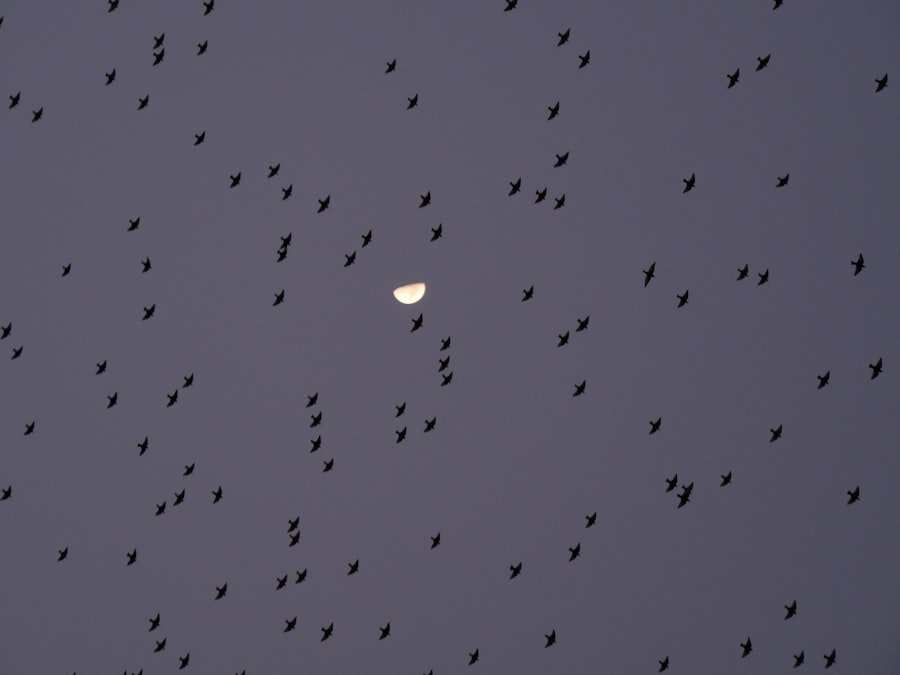
The auditory landscape of the night is often just as important as the visual one. While birds might not “see” with their ears, sounds can provide crucial directional and locational information, especially in dense vegetation or during periods of low visibility.
Echolocation in Nocturnal Birds: A Specialized Adaptation
While echolocation is famously associated with bats, a few bird species, most notably the oilbirds of South America and the cave swiftlets of Asia, have evolved this remarkable ability. These birds live in perpetual darkness within caves and navigate using self-produced clicks that bounce off their surroundings.
Navigating the Abyss: Clicks and Echoes
Oilbirds emit a series of audible clicks, similar to those of bats, and interpret the returning echoes to construct a sonic map of their environment. This allows them to fly through complex cave systems, avoiding obstacles and locating their roosting sites. The frequency and pattern of these clicks, as well as the timing and intensity of the echoes, provide detailed information about the size, shape, and distance of objects in their path. This is a prime example of a highly specialized adaptation for navigating complete darkness.
Auditory Landmarks and Spatial Awareness
Beyond specialized echolocation, many nocturnal birds may use ambient sounds for navigation. The roar of a distant ocean, the rustling of leaves in a particular wind pattern, or even the calls of other nocturnal animals can serve as auditory landmarks. These sounds can help birds orient themselves within familiar territories or signal their approach to specific locations. For instance, a bird returning to its roosting site might listen for the communal calls of its species or the familiar sounds associated with its home area. The ability to differentiate and interpret these varied soundscapes contributes to their overall spatial awareness.
Birds have long fascinated scientists with their remarkable ability to navigate at night, often relying on a combination of celestial cues and Earth’s magnetic field. Recent studies suggest that some species can even detect polarized light, which helps them orient themselves in the dark. For those interested in exploring this topic further, a related article can be found at Freaky Science, where the intricacies of avian navigation are discussed in greater detail. Understanding these mechanisms not only sheds light on the lives of birds but also enhances our knowledge of animal behavior as a whole.
Integration and Redundancy: A Multi-Sensory Approach to Navigation
| Navigation Method | Description |
|---|---|
| Magnetic Compass | Birds can detect the Earth’s magnetic field and use it to navigate. |
| Stellar Navigation | Birds can use the stars to orient themselves and navigate at night. |
| Solar Navigation | Some birds can use the position of the sun, even at night, to navigate. |
| Landmarks | Some birds rely on familiar landmarks such as mountains or coastlines to navigate. |
The remarkable navigational abilities of nocturnal birds are not reliant on a single sensory system. Instead, they demonstrate a sophisticated integration of multiple cues, creating a robust and redundant system that ensures their safe passage through the darkness.
The Hierarchical Use of Navigational Cues
It is likely that birds employ a hierarchical approach to navigation, utilizing different cues based on the context and demands of their journey. For long-distance migration, the magnetic compass and stellar navigation might provide the primary directional framework. As they approach their destination, olfactory cues and visual landmarks could become more important for fine-tuning their approach and locating specific roosting or foraging sites.
Redundancy for Reliability in Unpredictable Environments
The reliance on multiple navigational systems provides a crucial redundancy. If one cue is obscured or unreliable – for example, a cloudy night obscuring the stars, or a sudden change in wind direction affecting scent dispersal – the bird can still rely on its other senses to maintain its course. This multi-sensory approach is a testament to the evolutionary pressures that have favored navigational accuracy and survival in a dynamic and often challenging nocturnal world. The intricate interplay of these systems ensures that even in the deepest darkness, birds can find their way, a constant marvel of the natural world.

Birds Can Sense Something Humans Never Will
FAQs
1. How do birds navigate at night?
Birds navigate at night using a variety of methods, including celestial cues such as the stars and moon, geomagnetic cues, and visual landmarks. Some species also rely on their keen sense of hearing to navigate through the sounds of the environment.
2. Do birds have a special adaptation for night navigation?
Yes, birds have special adaptations for night navigation, including a higher density of rod cells in their retinas, which allows them to see better in low light conditions. Additionally, some species have a specialized area in their brain called the “cluster N,” which is responsible for processing magnetic information for navigation.
3. Can birds navigate through unfamiliar territory at night?
Yes, birds are capable of navigating through unfamiliar territory at night using a combination of their innate navigational abilities and learning from previous experiences. Some species are also known to use the Earth’s magnetic field as a guide, allowing them to navigate across long distances.
4. What role does the moon play in bird navigation at night?
The moon plays a significant role in bird navigation at night, as it provides a reliable source of light for orientation. Many bird species use the position of the moon and its phases to determine their direction and maintain their course during nocturnal migrations.
5. Are there any challenges that birds face when navigating at night?
Birds face several challenges when navigating at night, including the risk of colliding with obstacles, disorientation due to artificial lights, and the potential for getting lost in unfamiliar environments. Additionally, weather conditions such as fog or heavy cloud cover can further complicate their navigation efforts.