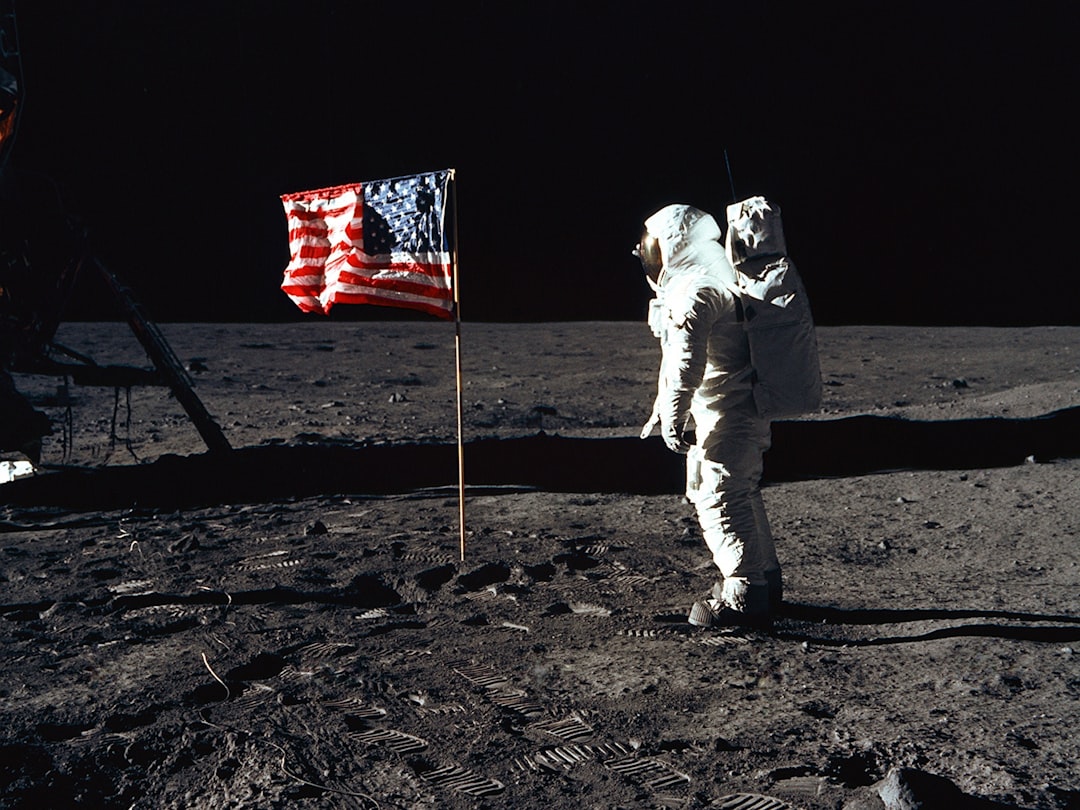
NASA’s Moon Mission: Return Physics Explained
The prospect of humans once again setting foot on the Moon is an exhilarating one, evoking images of the Apollo missions and the boundless spirit of exploration. However, returning to the lunar surface and, crucially, bringing astronauts safely back to Earth, involves a complex interplay of physics principles far beyond the simple act of launching a rocket. NASA’s Artemis program, the ambitious endeavor aiming to establish a sustained human presence on the Moon, relies on a deep understanding and precise application of fundamental physics to overcome the unique challenges of lunar travel. This article delves into the core physics concepts that underpin NASA’s return to the Moon, from the initial ascent to the final splashdown.
The journey to the Moon is not a direct sprint but a carefully orchestrated ballet dictated by the laws of orbital mechanics. Understanding how celestial bodies interact and move is paramount to designing a feasible and efficient mission.
Gravitational Influence: The Universal Attraction
At the heart of all space travel is Newton’s Law of Universal Gravitation. Every object with mass exerts a gravitational pull on every other object with mass. For a Moon mission, this means accounting for the gravitational forces of Earth, the Moon, and even to a lesser extent, the Sun.
Earth’s Embrace: Launching into Orbit
The initial phase of any lunar mission involves escaping Earth’s gravitational pull. This requires achieving Earth escape velocity, approximately 11.2 kilometers per second (6.9 miles per second). Rockets generate thrust by expelling mass at high velocity in the opposite direction, a direct application of Newton’s Third Law of Motion (for every action, there is an equal and opposite reaction). The immense force generated by powerful rocket engines is necessary to overcome Earth’s gravity and lift the spacecraft into a stable orbit. Once in orbit, the spacecraft can be further accelerated to begin its journey towards the Moon.
Lunar Gravity: The Gentle Pull
As the spacecraft approaches the Moon, lunar gravity begins to dominate. While significantly weaker than Earth’s gravity (about one-sixth), it is still substantial enough to influence the spacecraft’s trajectory. This pull is not just a passive force; it’s an active participant in the mission.
Lunar Orbit Insertion: A Delicate Maneuver
To enter orbit around the Moon, the spacecraft must reduce its speed. This is achieved by firing its engines in the direction of motion, a process called a braking burn. The timing and duration of this burn are critical. Too little braking, and the spacecraft will slingshot past the Moon; too much, and it could crash into the lunar surface. This maneuver requires precise calculations based on the spacecraft’s current velocity, altitude, and the Moon’s gravitational field.
Trajectory Planning: The Elliptical Paths
The path a spacecraft takes between Earth and the Moon is not a straight line. Instead, it follows an elliptical orbit. The most common and energy-efficient trajectory is a Hohmann transfer orbit, which involves two engine burns: one to leave Earth’s orbit and enter an elliptical path towards the Moon, and another upon arrival to enter lunar orbit.
Trans-Lunar Injection (TLI): The Push to the Moon
The TLI burn is a crucial event where the spacecraft’s engines are fired to increase its velocity, pushing it out of Earth orbit and onto a trajectory that will intersect the Moon’s orbit. The exact timing and duration of the TLI burn are meticulously calculated to ensure the spacecraft arrives at the Moon at the precise moment when the Moon is in the correct position in its orbit. This requires understanding the relative positions and velocities of both Earth and the Moon.
Free Return Trajectories: A Safety Net
For human missions, safety is paramount. Some mission plans incorporate “free return trajectories.” These are orbits designed such that if the spacecraft’s engines fail at a certain point after leaving Earth, the Moon’s gravity will naturally pull it back towards Earth, allowing for a safe, albeit potentially long, return. This concept leverages the predictable nature of gravitational interactions.
The physics behind NASA’s Moon mission return is a fascinating topic that delves into the complexities of gravitational forces, propulsion, and orbital mechanics. For those interested in exploring this subject further, a related article can be found at Freaky Science, which provides insights into the scientific principles that govern space travel and the challenges faced during lunar missions.
The Art of Landing: Descent and Ascent Physics
The most challenging phases of a lunar mission are the landing and subsequent ascent. These maneuvers require an intricate understanding of physics to achieve precise control and avoid catastrophic outcomes.
Descent: Braking Against Gravity
Landing on the Moon is akin to bringing a fast-moving object to a complete halt on an alien surface, all while fighting against lunar gravity.
Deceleration: Slowing Down for Touchdown
Upon reaching the Moon’s orbit, the spacecraft begins its descent. The primary method for slowing down is through retro-propulsion, firing engines against the direction of motion. This process is similar to braking a car, but in space, there’s no air resistance to assist.
Terminal Descent: The Final Approach
The final moments of descent are the most critical. The spacecraft must transition from orbital velocity to a near-zero vertical velocity for a soft landing. This involves precise throttling of the descent engines to counteract gravity and control the rate of descent. Factors like the uneven lunar terrain, potential hazards like rocks and craters, and the spacecraft’s attitude (orientation) all need to be considered and compensated for in real-time.
Ascent: Reversing the Process
Leaving the Moon is a mirror image of the landing, but with the added challenge of starting from a standstill on an inclined surface and needing to achieve lunar escape velocity.
Liftoff: Overcoming Lunar Gravity
The ascent module of the lunar spacecraft is equipped with its own powerful engines. These engines must generate enough thrust to overcome the Moon’s gravity and lift the module off the surface. The thrust-to-weight ratio is a critical design parameter, ensuring that the engines can provide sufficient force to achieve liftoff and accelerate the module.
Orbital Rendezvous: Meeting Up in Space
Once in lunar orbit, the ascent module must rendezvous with the orbiting command module (if applicable) or continue on its trajectory back to Earth. This requires precise orbital maneuvers, carefully timed engine burns to match the velocity and position of the other spacecraft. Understanding relative orbital motion and the effects of gravitational perturbations is key to a successful rendezvous.
The Vacuum of Space: Environmental Physics and Life Support
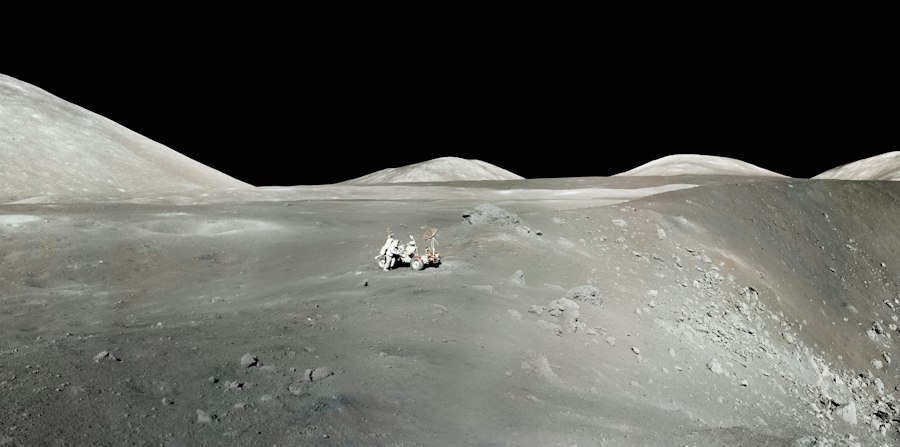
The lunar environment is hostile to human life. The vacuum of space, extreme temperature fluctuations, and radiation all present significant physics-related challenges that NASA must overcome.
The Vacuum: No Air to Breathe, No Sound to Hear
The absence of an atmosphere on the Moon means that all breathing apparatus and pressure containment must be provided by the spacecraft and spacesuits.
Pressure Integrity: Maintaining a Habitable Environment
The spacecraft and spacesuits are essentially small, pressurized habitats designed to maintain a breathable atmosphere and protect astronauts from the vacuum. The physics of pressure differentials is crucial here. Any breach in the hull or suit would lead to a rapid depressurization, with devastating consequences. Materials science and structural engineering play vital roles in ensuring the integrity of these pressurized systems.
Thermal Management: Surviving Extreme Temperatures
The Moon experiences drastic temperature swings between day and night, ranging from scorching hot (around 127°C or 260°F) to frigidly cold (around -173°C or -280°F). Spacecraft and spacesuits are equipped with sophisticated thermal management systems to regulate internal temperatures. This involves understanding heat transfer mechanisms: conduction, convection, and radiation.
Radiation Shielding: Protecting Against Cosmic Rays
Without an atmosphere or magnetic field to shield them, astronauts are exposed to dangerous levels of solar and cosmic radiation. Spacesuits and spacecraft are designed with materials that provide a degree of radiation shielding, reducing the absorbed dose. Understanding the interaction of high-energy particles with matter is essential for designing effective shielding.
Re-entry and Splashdown: The Fiery Return
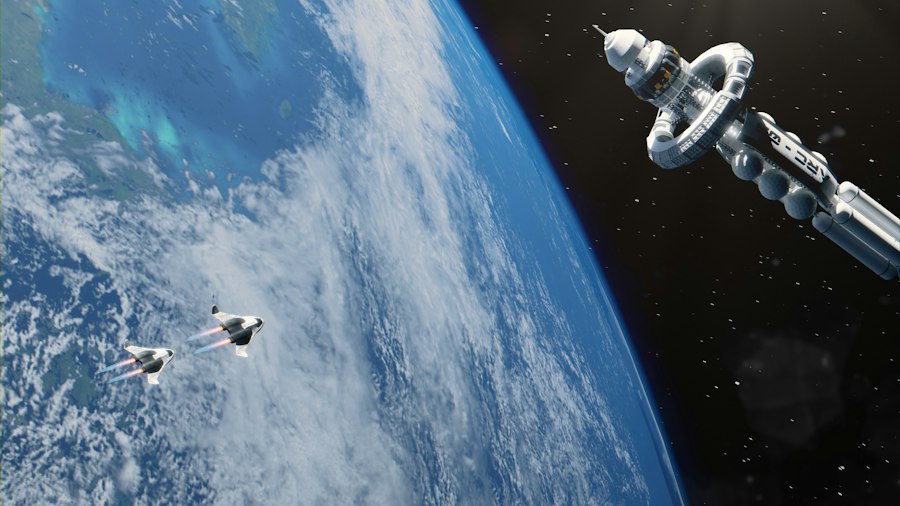
The journey back to Earth culminates in a high-speed re-entry into Earth’s atmosphere, a process fraught with intense physics challenges.
Atmospheric Re-entry: Friction and Heat
As the spacecraft enters Earth’s atmosphere at hypersonic speeds, it encounters air molecules. The immense kinetic energy of the spacecraft is converted into heat through friction with these molecules.
Ablative Heat Shields: Burning Away the Heat
The exterior of the re-entry capsule is protected by an ablative heat shield. This material is designed to char and vaporize upon contact with the superheated air, carrying away the heat and protecting the interior of the capsule. This is a controlled process of material degradation driven by high temperatures.
Aerodynamic Forces: Controlling the Descent
The shape of the re-entry capsule is crucial for controlling its descent. Aerodynamic forces, such as lift and drag, are generated as the capsule moves through the atmosphere. By carefully controlling the capsule’s orientation, engineers can steer its trajectory and manage the rate of deceleration. This involves principles of aerodynamics and fluid dynamics.
Parachutes and Splashdown: The Final Slowdown
Once the spacecraft has been sufficiently slowed by atmospheric friction, parachutes are deployed to further decelerate it.
Parachute Dynamics: Harnessing Air Resistance
Parachutes work by increasing the surface area of the falling object, thereby increasing air resistance (drag). The size and configuration of the parachutes are carefully calculated to ensure a safe landing speed. The physics of drag forces and the behavior of large flexible surfaces in airflow are critical here.
Splashdown: Impact and Recovery
The final landing occurs on water, known as a splashdown. The impact with the water is cushioned by the spacecraft’s design and flotation systems. The physics of buoyancy and impact forces are considered to ensure the capsule remains stable and accessible for recovery crews.
The recent advancements in NASA’s Moon mission have sparked significant interest in the physics of lunar return trajectories. Understanding the complexities of these trajectories is crucial for ensuring the safe return of astronauts to Earth. For those looking to delve deeper into the science behind these missions, an insightful article can be found at Freaky Science, which explores the intricate details of space travel and the physics involved in navigating back from the Moon.
Mission Planning and Simulation: The Digital Playground of Physics
| Parameter | Value | Unit | Description |
|---|---|---|---|
| Escape Velocity from Moon | 2.38 | km/s | Minimum speed needed to leave the Moon’s gravitational influence |
| Moon Gravity | 1.62 | m/s² | Acceleration due to gravity on the Moon’s surface |
| Earth-Moon Distance | 384,400 | km | Average distance between Earth and Moon |
| Trans-Earth Injection Velocity | 1.0 | km/s | Velocity required to leave lunar orbit and head back to Earth |
| Re-entry Velocity at Earth | 11.0 | km/s | Speed of spacecraft entering Earth’s atmosphere from lunar return |
| Heat Shield Temperature | 2,760 | °C | Maximum temperature experienced by the heat shield during re-entry |
| Time for Earth Return Trajectory | 3 | days | Typical duration of return trip from Moon to Earth |
| Mass of Lunar Module at Launch | 15,200 | kg | Mass of the lunar module at the start of return journey |
| Delta-V for Lunar Ascent | 1.9 | km/s | Change in velocity required to ascend from Moon surface to lunar orbit |
Before any hardware is built or any rocket ignites, NASA relies heavily on advanced computer simulations to test and refine mission parameters.
Computational Physics: Modeling the Universe
Modern mission planning involves complex computer models that simulate every aspect of the journey.
Trajectory Simulations: Predicting the Path
These simulations use sophisticated algorithms to model gravitational forces, engine performance, and orbital dynamics. Engineers can explore thousands of potential trajectories, optimizing for fuel efficiency, mission duration, and safety.
Re-entry Simulations: Testing the Limits
Similarly, re-entry simulations allow engineers to test the performance of heat shields and aerodynamic controls under extreme conditions, identifying potential failure points and refining designs. The accuracy of these simulations is directly dependent on the fidelity of the underlying physics models.
Mission Control: Real-time Physics in Action
During the actual mission, a vast team of engineers in mission control constantly monitors the spacecraft’s performance. They use real-time data to make critical decisions, often involving instantaneous physics calculations.
Trajectory Correction Maneuvers (TCMs): Fine-Tuning the Course
Even with the best planning, minor deviations can occur due to unexpected factors. Mission control can command the spacecraft to perform TCMs, brief engine firings to adjust its trajectory and ensure it stays on course. This demonstrates the iterative application of physics in response to real-world conditions.
The return of humans to the Moon is not simply a matter of technological advancement; it is a profound testament to humanity’s understanding and mastery of the fundamental laws of physics. From the grand ballet of orbital mechanics to the fiery dance of atmospheric re-entry, every phase of a lunar mission is governed by these immutable principles. NASA’s Artemis program, with its ambitious goals, will undoubtedly continue to push the boundaries of our knowledge, showcasing the enduring power and elegance of physics in shaping our exploration of the cosmos.

There’s Only One Safe Way Back to Earth From the Moon
FAQs
What is the purpose of NASA’s Moon mission return?
NASA’s Moon mission return aims to bring astronauts safely back to Earth after exploring the lunar surface.
What physics principles are involved in the return journey from the Moon?
The return journey from the Moon involves principles of orbital mechanics, gravitational forces, and re-entry dynamics.
How does the spacecraft’s speed affect the return journey from the Moon?
The spacecraft’s speed plays a crucial role in the return journey from the Moon as it determines the trajectory, re-entry angle, and overall success of the mission.
What challenges do astronauts face during re-entry into Earth’s atmosphere?
Astronauts face challenges such as extreme temperatures, high speeds, and intense forces during re-entry into Earth’s atmosphere, requiring precise calculations and engineering to ensure a safe return.
What technologies are used to ensure a successful return from a Moon mission?
Technologies such as heat shields, parachutes, and guidance systems are utilized to ensure a successful return from a Moon mission, protecting astronauts and spacecraft during the re-entry process.