
You’ve probably noticed it – that subtle, almost ethereal purple hue that sometimes washes over streetlights. It’s a common sight in many towns and cities, and it’s not some sort of mystical phenomenon, though it certainly has a magical feel to it. The purple glow is actually a sign of aging high-pressure sodium (HPS) streetlights, and it happens due to a chemical reaction inside the bulb.
The Science Behind the Violet Hue
So, what’s actually going on inside those lamps that makes them turn purple? It’s all about the materials and how they break down over time.
The Core Components of HPS Bulbs
High-pressure sodium lamps are a workhorse for street lighting because they’re quite energy-efficient and produce a lot of light. Their design involves a ceramic arc tube, typically made of translucent alumina, which contains a mixture of sodium, mercury, and xenon. When you turn the lamp on, an electric arc forms between two electrodes within this tube. This arc excites the mercury and xenon, producing a blueish light. This initial light then heats up the sodium, which starts to vaporize and emit its characteristic yellowish-orange light, the color we usually associate with streetlights. The combination of these lights is what gives us that familiar warm glow.
The Gradual Deterioration of Sodium
The key to the purple shift lies with the sodium itself. Over thousands of hours of operation, the sodium inside the arc tube gradually reacts with the inner wall of the alumina tube. This reaction causes the sodium to slowly be absorbed into the ceramic material. As more sodium is absorbed, the concentration of free sodium vapor in the arc tube decreases.
The Shifting Light Spectrum
Sodium is the primary source of the yellow and orange wavelengths of light. When its concentration diminishes, the lamp relies more heavily on the light emitted by the excited mercury and xenon. Mercury, in particular, emits strongly in the blue and ultraviolet parts of the spectrum. With less sodium to “warm up” the overall color, the blue and violet wavelengths become more prominent. This shift in the balance of emitted light is what we perceive as the purple or sometimes even pinkish glow. It’s essentially the lamp running out of its primary color-producing element, revealing the underlying blue tones.
The recent implementation of purple glow streetlights in various cities has sparked interest and debate among residents and urban planners alike. These lights, designed to enhance nighttime visibility and reduce light pollution, have been the subject of numerous studies and articles. For a deeper understanding of the science behind these innovative lighting solutions, you can read a related article on the topic at Freaky Science. This resource provides insights into the benefits and potential drawbacks of using purple glow streetlights in urban environments.
When Did This Start Happening?
The purple glow isn’t a brand-new development, but it has become more noticeable as older lighting infrastructure is still in use while newer technologies are being implemented.
The Era of HPS Lighting
High-pressure sodium lamps were widely adopted starting in the mid-20th century, becoming the dominant form of street lighting for decades. Their longevity and cost-effectiveness made them a logical choice for municipalities and utility companies. This means there’s a vast number of these bulbs out there that have been in service for a significant portion of their lifespan.
A Natural End-of-Life Indicator
The purple hue is essentially a visual cue that an HPS bulb is nearing the end of its operational life. While the light might still be functional, its color rendering and intensity will have degraded considerably. This makes them less effective for providing consistent and safe illumination for streets and public areas. It’s not that the bulbs are “broken” in a dramatic way, but rather that their internal chemistry has changed to the point where they no longer produce light as intended.
The Transition to LED
In recent years, there’s been a significant push to replace older HPS streetlights with LED (Light Emitting Diode) technology. LEDs are far more energy-efficient, have a much longer lifespan, and offer better control over light output and color temperature. This transition means that while we see the purple glow in areas where HPS lights are still in place, the overall prevalence of this phenomenon is declining as older infrastructure is upgraded.
Practical Implications for Your Neighborhood
Beyond the visual aspect, the purple glow has some real-world consequences for how well our streets are lit.
Reduced Visibility and Color Accuracy
The primary issue with the purple shift is its impact on visibility. The altered spectrum means that colors appear less accurately under these lights. Reds and oranges, for example, can be difficult to distinguish, which can be a safety concern, especially for drivers and pedestrians. The overall illumination may also be dimmer and less uniform compared to a healthy HPS lamp or an LED equivalent. This can create more shadows and areas where visibility is compromised.
Safety Concerns in Specific Areas
While the purple glow might be aesthetically interesting to some, it can pose safety risks in areas where clear visibility and accurate color perception are crucial. This includes busy intersections, pedestrian crossings, and areas where identifying hazards quickly is important. The inability to accurately judge the color of traffic signals or to see potential obstacles clearly can be a genuine concern.
An Indicator for Upgrades
For city planners and maintenance crews, the purple glow is a clear signal that a streetlight needs attention. It’s a visual diagnostic tool indicating that the bulb is old and likely performing poorly. This prompts them to schedule replacements, often as part of broader infrastructure modernization projects aimed at improving energy efficiency and public safety. It’s a tangible sign that it’s time to invest in newer, more reliable lighting solutions.
Why Not Just Replace Them All Immediately?
You might wonder why these purple-glowing lights aren’t just swapped out overnight. There are practical and financial reasons behind the gradual replacement.
Budgetary Constraints
Municipal budgets are often stretched thin, and replacing an entire city’s worth of streetlights is a massive undertaking. The cost of new LED fixtures, installation labor, and the associated project management can add up to millions of dollars. This necessitates a phased approach, prioritizing areas with the greatest need or where the existing infrastructure is failing most severely.
The Pace of Infrastructure Renewal
Streetlights, like many other public utilities, are part of a long-term infrastructure renewal cycle. Cities don’t typically replace all their streetlights at once. Instead, they are replaced as bulbs burn out, or as part of planned upgrades that might also involve upgrading poles, wiring, or other associated equipment. The purple glow, while noticeable, doesn’t usually render a streetlight completely inoperable, meaning it might not be the absolute highest priority compared to a completely dark or malfunctioning lamp.
The Life Cycle of HPS Bulbs
While the purple color indicates aging, HPS bulbs are designed to last for a considerable number of hours. They don’t typically fail catastrophically without warning. Their degradation is gradual. This allows for a managed replacement strategy rather than an emergency scramble. The purple stage is simply one of the later stages in their natural decline.
The introduction of purple glow streetlights has sparked interest among urban planners and residents alike, as they are believed to have a calming effect and may even reduce crime rates. For those curious about the science behind this innovative lighting solution, you can explore a related article that delves into the benefits and potential drawbacks of these unique streetlights. This article provides insights into how the color and brightness of streetlights can influence public safety and community well-being. To learn more, check out this informative piece on the subject here.
The Future of Street Lighting
| Metric | Value | Unit | Description |
|---|---|---|---|
| Light Wavelength | 400-450 | nm | Range of purple/violet light emitted by the streetlight |
| Luminous Intensity | 800 | cd | Brightness of the streetlight measured in candelas |
| Power Consumption | 50 | W | Energy used by the streetlight |
| Illumination Area | 150 | m² | Area covered by the light glow |
| Color Temperature | 2700 | K | Warmth of the purple glow |
| Operational Hours | 12 | hours/night | Typical duration the streetlight is on during night |
| Height of Streetlight | 8 | m | Height from ground to light source |
The purple glow is a phenomenon tied to a specific technology that is slowly being phased out. The future of street lighting is heading in a different direction.
The Rise of LED Technology
As mentioned, LED lighting is rapidly becoming the standard for new installations and replacements. LEDs offer significant advantages:
- Energy Efficiency: They consume considerably less electricity, leading to substantial cost savings for municipalities.
- Longevity: LEDs have a much longer operational lifespan than HPS bulbs, reducing maintenance and replacement frequency.
- Control and Smart City Integration: Modern LED systems can be controlled remotely, allowing for dimming, scheduling, and integration with smart city technologies. This means lights can be adjusted based on time of day, traffic flow, or even ambient light conditions.
- Improved Light Quality: LEDs offer better color rendering, allowing us to see the world in more natural colors, which enhances safety and aesthetics.
Beyond Static Lighting
The conversation around street lighting is evolving beyond just providing illumination. It’s increasingly about creating safer, more efficient, and smarter urban environments. Smart lighting systems can collect data, communicate with other city infrastructure, and contribute to a more responsive and sustainable city. This includes features like adaptive lighting that brightens when motion is detected, or systems that monitor air quality or traffic.
A Fading Spectacle
So, while the enchanting purple glow might persist for a while longer in certain areas, it’s becoming a fading spectacle. It serves as a reminder of the technologies that have served us well and a precursor to the more advanced and efficient lighting solutions that are shaping our urban landscapes for the better. The next time you see that violet hue, you’ll know it’s not magic, but simply the quiet, colorful farewell of a hardworking streetlight.
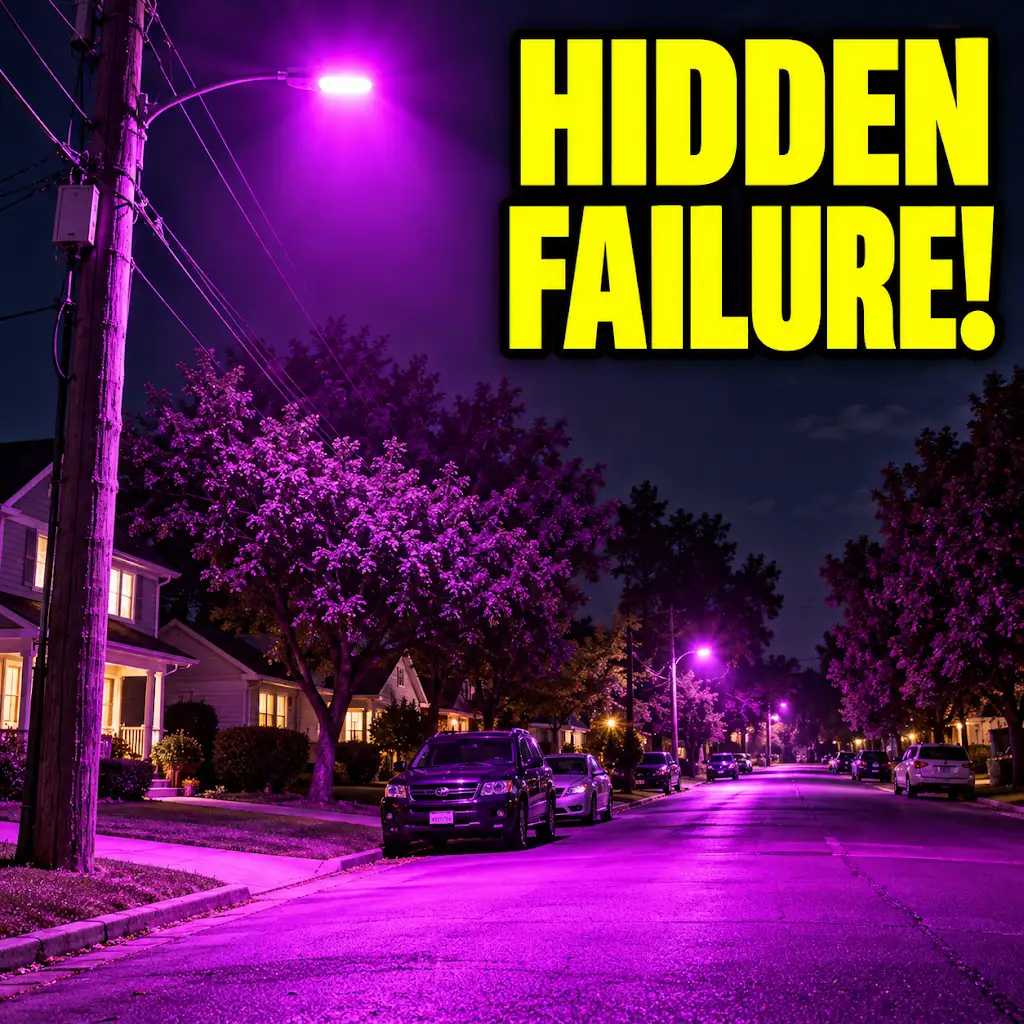
Why The Streetlights Are Turning Purple
FAQs
What causes the purple glow in streetlights at night?
The purple glow in streetlights at night is typically caused by the use of LED lights that emit a bluish-white light which can appear purple when reflected off particles in the air.
Are purple glow streetlights energy-efficient?
Yes, purple glow streetlights are often energy-efficient because they use LED technology, which consumes less energy compared to traditional streetlights.
Do purple glow streetlights affect wildlife or human health?
There is ongoing research to determine the impact of purple glow streetlights on wildlife and human health. Some studies suggest that exposure to certain types of artificial light at night can disrupt ecosystems and affect human circadian rhythms.
Can purple glow streetlights improve visibility at night?
While purple glow streetlights may provide a unique aesthetic, they may not necessarily improve visibility at night compared to traditional white or yellow streetlights. The color of the light can affect depth perception and color recognition.
Are there any regulations regarding the use of purple glow streetlights?
Regulations regarding the use of purple glow streetlights may vary by location. It is important to check with local authorities or lighting ordinances to ensure compliance with any restrictions or guidelines.