You’ve probably been warned. That stern voice from your childhood, or perhaps a nagging voice of caution in your adult life, has likely told you: “Don’t put metal in the microwave.” But have you ever stopped to truly wonder why? It’s not just some arbitrary rule; it’s a fundamental interaction between metal and the invisible waves that heat your popcorn. Understanding this reaction isn’t just about microwave safety; it’s about appreciating the science behind a common household appliance and the surprising physics at play.
This isn’t about a fear-mongering exposé. Instead, we’re going on a journey into the heart of microwave ovens and the properties of metals. We’ll explore how microwaves work, what makes metals so different, and the spectacular (and sometimes dangerous) consequences when they collide. So, buckle up, and prepare to have your curiosity about that shiny tin foil wrapper or that fancy metal-trimmed plate finally satisfied.
Before we delve into the metal’s reaction, it’s crucial to grasp the mechanism by which microwaves heat your food in the first place. It’s not a simple process of radiating heat from a coil or a glowing element. Instead, a microwave oven employs a sophisticated system to generate and direct electromagnetic radiation within a specific frequency range – typically around 2.45 gigahertz (GHz). This frequency is key, as it resonates with water molecules, the primary component of most foods.
The Magnetron: The Heart of the Microwave
The magic begins with a device called a magnetron. This is the engine of your microwave, responsible for generating the microwave radiation. It’s a complex vacuum tube that uses a combination of magnetic and electric fields to accelerate electrons. As these electrons move, they interact with resonant cavities within the magnetron, producing high-frequency electromagnetic waves. Think of it as a highly specialized radio transmitter, but instead of broadcasting music, it’s broadcasting waves designed to agitate water molecules.
Directing the Waves: The Waveguide and Stirrer
Once generated, these microwaves are not simply released into the oven cavity. They are carefully channeled through a component called a waveguide. This hollow metal tube acts like a pipe, directing the microwave energy from the magnetron to the cooking chamber. Inside the oven, a rotating stirrer or turntable is usually present to ensure a more even distribution of microwave energy throughout the food. This is important because microwaves, like light waves, can create “hot spots” and “cold spots” due to interference patterns. By scattering the waves, the stirrer or turntable helps to cook your food more uniformly.
The Molecular Dance: How Microwaves Heat Water
The core principle of microwave heating lies in the interaction of these electromagnetic waves with polar molecules, most notably water. Water molecules have a slight positive charge on one side and a slight negative charge on the other, making them electric dipoles. When exposed to the oscillating electric field of the microwaves, these water molecules try to align themselves with the field. As the field rapidly oscillates back and forth (billions of times per second at 2.45 GHz), the water molecules are forced to rapidly rotate and jostle against each other. This constant friction and collision generate heat. It’s this molecular agitation that cooks your food from the inside out, or more accurately, wherever water molecules are present.
Beyond Water: Other Polar Molecules
While water is the most significant contributor to microwave heating, other polar molecules like fats and sugars also contribute to the cooking process. However, their response to microwave radiation is generally less pronounced than that of water. This is why fatty or sugary foods can sometimes cook faster or brown differently than lean foods. The absence of these polar molecules, or their low concentration, is also why some foods don’t heat effectively in a microwave.
In exploring the fascinating interactions between materials and microwave radiation, an insightful article can be found on the topic of how metal responds to such energy. This article delves into the principles of microwave absorption and reflection in metals, shedding light on the underlying physics and practical applications. For more detailed information, you can read the article here: Freaky Science.
The Nature of Metals: Conductors and Reflectors
Now that you understand how microwaves work, let’s turn our attention to the star of our investigation: metal. Metals possess unique physical properties that make them behave very differently when exposed to electromagnetic radiation. Their atomic structure, characterized by a sea of delocalized electrons, is the key to their distinctive reactions.
The Electron Sea: Electrical Conductivity
The defining characteristic of metals is their excellent electrical conductivity. This stems from the way their atoms are bonded. In a metallic crystal lattice, the valence electrons are not tightly bound to individual atoms. Instead, they form a “sea” of mobile electrons that can move freely throughout the metal. This electron sea is what allows metals to conduct electricity so efficiently. When an electric field is applied to a metal, these free electrons can move easily, creating an electric current.
Interaction with Electromagnetic Fields
Microwave radiation, as we’ve established, consists of oscillating electric and magnetic fields. When these fields encounter a metal, they interact with the free electrons in a profound way. The oscillating electric field of the microwave forces the free electrons in the metal to move rapidly back and forth. This creates an intense, oscillating electric current within the metal.
Reflection is Key: The Mirror Effect
The most significant consequence of this interaction is that metals are excellent reflectors of microwave radiation. Instead of allowing the waves to penetrate and agitate molecules within the metal (as they do with food), the free electrons in the metal essentially push back against the incoming waves. This causes the microwaves to bounce off the surface of the metal. Think of it like shining a flashlight on a mirror – the light is reflected, not absorbed. This reflective property is why metal surfaces inside a microwave oven, like the interior walls and the door’s mesh, are designed to contain the microwaves and keep them from escaping.
Limited Absorption: Why Metal Doesn’t “Cook”
Because metals primarily reflect microwaves rather than absorbing them, they don’t heat up in the same way that food does. While there might be some minor absorption leading to slight warming, it’s nowhere near the efficient energy transfer that occurs with water molecules. This is why a metal spoon left in a bowl of soup won’t cook the soup; it will mostly just get in the way and potentially cause other issues.
The Spark and the Fire: Arcing and Discharge

When you violate the cardinal rule and place certain types of metal in a microwave, the interaction between the microwaves and the metal’s free electrons can lead to some dramatic and potentially dangerous phenomena. The most common and recognizable of these is arcing, often accompanied by sparks and flashes of light.
What is Arcing?
Arcing, or electrical discharge, occurs when the electric field strength between two conductive surfaces or between a conductive surface and a sharp point becomes too high for the air to act as an insulator. In a microwave, this can happen in a few ways when metal is present. The intense, rapidly oscillating electric fields generated by the microwaves can induce a significant voltage difference on the surface of the metal. If this voltage becomes high enough, it can overcome the insulating properties of the air surrounding the metal, causing electrons to jump across the gap. This rapid flow of electrons through the air is what we perceive as a spark or an arc.
The Role of Sharp Edges and Points
The risk of arcing is significantly amplified by sharp edges, corners, or thin points on the metal object. These areas concentrate the electric field, making it easier for the voltage to reach the breakdown point of the air. Think of a lightning rod – its sharp point is designed to attract lightning because it concentrates the electric field. In a microwave, a crinkled piece of aluminum foil or the jagged edges of a disposable metal tray can act like miniature lightning rods, initiating sparks.
Consequences of Arcing: Damage and Fire Hazard
The sparks generated by arcing are essentially small electrical fires. These intense bursts of energy can:
- Damage the Microwave: The electrical discharge can burn or pit the interior walls of the microwave oven, potentially damaging the paint or coating. In severe cases, it can even damage the magnetron or other electronic components, rendering the appliance unusable.
- Ignite Food or Packaging: The heat from the arcing can be intense enough to ignite nearby flammable materials, such as paper towels, food packaging, or even the food itself. This is a significant fire hazard.
- Create Ozone and Odors: The electrical discharge also breaks down oxygen molecules in the air, producing ozone. While ozone can have some beneficial properties, in high concentrations within an enclosed space, it can be irritating and produce unpleasant smells.
Smooth, Rounded Surfaces vs. Sharp Edges
This is why smooth, rounded metal objects might cause less of a problem than sharp, crinkled ones. The smooth surfaces distribute the electric field more evenly, reducing the likelihood of high-voltage concentrations. However, even smooth metal is still a reflector, and if it gets too close to the microwave walls or other conductive objects, arcing can still occur. The general rule of thumb is to avoid any metal that isn’t specifically designed for microwave use.
Specific Metal Behaviors and Their Risks
Not all metals are created equal when it comes to their interaction with microwaves, though the general principle of reflection and potential for arcing remains. Certain types of metal, their form, and their proximity to other materials can influence the outcome.
Aluminum Foil: A Double-Edged Sword
Aluminum foil is a prime example of a metal that needs careful handling. Its thinness and tendency to be crinkled make it highly prone to arcing.
- Crinkled Foil: As mentioned, the sharp creases and edges in crinkled aluminum foil are perfect breeding grounds for electrical discharge. Even a small piece can cause sparks and potential damage.
- Smooth Foil: While smoother sheets of aluminum foil are less likely to arc, they are still excellent reflectors of microwaves. If placed in direct contact with the microwave walls or other conductive materials, they can still cause issues.
- Intended Use: The only time you might see aluminum foil mentioned in microwave cooking instructions is for shielding specific parts of food to prevent overcooking. In these instances, the foil is used strategically and carefully, often with smooth, folded edges, and in conjunction with the food itself, which can absorb some of the energy. Even then, it’s a practice that requires caution.
Stainless Steel: The Reflective Barrier
Stainless steel, commonly found in cookware and utensils, is another material that is highly reflective of microwaves.
- Cookware and Utensils: Placing stainless steel bowls, pans, or cutlery in a microwave is a sure way to prevent your food from heating effectively. The microwaves will simply bounce off the steel.
- Arcing Potential: While generally less prone to arcing than thin aluminum foil due to its thickness and smoother surfaces, stainless steel can still cause arcing, especially if it has sharp edges or comes into close proximity with other conductive materials. The same principle applies: high voltage concentrations can lead to discharge.
- Interior Walls: The interior walls of most microwaves are made of coated metal, often stainless steel or a similar alloy. This is by design, to contain the microwaves within the cooking cavity.
Gold and Silver Trim: The Decorative Danger
You’ve likely seen or owned dishes with decorative metallic trim, often gold or silver. These are not just for show; they are conductive materials.
- Conduction and Reflection: The thin metallic paint or plating used for these trims acts like any other metal – it conducts electricity and reflects microwaves.
- High Risk of Arcing: The fine, intricate nature of these decorative patterns, especially those with sharp lines or points, makes them extremely susceptible to arcing. The metallic particles are often very small and can become concentrated in certain areas, leading to intense electric fields.
- Damage to Dishes and Microwave: Arcing on these trims can not only damage the dishes themselves, leaving black scorch marks or pitted areas, but can also lead to the same damage to the microwave interior as other metal-related arcing. It’s often the source of those unsettling sparks you might have witnessed coming from a fancy dinner plate.
The Role of Proximity and Shape
Beyond the type of metal, its shape and proximity to other conductive surfaces are critical factors.
- Close Proximity: If a metal object is very close to the metal walls of the microwave cavity, the gap between them can become a point of high electrical stress, increasing the likelihood of arcing.
- Thin or Pointed Shapes: As discussed, anything that creates sharp edges or thin points will concentrate electric fields, making arcing more probable. This is why a metal fork with its tines can be more problematic than a solid metal rod.
- Smooth, Rounded Objects (with caveats): While generally safer, even smooth, rounded metal objects are not entirely risk-free. If they are large enough or positioned in a way that their conductive surface is very close to the microwave’s internal components, arcing can still occur.
Recent studies have shown that metal can exhibit fascinating behaviors when exposed to microwave radiation, leading to intriguing applications in various fields. For a deeper understanding of this phenomenon, you might find it interesting to read an article that explores the interaction between metals and microwaves in detail. This article discusses the principles behind these interactions and their potential implications in technology. You can check it out here.
Safe Practices and Microwave-Friendly Alternatives
| Metal | Response to Microwave Radiation |
|---|---|
| Aluminum | Reflects microwave radiation |
| Iron | Absorbs microwave radiation |
| Gold | Reflects microwave radiation |
| Copper | Reflects microwave radiation |
Understanding the risks associated with metal in microwaves is crucial for safe operation. Fortunately, there are clear guidelines and readily available alternatives to ensure your cooking and reheating experiences are both efficient and safe.
The Golden Rule: When in Doubt, Leave It Out
This is the most important principle. If you’re unsure whether a particular item is microwave-safe, err on the side of caution and do not put it in the microwave. The potential for damage, fire, or even injury far outweighs the convenience of heating a single item.
What is Generally Microwave-Safe:
- Glassware: Most glass containers, including Pyrex and other oven-safe glass, are excellent for microwave use. Ensure they don’t have metallic trim.
- Ceramics: Many ceramic dishes and bowls are microwave-safe, as long as they do not contain any metallic glaze or decoration.
- Plastics: Look for the “microwave-safe” symbol on plastic containers. Not all plastics are created equal, and some can melt, warp, or leach chemicals when heated.
- Paper Products: Plain white paper plates, paper towels, and wax paper are generally safe for short periods of reheating, as long as they don’t have metallic elements. Avoid printed paper products that might contain metallic inks.
When Metal Might Be Used (With Extreme Caution):
In very specific, limited scenarios, some metal components are used in microwave ovens, but these are integrated into the appliance’s design to manage microwave energy safely.
- Interior Walls and Door Mesh: The metal interior of your microwave and the fine mesh screen in the door are designed to reflect microwaves and contain them within the oven. The mesh on the door has holes small enough to prevent microwaves from escaping but large enough for you to see inside.
- Specialized Microwave Containers: Some manufacturers offer specialized microwave containers that incorporate small amounts of metal to aid in browning or crisping. These are engineered with safety in mind and should only be used as per the manufacturer’s instructions. They are not your everyday metal cookware.
Avoiding Common Pitfalls:
- Disposable Aluminum Trays: While convenient for transporting food, these are generally not microwave-safe due to their tendency to arc. Opt for glass or ceramic alternatives for reheating.
- Food with Metallic Packaging: Be sure to remove food from any packaging that contains metallic elements, such as foil liners or metallic printing, before microwaving.
- Twist Ties and Staples: Remove any plastic twist ties with metal wire or staples from food packaging before microwaving.
What to Do if You Accidentally Put Metal in the Microwave:
If you realize you’ve accidentally put metal in the microwave and it hasn’t arced yet, immediately turn off the microwave and unplug it. Carefully remove the metal object. If arcing has occurred, turn off the microwave, unplug it, and let it cool down completely before inspecting for any damage. If you notice any scorch marks, pitting, or smell ozone, it’s advisable to have the microwave inspected by a qualified technician before using it again.
By adhering to these safety guidelines and understanding the principles behind the interaction of metal and microwaves, you can ensure your kitchen remains a safe and efficient space for preparing your meals. The fascinating science behind this common household appliance reveals why those childhood warnings were more than just cautionary tales.
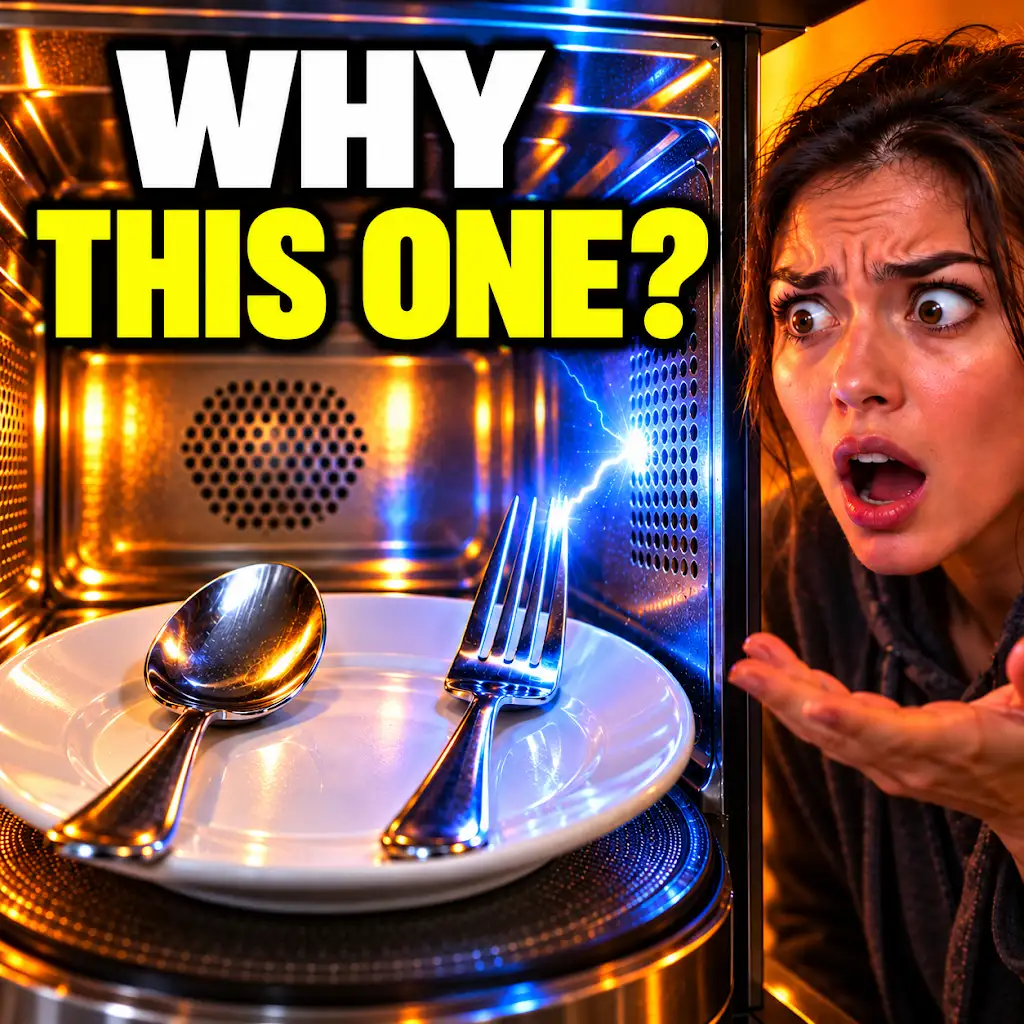
A Fork and a Spoon React Differently in a Microwave. Why?
FAQs
What happens when metal is exposed to microwave radiation?
When metal is exposed to microwave radiation, it can cause sparks and arcing, which can lead to damage to the microwave and potential fire hazards.
Why does metal react differently to microwave radiation compared to other materials?
Metal reflects and absorbs microwave radiation differently than other materials due to its conductive properties. This can cause the metal to heat up rapidly and potentially cause damage to the microwave.
Can any type of metal be safely used in a microwave?
No, it is not safe to use any type of metal in a microwave. Metal objects with sharp edges or points can cause arcing and sparks, which can lead to damage and potential fire hazards.
What precautions should be taken when using metal in a microwave?
It is important to avoid using metal containers, utensils, or foil in a microwave. Additionally, it is important to carefully follow the manufacturer’s guidelines and only use microwave-safe cookware.
Are there any safe ways to use metal in a microwave?
Some microwave-safe cookware may have a metal trim or coating that is designed to be safe for use in a microwave. However, it is important to carefully follow the manufacturer’s guidelines and only use cookware that is specifically labeled as microwave-safe.