Ice skating, a sport that conjures images of effortless glides and breathtaking spins, is a delicate dance between physics and human skill. At the heart of this elegant performance lies a fundamental scientific principle: friction. While seemingly counterintuitive in a realm of frozen water, understanding and manipulating friction is not merely a detail; it is the very key to mastering the art and science of ice skating. Without friction, the blades would simply slide uncontrollably, rendering any attempt at movement or control impossible. This article delves into the intricate relationship between ice skates and ice, exploring how friction, in its various forms, dictates every push, glide, and turn on the rink.
At its most basic level, the ability to move on ice depends on overcoming static friction. Static friction is the force that resists the initiation of motion between two surfaces in contact. In the context of ice skating, it’s the force that needs to be overcome for the skater to push off from a stationary position.
How Static Friction Works on Ice
When a skater stands still on the ice, the weight of their body is distributed across the small surface area of the skate blades. This pressure causes a slight melting of the ice directly beneath the blades. This thin layer of water acts as a lubricant, reducing the overall friction. However, there is still a resistive force that must be overcome to start moving. This static friction is influenced by several factors.
Factors Affecting Static Friction
- Blade Sharpness: Sharper blades have a smaller contact area with the ice. This concentrates the skater’s weight into a smaller region, increasing the pressure and thus promoting more melting. While seemingly beneficial for lubrication, extreme sharpness can also increase the likelihood of digging into the ice, creating a different kind of resistance. A well-maintained, sharp edge provides the ideal balance.
- Blade Material and Profile: The material of the skate blade, typically high-carbon steel, is designed to withstand the forces involved and resist corrosion. The profile, or the curvature of the blade’s bottom, also plays a significant role. A flatter profile offers a larger contact area, potentially increasing static friction, while a more curved profile reduces the contact area, making it easier to initiate movement but potentially harder to balance.
- Ice Temperature and Condition: The temperature of the ice is crucial. Colder ice is harder and less prone to melting, leading to higher static friction. Conversely, warmer ice melts more readily, reducing static friction. The condition of the ice surface – whether it’s smooth, rough, or has visible imperfections – also impacts the static friction.
- Skater’s Weight and Boot Stiffness: A heavier skater will exert more downward pressure, leading to greater ice melt and reduced static friction. The stiffness of the skating boot is also important; a stiff boot provides better support and allows the skater to effectively transfer force, helping them to overcome static friction more efficiently.
Overcoming Static Friction: The Push-Off
The fundamental push-off in ice skating relies on generating sufficient force to overcome static friction. The skater typically angles their blade, digging the edge into the ice to gain purchase. They then exert force backward and downward, propelling themselves forward. This initial powerful push requires a coordinated effort from the legs and core to effectively transfer energy and break the static resistance. Without this understanding, a skater will struggle to gain momentum from a standstill, remaining rooted to the spot.
Ice skating is a fascinating sport that combines grace and speed, but it also involves complex physics, particularly when it comes to friction. To delve deeper into the science behind ice skating and understand how friction affects performance on the ice, you can explore a related article that provides an in-depth explanation. For more information, check out this article on ice skating friction explained at Freaky Science.
The Glide: Kinetic Friction in Action
Once the skater is in motion, the dominant force becomes kinetic friction. Kinetic friction, also known as sliding friction, is the force that opposes motion when two surfaces are sliding relative to each other. On the ice, this is the friction between the moving blade and the ice surface.
The Nature of Kinetic Friction on Ice
The thin layer of water formed by the pressure and friction between the blade and the ice acts as a lubricant, significantly reducing kinetic friction. This is why ice skaters can glide so smoothly and efficiently. However, kinetic friction is not absent; it’s simply much lower than it would be between two dry surfaces. This subtle but present friction is what allows for controlled movement and is responsible for slowing the skater down over time if no further propulsion is applied.
Factors Influencing Kinetic Friction
- The Lubricating Layer: The thickness and consistency of the water layer are paramount. Too little melting leads to higher friction, while excessive melting can make the ice feel “sloppy” and unpredictable. The rate at which this layer is replenished is influenced by speed, pressure, and ice temperature.
- Blade Surface Roughness: Even though the ice appears smooth, microscopic imperfections on both the blade and the ice surface exist. The interaction of these imperfections contributes to kinetic friction. A perfectly polished blade will experience less friction than a dull or scratched one.
- Skater’s Speed: Generally, kinetic friction is less dependent on speed than static friction. However, at very high speeds, the pressure exerted by the blade can increase due to aerodynamic forces or subtle changes in the ice surface, potentially leading to a slight increase in the lubricating layer and a complex interplay of forces.
- Ice Quality: The presence of impurities in the ice, such as dirt or frozen water droplets, can significantly increase kinetic friction by creating a rougher surface and disrupting the lubricating layer.
Maintaining the Glide: The Importance of Edge Control
While kinetic friction allows for the glide, effective edge control is essential to harness and manipulate it. Skaters use the edges of their blades – the inside edge and the outside edge – to control their direction and speed. By tilting the ankle and leg, the skater can bring either edge into contact with the ice, altering the angle of contact and the distribution of pressure. This allows them to carve turns, stop, and maintain balance.
Friction’s Role in Turning and Edging
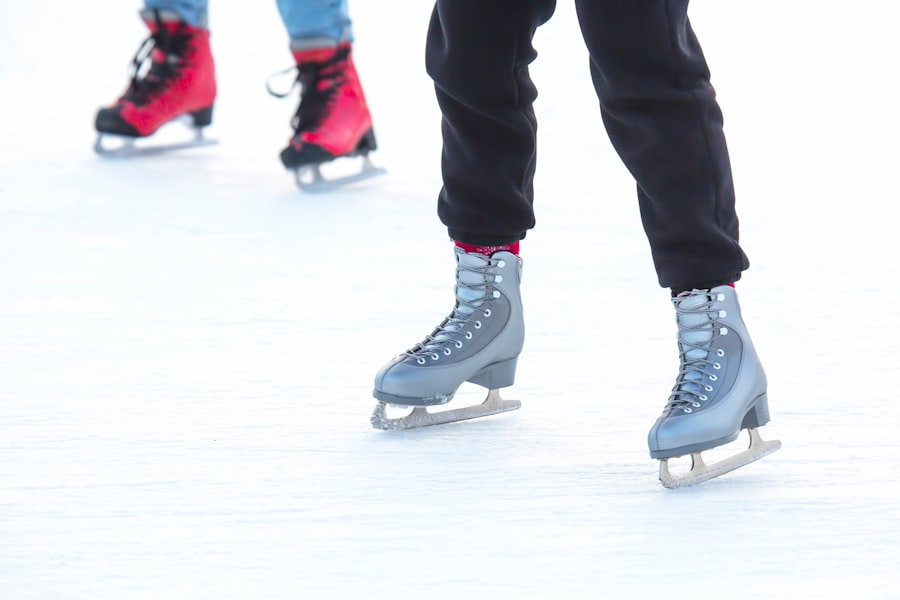
Turning on ice is a masterful demonstration of controlling friction. It’s not simply about changing direction; it’s about actively using the interaction with the ice to facilitate the maneuver. This involves the subtle yet crucial manipulation of the skate’s edges.
Inside and Outside Edges: The Pivotal Difference
- Inside Edge: When a skater turns to their left, they typically use their right foot’s inside edge. The blade is angled such that the inside edge digs into the ice, creating a pivot point. The centrifugal force generated by the turn pushes the skater outward, and the inside edge resists this outward force, allowing the skater to curve their path.
- Outside Edge: Conversely, for a turn to the right, a skater might use their left foot’s outside edge. The outside edge digs into the ice, again providing the necessary resistance to change direction. The specific edge used depends on the desired turn direction, the skater’s stance, and the technique being employed.
The Physics of the Turn
During a turn, the skater leans into the turn, angling their body to counteract the centrifugal force. This lean, combined with the pressure exerted on the chosen edge, creates a rotational force. The friction between the edge and the ice provides the necessary grip to initiate and maintain this rotation. Without this grip, the skater would simply slide in a straight line, regardless of their lean. The angle of the lean and the pressure applied to the edge directly influence the radius of the turn. A deeper lean and more pressure on the edge will result in a tighter, sharper turn.
Edge Work and Carving
Advanced skaters can “carve” their turns, creating distinct grooves in the ice. This indicates a significant amount of pressure being applied to the edge, effectively using the friction to grip and guide the blade through a smooth, continuous arc. The concept of “digging into the ice” is a direct manifestation of overcoming the tendency of the blade to slip sideways and instead using friction to create a controlled curve.
Friction and Stopping: Bringing Motion to a Halt
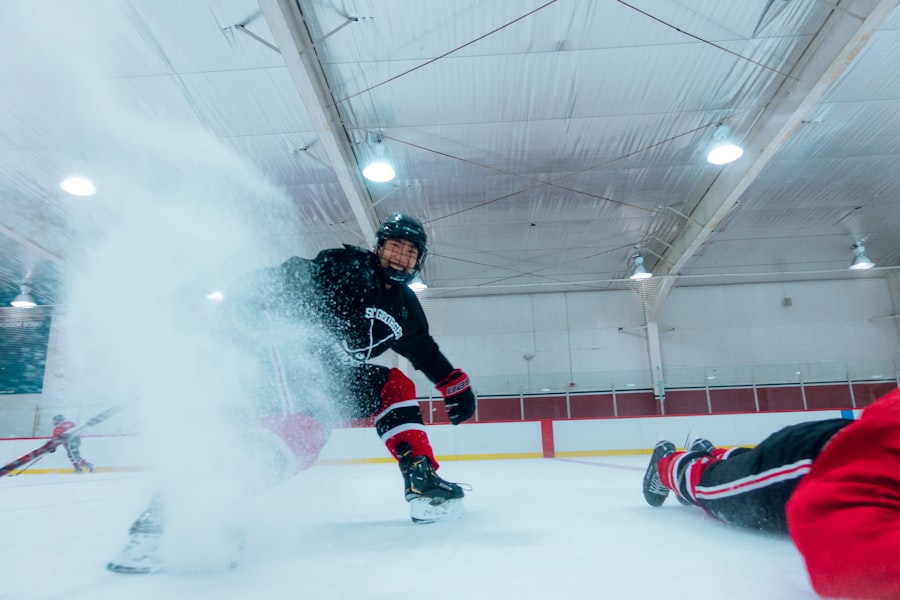
Stopping on ice is perhaps the most dramatic and visible application of friction manipulation in skating. It’s a skill that requires precision, power, and a deep understanding of how to generate significant resistive forces.
The Hockey Stop: A Prime Example
The hockey stop is a classic example of a controlled stop that relies heavily on friction. The skater abruptly angles their skates ninety degrees to their direction of motion, bringing the blades in contact with the ice at a perpendicular angle. This dramatically increases the surface area and the pressure of the blade against the ice.
The Mechanics of the Hockey Stop
- Blade Angle: The ninety-degree angle is critical. It maximizes the ice contact and creates a strong resistive force.
- Pressure and Lean: The skater leans back and applies significant downward pressure, further increasing the friction. This pressure forces a substantial amount of melting, creating a large, albeit momentary, lubricating layer that helps dissipate heat and prevent the blade from digging too deeply and causing a fall.
- Edge Engagement: Both skates are typically used, with the blades digging in to provide maximum grip. The friction generated is immense, effectively converting the skater’s kinetic energy into heat and sound.
Other Stopping Techniques
While the hockey stop is iconic, other stopping techniques also leverage friction:
- The Swizzle Stop: This involves a series of rapid, side-to-side movements that gradually reduce speed. It relies on the friction generated by the outward and inward scraping of the blades.
- The T-Stop: This involves bringing one skate perpendicular to the direction of travel, while the other skate continues to glide. The perpendicular skate creates significant friction to slow the skater down.
The Role of Heat and Melting
All stopping techniques involve generating heat through friction, which in turn causes localized melting of the ice. This melting is a double-edged sword. It provides a lubricating effect that prevents the blade from overheating and sticking, but too much melting without proper control can lead to loss of grip and an uncontrolled slide. The ability to control the amount of melting is a key aspect of mastering stopping techniques.
Understanding the intricacies of ice skating involves delving into the concept of friction, which plays a crucial role in the sport. For those interested in exploring this topic further, there is a fascinating article that explains how the unique properties of ice and the design of skate blades interact to create the perfect glide. You can read more about this in the article on friction in ice skating, which provides valuable insights into the science behind this elegant sport.
Advanced Concepts: Friction in Spins and Jumps
| Surface Material | Friction Coefficient |
|---|---|
| Ice | 0.02-0.04 |
| Rubber | 0.6-1.0 |
| Concrete | 0.6-0.8 |
Beyond basic movement and stopping, advanced ice skating disciplines like figure skating and speed skating involve complex maneuvers where friction plays an even more nuanced and critical role.
Spins: The Art of Controlled Friction
Spins, whether in figure skating or speed skating, are a testament to the skater’s ability to manipulate friction to achieve extreme rotational speeds and maintain balance.
Balancing Static and Kinetic Friction in Spins
- Initiation: A spin begins with an initial push, similar to starting a glide, utilizing static friction.
- The “Sweet Spot”: Once spinning, the skater aims to find a “sweet spot” where the friction is minimized, allowing for rapid rotation. This is often achieved by bringing the free leg and arms in close to the body, reducing the moment of inertia and allowing for faster spinning according to conservation of angular momentum.
- Edge Control: The skater carefully controls which edge is in contact with the ice. A slight adjustment of the blade’s angle can either increase or decrease friction, allowing them to speed up, slow down, or maintain their rotational velocity. A skater might use a very small contact area with a specific edge to achieve maximum speed.
- Balancing Torque: The skater’s body position and the subtle movements of their limbs are used to create opposing torques that counteract any wobbles or imbalances, maintaining a stable spin. This constant adjustment is a continuous interplay with the frictional forces at the blade-ice interface.
Jumps: Harnessing Friction for Takeoff and Landing
Jumps are perhaps the most gravity-defying elements in ice skating, and friction is absolutely essential for both the takeoff and the landing.
The Takeoff: Generating Upward Force
- Edge Grip: Before a jump, the skater approaches with speed and then uses a powerful edge grip to generate the necessary upward momentum. This involves digging the edge of the blade into the ice, creating resistance.
- Leg Power: The skater then explodes upward, converting their horizontal momentum into vertical lift. The friction between the blade and the ice provides the reactive force needed to propel them upwards.
- Edge Selection: Different jumps utilize different takeoff edges. For instance, a Salchow jump typically involves a backward inside edge takeoff, while a toe loop involves using the toe pick for added propulsion. The choice of edge is dictated by the type of rotation and the desired trajectory.
The Landing: Absorbing Impact and Maintaining Balance
- Blade Control: The landing is arguably the more challenging aspect of a jump. The skater must absorb the immense impact force while maintaining balance. This is achieved through a controlled bending of the knees and ankles, and by landing on a specific edge.
- Friction for Stability: The friction between the landing blade and the ice provides the necessary grip to prevent the skater from sliding uncontrollably upon impact. The skater’s ability to quickly adjust their balance is critical.
- “Scratching” the Ice: A successful landing often involves a slight “scratch” or carve on the ice as the skater regains their balance. This is the skater actively using friction to stabilize themselves after the high-impact landing.
The Interplay of Friction, Speed, and Technique
In essence, mastering ice skating is about developing an intuitive understanding of friction. It’s about learning how to increase it when needed for propulsion and stability, and how to minimize it for speed and fluidity. The skater’s technique, their body awareness, and their ability to adapt to varying ice conditions all stem from this fundamental understanding of how their blades interact with the frozen surface. From the initial push-off to the most elaborate spin, friction is the invisible partner that enables every graceful and powerful movement on the ice.

Why Ice Is Slippery Is Stranger Than You Think
FAQs
What is friction in ice skating?
Friction in ice skating refers to the resistance that occurs when the blades of the skates come into contact with the ice. This resistance affects the skater’s ability to move smoothly across the ice.
How does friction affect ice skating?
Friction affects ice skating by providing the necessary grip for the skater to push off and maneuver on the ice. However, too much friction can slow the skater down, while too little friction can cause the skater to slip and lose control.
What factors affect friction in ice skating?
Factors that affect friction in ice skating include the sharpness of the skate blades, the temperature and condition of the ice, the weight and speed of the skater, and the type of ice skate being used.
How do skaters reduce friction on the ice?
Skaters can reduce friction on the ice by regularly sharpening their skate blades, adjusting their technique to minimize drag, and using specialized skating techniques to maximize speed and control.
Why is understanding friction important for ice skaters?
Understanding friction is important for ice skaters because it allows them to optimize their performance on the ice, improve their speed and control, and reduce the risk of injury. By understanding how friction works, skaters can make informed decisions about their equipment and technique.