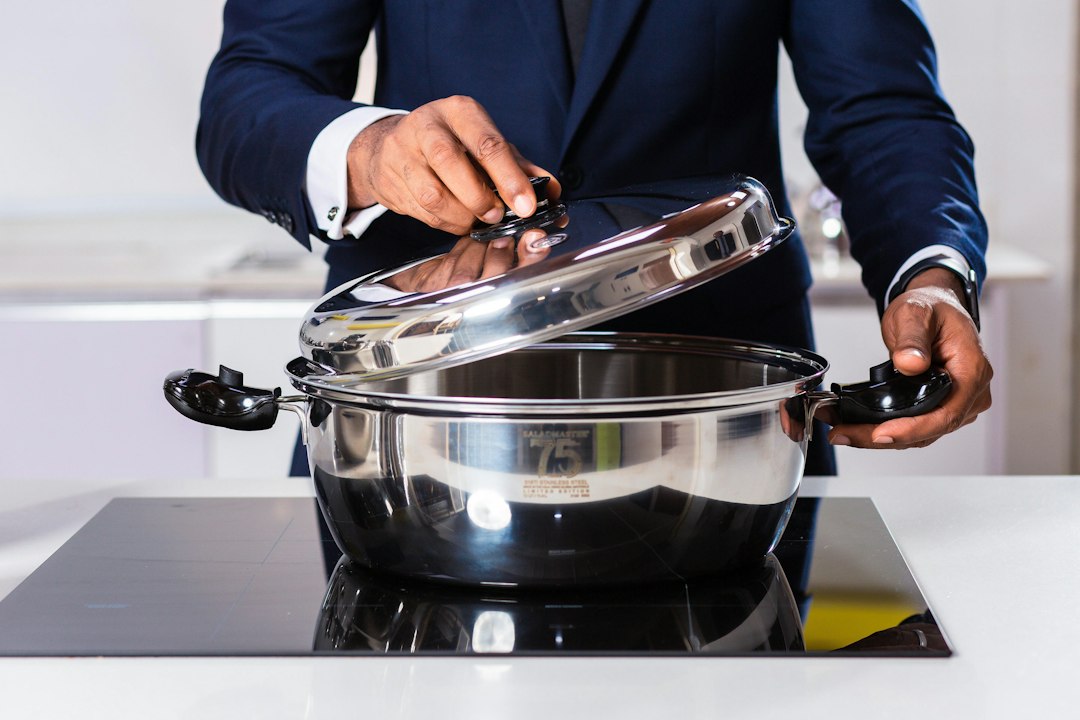
You’re probably staring at your new induction stove with a mix of curiosity and a healthy dose of apprehension. It’s sleek, it’s modern, and it hums with a power that feels, well, different. This isn’t the familiar glow of your old electric coil or the flickering dance of gas flames. This is induction, and it’s about to become your secret weapon for mastering the physics of everyday cooking. Forget the dense textbooks; your kitchen is about to become your most illuminating laboratory.
The Invisible Force: Understanding Electromagnetic Induction
Your induction stove is a marvel of applied physics, a testament to the clever manipulation of electromagnetism. At its heart lies the principle of electromagnetic induction, a phenomenon first observed by Michael Faraday. You’re not directly heating the surface of the stove; you’re not even directly heating the cookware in the traditional sense. Instead, you’re creating a magnetic field that induces heat within your compatible pots and pans. It’s a subtle yet profound distinction that unlocks a whole new level of control and efficiency in your cooking.
The Anatomy of Induction: What’s Under the Hood?
To truly master your induction stove, it’s helpful to understand its basic components and how they work in concert. This isn’t about becoming an electrical engineer, but rather appreciating the fundamental science that makes it all possible.
The Solenoid Coil: Your Magnetic Maestro
Beneath the smooth ceramic-glass surface of your induction hob lies a series of copper coils. When you turn on the stove and select a heating zone, electricity flows through these coils, generating a fluctuating magnetic field. Think of this as the conductor of your kitchen orchestra, setting the rhythm for the heat that will follow. The higher the power setting, the stronger and faster this magnetic field fluctuates. This is crucial because the effectiveness of induction is directly tied to the speed and strength of this oscillating magnetic field.
The Eddy Currents: The Heart of the Heat
This fluctuating magnetic field is the key. When you place a ferromagnetic pot or pan (think cast iron or certain types of stainless steel) on the induction hob, this magnetic field penetrates the base of the cookware. According to Faraday’s law of induction, a changing magnetic field induces an electromotive force (EMF) in a conductor. In your cookware, this EMF drives eddy currents – small, circulating electrical currents within the metal itself. It’s these eddy currents, as they flow through the resistance of the metal, that generate heat. The faster the currents, the greater the resistance, and thus, the more heat produced. This is why induction is so responsive; you’re directly generating heat within the pot, not waiting for heat to transfer from a heating element.
The Magnetic Field Interaction: The Crucial Connection
The reason your old aluminum or copper pans won’t work on an induction stove is simple physics. These materials are not ferromagnetic. While they are conductive, the magnetic field from the induction coil won’t effectively penetrate them and induce significant eddy currents. The magnetic field needs to “grab hold” of the material to cause the necessary atomic friction that translates into heat. This is why selecting the right cookware is not just a matter of preference, but a fundamental requirement for your induction stove to function. Look for the induction symbol on your cookware, or simply test it with a magnet – if it sticks firmly, it’s likely induction-compatible.
If you’re curious about the everyday physics behind induction stoves and how they work, you might find this related article on Freaky Science particularly enlightening. It delves into the principles of electromagnetic induction and explains how these stoves efficiently heat cookware without direct flame. For more insights, check out the article here: Freaky Science.
The Speed of Light (Almost): Responsiveness and Control
One of the most striking differences you’ll notice with your induction stove is its sheer responsiveness. Gone are the days of waiting for a burner to cool down or preheat. Induction offers near-instantaneous temperature changes, allowing you to perform culinary feats that were previously the exclusive domain of seasoned chefs. This rapid response is a direct consequence of the physics of eddy current generation.
Instantaneous Heat Application: No More Waiting
When you turn the dial or tap the controls on your induction stove, you are not waiting for a heating element to get hot and then transfer that heat to your pan. Instead, you are directly influencing the strength and frequency of the magnetic field. This, in turn, directly impacts the intensity of the eddy currents generated within your cookware. The moment you increase the power, the eddy currents surge, and your pan heats up. Conversely, when you reduce the power, the eddy currents diminish almost instantly, causing your pan to cool down just as rapidly. This direct correlation between your input and the heat output is what makes induction so incredibly precise.
The Physics of Thermal Inertia: Minimized for Maximum Impact
Every material has thermal inertia, which is its resistance to changes in temperature. Traditional stovetops have significant thermal inertia; the heating element itself has to absorb and then release heat, which takes time. Your induction stove, by generating heat directly within the pan, bypasses this intermediary step. The thermal inertia you are primarily dealing with is that of the cookware itself, which is significantly less than the combined inertia of a traditional burner and the pan. This means your pan responds to your adjustments almost immediately, allowing you to fine-tune your cooking with an unprecedented level of accuracy.
Precision Power Levels: The Art of the Subtle Adjustment
Many induction stoves offer a granular range of power settings, often displayed numerically rather than with vague descriptors like “low” or “medium.” This granularity is a direct reflection of the precise control you have over the magnetic field. Each number corresponds to a specific frequency and amplitude of the oscillating magnetic field, which translates to a predictable level of heat generation. This allows you to move beyond guesswork and engage in the subtle art of heat management. Simmering delicate sauces, searing meats to perfection, or gently melting chocolate – all become more manageable when you can precisely dial in the exact amount of heat you need.
Efficiency and Energy: The Smart Choice for Your Kitchen
Beyond its impressive performance, your induction stove is also a champion of energy efficiency. The physics behind its operation mean less wasted energy and a more sustainable approach to cooking. You’re not just cooking; you’re cooking smartly.
Minimizing Heat Loss: Keeping the Energy Where It Belongs
One of the biggest thermodynamic losses in traditional cooking methods is the dissipation of heat into the surrounding environment. With gas stoves, a significant portion of the flame’s heat escapes around the sides of the pot. Even electric coil stoves lose a considerable amount of heat to the air as the coils heat up and then transfer that heat to the cookware. Your induction stove, however, is remarkably efficient.
Direct Energy Transfer: No More Heat Escape Routes
The electromagnetic field is precisely focused on the base of your cookware. There are no open flames to lick the sides of your pots, and no glowing red coils radiating heat into your kitchen. The heat is generated within the pan itself, meaning virtually all the energy you’re consuming is directed towards cooking your food. This dramatically reduces energy waste and contributes to a more efficient cooking process. Think of it like this: you’re not heating the air around the pan; you’re heating the pan, and by extension, your food.
Reduced Ambient Heat: A Cooler, More Comfortable Kitchen
Because so little heat is lost to the surroundings, your kitchen remains significantly cooler when you’re cooking with induction. This is a welcome benefit, especially during warmer months, as it reduces the need for increased air conditioning. Furthermore, this reduced ambient heat can contribute to a more comfortable and pleasant cooking experience. You’re not battling a wave of heat emanating from the stovetop, allowing you to focus on the task at hand.
Safety First: The Physics of a Cooler Touch
Safety is paramount in any kitchen, and your induction stove offers a significant advantage in this regard, thanks to its unique heating mechanism. You’re no longer dealing with a perpetually hot surface, but a system that prioritizes your well-being.
The Cool-to-Touch Surface: A Game Changer
The ceramic-glass surface of your induction stove remains relatively cool during operation. This is because the heat is generated directly within the cookware, not on the hob itself. While the hob will absorb some residual heat from the hot pan, it never reaches the scorching temperatures of traditional electric or gas burners.
Residual Heat Dynamics: Understanding the Nuances
It’s important to understand that the surface isn’t cold while you’re cooking. It will get warm from the heat radiating from the pan. However, this residual heat dissipates quickly once the pan is removed. The critical difference is that the surface itself is not the primary heat source. This significantly reduces the risk of accidental burns from touching the stovetop, especially for households with children or pets. The danger zone is primarily the hot pan, which you are actively interacting with.
Automatic Shut-Off Features: The Electronic Guardian
Many induction stoves are equipped with sophisticated safety features, including automatic shut-off when no cookware is detected or when cookware is removed for an extended period. This intelligent design further enhances safety by preventing the stove from overheating unnecessarily. The sensors are detecting the presence and interaction of your ferromagnetic cookware with the magnetic field. If that interaction ceases, the system is programmed to disengage, preventing potential hazards.
Induction stoves are a fascinating example of everyday physics in action, utilizing electromagnetic fields to heat cookware directly while keeping the surface cool to the touch. For those interested in exploring the science behind this technology further, you can read a related article that delves into the principles of electromagnetism and how they apply to cooking. Understanding these concepts can enhance your appreciation of modern kitchen appliances and their efficiency. To learn more, check out this insightful piece on Freaky Science.
Mastering the Art of Induction Cooking: Practical Applications
Now that you understand the underlying physics, let’s translate that knowledge into practical cooking techniques. Your induction stove isn’t just a fancy appliance; it’s a tool that, when understood, allows you to elevate your culinary skills.
The Perfect Sear: Unleashing the Power of Rapid Heating
Induction is ideal for achieving a perfect sear on meats. The ability to rapidly bring your pan to high temperatures means you can create that beautiful, crispy crust without overcooking the interior.
Preheating Strategy: Get It Hot, Fast.
Don’t be shy with your induction stove when it comes to searing. Select a high power setting for your induction-compatible pan and allow it to preheat for a minute or two. You’ll notice the temperature rise quickly. A smoking hot pan is crucial for a good sear. This rapid preheating is directly a result of the efficient eddy current generation.
Post-Sear Management: The Cool Down is Quick
Once your protein is seared, you’ll likely want to reduce the heat to finish cooking. Your induction stove’s responsiveness means you can immediately drop the power level without waiting for a burner to cool. This prevents your protein from burning or overcooking while you adjust the heat. This control is a direct manifestation of minimizing thermal inertia.
The Delicate Simmer: Precision Control for Nuance
Conversely, induction is equally adept at maintaining a gentle simmer, crucial for delicate sauces, custards, and slow-cooked dishes.
Low-Heat Mastery: Finding the Sweet Spot
Many induction stoves have very low power settings that are perfect for maintaining a gentle simmer. You can often see tiny bubbles just beginning to form in your liquid. This precise control prevents scorching and allows flavors to meld beautifully. This isn’t about simply turning down the dial; it’s about controlling the intensity of the eddy currents to generate just enough heat to maintain a consistent, low temperature.
Stirring and Adjusting: The Continuous Flow
The responsive nature of induction allows you to continuously monitor and adjust your simmer. If you see the temperature creeping up, a quick reduction in power brings it back under control. This constant feedback loop, enabled by the physics of induction, is key to achieving perfect results for dishes that require a slow, steady heat.
Boiling Water in Record Time: Efficiency at Its Finest
You might be surprised at how quickly your induction stove can bring water to a boil. This is a direct testament to its efficiency.
The Direct Heat Equation: Energy In, Heat Out
When you boil water on an induction stove, the energy from the magnetic field is directly transferred into the water molecules within the pan. There’s minimal energy lost to heating the surrounding air. This direct energy transfer translates into faster boiling times, saving you precious minutes in your daily routine. This is a perfect example of minimizing thermodynamic losses.
Comparison to Other Methods: A Clear Winner
Compare the boiling time of water on your induction stove to a gas or traditional electric stove. You’ll likely find that induction is significantly faster. This isn’t magic; it’s good old-fashioned physics at play, prioritizing efficient energy transfer. You’re directly heating the water within the pan, not the air around it.
Your induction stove is more than just a cooking surface; it’s a gateway to understanding and applying the fundamental principles of physics in your daily life. By demystifying the invisible forces at play, you can unlock its full potential, enjoying not only delicious meals but also a safer, more efficient, and more enjoyable cooking experience. So, embrace the hum, experiment with the controls, and let your induction stove guide you on a journey of culinary and scientific discovery. You’re not just cooking; you’re conducting a symphony of electromagnetic waves and thermal energy, all within the comfort of your own kitchen.

The Pan Is the Heater: How Induction Cooking Really Works
FAQs

What is an induction stove?
An induction stove is a type of cooktop that uses electromagnetic induction to heat cookware directly, without the need for a traditional heating element like gas or electric coils.
How does an induction stove work?
An induction stove generates an electromagnetic field that creates heat only in the cookware placed on top of it. The cookware must be made of ferrous metal, such as cast iron or stainless steel, for the induction process to work.
What are the advantages of using an induction stove?
Some advantages of using an induction stove include faster heating times, precise temperature control, energy efficiency, and safety features like automatic shut-off when cookware is removed.
Are there any limitations to using an induction stove?
One limitation of using an induction stove is that not all cookware is compatible with induction cooking. Cookware must have a magnetic bottom to work effectively on an induction stove.
How can I clean and maintain an induction stove?
To clean and maintain an induction stove, it is recommended to use a soft cloth with mild detergent to wipe down the surface after each use. Avoid using abrasive cleaners or scrubbers that can damage the glass cooktop.