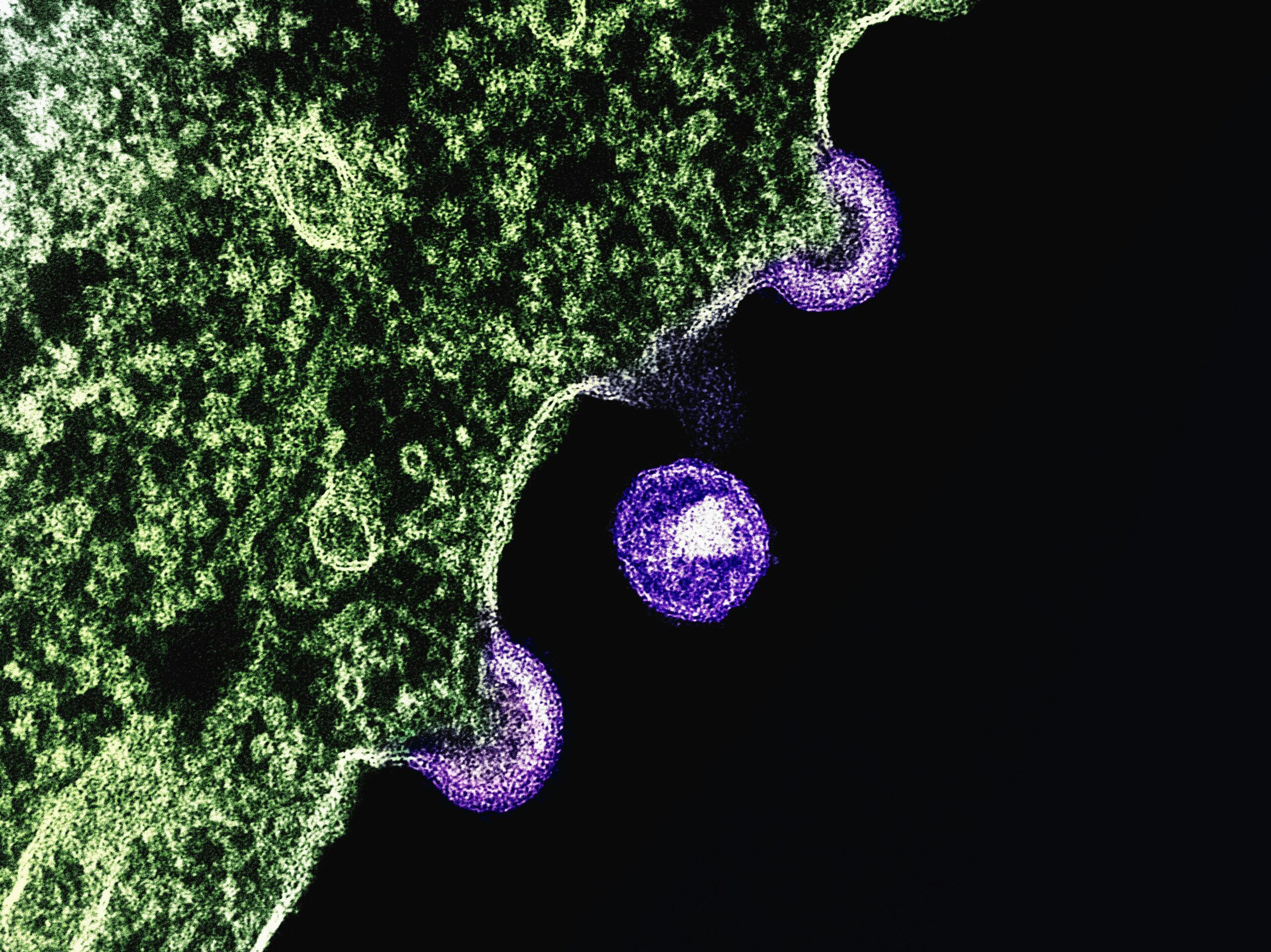
You are part of a mammalian lineage. This fact, seemingly straightforward, is the outcome of a profoundly intricate history, a narrative written not just in your genes but in the very fabric of your being. It’s a story where a significant, and often overlooked, chapter is filled with the persistent presence of viruses. Not as mere enemies to be eradicated, but as agents of change, whose genetic remnants have been woven into the tapestry of your own genome. You are, in a very real sense, a product of viral domestication.
Long before the advent of agriculture and the domestication of animals and plants, a more ancient and intimate form of domestication was taking place. This was the incorporation of viral genetic material into the germline of your mammalian ancestors. These are not transient infections; these are events where viral DNA managed to integrate itself into the very chromosomes that would be passed down from parent to offspring.
Endogenous Retroviruses: The Ghost in Your Genome
The primary culprits in this ancient domestication are what scientists call endogenous retroviruses (ERVs). These are remnants of retroviral infections that occurred millions of years ago. Retroviruses, like HIV, have a unique life cycle: they inject their RNA genome into a host cell, convert this RNA into DNA using a viral enzyme called reverse transcriptase, and then, crucially, this viral DNA can integrate itself into the host cell’s DNA. In a rare but pivotal event, if this integration occurs in a germline cell (sperm or egg), the integrated viral DNA becomes a permanent part of the host’s genome, inherited by all subsequent generations.
The Scale of Endogenous Viral Elements
You carry within your DNA hundreds, if not thousands, of these ERV sequences. They are not inert passengers. Over evolutionary time, many have accumulated mutations, rendering them incapable of producing infectious viral particles. However, their presence is far from insignificant. These ERVs are distributed across your chromosomes, interspersed with your own genes, acting as silent witnesses to the viral invasions of your distant past.
Mechanisms of Germline Integration
The process of retroviral integration into the host genome is a complex molecular dance. It involves specific viral enzymes and a degree of chance. The viral DNA, once reverse transcribed, seeks out sites for integration. While some integration sites might be detrimental, leading to disease or reduced fitness, others might be neutral or, over vast stretches of time, even advantageous.
The Evolutionary Lottery: Survival and Persistence of Viral DNA
The survival of an ERV in a mammalian lineage is a testament to a delicate evolutionary balance. Not every retroviral integration event leads to a stable endogenous element. Factors determining persistence include:
- Location of Integration: If a viral insertion disrupts a critical gene, it is likely to be selected against and lost from the population. Conversely, integrations in less critical regions, or within existing genes in a non-disruptive manner, are more likely to persist.
- Recombination and Deletion: Over time, due to cellular processes like recombination and random deletion, ERV sequences can be eroded or lost. However, if an ERV is present in multiple copies within the genome, or if its insertion is particularly stable, it can withstand these forces.
- Fitness Implications: If an ERV confers even a slight fitness advantage, or is neutral, its presence will increase in frequency within the population, solidifying its position as an endogenous element.
Recent research has shed light on the fascinating phenomenon of viral envelope genes that have been domesticated by mammals, revealing how these genes have been co-opted for essential biological functions. A related article that delves deeper into this topic can be found at Freaky Science, where the implications of these viral genes on mammalian evolution and immune responses are explored in detail. This intersection of virology and mammalian biology highlights the complex relationships that can develop between hosts and viruses over evolutionary time.
Beyond Relics: Viral Genes Stepping Up as Cellular Helpers
It is a common misconception that all viral genetic material within your genome is vestigial, a scar from past infections. While many ERVs are indeed inactive, a fascinating subset have been repurposed by your cells, evolving to perform crucial functions that you rely on for existence. This is the essence of domestication: taking something that was once external and potentially harmful, and integrating it into the functioning machinery of the host.
Syncytin: The Viral Key to Placental Development
Perhaps the most celebrated example of viral domestication is the gene encoding Syncytin. This gene, derived from an ERV, plays an absolutely indispensable role in mammalian reproduction, particularly in the formation of the placenta. The placenta is a complex organ that facilitates nutrient and gas exchange between the mother and the developing fetus.
The Role of Env Protein
The original retroviral gene that gave rise to Syncytin encoded for the viral envelope (Env) protein. This protein is essential for the virus to fuse with the host cell membrane, allowing viral entry. In its domesticated form, Syncytin, this Env protein has been co-opted to mediate cell-cell fusion in a controlled and essential manner within the developing placenta.
Fusion of Trophoblast Cells
Specifically, Syncytin drives the fusion of trophoblast cells, the outer layer of cells in the early embryo that will form the placenta. This fusion creates a multinucleated layer called the syncytiotrophoblast, which is critical for establishing the maternal-fetal interface. Without this viral-derived protein, the placenta would not form correctly, and mammalian reproduction as you know it would be impossible.
Immune Tolerance at the Maternal-Fetal Interface
Furthermore, Syncytin is thought to play a role in immune tolerance at the maternal-fetal interface. The fetus, being partially genetically distinct from the mother, could theoretically elicit an immune response. Syncytin may contribute to the formation of a barrier that prevents such a response, ensuring the successful pregnancy.
Other Env-Derived Proteins in Mammalian Physiology
The story of Syncytin is not an isolated incident. While less dramatically essential to the entire species, other ERV-derived genes are also contributing to various aspects of mammalian physiology. Researchers are continually uncovering new instances of viral genes being repurposed.
Potential Roles in the Nervous System
There is intriguing evidence suggesting that certain ERV-derived proteins might play roles in the nervous system. These could involve processes related to neuronal development, signaling, or even myelination. The complex interactions within the brain make it a fertile ground for discovering such internalized viral elements.
Contributions to Immune Regulation
Beyond the placenta, some ERV-derived proteins may also contribute to the broader regulation of your immune system. Their expression patterns could influence inflammation, immune cell responses, or the development of immune tolerance to self-antigens.
The Molecular Mechanisms: How Viral Genes Are Repurposed

The transition from a functional viral gene to a domesticated host gene is not an instantaneous event. It involves a series of molecular adaptations that allow the viral element to be expressed and regulated appropriately within the mammalian cellular environment.
Transcriptional Regulation: Finding the Right Promoters
For a viral gene to be expressed, it needs to be transcribed into RNA. This process is typically initiated by a promoter sequence. In the case of domesticated ERVs, their own viral promoters may have been modified, or they might have acquired new promoters from neighboring host genes. This allows for the regulated expression of the former viral gene at specific times and in specific tissues.
Promoter Acquisition and Modification
The integration event itself can place viral genes near host gene promoters, facilitating their expression. Over time, mutations within these sequences can refine the promoter’s activity, leading to tissue-specific or developmentally regulated expression patterns.
Chromatin Remodeling and Epigenetic Control
The cellular environment also plays a role in controlling gene expression through epigenetic mechanisms. Chromatin structure can be altered to make viral DNA more or less accessible for transcription. This allows for fine-tuning of the expression level and timing of domesticated viral genes.
Post-Transcriptional and Post-Translational Modifications: Tailoring the Protein
Once transcribed into RNA and translated into protein, former viral proteins may also undergo further modifications to fit their new cellular roles.
RNA Splicing
While retroviruses are typically single-stranded RNA viruses, their DNA integration allows them to be treated like host genes during transcription. This means they can be subject to cellular RNA splicing machinery, which can alter the resulting messenger RNA (mRNA) and, consequently, the protein produced.
Protein Folding and Assembly
The cellular machinery responsible for protein folding and assembly also interacts with domesticated viral proteins. This ensures that these proteins adopt the correct three-dimensional structures necessary for their function within the complex environment of a mammalian cell.
Protein Stability and Degradation
The lifespan of a protein within a cell is tightly regulated. Domesticated viral proteins are also subject to these regulatory mechanisms, influencing their stability and the rate at which they are degraded.
The Evolutionary Advantage: Why Domesticate Viral Genes?

The question arises: what evolutionary pressures would drive the domestication of viral genes by mammals? The answer lies in the concept of exaptation – where a trait that evolved for one purpose is later co-opted for a new function. Viral genes provided pre-existing, pre-built molecular machinery that could be readily incorporated into the host’s genetic toolkit.
Accelerating Innovation: Leveraging Existing Complexity
Developing complex molecular functions from scratch is a slow and arduous process, requiring multiple incremental steps over vast periods. Viral genomes, on the other hand, already possess sophisticated proteins and genetic elements. By integrating and repurposing these, mammals could accelerate their evolutionary innovation.
Pre-built Functional Modules
Think of viral genes as pre-fabricated modules. Instead of building a complex cellular mechanism piece by piece, mammals could “borrow” a functional module from a virus and adapt it to their needs. This bypasses much of the trial-and-error inherent in de novo evolution.
Providing Novel Solutions to Biological Challenges
Mammalian evolution presented numerous biological challenges, such as developing effective reproduction, immune system complexity, and sophisticated neural networks. Viral genes, having evolved in diverse environments and interacting with various hosts, may have offered novel molecular solutions that were not readily available through modifications of existing host genes.
Repurposing for Reproductive Success
As seen with Syncytin, a significant advantage conferred by domesticated viral genes appears to be in reproductive biology. The development of viviparity (live birth) and the associated complex placental structures presented a major evolutionary leap. Viral genes provided the necessary tools to achieve this.
Overcoming Barriers to Placentation
The formation of an effective placenta, capable of supporting a developing fetus within the mother, is a complex undertaking. It requires intricate cell-cell recognition, fusion, and barrier formation, all of which can be facilitated by viral Env proteins.
Facilitating Mammalian Radiation
The ability to reproduce effectively through live birth and efficient placentation is a hallmark of mammalian success. It allowed mammals to occupy a vast array of ecological niches, contributing to their incredible diversity and radiation across the globe. It is plausible that the domestication of viral genes played a critical role in unlocking this reproductive advantage.
Recent studies have shed light on the fascinating phenomenon of viral envelope genes that have been domesticated by mammals, revealing how these genes may play a crucial role in immune responses and cellular functions. For a deeper understanding of this topic, you can explore an insightful article on the implications of these viral genes in mammalian evolution and health. To read more about it, visit this article which delves into the intricate relationship between viruses and their mammalian hosts.
The Ongoing Dialogue: Viral Genes and Mammalian Evolution Today
| Species | Gene Name | Function |
|---|---|---|
| Humans | Syncytin-1 | Placental development |
| Mouse | Syncytin-A | Placental development |
| Cats | Syncytin-T1 | Placental development |
The relationship between mammals and their endogenous viral elements is not a static one. It is an ongoing evolutionary dialogue, where viral genes continue to influence mammalian evolution, and mammals, in turn, shape the fate of these internalized viral sequences.
New Discoveries and Unanswered Questions
The field of ERV research is rapidly advancing. Each year brings new discoveries about the diverse roles these ancient viral remnants play in mammalian biology. However, many questions remain unanswered.
Prevalence and Function Across Species
While Syncytin is a well-established example, the extent to which other ERV-derived genes are functional and conserved across different mammalian species is still being actively investigated. The diversity of ERVs means that different lineages may have domesticated different viral genes.
Links to Disease and Health
The dual nature of these viral remnants is also a subject of intense study. While some are beneficial, others might contribute to disease, particularly when their expression is dysregulated. Understanding this balance is crucial for human health.
The Implications for Your Own Biology
The implications of this viral domestication are profound. It means that you are not just a human, or a mammal, with a purely “human” or “mammalian” genome. You are a composite entity, a testament to a long and complex history of interspecies genetic exchange.
A Reimagining of the Self
Your very existence, your ability to reproduce, and many of your physiological functions are, in part, a legacy of ancient viral invasions. This offers a humbling and fascinating perspective on what it means to be a mammal.
The Future of Genetic Research
Understanding the mechanisms and consequences of viral gene domestication opens new avenues for genetic research. It could lead to novel therapeutic strategies, a deeper understanding of evolutionary processes, and a more holistic view of the interconnectedness of life. You are a living, breathing testament to the power of viral genes to shape life itself.
FAQs
What are viral env genes?
Viral env genes are genes found in the genome of viruses that encode for envelope proteins. These proteins are responsible for the virus’s ability to infect host cells and are crucial for the virus’s life cycle.
How have mammals domesticated viral env genes?
Mammals have domesticated viral env genes by incorporating them into their own genomes through a process called endogenization. This process involves the integration of viral genetic material into the host genome, where it can be passed down to future generations.
What is the significance of mammals domesticating viral env genes?
The domestication of viral env genes by mammals has been found to play a role in the evolution of mammalian species. These genes have been repurposed for various functions in the host, such as placental development and immune system regulation.
Can domesticated viral env genes have beneficial effects for mammals?
Yes, domesticated viral env genes have been found to have beneficial effects for mammals. For example, some of these genes have been co-opted for important physiological functions, such as the formation of the placenta in pregnancy.
Are there any potential risks associated with domesticated viral env genes in mammals?
While domesticated viral env genes have been repurposed for beneficial functions in mammals, there is also the potential for these genes to contribute to diseases, such as cancer, if they become dysregulated. Research is ongoing to better understand the potential risks associated with these domesticated genes.