
Macaque studies have begun to illuminate the complex and concerning nature of Chronic Wasting Disease (CWD), a transmissible spongiform encephalopathy (TSE) that affects cervids, such as deer, elk, moose, and caribou. This persistent and invariably fatal neurological disease has steadily expanded its geographic footprint across North America and has been detected in several other countries, raising significant alarm among wildlife managers, agricultural sectors, and public health officials. The macaque research, primarily conducted with non-human primates in laboratory settings, offers a crucial window into the disease’s potential for transmission, its pathogenesis, and, critically, the potential risks it may pose to human health. For those who follow the unfolding narrative of CWD, these primate studies are akin to unlocking a vital chapter in a still-incomplete book, providing answers while simultaneously posing new questions.
Chronic Wasting Disease (CWD) is characterized by the accumulation of misfolded prion proteins, known as prions, in the brain and other tissues of affected animals. These prions, though lacking genetic material, possess the unsettling ability to induce normal, healthy prion proteins to misfold in a domino-like fashion, leading to the formation of amyloid plaques and spongiform degeneration of neural tissue.
What are Prions?
Prions are abnormal forms of cellular proteins that are found in the brain tissue of all mammals. In their normal state, these proteins play a role in various cellular functions. However, when they misfold into the abnormal prion configuration, they become infectious agents. This prion formation is a self-propagating process, where the misfolded protein acts as a template, forcing other normal prion proteins to adopt the same aberrant shape. This aberrant folding is the root cause of the neurodegenerative damage observed in TSEs. The insidious nature of prions lies in their resilience; they are remarkably resistant to conventional sterilization methods like heat, radiation, and disinfectants, making them exceptionally difficult to eradicate from the environment. This tenacity means that even after an infected animal is removed, prions can persist in soil, water, and vegetation, creating a potent reservoir for future transmission.
Transmission Pathways and Environmental Persistence
The primary routes of CWD transmission are believed to be direct animal-to-animal contact, particularly through saliva, urine, feces, and physical contact with infected carcasses. Indirect transmission through environmental contamination is also a significant concern. Prions are shed in large quantities by infected animals, and once released into the environment, they can bind to soil particles and vegetation, remaining infectious for extended periods. This environmental persistence acts as a silent, invisible threat, seeding the landscape with the pathogen and making it challenging to implement effective containment strategies. The long incubation period of CWD, often spanning months or even years, further complicates detection and control efforts, as animals can shed prions and spread the disease without exhibiting outward symptoms.
Geographic Spread and Economic Impact
Initially identified in mule deer in Colorado in the 1960s, CWD has now been detected in over 30 states in the United States and in multiple Canadian provinces. Its relentless march across the continent presents a significant ecological and economic challenge. For wildlife populations, CWD can lead to significant mortality rates, particularly in areas with high densities of susceptible species. This can disrupt ecosystems, impact hunting traditions, and reduce biodiversity. Economically, the spread of CWD can impact the multi-billion dollar hunting and tourism industries, leading to restrictions on hunting, herd management costs, and trade limitations for game meat. The economic implications are not limited to wildlife; concerns about potential impacts on livestock, though currently unsubstantiated by direct evidence of transmission to cattle, also cast a long shadow over the agricultural sector’s economic stability.
Recent studies have explored the implications of chronic wasting disease (CWD) in macaques, shedding light on the potential transmission pathways and effects of prion diseases in primate models. For further insights into this topic, you can read a related article that discusses the latest findings and their significance in understanding CWD. To learn more, visit Freaky Science.
Macaques as a Primate Model for CWD Research
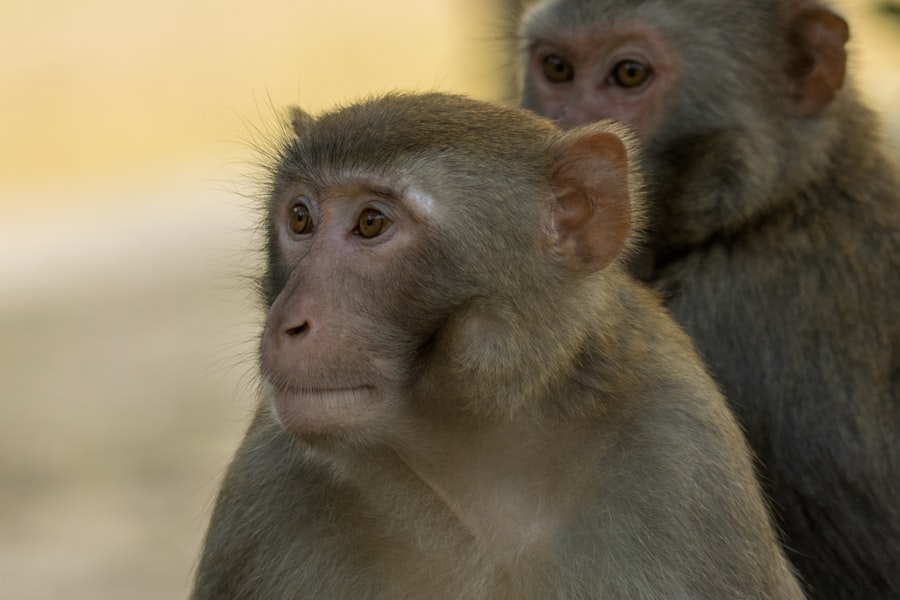
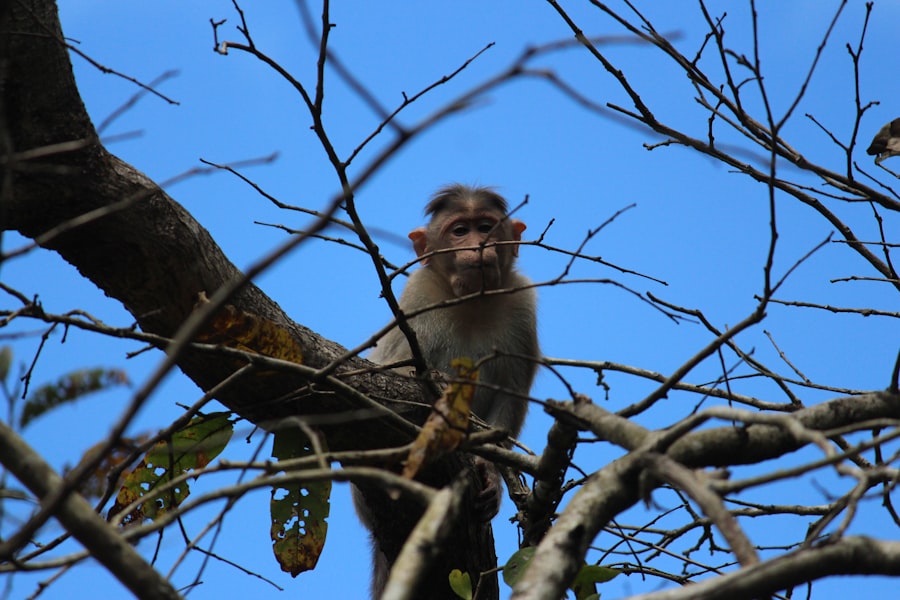
The challenges in studying CWD in its natural hosts, coupled with the need to understand potential zoonotic transmission, have led researchers to investigate its effects in non-human primate models. Macaques, a genus of Old World monkeys, have been chosen for their physiological similarities to humans and their susceptibility to prion diseases when experimentally infected. These animals, in controlled laboratory environments, become invaluable surrogates, allowing scientists to probe the disease mechanisms with a level of precision not achievable in wild populations.
Why Macaques?
Macaques, particularly species like the cynomolgous macaque (Macaca fascicularis) and the rhesus macaque (Macaca mulatta), have been instrumental in prion disease research for decades. Their genetic makeup and neurological systems share significant commonalities with human physiology, making them an ethically justifiable and scientifically robust model for investigating diseases that could potentially affect humans. The ability to control their diet, environment, and exposure to pathogens allows for standardized research protocols, generating reproducible and reliable data. This controlled environment acts as a sterile petri dish for meticulously observing the progression of disease, a luxury not afforded by the chaotic and often unpredictable world of wild animal populations.
Experimental Infection and Disease Progression
In these macaque studies, researchers have experimentally inoculated macaques with CWD prions derived from various cervid species. The administration routes have often mimicked potential natural exposures, such as oral ingestion. Following inoculation, the macaques are closely monitored for the development of clinical signs and pathological changes consistent with CWD. This meticulous observation period can extend for several years, reflecting the long incubation period of the disease. During this time, researchers collect a wealth of data on neurological function, behavior, and the distribution of prions within the body, painting a detailed portrait of the disease’s insidious spread through the primate nervous system. The progression mirrors the slow, creeping dread one might feel when a shadow lengthens across a room – subtle at first, then undeniable.
Insights into Pathogenesis and Neurodegeneration
The pathological examination of macaque brains in these studies has provided critical insights into the pathogenesis of CWD. Researchers have observed the characteristic spongiform changes, neuronal loss, and the deposition of misfolded prion proteins in specific brain regions. Understanding which areas of the brain are most vulnerable to prion accumulation helps to explain the observed clinical signs and provides clues about the molecular mechanisms driving neurodegeneration. This detailed anatomical mapping of the disease’s devastation within the macaque brain is like charting an enemy’s advance, identifying key strategic points of attack.
Zoonotic Potential: The Human Health Question
One of the most pressing questions surrounding CWD is its potential to transmit to humans, a phenomenon known as zoonosis. While no definitive cases of CWD in humans have been documented to date, the persistence of the disease in wildlife and the close interactions between humans and cervids, particularly through hunting and consumption, necessitate a thorough investigation of this risk.
Transmission Studies in Primates
Macaque studies are at the forefront of addressing the zoonotic potential of CWD. By experimentally infecting macaques with CWD prions, researchers are directly testing whether these prions can cross the species barrier and cause disease in primates that are biologically closer to humans. The results of these studies are therefore of paramount importance for informing public health recommendations and risk assessments. The outcome of these experiments is watched with the intensity of a jury awaiting a verdict, as the implications for human health hang in the balance.
Oral Transmission and Incubation Period
Studies have investigated the efficacy of oral transmission of CWD prions to macaques. While not all studies have shown successful transmission, some experimental inoculations, particularly with concentrated prion isolates, have resulted in the development of the disease. The incubation period in macaques, as in their natural cervid hosts and indeed in humans with other prion diseases, can be lengthy, often measured in years. This long fuse of incubation period means that a potential future human infection might not manifest clinical signs for a significant time after exposure, underscoring the importance of proactive research and monitoring.
Prion Strain Variation and Adaptation
A critical aspect of zoonotic risk involves the concept of prion strains. Different strains of prions can have varying levels of infectivity and may exhibit different propensities to jump species. Macaque studies are also exploring whether CWD prions from different cervid sources or that have undergone different environmental evolution might possess different zoonotic potential. Understanding these strain variations is like deciphering different dialects of a language; some might be more easily understood, or in this case, more readily transmitted, by a new host.
Implications for Public Health and Wildlife Management
The findings from macaque studies directly inform public health guidelines and wildlife management strategies aimed at mitigating the spread of CWD and protecting human health. These research efforts are not purely academic exercises; they are critical tools for safeguarding both our wild spaces and our communities.
Risk Assessment and Public Health Recommendations
The data generated from macaque experiments contribute to the ongoing risk assessments conducted by public health agencies. If macaques are shown to be susceptible to CWD under experimental conditions, it raises the precautionary principle for human exposure. This can lead to recommendations regarding the hunting, processing, and consumption of game meat from CWD-affected areas. The research acts as a scientific compass, guiding public health officials in navigating the uncharted waters of CWD risk.
Surveillance and Monitoring Efforts
Understanding the transmission dynamics and pathogenesis of CWD in a primate model can also inform and refine surveillance and monitoring efforts in wild populations. If researchers can identify specific markers or early indicators of infection in macaques, these might be translatable to diagnostic tools for wild cervids or even for human screening in the future. This proactive approach is akin to developing advanced radar systems to detect incoming threats long before they reach their target.
Evolution of Management Strategies
The insights gained from macaque studies can influence the evolution of CWD management strategies. For instance, if certain transmission routes are shown to be more efficient in primates, these could be prioritized for intervention in wild populations. Similarly, understanding the environmental persistence of prions, as illuminated by studies on their behavior in laboratory models, can lead to more targeted decontamination or management efforts in affected areas. The research empowers managers to deploy their resources more effectively, like a skilled general planning a campaign.
Recent research has highlighted the intriguing connection between macaque studies and chronic wasting disease, shedding light on potential transmission pathways and the disease’s impact on primate health. For those interested in exploring this topic further, a related article discusses the implications of these findings and their relevance to understanding chronic wasting disease in various species. You can read more about it in this insightful piece here.
Future Directions and Unanswered Questions
| Study | Year | Number of Macaques | Infection Method | Incubation Period (months) | Symptoms Observed | Prion Detection Method | Key Findings |
|---|---|---|---|---|---|---|---|
| Race et al. | 2009 | 5 | Oral exposure | 24-30 | Weight loss, ataxia, behavioral changes | Western blot, Immunohistochemistry | Confirmed transmission of CWD to macaques via oral route |
| Mathiason et al. | 2013 | 6 | Intracerebral inoculation | 18-22 | Neurological decline, tremors | RT-QuIC, ELISA | Faster disease progression with intracerebral route |
| Seelig et al. | 2015 | 4 | Oral exposure | 28-36 | Behavioral changes, motor dysfunction | Immunohistochemistry | Long incubation period but eventual disease development |
| Huang et al. | 2017 | 7 | Oral and intracerebral | 20-32 | Weight loss, ataxia, cognitive impairment | Western blot, RT-QuIC | Dual exposure routes increase infection efficiency |
Despite the significant progress made through macaque studies, many questions surrounding CWD and its potential zoonotic implications remain. The scientific journey to fully understand this complex disease is far from over, and continued research is essential.
Enhancing Diagnostic Tools
Developing highly sensitive and specific diagnostic tools for CWD is a critical area of ongoing research. Macaque studies can play a role by helping to validate new diagnostic technologies under controlled experimental conditions. This includes exploring the possibility of early ante-mortem diagnostics in live animals, which would revolutionize our ability to track and manage the disease. The pursuit of better diagnostics is like searching for a sharper lens to see the subtle signs of trouble.
Investigating Interspecies Transmission Variability
Further research is needed to fully understand the variability in interspecies transmission of CWD. This includes investigating whether other common animal species, beyond cervids, could act as reservoirs for CWD or if they possess a natural resistance to infection. The exploration of such variabilities is akin to mapping the diverse flora and fauna of an uncharted continent, identifying potential pathways and barriers.
Long-Term Human Health Surveillance
While an immediate human health crisis from CWD has not materialized, the possibility of long-term, low-level exposures leading to chronic neurological issues remains a theoretical concern. Enhanced and sustained surveillance of human neurological diseases with unexplained etiologies, particularly in populations with high cervid exposure, may be necessary in the future. This ongoing vigilance is like maintaining a watchtower on a frontier, ready to sound an alarm at the first sign of encroachment. The continued investigation into chronic wasting disease, with macaque studies serving as a vital cornerstone, represents a critical scientific endeavor. It is a testament to human curiosity and our persistent drive to understand and mitigate threats to both animal and human health, a complex puzzle where each piece of research, like the macaque studies, brings us closer to a clearer picture of a formidable adversary.
FAQs
What is chronic wasting disease (CWD)?
Chronic wasting disease is a contagious neurological disorder affecting deer, elk, and moose. It is caused by misfolded proteins called prions, which lead to brain damage and ultimately death in infected animals.
Why are macaques used in studies on chronic wasting disease?
Macaques are used in CWD research because they are non-human primates with physiological and genetic similarities to humans. Studying CWD in macaques helps scientists understand the potential risk of transmission to humans and the disease’s progression in primates.
What have macaque studies revealed about the transmissibility of CWD to primates?
Macaque studies have shown that CWD prions can infect primates under certain experimental conditions, indicating a potential risk for cross-species transmission. However, the efficiency and likelihood of natural transmission to humans remain under investigation.
How do researchers conduct macaque studies on chronic wasting disease?
Researchers typically expose macaques to CWD prions through oral or intracerebral routes and monitor them over time for signs of infection. They use various diagnostic tools, including brain tissue analysis, to detect prion accumulation and disease progression.
What implications do macaque studies have for public health and wildlife management?
Findings from macaque studies inform risk assessments regarding human exposure to CWD, especially for hunters and consumers of cervid meat. They also guide wildlife management policies aimed at controlling the spread of CWD and protecting both animal and human health.