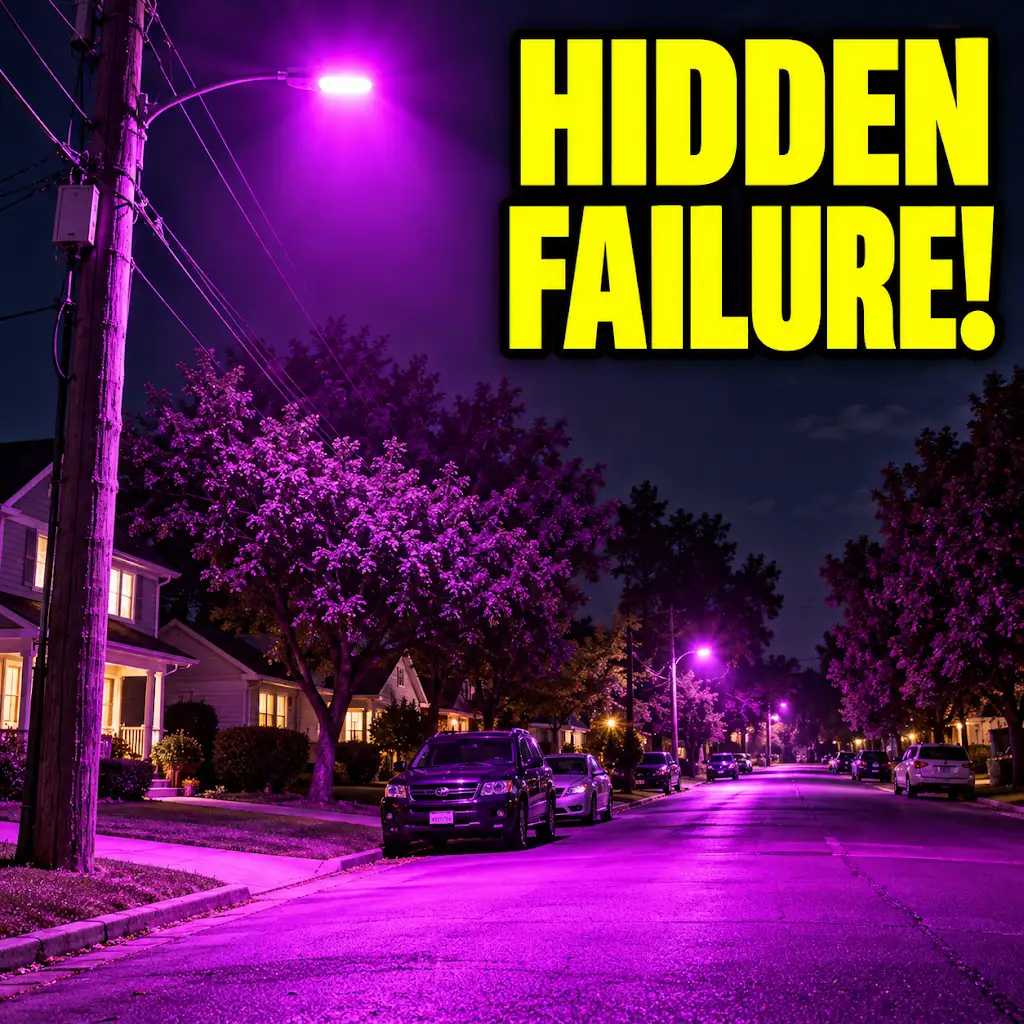
It’s not uncommon to see streetlights flickering or casting an odd hue, and that purple glow from an LED streetlight often signals a problem: thermal failure. This isn’t just an aesthetic issue; it points to a deeper problem with how the light is handling heat, which can impact its lifespan and performance.
The Purple Hue: A Visible Symptom of Overheating
That distinctive purple color isn’t a design choice; it’s a direct consequence of the LED chip itself failing due to excessive heat. Understanding why this happens involves a bit of insight into how LEDs work and the materials they’re made from.
How LEDs Produce Light
At its core, an LED (Light Emitting Diode) is a semiconductor device. When an electric current passes through it, electrons combine with electron holes, releasing energy in the form of photons – tiny packets of light. The color of the light depends on the specific semiconductor materials used and the energy gap between the electrons and holes. For white light, which most streetlights produce, manufacturers typically use a blue LED chip coated with a yellow phosphor. The blue light excites the phosphor, causing it to emit yellow light. The combination of blue and yellow light appears white to our eyes.
The Role of Phosphor Degradation
The phosphor coating is the key culprit when it comes to that purple glow. Phosphors are sensitive to heat. When an LED operates at excessively high temperatures, the phosphor material begins to degrade. This degradation is not uniform. It tends to happen unevenly, often starting from the edges or specific points on the phosphor layer. As the phosphor breaks down, it emits less yellow light and more of the original blue light. The remaining yellow component becomes insufficient to mix with the blue to create white light, resulting in a shift towards a bluer, and eventually, a distinctly purple hue. Think of it like a paint mixing gone wrong: if one of your colors fades or disappears, the final shade will change dramatically.
Why Heat is the Enemy of LEDs
LEDs are generally considered more energy-efficient and longer-lasting than older lighting technologies like incandescent or fluorescent bulbs. However, this efficiency comes with a caveat: they still generate heat. While they produce less heat overall than incandescent bulbs for the same amount of light, the heat they do generate is concentrated in a very small semiconductor junction. This concentrated heat needs to be managed effectively. If the heat isn’t dissipated properly, it can build up within the LED package, leading to accelerated aging of the semiconductor material and, crucially, the phosphor. This is why thermal management is such a critical aspect of LED streetlight design.
In recent discussions about the reliability of LED streetlights, concerns have been raised regarding thermal failure, particularly the phenomenon where these lights emit a purple hue as they degrade. This issue not only affects the aesthetic quality of urban lighting but also raises questions about the longevity and efficiency of LED technology. For a deeper understanding of the implications of thermal failure in LED streetlights, you can read a related article that explores these challenges in detail at this link.
Understanding the Root Causes of Thermal Stress

The purple glow is a symptom, not the disease. The underlying issue is the LED overheating. This overheating can stem from a variety of factors, often a combination of design flaws, installation issues, and environmental conditions. Pinpointing these causes is essential for preventing future failures and ensuring the longevity of the lighting infrastructure.
Inadequate Heat Sink Design
The heat sink is the unsung hero of LED operation. It’s the component, usually made of metal like aluminum, that draws heat away from the LED chip and dissipates it into the surrounding air. If the heat sink is too small, has insufficient surface area, or is poorly designed in terms of its fin structure, it simply won’t be able to carry away the heat generated by the LED at a fast enough rate. This leads to a buildup of heat within the fixture.
Material Quality of Heat Sinks
Even a well-designed heat sink can be rendered ineffective if the materials used are of poor quality. Low-grade aluminum or improper alloys might not conduct heat as efficiently as they should. Additionally, the thermal interface material (TIM) – the paste or pad that bridges the gap between the LED module and the heat sink – is crucial. If the TIM is old, dried out, or improperly applied, it creates a thermal barrier, hindering heat transfer.
Poor Thermal Conductivity Pathways
Beyond the heat sink itself, the entire pathway for heat to escape needs to be considered. This includes the thermal management integrated within the LED module, the electrical connections, and how the module is attached to the housing. Any bottleneck in this chain can lead to heat accumulating where it shouldn’t. For instance, poorly soldered connections or inadequate thermal vias on a printed circuit board can impede the flow of heat away from the LED chip.
Environmental Factors and Their Impact
The environment in which the streetlight operates plays a significant role. While LEDs are designed to withstand various conditions, extreme temperatures can push them beyond their limits.
High Ambient Temperatures
In regions with consistently high ambient temperatures, especially during summer months, the heat sink has a tougher job. It’s trying to dissipate heat into an already hot environment. If the fixture is also exposed to direct sunlight for extended periods, this adds another layer of thermal stress. The effectiveness of the heat sink is diminished when the surrounding air is already warm.
Poor Air Circulation and Ventilation
Streetlight fixtures are often enclosed to protect the electronics from the elements. However, this enclosure needs to be designed with ventilation in mind. If there are no vents, or if the vents are blocked by debris, dust, or insect nests, airflow is restricted. This trapped hot air can’t escape, leading to a significant increase in internal temperature. Think of trying to cool down in a stuffy room with no open windows – it’s much harder to lower your body temperature.
Manufacturing Defects and Quality Control Issues
Despite rigorous testing, manufacturing defects can slip through. These can range from microscopic flaws in the semiconductor chip itself to improper sealing of the fixture, allowing moisture ingress that can corrode components or affect thermal conductivity. Inconsistent application of phosphor coatings or inadequate soldering during assembly are also potential manufacturing-related causes of premature thermal failure.
The Consequences Beyond the Purple Glow

While a purple streetlight might seem like a minor annoyance, the underlying thermal failure has more far-reaching implications for maintenance, cost, and public safety. It’s a clear indicator that a fixture is not performing as intended and is likely to fail entirely soon.
Reduced Lifespan and Premature Failure
The most immediate consequence is a drastically shortened lifespan for the LED. LEDs are advertised with very long operational hours, often tens of thousands of hours. Thermal failure bypasses this, causing the light to fail prematurely, sometimes within a fraction of its expected life. This means more frequent replacements, which translates directly into increased costs for municipalities.
Diminished Light Output and Color Rendering
Even before the purple hue becomes prominent, the degrading phosphor leads to a reduction in light output (lumen depreciation). The light becomes dimmer, impacting visibility and potentially compromising the intended lighting levels for streets and public spaces. Furthermore, the poor color rendering means objects and people might appear less vibrant or even distorted under the purplish light, affecting the overall ambiance and potentially safety.
Increased Maintenance Costs and Inefficiency
When LEDs fail prematurely, public works departments face a cycle of costly replacements. This involves not only the cost of the new fixtures but also the labor for removal and installation. Diagnosing the problem (identifying the purple lights) adds another layer of effort. If thermal management issues are systemic within a batch of fixtures or a particular model, it can lead to widespread, recurring maintenance expenses that could have been avoided with better initial design or quality control.
Potential for Complete Fixture Failure
The progression of thermal failure doesn’t always stop at a color shift. Continued overheating can eventually lead to the complete burnout of the LED chip or other electronic components within the fixture. This not only results in a dark pole but also poses a slight, albeit rare, risk of electrical faults or even fire hazards in extreme cases, though modern safety features are designed to mitigate this.
Impact on Energy Efficiency Claims
The promise of LED street lighting is often its energy efficiency. However, a fixture that is overheating and failing prematurely is not operating efficiently. The energy consumed is not being converted into useful light as effectively as it should be, and the need for frequent replacements negates some of the long-term energy savings.
Strategies for Prevention and Remediation
Addressing the purple glow phenomenon requires a multi-pronged approach, focusing on better design, stringent quality control, and proactive maintenance. It’s about building more resilient lighting systems from the ground up and effectively managing them throughout their lifecycle.
Robust Heat Sink Design and Material Selection
This is arguably the most critical factor. Manufacturers must prioritize robust thermal management in their designs. This means:
- Larger and More Efficient Heat Sinks: Using heat sinks with ample surface area and optimized fin designs to maximize heat dissipation.
- High-Conductivity Materials: Employing premium-grade aluminum alloys known for their excellent thermal conductivity.
- Effective Thermal Interface Materials (TIMs): Ensuring the use of high-quality, durable TIMs that maintain their thermal transfer properties over time.
- Consideration of Environmental Extremes: Designing fixtures that can effectively manage heat even in the hottest climates or with limited airflow.
Enhanced Manufacturing and Quality Control
Strict quality control at every stage of production is vital:
- Component Testing: Thoroughly testing individual LED chips and phosphor coatings for thermal stability.
- Assembly Process Verification: Implementing robust checks for proper soldering, thermal paste application, and sealing of the fixture to prevent moisture ingress.
- Burn-in Testing: Subjecting a sample of finished fixtures to accelerated aging tests under thermal stress to identify potential weaknesses before mass deployment.
- Material Traceability: Ensuring that all materials used meet specified standards and are traceable.
Proper Installation and Environmental Considerations
Even the best-designed fixture can falter if installed improperly or if environmental factors are not considered:
- Adequate Ventilation: Ensuring that installed fixtures are not obstructed by foliage or other obstructions that block airflow. Cleaning vents periodically.
- Orientation and Shading: Where possible, considering fixture orientation to minimize direct sun exposure during peak heat hours, or exploring options for shading the fixture in extremely hot regions.
- Regular Inspection and Cleaning: Implementing a schedule for inspecting fixtures for debris accumulation on heat sinks and vents, and cleaning them as needed.
Proactive Maintenance and Monitoring
Moving from reactive to proactive maintenance can save significant costs:
- Visual Inspections: Regularly checking streetlights for any unusual colorations, flickering, or signs of damage.
- Data Logging and Analytics: For large-scale deployments, consider smart lighting systems that can monitor operating temperatures and performance metrics, flagging potential issues before they become visible problems.
- Phased Replacement Strategies: Based on performance data and age, plan for the replacement of fixtures before they fail completely, especially if they are known to have thermal management weaknesses.
Recent studies have highlighted the issue of thermal failure in LED streetlights, particularly focusing on the phenomenon known as “purple light syndrome.” This problem arises when the LEDs overheat, leading to a shift in color output and ultimately affecting visibility and safety. For a deeper understanding of this issue, you can read a related article that discusses the implications and potential solutions for maintaining optimal performance in LED street lighting. To learn more about this topic, visit Freaky Science.
The Future of LED Street Lighting: Beyond the Purple Problem
| Metric | Value | Unit | Description |
|---|---|---|---|
| Operating Temperature | 85 | °C | Temperature at which LED streetlight operates before failure |
| Thermal Failure Threshold | 95 | °C | Temperature at which thermal failure occurs causing purple discoloration |
| Time to Failure | 120 | Hours | Duration of operation at elevated temperature before failure |
| LED Junction Temperature | 100 | °C | Internal temperature of LED chip during thermal stress |
| Color Shift Wavelength | 450-470 | nm | Range of wavelength shift causing purple hue in LED output |
| Heat Sink Efficiency | 75 | % | Effectiveness of heat dissipation system in LED streetlight |
| Ambient Temperature | 35 | °C | Environmental temperature during testing |
| Power Consumption | 40 | Watts | Electrical power used by the LED streetlight |
The purple glow from LED streetlights is a clear signal that the technology, while revolutionary, still has areas for improvement. The industry is constantly evolving, driven by the need for greater reliability, efficiency, and cost-effectiveness. Addressing thermal management is a key focus for manufacturers aiming to deliver on the full promise of LED lighting.
Innovations in Thermal Management
Manufacturers are continually exploring new approaches to thermal management. This includes:
- Advanced Heat Sink Designs: Utilizing computational fluid dynamics (CFD) to create more efficient heat sink geometries, including designs that promote natural convection.
- New Materials: Research into more advanced thermal interface materials or even integrating heat dissipation directly into the fixture housing through novel material compositions.
- Active Cooling (Less Common for Streetlights): While usually not practical or cost-effective for streetlights due to power requirements and maintenance, some specialized high-power LED applications might explore micro-fans or other active cooling methods.
Smarter Fixture Design and Integrated Systems
The trend is towards more integrated and “smart” lighting solutions. This means:
- Self-Monitoring Capabilities: Fixtures that can report their own performance, including temperature, voltage, and lumen output, allowing for predictive maintenance.
- Modular Designs: Easier replacement of specific components, such as the LED module, if it shows signs of thermal stress, rather than replacing the entire fixture.
- Improved Sealing and Durability: Enhanced ingress protection (IP) ratings to better withstand environmental challenges like dust, moisture, and corrosive elements.
Emphasis on Longevity and Sustainability
As LED technology matures, there’s a growing emphasis on the overall lifecycle of the product. This includes:
- Extended Warranties: Manufacturers are increasingly offering longer warranty periods, which incentivizes them to design for greater durability and reliability, including robust thermal performance.
- Circular Economy Principles: Designing fixtures that are easier to repair, refurbish, or recycle at the end of their life, reducing waste.
- Reduced Maintenance Burden: The ultimate goal is to create streetlights that require minimal intervention, providing reliable illumination for decades with the lowest possible total cost of ownership.
By understanding the causes of thermal failure leading to the purple glow, and by prioritizing robust design, stringent quality control, and proactive maintenance, we can ensure that LED street lighting delivers on its promise of efficient, long-lasting, and reliable illumination for our communities.
Why The Streetlights Are Turning Purple
FAQs
What causes thermal failure in LED streetlights?
Thermal failure in LED streetlights can be caused by factors such as poor heat dissipation, high ambient temperatures, overdriving the LEDs, or inadequate thermal management systems.
How does thermal failure affect the performance of LED streetlights?
Thermal failure can lead to a decrease in light output, color shifting, flickering, or complete failure of the LED streetlight. It can also reduce the lifespan of the LED and other components.
Why does thermal failure in LED streetlights sometimes result in a purple hue?
When LED streetlights experience thermal failure, the phosphor coating on the LED chips can be affected, causing a shift in color temperature towards the blue end of the spectrum, resulting in a purple hue.
Can thermal failure in LED streetlights be prevented?
Thermal failure in LED streetlights can be prevented by ensuring proper heat dissipation through effective thermal management systems, using high-quality LEDs, and avoiding overdriving the LEDs beyond their specified limits.
What are the potential safety hazards associated with thermal failure in LED streetlights?
Thermal failure in LED streetlights can pose safety hazards such as reduced visibility on roads, increased risk of accidents, and potential damage to the surrounding environment. It is important to address thermal issues promptly to maintain the safety and functionality of LED streetlights.