
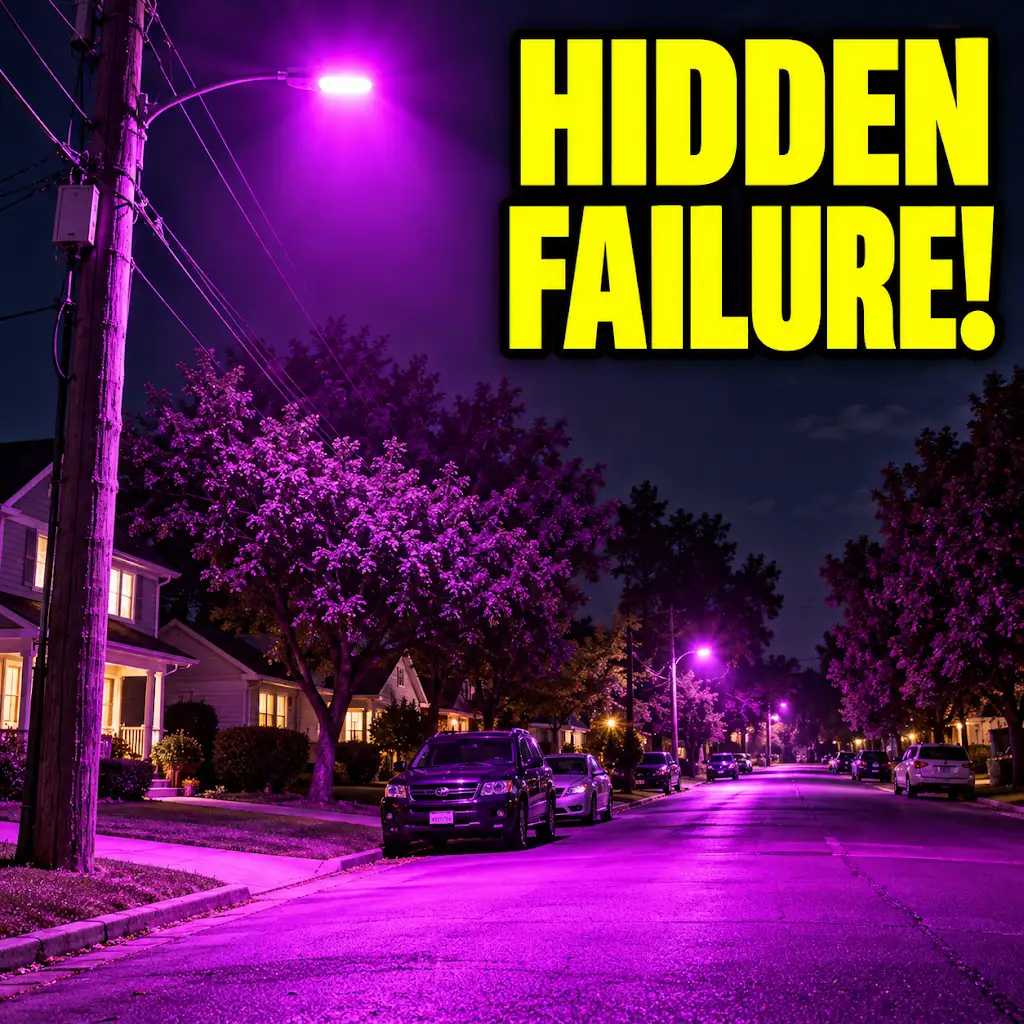
You’ve probably seen them – those streetlights that used to cast a clean, white glow but have started to develop a strange purplish hue. It’s not just a cosmetic issue; this purple light problem in LEDs can actually impact visibility and raise questions about the lifespan of the lighting. So, what’s behind this purple transformation, and more importantly, what can be done about it?
Essentially, the purple light effect in LED streetlights happens when the blue LED chips, which are critical for producing white light in many LED designs, start to degrade. This degradation causes them to emit less blue light. Since white light is a combination of different colors, including blue, a reduction in blue light means the remaining colors (primarily red and green) become more dominant, resulting in that distinct purple or sometimes pinkish cast. It’s a sign that the LED is not performing as it was originally designed to.
The Science Behind the Purple Hue
The way most white LEDs are made is quite clever. Instead of having individual LEDs for each color that combine to make white, manufacturers typically use a blue LED chip and then coat it with a phosphor material. This phosphor converts some of the blue light into other colors, like yellow. When the blue light and the converted yellow light mix, we perceive it as white light. The specific blend of phosphors determines the exact shade of white.
How Phosphors Play a Role
Phosphors are special compounds that absorb light of one wavelength and re-emit it at a different, longer wavelength. In white LEDs, a specific mix of phosphors is used to achieve the desired color temperature (how warm or cool the white light appears). For example, you might have phosphors that convert blue light into yellow, and sometimes other phosphors to fine-tune the spectrum and achieve a more complete white light.
The Degradation Mechanism
The problem arises when these phosphors, or the bond between the phosphor and the LED chip, start to break down over time. This breakdown is often accelerated by heat, moisture, and even the high intensity of the blue light itself. As the phosphors degrade, their ability to convert blue light diminishes. This means more of the original blue light passes through unchanged, while the converted colors might also become less intense or shift in their emission spectrum.
Why Blue Light is Key
The blue LED chip is the engine of the white light. Without sufficient blue light, the entire color balance is thrown off. Imagine trying to paint a pure white canvas with only red and green paint – you’d get a muddy, off-white or even a brownish color. Similarly, when the blue component of the LED output weakens, the remaining red and green light becomes disproportionately prominent, leading to the visible purple or pinkish cast. It’s the absence of sufficient blue, not an excess of red or green, that causes the shift.
In recent discussions about urban lighting, the defect in LED streetlights that causes them to emit a purple hue has raised concerns among city officials and residents alike. This issue not only affects the aesthetic appeal of neighborhoods but also raises questions about the safety and functionality of these lighting systems. For more insights into this phenomenon and its implications, you can read the related article on this topic at Freaky Science.
Common Causes of LED Streetlight Purple Light
Understanding why this happens is crucial for preventing it and for fixing it. It’s usually a combination of design choices and environmental factors that lead to the premature degradation of the LED components.
Thermal Stress and Heat
LEDs, like all electronic components, generate heat. While they are generally more energy-efficient and produce less waste heat than older lighting technologies, they still produce some. This heat needs to be managed effectively. If the heat isn’t dissipated properly, it can build up within the LED fixture, leading to accelerated degradation of the phosphor coating and the LED chip itself. Poorly designed heatsinks, inadequate ventilation in the fixture, or even extreme ambient temperatures can contribute to this thermal stress.
Moisture and Environmental Contamination
Streetlights are exposed to the elements 24/7. Rain, humidity, dust, and pollutants in the air can all find their way into the LED fixture. Over time, moisture can seep in and cause corrosion on the internal components, including the LED chip and its delicate phosphor coating. Airborne pollutants can also deposit on the phosphor, altering its optical properties or creating a barrier that affects light output and temperature. Corrosive elements in the environment can directly attack the chemical structure of the phosphors.
Material Quality and Manufacturing Defects
Not all LEDs are created equal. The quality of the materials used in the LED chip and the phosphor coating, as well as the precision of the manufacturing process, play a significant role in their longevity. Using lower-grade phosphors that are more susceptible to degradation, or inconsistencies in the application of the phosphor layer, can lead to premature failure. Similarly, defects in the LED chip itself, or in the encapsulation of the chip and phosphor, can create weak points that are prone to failure under operational stress.
Optical Degradation of Phosphors
The phosphor materials themselves can degrade over time due to their inherent chemical properties and their interaction with the blue light. Prolonged exposure to high-intensity blue light can cause the phosphor molecules to break down or change their crystalline structure. This change directly affects their ability to convert blue light efficiently, leading to a shift in the emitted spectrum. Think of it like a pigment in paint fading when constantly exposed to sunlight – the chemical bonds weaken, and the color changes.
Identifying and Diagnosing the Purple Light Problem
Spotting the purple light is usually the first clue, but a thorough diagnosis can help confirm the cause and the extent of the problem. This is important for determining whether a repair is feasible or if a full replacement is necessary.
Visual Inspection and Color Shift Assessment
The most obvious indicator is the color of the light. While a slight shift might be tolerable, a distinct purple or pink hue is a clear sign of degradation. Observing the color shift across multiple lights in an area can also provide clues. If a whole street starts turning purple simultaneously, it might point to a batch issue or a systemic environmental factor affecting all the fixtures. However, if only a few lights are affected, it might be individual fixture problems or localized environmental issues.
Luminaire Testing and Data Analysis
Modern LED streetlights often have built-in monitoring capabilities. These systems can log operational data such as temperature, current, and voltage. Analyzing this data can reveal if a particular fixture is experiencing higher temperatures than its neighbors, or if its power consumption has changed, which might indicate internal issues. Luminaire testing can also involve measuring the actual light output and spectral distribution to quantify the degree of color shift and lumen depreciation.
On-Site Diagnostics and Component Inspection
For a more in-depth assessment, technicians might need to open the streetlight fixture. This allows for a physical inspection of the LED module, the heatsink, and the seals. Looking for signs of corrosion, water ingress, or damage to the phosphor coating can be very informative. Sometimes, specific tests can be performed on the LED module itself to check its performance characteristics under controlled conditions.
Consulting Manufacturer Specifications and Warranty Information
Before undertaking any major repairs, it’s essential to check the manufacturer’s specifications for the LED streetlight model and review the warranty information. Different manufacturers will have different expected lifespans and performance tolerances for color shift. Knowing these parameters helps in determining if the observed purple light falls within acceptable limits or constitutes a warranty claim. Understanding the intended operating parameters also helps in diagnosing deviations.
Strategies for Resolving Purple Light Issues
Once the problem is identified, several approaches can be taken to address the purple light issue, ranging from minor fixes to complete overhauls. The best solution often depends on the severity of the degradation, the age of the fixture, and the available budget.
Replacing LED Modules or Drivers
If the issue is primarily with the LED module itself, or the driver that powers it, replacing these individual components can be a cost-effective solution. Many modern LED streetlights are designed with modular components, making them easier to service. Replacing a degraded LED module with a new one that meets the original specifications can restore the proper white light output. Similarly, a faulty driver can cause inconsistencies in power delivery, leading to accelerated degradation, and replacing it can rectify the situation.
Upgrading Fixtures with Improved Designs
In cases where the original fixtures had design flaws that contributed to premature failure (e.g., poor thermal management or sealing), it might be more practical to upgrade the entire fixture. Newer LED streetlight models often incorporate advanced heatsinking technology, better sealing against moisture, and more robust phosphor formulations. Opting for fixtures with higher quality components and a proven track record for longevity can prevent the purple light problem from recurring.
Optimizing Thermal Management and Environmental Sealing
If the purple light is a symptom of inadequate thermal management, improvements can be made to the existing fixture. This might involve cleaning out clogged heatsinks, ensuring proper ventilation, or even adding additional thermal paste. Similarly, if moisture ingress is the culprit, resealing the fixture with high-quality, UV-resistant silicone or replacing damaged gaskets can help. Sometimes, simple maintenance can significantly extend the life of the LED module.
Implementing Preventative Maintenance Programs
A proactive approach is often the most economical in the long run. Regular inspection and maintenance of streetlights can help identify potential issues before they become critical. This includes cleaning fixtures, checking for water ingress, and monitoring the color and brightness of the light output. Implementing a schedule for testing and data analysis of the LED systems can also catch early signs of degradation, allowing for timely intervention and preventing widespread purple light issues.
Recent concerns have emerged regarding a defect in LED streetlights that causes them to emit a purple hue, raising questions about their safety and effectiveness. This issue has been discussed in detail in a related article that explores the implications of such defects on urban lighting systems. For more information, you can read the full article here. Understanding these problems is crucial as cities increasingly rely on LED technology for energy-efficient lighting solutions.
Long-Term Considerations and Future-Proofing
| Metric | Description | Value | Unit |
|---|---|---|---|
| Defect Type | Color shift causing purple hue | Purple Tint | N/A |
| Occurrence Rate | Percentage of LED streetlights affected | 3.5 | % |
| Average Time to Failure | Time before purple defect appears | 18 | Months |
| Temperature Range | Operating temperature where defect is common | 25 – 40 | °C |
| Voltage Range | Operating voltage range linked to defect | 110 – 130 | Volts |
| Manufacturer | Most common manufacturer with defect reports | XYZ Lighting Co. | N/A |
| Resolution Time | Average time to fix or replace defective unit | 7 | Days |
Dealing with purple light isn’t just about fixing the immediate problem; it’s also about planning for the future and ensuring that future investments in street lighting are more robust and less prone to such issues.
Choosing LEDs with Advanced Phosphor Technology
Manufacturers are continuously innovating. Newer LED streetlights often utilize advanced phosphor coatings that are more resistant to degradation from heat and light. They might also employ different white light generation methods, such as combining multiple colored LEDs (e.g., red, green, and blue) to produce white light, rather than relying solely on a blue LED with phosphor. These direct-mix technologies can offer better color stability over their lifespan.
Specifying Color Stability and Lumen Maintenance Guarantees
When procuring new LED streetlights, it’s important to pay close attention to the specifications for color stability and lumen maintenance. Reputable manufacturers will provide guarantees on how long their LEDs will maintain their original color output and brightness. Looking for products that offer extended warranties and strong performance guarantees can significantly reduce the risk of encountering purple light issues down the line. Understanding the specific metrics like “L70” (the point at which luminous flux is 70% of its initial value) and “SLA” (Shifted Light Angle) can help in selecting durable products.
Embracing Smart Lighting Systems for Monitoring
Smart lighting systems offer unparalleled capabilities for monitoring the performance of individual streetlights. These systems can remotely track color temperature, lumen output, energy consumption, and operational temperatures. This data allows for early detection of anomalies, predictive maintenance, and precise identification of failing components, preventing the widespread development of purple light issues before they become a major problem affecting entire sections of a city.
Considering Environmental Factors in Design and Placement
The placement and design of streetlight fixtures can also play a role in their longevity. In areas with high levels of pollution or extreme temperatures, selecting fixtures with superior sealing and thermal management is paramount. Additionally, ensuring adequate airflow around fixtures, especially those mounted on poles, can help dissipate heat more effectively. A holistic approach that considers the local environment during the design and installation phase can prevent future problems.
Why The Streetlights Are Turning Purple
FAQs
What is the cause of the purple defect in LED streetlights?
The purple defect in LED streetlights is typically caused by a combination of factors, including the degradation of the phosphor coating on the LED chips and the overheating of the components.
How does the purple defect affect the performance of LED streetlights?
The purple defect can significantly reduce the brightness and efficiency of LED streetlights, leading to poor visibility and potential safety hazards on the roads.
Can the purple defect in LED streetlights be repaired?
In some cases, the purple defect in LED streetlights can be repaired by replacing the faulty components or adjusting the settings to improve the color output. However, in severe cases, it may be more cost-effective to replace the entire fixture.
Are there any preventative measures that can be taken to avoid the purple defect in LED streetlights?
To prevent the purple defect in LED streetlights, it is important to ensure proper installation, regular maintenance, and adequate cooling to prevent overheating of the components. Using high-quality LED fixtures from reputable manufacturers can also help reduce the risk of defects.
How common is the purple defect issue in LED streetlights?
The purple defect issue in LED streetlights is relatively uncommon but can occur in older or poorly maintained fixtures. Regular inspections and maintenance can help detect and address any potential issues before they become more serious.