The Promise of a Hidden Ocean
Jupiter’s moon Europa has long captivated scientists with its tantalizing potential for harboring life. Beneath its frigid, cracked icy shell lies a vast, salty ocean, warmed by tidal forces from Jupiter’s immense gravity. This subsurface ocean is considered one of the most promising locations in our solar system to search for extraterrestrial life, a “water world” teeming with possibilities. The prospect of exploring this alien ocean, however, presents a formidable set of scientific and engineering challenges. A mission to Europa is not merely a matter of reaching the moon; it is an intricate dance of overcoming extreme environments, sophisticated instrumentation, and the inherent risks of venturing into the unknown. The scientific bounty, if successful, could redefine our understanding of life’s prevalence in the universe.
Landing on Europa presents a myriad of challenges due to its harsh environment and thick ice crust, which obscures the ocean beneath. Scientists and engineers are working tirelessly to develop innovative technologies that can penetrate this icy shell and explore the potential for life in the subsurface ocean. For a deeper understanding of the complexities involved in such missions, you can read more in this related article: Challenges of Landing on Europa.
Navigating Jupiter’s Treacherous Domain

The journey to Europa is fraught with peril, beginning with the intense radiation environment surrounding Jupiter. The giant planet possesses a powerful magnetosphere that traps charged particles, creating belts of high-energy radiation that are lethal to unprotected electronics and potentially to any life that might exist on Europa’s surface.
Shielding Against the Radiation Storm
Protecting sensitive spacecraft components and any potential life-detection instruments from this relentless barrage is paramount. Engineers must design robust shielding, often involving thick layers of dense materials like aluminum or tantalum, to absorb or deflect the incoming radiation. This added mass can significantly increase the cost and complexity of a mission. Furthermore, the radiation affects not only the spacecraft but also the very surface of Europa, potentially altering its chemistry and making direct surface exploration even more challenging for instruments designed to detect organic molecules. The long-term effects of this radiation on any potential biological processes within the ocean also remain an open question, influencing the design of instruments and the interpretation of any biosignatures discovered.
The Perils of Jupiter’s Gravity Well
Jupiter’s immense gravitational pull also poses a significant challenge. Capturing a spacecraft into orbit around Jupiter, and then maneuvering it into a trajectory around Europa, requires precise propulsion and navigation. The sheer scale of Jupiter’s gravity means that once a spacecraft is within its grasp, it is difficult and fuel-intensive to change course. This dictates carefully planned orbital insertions and transfers, often involving multiple gravity assists from other Jovian moons, which further increases mission duration and complexity. The gravitational interactions also contribute to the tidal heating of Europa, the very phenomenon that likely sustains its subsurface ocean, highlighting the double-edged sword of Jupiter’s influence.
The Enigma of Europa’s Icy Crust
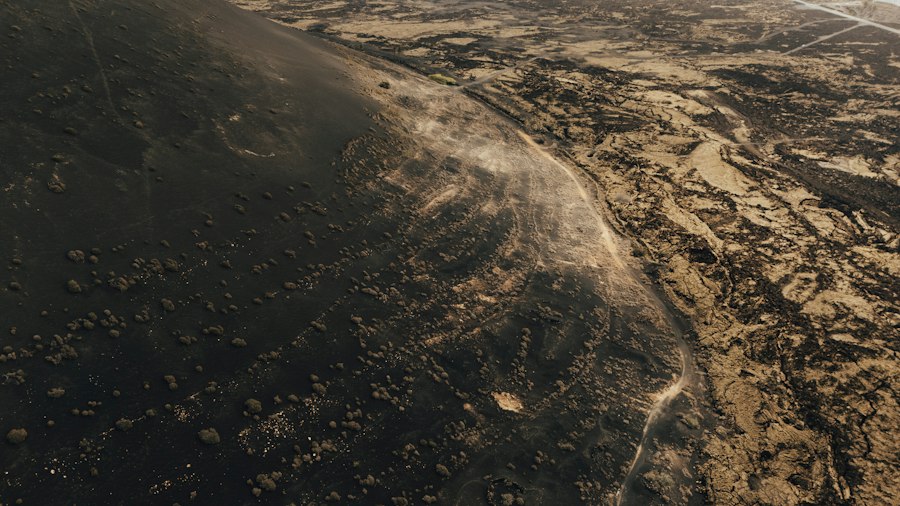
Europa’s defining feature is its thick, kilometers-deep ice shell. This frozen barrier is both the key to the moon’s potential habitability and the primary obstacle to accessing its ocean. Understanding the composition, structure, and dynamics of this ice shell is crucial for designing a mission that can effectively reach the liquid water below.
Piercing the Frozen Veil
The most significant engineering challenge is developing a probe capable of penetrating the ice shell. Traditional landers and orbiters are insufficient. A cryobot, a specialized vehicle designed to melt its way through ice, is the most likely solution. This involves a complex heating system that vaporizes the ice ahead of the probe, allowing it to descend. The energy requirements for such a process are immense, demanding advanced power sources. The ice itself is not uniform; it can contain brines, impurities, and trapped gases, which can affect the melting process and potentially contaminate the subsurface ocean. Therefore, the cryobot must be designed to navigate these variations and minimize contamination. The rate of descent through kilometers of ice will also be a slow process, potentially taking years, during which communication and control become increasingly difficult.
Navigating Chaotic Terrain
Europa’s surface is a chaotic landscape of ridges, cracks, and chaotic terrain, testament to the dynamic processes occurring beneath the ice. These features are not merely aesthetic; they provide clues about the ocean’s interaction with the ice shell and potential pathways for material exchange. Mapping these features in high resolution is essential for identifying safe landing sites and for understanding the geology of the moon. The presence of deep cracks could offer opportunities for subsurface sampling, but also pose navigational hazards. Some theories suggest that these cracks might be conduits for briny water to erupt onto the surface, creating plumes that could be sampled by an orbiter, thus avoiding the need to melt through the entire ice shell for initial chemical analysis.
The Quest for Biosignatures
Once a probe successfully reaches Europa’s ocean, the ultimate goal is to detect signs of life. This requires instruments capable of identifying complex organic molecules, analyzing chemical gradients, and potentially even observing microbial life itself.
Sampling the Primordial Soup
Collecting samples from Europa’s ocean presents a significant challenge. A cryobot would likely carry a sample acquisition system capable of collecting liquid water and any suspended particles. The integrity of these samples must be maintained during ascent and analysis. The presence of dissolved salts and other compounds could affect the chemical stability of biological molecules. Furthermore, the extreme cold and pressure of the subsurface ocean will require specialized equipment to preserve sample integrity. The potential for contamination from the spacecraft itself is also a major concern. Sterilization protocols are critical to ensure that any detected organic matter is indigenous to Europa and not a product of Earthly microbes carried by the probe.
Detecting Life’s Footprints
The search for biosignatures involves a suite of sophisticated instruments. These could include mass spectrometers to identify organic molecules and their isotopic ratios, gas chromatographs to separate and analyze complex compounds, and microscopes to search for cellular structures. However, distinguishing between abiotic and biotic organic matter can be incredibly difficult. Many organic molecules can be formed through geological processes alone. Therefore, a successful mission will require instruments that can detect patterns and complexities that are strongly indicative of biological origin, such as homochirality (the preference for one handedness of molecules) or the presence of specific metabolic byproducts. The possibility of life existing in forms vastly different from Earth life adds another layer of complexity, requiring instruments that are adaptable and capable of detecting a wide range of potential biosignatures.
Landing on Europa presents a myriad of challenges, from its icy surface to the harsh radiation environment. Researchers are continuously exploring innovative solutions to overcome these obstacles, as highlighted in a related article that delves into the complexities of extraterrestrial exploration. For more insights on this topic, you can read the article at Freaky Science, which discusses the technological advancements needed for successful missions to Europa and other celestial bodies.
The Long Road to Europa: Technological Hurdles and Future Prospects
| Challenge | Description | Impact on Mission | Mitigation Strategies |
|---|---|---|---|
| Extreme Radiation | Europa is bathed in intense radiation from Jupiter’s magnetosphere. | Damages spacecraft electronics and instruments. | Use radiation-hardened components and protective shielding. |
| Surface Composition | Surface is covered with a thick layer of ice with unknown hardness and structure. | Landing stability and drilling operations are complicated. | Conduct remote sensing to assess ice properties; design adaptable landing gear. |
| Low Gravity | Europa’s gravity is about 13.4% of Earth’s gravity. | Affects landing dynamics and mobility on the surface. | Adjust descent and landing algorithms; design mobility systems for low gravity. |
| Communication Delay | Signal delay between Earth and Europa can be up to 35 minutes one-way. | Prevents real-time control and requires autonomous operations. | Implement autonomous navigation and decision-making systems. |
| Extreme Cold | Surface temperatures average around -160°C (-260°F). | Can cause mechanical failures and battery inefficiency. | Use thermal control systems and heaters to maintain operational temperatures. |
| Unknown Surface Hazards | Potential presence of crevasses, ridges, and loose ice. | Risk of lander damage or mission failure. | Perform detailed reconnaissance and hazard mapping before landing. |
A mission to Europa is a monumental undertaking, pushing the boundaries of current technological capabilities. The challenges are not insurmountable, but they require significant investment in research, development, and innovative engineering.
Powering the Deep Dive
Providing sufficient power for a cryobot to melt through kilometers of ice and operate scientific instruments in the frigid ocean is a major hurdle. Nuclear power sources, such as radioisotope thermoelectric generators (RTGs), are likely candidates, offering a reliable and long-lasting energy supply independent of sunlight. However, the development and deployment of such power sources are complex and subject to stringent safety regulations. Alternative power generation methods, perhaps leveraging the thermal gradients within the ice or the potential for in-situ resource utilization, are also areas of active research. The sheer energy demand for melting ice makes any mission to the subsurface ocean a power-intensive endeavor.
Communication Across the Void
Maintaining reliable communication with a spacecraft deep within Europa’s ice shell and then in its subsurface ocean will be a significant challenge. The thick ice will act as a formidable barrier to radio waves, requiring advanced communication technologies and potentially relay systems. The latency in communication due to the vast distance from Earth will also necessitate a high degree of autonomy for the spacecraft and its instruments. As the probe descends, its communication link to the surface will degrade, and as it enters the ocean, the ice will further attenuate any signals. Developing robust, resilient communication systems that can function under these conditions is critical for mission success and for transmitting any groundbreaking discoveries back to Earth.
The Incremental Approach to Exploration
Given the immense challenges, a phased approach to Europa exploration is the most pragmatic path forward. Missions like NASA’s Europa Clipper, designed to conduct detailed reconnaissance of the moon from orbit, will gather crucial data about the ice shell, ocean composition, and potential landing sites. This will pave the way for future missions, such as a lander and potentially a cryobot, to directly sample and investigate the subsurface ocean. Each mission builds upon the knowledge gained from its predecessors, gradually de-risking the exploration of this enigmatic world. The scientific community is actively engaged in designing and advocating for these future missions, recognizing that the journey to understanding Europa’s potential for life is a long but incredibly rewarding one. The insights gained will not only shed light on our own solar system but will also inform our search for life beyond.

Water Boiled While Ice Formed. Could a Lander Sink Into It?
FAQs
1. What are the main challenges of landing on Europa?
Landing on Europa poses several challenges, including its thick icy crust, unknown surface conditions, and the presence of radiation from Jupiter’s magnetic field.
2. How does Europa’s icy crust impact landing missions?
Europa’s icy crust is several kilometers thick, making it difficult for landers to penetrate and reach the subsurface ocean that scientists believe exists beneath the surface.
3. Why is the unknown surface conditions of Europa a challenge for landing missions?
The surface of Europa is covered in a complex network of ridges, cracks, and icy plains, which could make it difficult to find a safe and stable landing site for a spacecraft.
4. How does Jupiter’s radiation affect landing missions on Europa?
Jupiter’s intense radiation belt can damage spacecraft electronics and increase the risk of malfunctions during a landing mission on Europa, requiring additional shielding and protection for the spacecraft.
5. What are some potential solutions to overcome the challenges of landing on Europa?
Some potential solutions include developing advanced landing technologies, improving radiation shielding, conducting detailed reconnaissance missions to map the surface, and using autonomous navigation systems to ensure a safe landing on Europa.