Is Time Really Relative? Exploring the Concept of Time Perception
Have you ever found yourself utterly engrossed in a captivating book or a thrilling movie, only to emerge and be surprised by how much time has passed? Or perhaps you’ve experienced the agonizing crawl of minutes during a particularly dull lecture or a tedious wait in line. These everyday phenomena hint at a profound truth: your experience of time is not a static, unyielding constant. It’s fluid, subjective, and deeply personal. But the question of whether time itself is relative, beyond just our perception of it, delves into the very fabric of the universe. Let’s embark on a journey to explore this fascinating concept, starting with how we feel time passing.
Your internal clock, the feeling of time slipping away or dragging interminably, is a complex interplay of neurological processes. It’s not a single, finely tuned instrument, but rather a distributed network that synthesizes information from various senses and cognitive functions. When you’re engaged and stimulated, your brain is actively processing information, creating a rich tapestry of experiences. This intense activity, paradoxically, can lead to a perception of time accelerating because so much is happening within a given objective span.
The Role of Attention and Engagement
Think about those moments when time seems to vanish. You’re not consciously tracking the seconds; your attention is fully absorbed by the task or experience at hand. This focused attention means your brain is prioritizing the processing of novel stimuli and engaging in complex cognitive operations. When your brain is working hard, it’s as if it’s compiling a dense file of memories. Later, when you recall that period, the sheer volume of information processed makes it feel longer, even though the clock ticked by at its usual pace. Conversely, boredom is characterized by a lack of engaging stimuli. Your brain has less to process, and the passage of time becomes more noticeable as you’re left with nothing but the ticking clock, making each second feel like an eternity.
Memory and Retrospective Time Judgments
Our memories play a crucial role in how we retrospectively judge the duration of events. When you look back on a vacation filled with new experiences and exciting activities, it often feels like it lasted longer than a mundane week at home. This is because your brain has encoded a greater number of distinct memories during that period. The more memory markers you have, the richer and potentially longer the perceived duration appears when you recall it. The “holiday paradox,” where a holiday feels both incredibly long while you’re on it (due to novelty and engagement) and then retrospectively seems to have flown by, highlights this complex relationship between immediate perception and memory reconstruction.
Emotional States and Time Distortion
Emotions are potent time-benders. Fear, for instance, can make time seem to slow down. In a crisis, your brain floods with adrenaline, heightening your senses and focusing your attention on survival. This hyper-awareness allows for the rapid processing of crucial details, creating the illusion that more time is available to react. Conversely, during periods of joy or contentment, time can seem to accelerate. When you’re happy and relaxed, your brain isn’t on high alert; it’s more likely to be engaged in effortless processing, leading to the feeling of time flying by.
The concept of time being relative has intrigued scientists and philosophers alike, leading to numerous discussions and explorations in the field of physics. A related article that delves deeper into this fascinating topic can be found on Freaky Science, which explores the implications of Einstein’s theory of relativity and how it challenges our conventional understanding of time. For more insights, you can read the article here: Freaky Science.
The Physics of Time: Einstein’s Revolutionary Insights
Beyond our subjective experience, the concept of time’s relativity gains a deeper, more profound meaning when we delve into the realm of physics. Albert Einstein’s theories of relativity, both special and general, revolutionized our understanding of space and time, revealing them as interconnected and mutable. He proposed that time is not an absolute, universal clock ticking at the same rate for everyone, everywhere. Instead, it’s a dimension woven into the fabric of spacetime, and its passage can be influenced by factors like speed and gravity.
Special Relativity: Speed and the Dilution of Time
Einstein’s special theory of relativity, published in 1905, is built upon two fundamental postulates: the laws of physics are the same for all non-accelerating observers, and the speed of light in a vacuum is constant for all observers, regardless of their motion or the motion of the light source. The mind-bending consequence of these postulates is time dilation. Essentially, the faster you move through space, the slower time passes for you relative to a stationary observer.
The Twin Paradox: A Thought Experiment Unveiled
Imagine two identical twins. One remains on Earth, while the other embarks on a long journey through space at a significant fraction of the speed of light. Upon the space-traveling twin’s return, they will be younger than their Earth-bound sibling. This is not science fiction; it’s a direct implication of time dilation. The twin in motion experiences time at a slower rate because their journey through space “uses up” some of their movement through time. The greater the speed, the more pronounced this effect. While the speeds required for noticeable time dilation are astronomical and far beyond our current technological capabilities for human travel, the principle is experimentally verified, even for subatomic particles.
The Speed of Light: The Universal Speed Limit
The constancy of the speed of light is key to understanding time dilation. If the speed of light is constant for everyone, then something else must give when observers are moving at different speeds. That “something else” is time. To an observer moving at high speed, their own time appears normal, but they will observe time passing more slowly for a stationary observer. Conversely, the stationary observer will see time passing more slowly for the fast-moving observer. This reciprocal relationship is a cornerstone of special relativity.
General Relativity: Gravity’s Warping Effect on Time
Einstein’s general theory of relativity, published in 1915, extended these ideas by incorporating gravity. He proposed that gravity is not a force in the traditional sense, but rather a curvature of spacetime caused by mass and energy. Massive objects warp the fabric of spacetime around them, and this warping affects the passage of time. The stronger the gravitational field, the slower time passes.
Gravitational Time Dilation: Clocks in Stronger Fields
Imagine a clock placed near a massive object, like a black hole, and another identical clock far away in a region of weaker gravity. The clock closer to the black hole will tick slower than the clock farther away. This phenomenon, known as gravitational time dilation, has been experimentally confirmed. For instance, clocks on satellites in orbit around Earth run at a slightly different rate than clocks on the ground due to the difference in gravitational pull. This effect, though minuscule in our everyday experience, is crucial for the accurate functioning of GPS systems. Without accounting for both special and general relativistic effects, GPS would be wildly inaccurate.
Spacetime: The Unified Fabric
General relativity paints a picture of spacetime as a unified, four-dimensional continuum. Space and time are not independent entities but are intimately linked. Events in space influence the flow of time, and vice versa. This interconnectedness is what allows gravity to influence time and for speed to affect it. It’s a radical departure from the Newtonian view of an absolute, unchanging space and a universal clock.
Is Time a Dimension? Exploring Its Nature
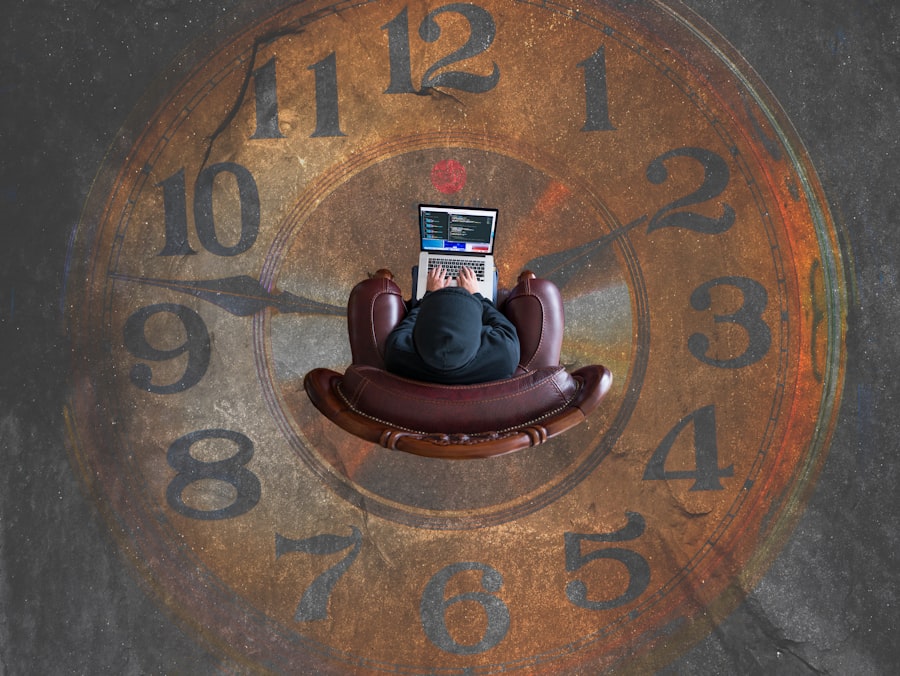
The concept of time as a dimension, as proposed by relativity, is a departure from our intuitive understanding. We readily perceive space in three dimensions: length, width, and height. We can move freely forward and backward, left and right, up and down. Time, however, feels different. We seem to be forced to move inexorably forward, unable to control our speed or reverse our direction. Yet, in the framework of physics, time is treated as the fourth dimension, inextricably linked to the spatial dimensions.
The “Block Universe” vs. “Presentism”
The relativistic view of spacetime has led to philosophical debates about the nature of time. One interpretation is the “block universe” model, where all of past, present, and future exist simultaneously. In this view, time is like a pre-existing, unchangeable landscape, and our journey through it is merely our consciousness moving along a predetermined path. Our perception of a flowing present is an illusion. Conversely, “presentism” argues that only the present moment is real, and the past and future do not exist. This perspective aligns more with our subjective experience but faces challenges in reconciling with the predictions of relativity.
The Arrow of Time: Why Does Time Only Move Forward?
A persistent question in physics is why time has a direction, often referred to as the “arrow of time.” While the fundamental laws of physics are largely time-symmetric (meaning they would work just as well if time ran backward), our macroscopic world clearly exhibits a unidirectional flow. Entropy, the measure of disorder in a system, provides a strong contender for explaining this phenomenon. The second law of thermodynamics states that entropy in an isolated system always increases or stays the same. This natural tendency towards disorder suggests that time moves in the direction of increasing entropy.
Entropy and the Tendency Towards Disorder
Consider a perfectly ordered deck of cards. Over time, through shuffling and handling, it naturally becomes disordered. It’s statistically improbable, if not impossible, for a shuffled deck to spontaneously reorder itself into its original sequence. Similarly, the universe as a whole tends towards greater disorder. This increase in entropy provides a thermodynamic basis for the arrow of time, suggesting that time’s forward march is linked to the universe’s inevitable movement towards a state of maximum entropy.
The Limits of Perception: When Our Inner Clock Goes Astray

Our subjective experience of time is not always a faithful reflection of objective time. Various factors can distort our perception, making time seem to speed up, slow down, or even skip a beat. These distortions highlight the complex and often unreliable nature of our internal timekeeping mechanisms.
Sleep and Circadian Rhythms: The Body’s Natural Clock
Our bodies operate on internal biological clocks, most notably the circadian rhythm, which regulates sleep-wake cycles. Disruptions to this rhythm, such as jet lag or shift work, can significantly alter our perception of time. When our internal clock is out of sync with the external environment, it can lead to feelings of disorientation, fatigue, and a distorted sense of temporal flow. This demonstrates the deep physiological underpinnings of our time perception.
Age and the Perception of Time
As we age, many people report that time seems to accelerate. A year can feel much shorter to a 50-year-old than it did to a 10-year-old. Several theories attempt to explain this phenomenon. One is the “ratio theory,” which suggests that each year of life represents a smaller fraction of our total lived experience as we age. Another is the “novelty effect,” where younger lives are filled with more new experiences, making time feel richer and therefore longer in retrospect. As we get older, life can become more routine, with fewer novel events to mark the passage of time.
Illness and Altered States of Consciousness
Illness, medication, and altered states of consciousness can profoundly affect our perception of time. Fever can make minutes feel like hours, while certain psychoactive substances can warp our temporal awareness in dramatic ways. These experiences underscore how our internal physiological and psychological states are intricately linked to our subjective experience of time. In severe cases, conditions like temporal lobe epilepsy can even cause individuals to experience episodes where time appears to stop, speed up, or repeat.
The concept of time being relative has intrigued many, leading to various discussions and explorations in the field of physics. For those interested in delving deeper into this fascinating topic, a related article can provide additional insights and perspectives. You can read more about the complexities of time and its relativity by visiting this informative article. It offers a comprehensive overview that complements the ongoing debate about the nature of time and how it affects our understanding of the universe.
The Future of Time: From Relativity to Quantum Enigmas
| Concept | Explanation |
|---|---|
| Time Dilation | The phenomenon where time passes differently for observers in different gravitational fields or relative velocities. |
| Special Relativity | Albert Einstein’s theory that states that time can appear to pass at different rates for different observers depending on their relative motion. |
| General Relativity | Einstein’s theory that describes how gravity affects the passage of time, leading to time dilation near massive objects. |
| Experimental Evidence | Various experiments, such as the Hafele-Keating experiment and the GPS system, have confirmed the effects of time dilation predicted by relativity. |
While Einstein’s theories provide a robust framework for understanding time’s relativity, the quest to fully comprehend its nature continues. The intersection of relativity and quantum mechanics, the two pillars of modern physics, presents some of the most perplexing enigmas, hinting at a future where our understanding of time might be even more radically reshaped.
Quantum Gravity and the Nature of Time at the Smallest Scales
At the extremely small scales governed by quantum mechanics, our current understanding of spacetime breaks down. The quest for a theory of quantum gravity aims to unify relativity and quantum mechanics, and it may hold the key to understanding the nature of time at its most fundamental level. Some theories suggest that time itself might be an emergent property, rather than a fundamental aspect of reality, at these scales.
Wormholes and the Possibility of Time Travel
The concept of wormholes, hypothetical tunnels through spacetime predicted by general relativity, has fueled speculation about the possibility of time travel. While mathematically plausible, the existence and stability of such structures remain highly theoretical. Furthermore, the paradoxes associated with time travel, such as the grandfather paradox, suggest significant theoretical hurdles to overcome, even if wormholes were to be discovered.
The Ever-Evolving Understanding of Time
Our journey to understand time has spanned millennia, from the philosophical musings of ancient Greeks to the complex equations of modern physics. We’ve moved from a notion of absolute, universal time to a more nuanced understanding of time as a dimension that can stretch and warp. Yet, the mystery persists. The subjective river of our perception, the objective framework of relativity, and the enigmatic quantum realm all contribute to a continuously evolving picture of time. So, is time really relative? In terms of your experience, undoubtedly. In terms of the universe? The evidence, from the warping of spacetime to the ticking of cosmic clocks, suggests a resounding yes, and there’s still so much more to discover.

Einstein Says There Is No Universal “Now” in the Universe
FAQs
What is the theory of relativity?
The theory of relativity, developed by Albert Einstein in the early 20th century, is a fundamental theory in physics that describes the relationship between space and time.
How does the theory of relativity affect our perception of time?
According to the theory of relativity, time is not absolute and can be experienced differently depending on factors such as gravity and velocity. This means that time can appear to pass at different rates for different observers.
What evidence supports the theory of relativity?
Several experiments and observations have provided evidence for the theory of relativity, including the bending of light around massive objects, the slowing of time in high-speed particle accelerators, and the synchronization of atomic clocks on GPS satellites.
How does time dilation work in the theory of relativity?
Time dilation is a phenomenon predicted by the theory of relativity, where time appears to pass more slowly for an observer in a strong gravitational field or moving at a high velocity, compared to an observer in a weaker gravitational field or at rest.
Is time really relative according to the theory of relativity?
According to the theory of relativity, time is indeed relative and can be experienced differently depending on the observer’s frame of reference. This has been confirmed by numerous experiments and observations in the field of physics.