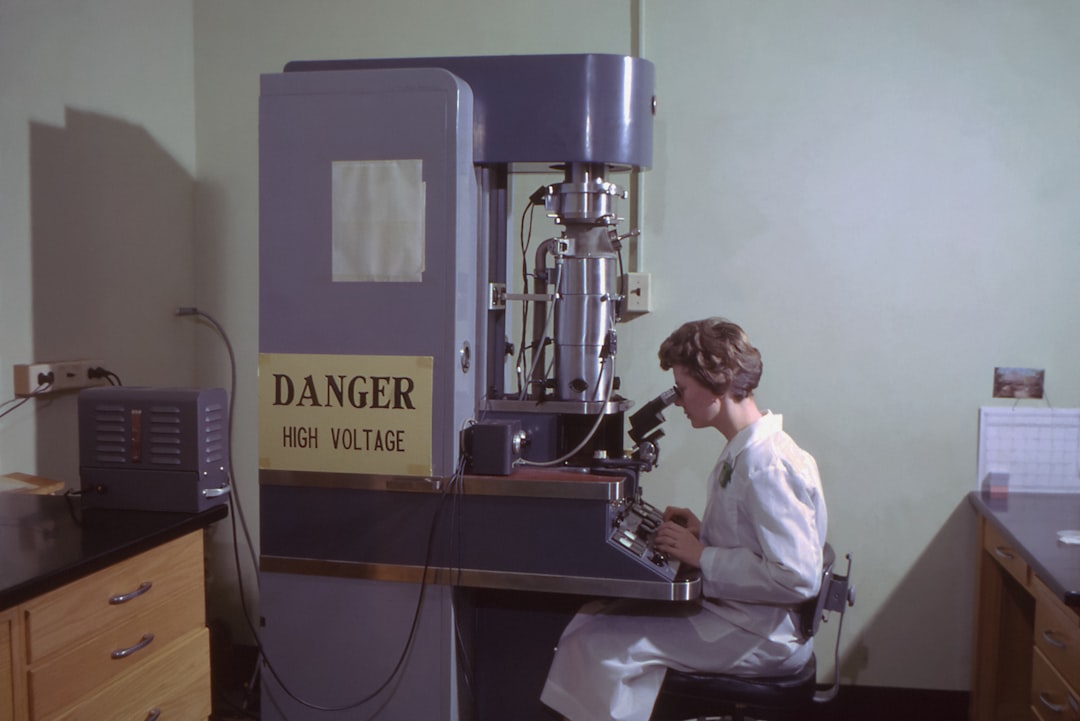
The age-old question of consciousness, of the subjective experience of being, continues to be a fertile ground for philosophical and scientific inquiry. At its core lies the persistent notion of the “self,” a perceived locus of awareness and agency that seems to transcend the purely physical. Could this self, this feeling of “I,” be nothing more than an illusion, a phantom generated by the intricate biological machinery of the brain? The proposition that the self is a ghost in a biological machine is not new, but contemporary neuroscience, artificial intelligence, and cognitive science provide novel avenues through which to explore this enduring enigma. This article delves into the arguments that challenge the traditional dualistic view of mind and body, suggesting instead that our sense of self might be an emergent property, a sophisticated narrative woven by the complex electrochemical processes within our physical form.
The phrase “ghost in the machine,” popularized by philosopher Gilbert Ryle, serves as a concise articulation of substance dualism, specifically as espoused by René Descartes. This perspective posits a fundamental separation between the physical body and the immaterial mind or soul.
Cartesian Dualism and Its Aftermath
René Descartes, in his Meditations on First Philosophy, famously arrived at the conclusion “Cogito, ergo sum” – “I think, therefore I am.” This established the certainty of the thinking substance (res cogitans) as distinct from the extended substance (res extensa), which comprises the physical world. For Descartes, the mind was unextended, indivisible, and capable of thought, while the body was extended, divisible, and governed by mechanical principles. The challenge then became explaining how these two fundamentally different substances could interact, a problem known as the mind-body problem. Though Descartes posited the pineal gland as the point of interaction, this explanation offered little in terms of a scientific mechanism. The persistence of this dualistic intuition about a non-physical self has had a profound impact on human thought and culture, influencing religious beliefs, legal systems and our understanding of personhood.
Early Challenges and Materialist Counterarguments
Even in Descartes’ own time, his dualism faced significant criticism. Philosophers like Antoine Arnauld questioned the clarity and distinctness of the separation. As scientific understanding advanced, particularly in the fields of physics and physiology, the need for an immaterial component to explain human behavior diminished. Materialist philosophies, which assert that everything that exists is ultimately physical, gained traction. These approaches sought to explain all phenomena, including mental ones, in terms of matter and its interactions. The increasing success of scientific explanations for previously mysterious phenomena, from disease to motion, lent credence to the idea that the mind, too, might eventually be understood within a purely physical framework.
In exploring the intriguing concept of whether the self can be considered a ghost within a biological machine, one might find it beneficial to read a related article that delves deeper into the philosophical implications of consciousness and identity. This article discusses various perspectives on the mind-body problem and how our understanding of the self has evolved over time. For more insights, you can check out the article here: Freaky Science.
Neuroscientific Evidence for a Materialist Self
Modern neuroscience, with its sophisticated tools for observing and manipulating the brain, provides compelling evidence that the self is deeply intertwined with, and perhaps even entirely constituted by, neural activity. Lesions, stimulation, and imaging studies all suggest that alterations to the physical brain directly impact our sense of self.
Brain Lesions and Altered Identities
Damage to specific brain regions can profoundly alter a person’s personality, memories, and sense of self. Phineas Gage, a railroad foreman who survived a tamping iron passing through his frontal lobe, famously exhibited drastic changes in his behavior and disposition. This case, and numerous others involving strokes or injuries to frontal or temporal lobes, demonstrates a direct correlation between the physical integrity of specific brain areas and the coherence of an individual’s identity. The inability to recognize oneself, the loss of personal memories, or the emergence of entirely new personality traits all point to the brain as the substrate of our selfhood, rather than an external controller.
The Role of Neural Networks in Self-Perception
Contemporary research focuses on the complex interplay of neural networks that give rise to our subjective experience. Theories such as the Global Neuronal Workspace theory propose that consciousness and self-awareness arise from the broadcasting of information across widespread neural networks. When certain information becomes globally available to the brain’s processing systems, it is experienced consciously, contributing to our sense of a unified self. This view suggests that the “self” is not a singular entity but rather a dynamic process, a constantly updated narrative constructed by the brain’s internal computations.
Neurotransmitter Imbalances and Subjective Experience
The chemical environment of the brain plays a crucial role in shaping our mental states and, consequently, our sense of self. Imbalances in neurotransmitters like dopamine, serotonin, and norepinephrine are implicated in various psychiatric disorders, leading to alterations in mood, perception, and even identity. For instance, conditions like schizophrenia can involve profound disruptions to an individual’s sense of reality and self, often linked to neurotransmitter dysregulation. This pharmacological evidence further strengthens the argument that our subjective experience is intimately linked to the material workings of the brain.
The Self as a Narrative Construction

If the self is not a pre-existing entity, then what is it? Many theorists propose that the self is a story we tell ourselves, a coherent narrative constructed from our experiences, memories, and beliefs. This narrative is not static but is continually updated and revised.
Memory and the Building Blocks of Identity
Our memories are fundamental to our sense of who we are. The ability to recall past events, to connect them to our present, and to project a future self is central to our identity. Amnesia, the loss of memory, can lead to a profound erosion of the self. Patients with severe anterograde or retrograde amnesia often struggle to maintain a consistent sense of identity, as their link to their personal history is severed. This highlights the indispensable role of memory in constructing and maintaining our narrative self.
The Brain’s Predictive Processing Mechanism
The brain is not a passive recipient of information; it actively predicts incoming sensory data. This predictive processing framework suggests that our perception of reality, and our sense of self, are shaped by these internal predictions. The self, in this context, can be viewed as a sophisticated prediction machine, constantly updating its model of the world and its place within it. Discrepancies between predictions and reality can lead to conscious awareness and a revision of the self-narrative. This ongoing process of prediction and correction contributes to the dynamic and fluid nature of our subjective experience.
Social and Cultural Influences on Self-Narratives
Our sense of self is not formed in isolation. Societal norms, cultural values, and interpersonal relationships significantly shape the stories we tell about ourselves. The roles we adopt, the expectations placed upon us, and the feedback we receive from others all contribute to the construction of our self-identity. Different cultures may emphasize different aspects of the self, leading to variations in how individuals perceive their own agency, social embeddedness, and personal aspirations. This suggests that the “self” is, to a considerable extent, a product of our social and cultural environment, internalized and integrated into our personal narrative.
The Illusion of Agency and Free Will

The feeling of making conscious choices, of exercising free will, is a cornerstone of our subjective experience. However, neuroscientific findings challenge this intuition, suggesting that our actions may be initiated by unconscious brain processes before we become consciously aware of them.
Libet’s Experiments and the Readiness Potential
Benjamin Libet’s groundbreaking experiments in the 1980s demonstrated that electrical activity in the brain, known as the “readiness potential,” precedes subjects’ conscious decision to move. Participants were asked to flex their wrist whenever they felt the urge and to note the precise moment they became aware of that urge. The readiness potential consistently appeared approximately half a second before the conscious decision. This finding has been interpreted by some as evidence against free will, suggesting that our conscious experience of choosing to act is a post-hoc rationalization of an action already set in motion by unconscious brain mechanisms.
The Role of Unconscious Processing in Decision-Making
Modern research continues to explore the pervasive influence of unconscious processing on our decisions and behaviors. Studies using fMRI and other neuroimaging techniques have shown that brain activity associated with decision-making can be detected milliseconds or even seconds before conscious awareness of the decision. This suggests that many of our actions are initiated by rapid, automatic processes operating outside of our immediate conscious control. The feeling of consciously “making a choice” might be the brain’s way of integrating these pre-conscious decisions into a coherent narrative of agency.
The Evolutionary Advantage of Believing in Free Will
Even if free will is an illusion, the belief in it may confer significant evolutionary advantages. A strong sense of agency can promote motivation, responsibility, and goal-directed behavior. Societies that foster a belief in individual accountability and choice may be more stable and productive. Therefore, it is plausible that our brains have evolved to generate the subjective experience of free will as a functional adaptation, regardless of its ultimate metaphysical reality. This subjective experience, though potentially illusory, plays a vital role in our personal and social lives.
The concept of the self as a ghost in a biological machine raises intriguing questions about consciousness and identity. This idea resonates with discussions found in a related article that explores the intersection of science and philosophy, particularly regarding the nature of existence. For those interested in delving deeper into these themes, the article can be found at Freaky Science, where various perspectives on the mind-body problem are examined. Understanding how our perceptions shape our reality can provide valuable insights into the enigmatic relationship between our consciousness and our physical form.
The Self as an Emergent Phenomenon
| Data/Metric | Value |
|---|---|
| Self | Ghost in a biological machine |
| Existence | Debatable |
| Physical Form | Biological body |
| Consciousness | Subject to interpretation |
| Interaction with Environment | Varies based on beliefs |
Rather than a distinct entity, the self might be an emergent property of complex biological systems, similar to how wetness emerges from the interaction of water molecules. At a certain level of complexity, new properties arise that are not present in the individual components.
Complexity Science and the Brain
The brain, with its billions of neurons and trillions of connections, is an archetypal complex system. Within such systems, interactions between individual components can give rise to macro-level phenomena that are not reducible to the properties of those components alone. The self, in this view, is an emergent property of the brain’s intricate network dynamics, a pattern of activity that arises from the collective behavior of its constituent parts. It is the ongoing, integrated processing of information that creates the experience of a unified self.
Artificial Intelligence and the Search for Consciousness
The development of artificial intelligence offers a unique testbed for understanding the nature of consciousness and the self. While current AI systems can perform complex tasks and exhibit remarkable learning capabilities, they do not currently possess subjective experience or a sense of self. However, future advancements in AI might shed light on what level of complexity and what kind of computational architecture are necessary for self-awareness to emerge. The creation of a truly conscious AI would lend significant weight to the emergentist view of the self.
The Limitations of Reductionism
While neuroscience and biology provide invaluable insights, a purely reductionist approach may not fully capture the richness of subjective experience. Explaining consciousness solely in terms of the firing of individual neurons might miss the forest for the trees. The emergentist perspective argues that the “ghost” is not separate from the machine, but rather a phenomenon that arises from the machine’s intricate operation at a higher level of organization. It is a property of the system as a whole, not of its individual components.
Consciousness as a Product of Information Integration
Integrated Information Theory (IIT) proposes that consciousness is a measure of the amount of integrated information in a system. A system is conscious to the extent that it has a large repertoire of possible states and these states are highly interconnected. The brain, with its massive and intricate neural networks, is an excellent candidate for possessing high levels of integrated information. The self, in this theoretical framework, is intrinsically linked to the level of consciousness, and as consciousness emerges from information integration, so too does the sense of self.
The question of whether the self is a ghost in a biological machine remains one of the most profound enduring mysteries. While traditional dualistic notions persist, an increasing body of evidence from neuroscience, cognitive science, and philosophy suggests that our sense of self is a complex, emergent property of the physical brain. It is a narrative constructed from memory, shaped by prediction, influenced by our environment, and perhaps even an evolutionary adaptation that enhances our survival and social interactions. The exploration of this question continues, pushing the boundaries of our understanding of what it means to be a conscious, sentient being.
FAQs
What is the concept of “the self” in the context of the article “Is the self a ghost in a biological machine?”
The concept of “the self” refers to the individual’s sense of personal identity and consciousness. It encompasses one’s thoughts, feelings, and experiences, and is often associated with the idea of a distinct, autonomous entity within the human mind.
What is meant by “a ghost in a biological machine” in the context of the article?
The phrase “a ghost in a biological machine” is used metaphorically to describe the relationship between the self and the physical body. It suggests that the self, or consciousness, exists separately from the biological processes of the body, much like a ghost inhabiting a machine.
What are some scientific perspectives on the nature of the self?
Scientific perspectives on the nature of the self vary, but many researchers and scholars in fields such as neuroscience, psychology, and philosophy are interested in understanding how the self emerges from the complex interactions of the brain and body. Some theories propose that the self is an emergent property of neural processes, while others explore the role of social and environmental factors in shaping the self.
How does the article explore the relationship between the self and the biological machine?
The article delves into the philosophical and scientific debates surrounding the nature of the self and its relationship to the physical body. It examines questions about the origins of consciousness, the impact of brain function on the sense of self, and the implications of these inquiries for our understanding of human identity.
What are some key takeaways from the article “Is the self a ghost in a biological machine?”
Key takeaways from the article include the complexity of the self-body relationship, the ongoing exploration of consciousness and identity in scientific and philosophical discourse, and the potential implications of these inquiries for fields such as psychology, medicine, and ethics.