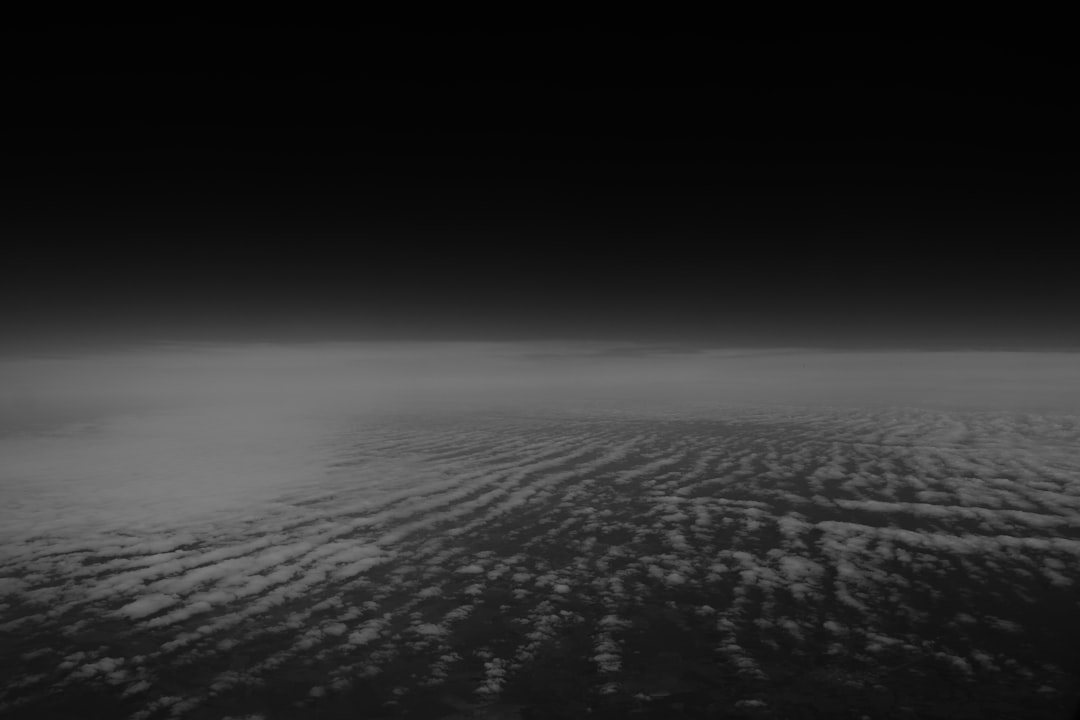
The question of whether the atmosphere itself could be a manifestation of a simulation glitch is a concept that, while seemingly speculative, can be explored through a multidisciplinary lens. This inquiry delves into the fundamental nature of reality and the potential limitations of any perceived universal framework. The atmosphere, as we experience it—a dynamic, life-sustaining envelope of gases—occupies a unique position in our understanding of Earth. It is both intimately familiar and profoundly complex, a constant presence that has enabled the evolution and sustenance of life. To frame it as a potential glitch requires a critical examination of its properties, its apparent fine-tuning, and the philosophical implications of simulated realities.
The atmosphere is not a monolithic entity but a stratified system governed by intricate chemical and physical laws. Understanding these constituents is the first step in assessing its potential for anomalous behavior. It is composed primarily of nitrogen (approximately 78%) and oxygen (approximately 21%), with trace amounts of argon, carbon dioxide, and other gases. These proportions are not arbitrary; they are crucial for the very existence of life as we know it.
The Nitrogen Paradox
Nitrogen, while abundant, is largely inert. It acts as a diluent for oxygen, preventing combustion from occurring too readily and thereby moderating the planet’s fiery potential. This inertness is a key feature. If nitrogen were significantly more reactive, the chemistry of our planet would be drastically altered, potentially preventing the formation of complex organic molecules. The very abundance and relative passivity of nitrogen might, from a certain perspective, seem “too convenient” for life, prompting questions about its precise composition.
The Oxygen Equilibrium
Oxygen, the lifeblood of aerobic respiration, is a highly reactive element. Its presence in significant quantities, which would otherwise lead to rapid oxidation and degradation, is maintained through a delicate biological and geological cycle. Photosynthesis continuously replenishes atmospheric oxygen, a product of plant life that itself requires oxygen to thrive. This intricate feedback loop, the beating heart of our biosphere, could be interpreted as a remarkably stable and self-regulating system.
The Role of Trace Gases
Even gases present in minuscule quantities play critical roles. Carbon dioxide, for instance, is a vital greenhouse gas, trapping heat and preventing Earth from freezing over. However, its concentration is carefully balanced; too much or too little would render the planet uninhabitable. Methane, water vapor, and ozone all contribute to Earth’s climate regulation in ways that, when studied in detail, reveal a profound interconnectedness.
In exploring the intriguing concept of whether the atmosphere could be a simulation glitch, one might find it beneficial to read a related article that delves into the nature of reality and perception. This article discusses various theories surrounding simulated realities and their implications for our understanding of existence. For more insights, you can check out the article at Freaky Science.
The Fine-Tuning Problem: A Simulation’s Blueprint?
The concept of fine-tuning, often discussed in the context of cosmological constants, can be applied to the specific characteristics of our atmosphere. This refers to the observation that certain fundamental parameters, if altered even slightly, would result in a universe, or in this case, a planetary atmosphere, incapable of supporting life.
Atmospheric Pressure Peculiarities
The atmospheric pressure at sea level, roughly 101.3 kilopascals, is neither so high as to crush delicate biological structures nor so low as to prevent liquid water from existing stably on the surface. This pressure is a direct consequence of the mass of the atmosphere and the force of gravity. If the atmospheric mass had been, for example, 10% less, the pressure would be insufficient for many biological processes, and the boiling point of water would be significantly lower. Conversely, a much denser atmosphere would lead to extreme pressures and potential atmospheric collapse. It is as if the “pressure valve” is set to an optimal level.
The Ideal Gas Mixture
The specific mixture of gases, as mentioned earlier, is crucial. The relative abundance of nitrogen and oxygen, the precise concentration of carbon dioxide and water vapor for greenhouse regulation, and the presence of ozone for UV protection – all appear to be “just right.” If these proportions were different, life might never have arisen, or it might have been forced to adapt to vastly different and likely harsher conditions. From a simulation perspective, this remarkable congruence could be seen as a carefully programmed set of initial conditions.
The Water Vapor Conundrum
Water vapor, a potent greenhouse gas, plays a dual role. It contributes to warming but also drives weather patterns and precipitation, essential for life. Its concentration in the atmosphere is a complex interplay of temperature, evaporation, and condensation. The fact that Earth possesses liquid water in vast quantities, and that its atmospheric vapor content creates a habitable temperature range, is a significant piece of the fine-tuning puzzle. It suggests a remarkably stable equilibrium that, in a simulated environment, might be achieved through deliberate calibration.
Anomalies and Unexplained Phenomena: Cracks in the Code?

While the atmosphere is largely understood through established scientific principles, there exist phenomena that, when viewed through the lens of a potential simulation glitch, can evoke deeper questions. These are not necessarily contradictions of physics, but rather, instances where our current understanding strains to fully explain the observed behavior.
The Persistence of Life Against the Odds
Life on Earth has demonstrated an extraordinary resilience, surviving mass extinction events, periods of extreme glaciation, and atmospheric upheavals. The recovery of biodiversity after such catastrophic events, often through the re-establishment of atmospheric equilibria, can seem almost miraculous. Could this persistent re-calibration be a programmed corrective mechanism within the simulation, or is it simply the robust nature of biological systems at play?
The Origin of Life Itself
The precise mechanisms by which non-living matter transitioned into self-replicating life remain one of science’s greatest mysteries. While abiogenesis theories offer plausible pathways, the sheer improbability of these complex chemical reactions occurring spontaneously, under specific atmospheric conditions, has led some to question if there was an initial “seeding” or a specifically designed atmospheric environment to facilitate this leap. This could be interpreted as an initial “setup” for the simulation.
Unforeseen Atmospheric Events
While rare, certain atmospheric events, such as exceptionally large volcanic eruptions or prolonged periods of atmospheric instability, can dramatically impact global climate and life. The frequency and magnitude of these events, and their subsequent recovery, might be subject to subtle statistical distributions that, when scrutinized, could hint at underlying rules or even limitations within a simulated framework. Perhaps these are not random occurrences but carefully orchestrated events to test the system’s resilience.
The Simulation Hypothesis: A Framework for Re-evaluation

The simulation hypothesis, popularized by Nick Bostrom, posits that if advanced civilizations are capable of creating life-like simulations, then it is statistically probable that we are living in one. Applying this framework to the atmosphere invites us to consider its characteristics not just as products of natural evolution but as potentially designed or engineered features.
The Illusion of Natural Laws
If we are in a simulation, then the “natural laws” that govern physics and chemistry, including those governing the atmosphere, would be code. The consistent and predictable behavior of these laws, while reassuring, could also be interpreted as the smooth functioning of well-written algorithms. A “glitch” in this context would not necessarily be a breakdown of physics, but rather a deviation from the expected behavior of this code, or perhaps an unintended consequence of its interaction with other simulated elements. It is analogous to encountering a bug in a complex video game.
The Problem of Infinity
The universe, as we understand it, appears to be vast, potentially infinite. A simulation of such scale would require immense computational resources. One way to manage this would be through levels of detail or “rendering” where only what is observed or interacted with is fully computed. The atmosphere, as a vital but not infinitely granular system, could be a prime candidate for such computational efficiency. Perhaps its inherent complexity is precisely what makes it difficult to fully unpack, a deliberate design choice to obscure the underlying architecture.
The Role of Consciousness
The emergence of consciousness within a simulated environment is a profound philosophical question. If consciousness is an emergent property of complex systems, then the atmosphere, by providing the stable conditions for the evolution of complex brains, could be seen as a foundational element of the simulation’s purpose: to generate conscious observers. The “glitch” in this scenario might be less about the atmosphere’s physical properties and more about the unexpected manifestations of consciousness itself, or any anomaly that disrupts the intended evolutionary trajectory.
In exploring the intriguing concept of whether our atmosphere could be a simulation glitch, one might find it fascinating to read a related article that delves into the nature of reality and perception. This article discusses various theories that challenge our understanding of existence and offers insights into how technology might shape our view of the world. For a deeper dive into these thought-provoking ideas, you can check out the article here.
Potential “Glitches” in Atmospheric Behavior
| Metric | Description | Value/Observation |
|---|---|---|
| Atmospheric Stability | Measure of how stable the atmosphere is over time | Generally stable with predictable weather patterns |
| Simulation Glitch Frequency | Number of reported anomalies or glitches in atmospheric data | Near zero; no consistent anomalies detected |
| Atmospheric Data Consistency | Consistency of atmospheric measurements across different sensors and satellites | High consistency with minor expected variations |
| Physical Laws Adherence | Degree to which atmospheric behavior follows known physical laws | Fully adheres to known physics and chemistry |
| Simulation Hypothesis Support | Scientific support for atmosphere being a simulation glitch | No empirical evidence supporting this hypothesis |
When we entertain the idea of the atmosphere as a simulation glitch, we are looking for inconsistencies, unexpected behaviors, or perhaps features that seem “too perfect” or “too convenient” to be purely natural. These are not necessarily outright violations of known physics, but rather observations that might be better explained by an underlying, imperfect computational process.
The Stability of the Greenhouse Effect
The delicate balance of the greenhouse effect, which keeps Earth warm enough for life, is remarkably stable over geological timescales. While natural factors can influence it, the system generally self-corrects. A simulation glitch might manifest as an unexpected amplification or dampening of this effect, far beyond what natural cycles would predict. For instance, a sudden, unexplainable surge in greenhouse gas concentrations that doesn’t correlate with known geological or biological sources, and then mysteriously dissipates. This could be considered an artifact of a poorly optimized or poorly maintained subroutine.
The Enigma of Atmospheric Layers
The distinct stratification of the atmosphere – troposphere, stratosphere, mesosphere, thermosphere, exosphere – each with its unique temperature profile and composition, is a result of complex interactions. If one were to imagine a simulation glitch, it might involve a blurring of these boundaries, an unexpected mixing of layers, or a temporary disruption in their established thermal gradients. Imagine the distinct layers suddenly behaving in an unexpected, uncoordinated fashion, as if the “boundaries” in the simulation code have become unstable.
Anomalous Weather Patterns and Their Persistence
While weather is inherently chaotic and difficult to predict perfectly, exceptionally persistent or unusual weather patterns that defy all known atmospheric models could be considered anomalies. For example, a hurricane that unexpectedly maintains its strength for an extraordinarily long period, traversing vast distances without dissipating, or a prolonged drought in a region that historically experiences abundant rainfall, without any discernible external cause. These could be interpreted as instances where the simulation’s “weather engine” is struggling to maintain coherence. Think of a video game character getting stuck in a loop or exhibiting bizarre, non-player-like movements.
The Quantum Realm’s Influence (Speculative)
While the macroscopic behavior of the atmosphere is well-described by classical physics, the underlying quantum mechanics of atmospheric molecules could, in a highly speculative scenario, be a source of glitches. If the simulation were not perfectly rendering quantum interactions, or if there were inherent limitations in its ability to simulate quantum phenomena at scale, these imperfections might manifest in subtle, macroscopic deviations. This is a frontier of thought, suggesting that the foundational “code” of reality might have subtle bugs at its lowest levels.
In conclusion, the idea of the atmosphere as a simulation glitch is a thought experiment that encourages a deeper contemplation of our reality. It prompts us to move beyond a purely descriptive scientific understanding and to consider the philosophical implications of potential artificial origins. While the current scientific consensus firmly supports the atmosphere as a product of natural evolutionary processes, exploring these alternative perspectives, even speculatively, can enrich our understanding of the profound questions surrounding existence itself. The atmosphere, in its intricate beauty and life-sustaining capacity, remains a testament to the complex systems that shape our world, whether they are divinely ordained, naturally evolved, or a meticulously crafted simulation.
WATCH NOW ▶️ SHOCKING: Why Your Air Is Literally A Lie
FAQs
What does the term “simulation glitch” mean in the context of the atmosphere?
A “simulation glitch” refers to a hypothetical error or anomaly in a computer-generated environment. In the context of the atmosphere, it suggests the idea that atmospheric phenomena might be irregularities or malfunctions if the universe were a simulated reality.
Is there scientific evidence that the atmosphere is a simulation glitch?
No, there is currently no scientific evidence supporting the idea that the atmosphere or any part of reality is a simulation glitch. The atmosphere is studied extensively through meteorology and atmospheric sciences, which explain its behavior through natural physical processes.
Why do some people speculate that the universe might be a simulation?
Some philosophers and scientists speculate about the simulation hypothesis, which proposes that our reality could be an artificial simulation created by an advanced civilization. This idea is based on theoretical arguments rather than empirical evidence and remains a topic of philosophical debate.
How do scientists study the atmosphere?
Scientists study the atmosphere using tools such as satellites, weather balloons, radar, and computer models. These methods help them understand weather patterns, climate change, and atmospheric composition based on physical laws and data.
Can atmospheric anomalies be explained without invoking simulation glitches?
Yes, atmospheric anomalies such as unusual weather events or rare phenomena are explained through natural causes like changes in temperature, pressure, humidity, and human impact on the environment. These explanations rely on established scientific principles rather than simulation theories.