
The concept of reality being a simulation is a captivating and increasingly discussed topic, moving from the realm of science fiction to serious scientific and philosophical inquiry. This article examines the various facets of this hypothesis, presenting the arguments for and against it, and delving into the potential implications should it prove to be true. Readers are invited to consider the profound questions raised by this fascinating idea.
Long before computers or virtual reality, philosophers grappled with the nature of reality and the possibility of illusion. These ancient inquiries laid the groundwork for modern simulation hypothesis.
Plato’s Allegory of the Cave
Plato, in his Republic, presented the allegory of the cave, a foundational thought experiment concerning perception and reality. Prisoners, chained since birth, perceive only shadows cast on a cave wall by objects passing behind them. For these prisoners, the shadows constitute their entire reality. Should one escape and witness the true objects and the sun itself, their initial reaction would be disbelief and pain, followed by enlightenment. This allegory suggests that our perceived reality might be a mere shadow of a more fundamental truth. The shadows, in this context, serve as a powerful metaphor for our limited sensory experience, which could be obscuring a greater, underlying reality.
Descartes’ Evil Demon Argument
Centuries later, René Descartes, in his Meditations on First Philosophy, introduced the concept of an “evil demon” or “malicious genie.” This supremely powerful and cunning entity, Descartes posited, could be orchestrating an elaborate deception, making everything he perceives—the sky, the air, colors, shapes, sounds—nothing but illusions. This thought experiment aimed to challenge the certainty of sensory experience and lay the groundwork for understanding what knowledge can truly be considered indubitable. Descartes’ demon serves as a precursor to the modern idea of a superintelligent AI simulating our reality, a malevolent programmer crafting an intricate world for us to inhabit.
The concept of reality being a simulation has intrigued many thinkers and scientists, leading to various discussions and theories. A related article that delves into this fascinating topic can be found on Freaky Science, where they explore the implications of living in a simulated universe and the philosophical questions it raises. For more insights, you can read the article here: Freaky Science.
Technical Feasibility and Computational Power
Modern advancements in computing power and simulation technology have given new impetus to the simulation hypothesis. The trajectory of technological progress suggests that creating highly realistic simulations may eventually be within humanity’s grasp.
Moore’s Law and Exponential Growth
Moore’s Law, an observation that the number of transistors in an integrated circuit doubles approximately every two years, has dictated the exponential growth of computational capabilities. While the rate of Moore’s Law is beginning to slow for traditional silicon-based processors, parallel advancements in quantum computing and neuromorphic computing suggest a continued, albeit perhaps different, exponential growth in processing power. If this trend continues indefinitely, the computational resources required to simulate an entire universe, complete with conscious entities, might one day be achievable. Consider our current video games, which, with each passing year, approach photo-realism. Projecting this trend over millennia raises the possibility of indistinguishable simulations.
The Limits of Current Simulations
Despite these advancements, current simulations, even the most sophisticated ones, are still far from mimicking the complexity of reality. From detailed physics engines to artificial intelligence that can truly replicate human consciousness, significant hurdles remain. The sheer computational demands to simulate every atom, every interaction, and every quantum fluctuation in a universe of our perceived size are astronomical. However, proponents argue that a perfect, atom-for-atom simulation might not be necessary. A sufficiently advanced simulation could render only what is observed, optimizing resources by displaying only the “pixels” that are actively being viewed by a conscious entity, much like how video games only render visible portions of a scene.
The Simulation Argument: Nick Bostrom’s Hypothesis

In 2003, philosopher Nick Bostrom formalized the simulation hypothesis with his seminal paper “Are You Living in a Computer Simulation?”. His argument, based on a trilemma, has become a cornerstone of modern discussions on the topic.
Bostrom’s Trilemma
Bostrom’s argument posits that at least one of three propositions must be true:
- The fraction of human-level civilizations that survive to reach a “posthuman” stage is very close to zero. This suggests that advanced civilizations capable of creating detailed simulations either destroy themselves before reaching that technological zenith or face insurmountable barriers to achieving such a feat. Catastrophic events, self-inflicted technological disasters, or other unforeseen obstacles could prevent nearly all advanced civilizations from ever reaching the capability to run ancestor simulations.
- The fraction of posthuman civilizations that are interested in running ancestor-simulations is very close to zero. This proposition suggests that even if civilizations reach a posthuman stage, they might have no desire or incentive to simulate their ancestors. Perhaps the ethical implications are too profound, the computational cost too high for the perceived benefit, or their interests lie in entirely different avenues of technological advancement. One could imagine a future society that finds the concept of simulating consciousness morally repugnant, or simply uninteresting compared to other cosmic endeavors.
- We are almost certainly living in a computer simulation. If the first two propositions are false, meaning that a significant number of posthuman civilizations do arise and a significant fraction of them are interested in running ancestor simulations, then the number of simulated realities would vastly outnumber the single “base” reality. Therefore, given the sheer scale, it becomes statistically probable that we are one of the simulated instances. Our “reality” would be one among countless others running on the supercomputers of a more advanced civilization.
Implications of the Trilemma
Bostrom’s argument does not claim that we are in a simulation, but rather that it is highly probable if certain plausible assumptions about technological advancement and civilization behavior hold true. The implications are profound, suggesting a fundamental uncertainty about our place in the cosmos. It’s akin to being an ant in a meticulously crafted terrarium, observing its intricate miniature world, unaware of the giant hand that tends to it.
Evidence and Observational Phenomena
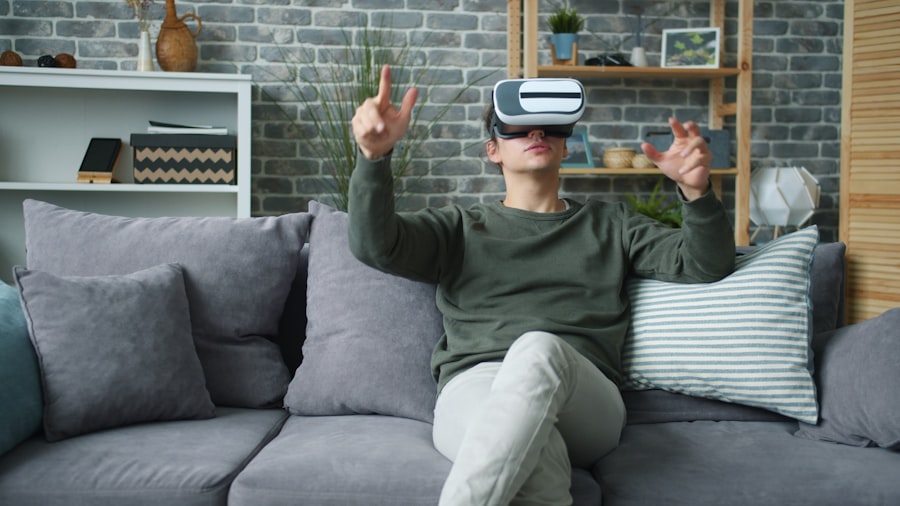
While definitive proof remains elusive, some scientists and thinkers have pointed to various aspects of physics and cosmology that, they argue, could be interpreted as “glitches” or characteristics of a simulated environment.
Fine-Tuning of Universal Constants
Many physicists have noted the seemingly improbable “fine-tuning” of fundamental physical constants. The values of quantities such as the gravitational constant, the strong nuclear force, the cosmological constant, and the mass of fundamental particles appear to be incredibly precise, even infinitesimally so, for the universe to support life as we know it. A slight variation in any of these values would result in a universe either collapsing immediately, preventing star formation, or being too diffuse for matter to coalesce. Some theorists interpret this fine-tuning as evidence for intelligent design—a “programmer” carefully setting the parameters for our universe to unfold. Others, however, offer alternative explanations such as the multiverse hypothesis, where our universe is just one among countless others, each with different constants, and we simply happen to reside in one that supports life.
The Limits of Physics: Planck Length and Quantum Mechanics
At the smallest scales, physics becomes profoundly strange. The Planck length, approximately 1.6 x 10⁻³⁵ meters, represents a theoretical lower limit beyond which current physics breaks down. It’s hypothesized that below this scale, spacetime itself might discretize, meaning it’s not continuous but made of tiny, indivisible units – like pixels on a screen. If reality is a simulation, such a fundamental “pixelation” would be an expected feature, a computational cutoff to save processing power. Similarly, the perplexing nature of quantum mechanics, particularly the observer effect (where observation seems to influence the state of a particle) and the non-locality of entangled particles, has been cited. Some suggest these phenomena are akin to optimized rendering in a video game; unobserved parts of the simulation don’t need to be fully rendered until an observer interacts with them, thus conserving computational resources. It’s like a massive multiplayer online role-playing game where only the portion of the world the player is traversing is being fully computed, with the rest existing in a less detailed, “potential” state.
The intriguing concept of whether reality is a simulation has captivated the minds of many thinkers and scientists alike. This idea raises profound questions about the nature of existence and our understanding of the universe. For those interested in exploring this topic further, a related article can provide additional insights into the philosophical implications and scientific theories surrounding the simulation hypothesis. You can read more about it in this fascinating article that delves into the various perspectives on this mind-bending subject.
Implications of a Simulated Reality
| Metric | Description | Value / Estimate | Source / Reference |
|---|---|---|---|
| Simulation Hypothesis Probability | Estimated likelihood that our reality is a computer simulation | Up to 50% | Nick Bostrom, 2003 |
| Computational Power Required | Estimated computational resources needed to simulate a universe like ours | 10^42 FLOPS (floating point operations per second) | Oxford University, theoretical estimates |
| Quantum Decoherence Time | Time scale over which quantum states lose coherence, relevant to simulation fidelity | 10^-6 to 10^-3 seconds | Physics experiments |
| Pixelation Scale | Hypothetical smallest unit of space-time in a simulated reality | Planck length (~1.6 x 10^-35 meters) | Physics theory |
| Simulation Detection Attempts | Number of scientific experiments or proposals aimed at detecting simulation artifacts | 5+ | Various academic papers (2012-2023) |
| Philosophical Support | Percentage of surveyed philosophers who consider simulation hypothesis plausible | ~30% | Philosophy surveys, 2020 |
If the simulation hypothesis were to be proven true, the implications for humanity, philosophy, and science would be profound and far-reaching, challenging many of our deeply held beliefs.
Existential Questions and the Search for Meaning
Discovering we are simulated beings would undoubtedly trigger an existential crisis of unprecedented scale. Questions about the meaning of life, free will, and the nature of consciousness would take on new urgency. Are our experiences truly our own, or merely programmed responses? Is there a “realer” reality, and if so, can we access it or even perceive our simulators? This realization could be liberating for some, shedding the weight of traditional philosophical burdens, while for others, it might induce a profound sense of insignificance or disillusionment. The notion of a “God” might transform from a supernatural being to a hyper-intelligent programmer.
Ethics and Morality in a Simulated World
The ethical ramifications are equally complex. If we are simulated, does this diminish the moral imperative to treat others with respect and compassion? If our suffering is merely lines of code, does it still matter? Conversely, if our simulators are aware of our experiences, does that impose an ethical obligation on them to ensure our well-being or even intervene? Furthermore, if we eventually become beings capable of running ancestor simulations, what moral responsibilities would we have towards our simulated descendants? Would we allow them to suffer, or would we strive to create a benevolent simulation? These questions force a re-evaluation of established ethical frameworks.
The Future of Scientific Inquiry
From a scientific perspective, confirming that we are in a simulation would fundamentally alter the pursuit of knowledge. The goal might shift from merely understanding the laws of our universe to deciphering the “code” of the simulation, looking for “backdoors,” or even attempting to communicate with our creators. Physics might become a quest to identify the underlying algorithms, and biology an understanding of programmed neural networks. The very foundation of what we consider empirical evidence would be re-examined. Perhaps future physicists would consider debugging their reality rather than merely observing it. It would be akin to understanding the source code of the operating system we are running on, rather than just the applications it hosts.
The Problem of Recursion and Infinitude
A critical aspect of the simulation hypothesis is the problem of recursion. If we are in a simulation, what are our simulators in? Are they also simulated? This chain could potentially extend infinitely, creating a stack of simulated realities layered upon each other. While conceptually challenging, it doesn’t invalidate the initial hypothesis. Each level of simulation could have different fundamental laws, time scales, and computational capacities. This recursive nature highlights the immense difficulty in ever definitively proving or disproving the hypothesis from within our own perceived reality. We may be living in a universe that is itself a character in a much larger, more intricate narrative that we can never fully comprehend. Our perceived base reality could be just one layer within a cosmic onion.
FAQs
What does the simulation hypothesis propose?
The simulation hypothesis suggests that our reality might be an artificial simulation, such as a computer-generated environment, created by an advanced civilization or entity.
Who popularized the idea that reality could be a simulation?
Philosopher Nick Bostrom popularized the simulation hypothesis in 2003 with his paper “Are You Living in a Computer Simulation?” where he argued that one of several scenarios about advanced civilizations is likely true.
Is there scientific evidence supporting the simulation hypothesis?
Currently, there is no direct scientific evidence proving that reality is a simulation. The idea remains a philosophical and theoretical concept rather than an empirically testable theory.
What are some arguments against the simulation hypothesis?
Critics argue that the hypothesis is unfalsifiable, meaning it cannot be tested or disproven, and that it relies on assumptions about future technology and motivations of hypothetical simulators.
How does the simulation hypothesis relate to physics and cosmology?
Some researchers explore whether certain physical phenomena, such as quantum mechanics or the nature of spacetime, could be consistent with a simulated reality, but these connections remain speculative and inconclusive.